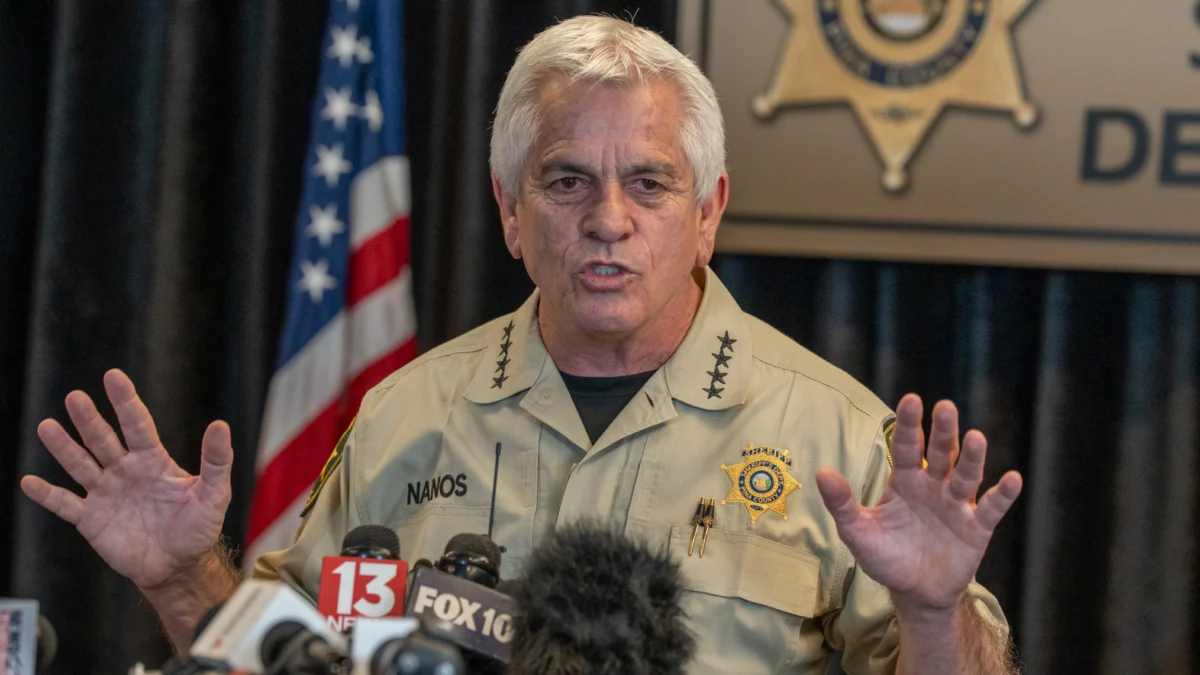
The investigation into the disappearance of Nancy Guthrie, the mother of Today show co-anchor Savannah Guthrie, has reached a critical juncture as it enters its fourth month. In a recent development that highlights the shifting dynamics of the high-profile search, Pima County Sheriff Chris Nanos confirmed that his department is no longer maintaining direct lines of communication with the Guthrie family. Instead, the Federal Bureau of Investigation (FBI) has assumed the primary role of liaison between law enforcement and the family members, including Savannah Guthrie. This transition comes amid mounting public pressure and internal political scrutiny regarding the management of the Pima County Sheriff’s Department.
Nancy Guthrie vanished from her home in Arizona three and a half months ago, sparking a massive multi-agency search effort that has captivated the national media. Despite the intensity of the investigation, concrete leads have remained elusive, leaving the family and the public in a state of prolonged uncertainty. Sheriff Nanos, speaking in an interview with People, acknowledged the profound emotional toll the delay has taken on the Guthrie family. He noted that for those waiting for news, every passing second feels like an eternity, yet he emphasized the necessity of a methodical approach to avoid procedural errors that could jeopardize future legal proceedings.
The Investigative Focus: Digital and Biological Forensics
The Pima County Sheriff’s Department has pivoted its strategy toward a heavy reliance on digital evidence. According to Nanos, investigators are currently wading through "thousands and thousands" of videos. This digital dragnet includes footage from private doorbell cameras, commercial surveillance systems, and traffic monitoring cameras from across the region. The sheer volume of data requires an exhaustive review process, as technicians look for any sign of Guthrie’s movements or suspicious vehicles in the vicinity of her home around the time of her disappearance.
In addition to video evidence, forensic teams are analyzing biological data. This includes DNA samples collected from Guthrie’s residence and potential areas of interest. The integration of high-tech digital forensics with traditional biological evidence is a hallmark of modern missing persons cases, particularly those involving high-profile individuals where the resources of federal agencies like the FBI are leveraged. Nanos expressed a firm belief that these scientific methods will eventually yield a breakthrough, stating his 100% confidence that his team, supported by the "best minds in the country," will solve the case.
The transition of family communication to the FBI is a common procedural step in investigations of this scale. By centralizing communication through federal agents, local law enforcement can focus entirely on field operations and evidence analysis, while the FBI provides specialized support in victim services and family advocacy. This move also ensures that the information relayed to the family is consistent and vetted across all participating agencies.
A Timeline of the Disappearance and Search Efforts
The timeline of Nancy Guthrie’s disappearance began in early 2026, when she was reported missing from her residence in Pima County. The initial search involved ground crews, K-9 units, and aerial surveillance, covering the rugged terrain surrounding her home. As the days turned into weeks, the focus shifted from a localized search to a broader investigative scope involving financial records, phone pings, and social media activity.
By the two-month mark, the Pima County Sheriff’s Department had established a dedicated task force to handle the influx of tips from the public. While many leads were explored and subsequently dismissed, the department maintained that they were narrowing their focus on specific "items of interest." However, the lack of a named suspect or any formal arrests has led to a sense of stagnation in the public eye.
The three-and-a-half-month milestone represents a difficult period in missing persons cases. Statistically, the likelihood of a recovery decreases as time passes, yet law enforcement officials often point to "cold cases" that are solved months or years later through advancements in DNA technology or the emergence of new witnesses. For the Guthrie family, the wait remains a harrowing ordeal, exacerbated by the public nature of Savannah Guthrie’s role as a prominent journalist.
Political Turbulence and Leadership Concerns
While the search for Nancy Guthrie continues, Sheriff Chris Nanos finds himself at the center of a political firestorm within Pima County. The Pima County Board of Supervisors recently held a high-stakes meeting to discuss Nanos’ future in his role. The discussions were prompted by concerns over his management of the department, as well as allegations regarding his past conduct.

Specifically, two Pima County supervisors have alleged that Nanos lied under oath during a deposition related to his previous tenure as a police officer in El Paso, Texas. These allegations of perjury have cast a shadow over his leadership during one of the county’s most watched investigations. On Tuesday, the Board of Supervisors reached a decision not to vacate Nanos’ position immediately, but they did vote to forward the perjury allegations to the Arizona Attorney General for further investigation.
Pima County Supervisor Matt Heinz emphasized the importance of maintaining public trust in law enforcement leadership. In a statement following the vote, Heinz noted that the people of Pima County deserve a Sheriff’s Department led with "integrity and professionalism." By referring the matter to the state’s Attorney General, the board aims to ensure an independent review of the facts, separate from the ongoing Guthrie investigation.
Impact on the Guthrie Family and the Public
The Guthrie family has largely remained private regarding the specifics of the investigation, though Savannah Guthrie has occasionally shared messages of hope and gratitude for the public’s support. The emotional weight of the situation is compounded by the professional irony of a world-renowned news anchor becoming the subject of a major news story herself.
The public reaction has been a mix of sympathy and frustration. High-profile cases often highlight the disparities in investigative resources, with some critics questioning if a similar level of attention and FBI involvement would be granted to a family without such a significant media platform. Conversely, the intense scrutiny also puts immense pressure on local officials like Nanos, whose every word and action is analyzed by national outlets.
The "frustration" mentioned by Nanos is not just limited to the family; it extends to the community of Tucson and the broader Pima County area. Residents have expressed concern about safety and the effectiveness of local law enforcement, particularly when a case involving such a well-known family remains unsolved for over 100 days.
Broader Implications for Law Enforcement Accountability
The intersection of a high-profile missing persons case and allegations of misconduct against the lead investigator creates a complex legal and ethical landscape. If the Arizona Attorney General finds merit in the perjury allegations against Sheriff Nanos, it could potentially impact the Guthrie case, specifically if defense attorneys in a future trial attempt to question the credibility of the department’s leadership.
Furthermore, the decision of the Board of Supervisors to involve the Attorney General reflects a growing trend in American governance toward greater oversight of elected law enforcement officials. The referral acts as a safeguard, intended to protect the integrity of the Pima County Sheriff’s Department while the investigation into Nancy Guthrie’s disappearance proceeds.
As investigators continue to process biological and digital evidence, the case serves as a reminder of the complexities involved in modern forensics. The "thousands" of videos being reviewed are a testament to the digital footprint left by individuals in the 21st century, but they also represent a monumental challenge for departments with limited manpower. The outcome of the Nancy Guthrie case may ultimately hinge on a single frame of video or a microscopic strand of DNA, highlighting the meticulous—and often slow—nature of justice.
Looking Ahead
For now, the search for Nancy Guthrie remains an active and ongoing investigation. The involvement of the FBI as the primary contact for the family suggests a long-term commitment to solving the mystery, even as the local political situation remains fluid. Sheriff Nanos continues to project confidence in his team’s ability to find answers, even as he faces personal legal and professional challenges.
The Guthrie family continues to wait for the one piece of information that will bring closure to their ordeal. In the meantime, the Pima County Sheriff’s Department must balance the demands of a high-stakes missing persons case with the internal need for transparency and accountability. The coming months will likely be defined by the findings of the Arizona Attorney General and the continued forensic analysis of the evidence gathered in the wake of Nancy Guthrie’s disappearance.