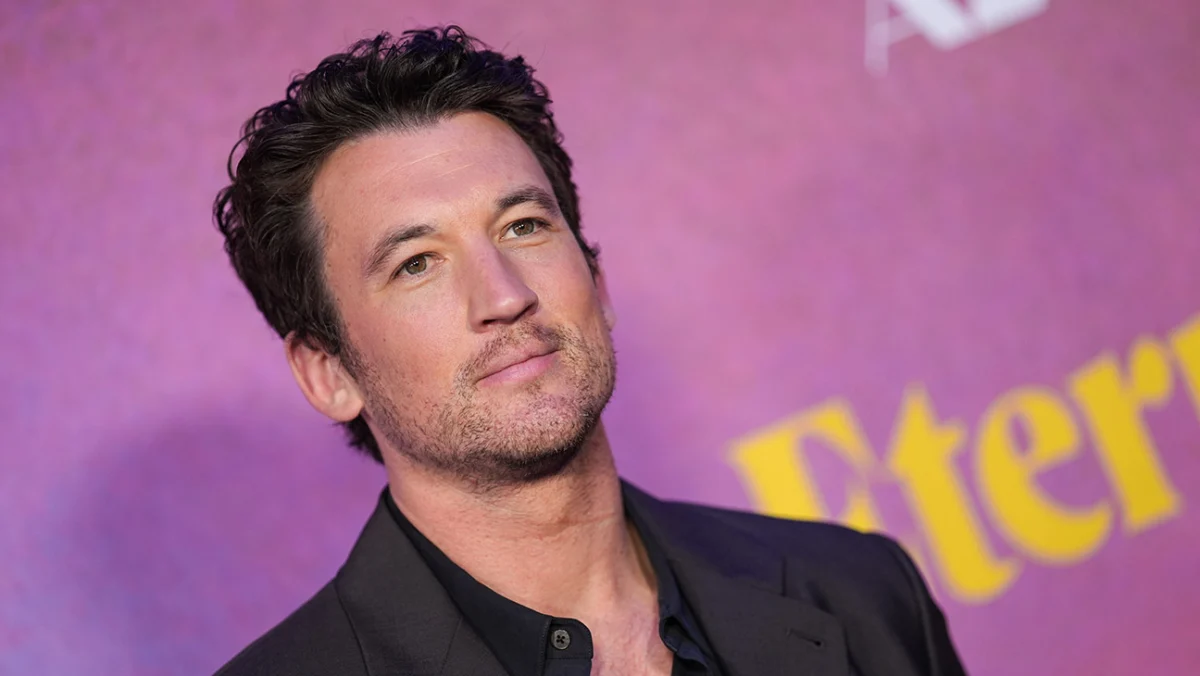
Miles Teller, a prominent figure in contemporary Hollywood, found himself once again navigating the intricate dance of celebrity promotion at the Cannes Film Festival while simultaneously revisiting a deeply ingrained reluctance towards traditional press engagements. His presence at the prestigious festival was primarily to champion his star turn in James Gray’s competition title, Paper Tiger. However, the spotlight on his latest cinematic endeavor inevitably drew attention to his long-standing aversion to extensive press junkets and sit-down profiles, a stance firmly rooted in the fallout from a particularly contentious September 2015 Esquire magazine cover story. This enduring wariness highlights the complex and often fraught relationship between public figures and the media, a dynamic that shapes careers and influences public perception in an increasingly scrutinized entertainment landscape.
The Genesis of a Grudge: The Infamous 2015 Esquire Profile
The incident that irrevocably shaped Teller’s approach to media relations occurred almost a decade ago, with the publication of an Esquire profile penned by writer Anna Peele. The article, which went viral for its provocative tone, opened with an instantly iconic and widely quoted line: "You’re sitting across from Miles Teller at the Luminary restaurant in Atlanta and trying to figure out if he’s a dick." This audacious introduction immediately set the stage for a piece that dissected Teller’s personality, often framing his candidness and self-confidence in a less than flattering light. The profile continued this theme, concluding with an equally memorable and cutting remark: "He gives you a hug and goes off to contribute to the cache or catalog or canon or whatever the fuck you call it and charm the world with his dickishness."
For Teller, the experience was profoundly jarring and, as he recently recounted to IndieWire during the Cannes festival, "That was so mishandled." He elaborated on the perceived betrayal, stating, "The reason why I have not done profiles is because I said, ‘Wow, if I’m not doing this interview on camera, this person can misquote things or put things out of order or say things that didn’t happen.’ It felt like such a violation of what actually transpired." The actor expressed a deep sense of injustice, feeling that his words and actions had been distorted to fit a pre-conceived narrative. The article, in his view, painted a picture that was fundamentally at odds with his own self-perception and how he believed he conducted himself.
A Shift in Media Strategy: Teller’s Post-Esquire Stance
In the immediate aftermath of the Esquire profile’s publication, the public reaction was swift and largely polarized. While some readers found the article refreshingly honest and entertaining, others criticized it as unnecessarily harsh and an unfair character assassination. For Teller, the personal impact was significant enough to prompt a dramatic reevaluation of his engagement with print media. He recalled telling his handlers, "Guys, I don’t think I’m doing this again, because I’m reading this and this doesn’t sound like me to me. This is not life, so why would I ever want to be a part of something where they can just put that in?" This marked a pivotal moment in his career, leading to a noticeable scaling back of traditional, in-depth profile interviews in favor of more controlled environments, such as on-camera appearances where context and tone are harder to manipulate.
The actor’s decision to largely retreat from the subjective scrutiny of print profiles underscored a growing concern among celebrities regarding journalistic interpretation and the potential for narratives to be shaped beyond their control. In an era where a single headline or quote can swiftly define public perception, the stakes of such interviews are exceptionally high. Teller’s reaction reflected a broader sentiment within the industry about the perceived sensationalism of celebrity journalism, where compelling narratives can sometimes overshadow factual accuracy or nuanced representation.
The Broader Context of Celebrity Journalism and Public Perception
The incident with Miles Teller and Esquire is not an isolated one but rather a prominent example of the inherent tension that often exists between celebrities and the media tasked with covering them. Celebrity profiles, by their very nature, aim to offer readers an intimate glimpse into the lives and personalities of public figures, often seeking to uncover something "real" or unexpected. Journalists are under pressure to craft engaging, insightful, and often provocative narratives that capture reader attention. However, this pursuit can sometimes clash with a celebrity’s desire to control their public image and protect their privacy.
The power dynamic is complex: celebrities rely on media exposure to promote their work, but that exposure comes with the risk of misrepresentation. The rise of digital media and the "click economy" has further intensified this dynamic, pushing for more sensational headlines and easily digestible, often reductive, characterizations. Teller’s lament that "negativity… sells. People want to click on the negativity" resonates with many in the industry who observe the often-disproportionate attention given to controversies or perceived flaws over positive achievements or personal growth. This environment makes trust between public figures and journalists increasingly fragile, leading many, like Teller, to adopt more guarded approaches.
Redemption and Resurgence: The Impact of "Top Gun: Maverick"
Despite, or perhaps in spite of, his self-imposed media restrictions, Miles Teller’s career has flourished significantly since 2015. His strategic choices regarding press have not seemingly hindered his ascent to leading man status. A monumental turning point came with his co-starring role as Rooster Bradshaw in the critically acclaimed and commercially colossal Top Gun: Maverick (2022). The film was a global phenomenon, grossing over $1.49 billion worldwide, making it the highest-grossing film of 2022 and elevating Teller’s profile to unprecedented heights. His performance was widely praised, showcasing his range and solidifying his position as a bankable star.
The success of Top Gun: Maverick provided Teller with a powerful platform that transcended traditional media narratives. The film’s overwhelming popularity allowed audiences to connect with his talent directly on screen, rather than through the lens of a print profile. This kind of organic, performance-driven validation can often be more potent in shaping public perception than any number of interviews. It allowed him to demonstrate his capabilities as an actor and redefine his image on his own terms, proving that a compelling cinematic presence can, at times, override negative press. His upcoming project, a biopic about Michael Jackson titled Michael, further underscores his continued trajectory in high-profile roles, demonstrating that his earlier media challenges have not derailed his career ambition or potential.
Cannes 2024 and "Paper Tiger": A Cautious Return to the Spotlight
Teller’s presence at the Cannes Film Festival for Paper Tiger marks a nuanced phase in his relationship with the media. While he continues to express reservations about the format of in-depth profiles, participating in a major film festival inherently requires a degree of public engagement. Paper Tiger, directed by the acclaimed James Gray, is a significant project. Gray is known for his introspective and often gritty narratives, and Paper Tiger appears to be no exception. The film follows Hester (Scarlett Johansson) and Irwin (Teller) as they navigate family life in 1980s Queens, only to be drawn into the perilous world of the Russian mob after Irwin’s charismatic but risky brother (Adam Driver) entices him into a dubious moneymaking scheme.
The film is particularly noteworthy as a semi-fictionalized return to Gray’s own family life in mid-1980s Queens, serving as a companion piece to his critically lauded 2022 film, Armageddon Time. Armageddon Time, which also premiered at Cannes, explored themes of class, race, and the American dream through the lens of Gray’s childhood, receiving strong critical reviews for its poignant storytelling and performances. Paper Tiger‘s selection for the competitive section at Cannes speaks to its artistic merit and the pedigree of its cast and director, making it a crucial project for Teller to promote. His decision to engage in interviews at Cannes, albeit with evident caution, indicates a willingness to support his work while still maintaining boundaries that reflect his past experiences. This careful approach is a testament to the ongoing challenge actors face in balancing career promotion with personal integrity and media management.
The Economics of Attention: Negativity and Clickbait Culture
Teller’s assertion that "being a good person… doesn’t sell. People want to click on the negativity" provides a stark commentary on the contemporary media landscape. The digital age has ushered in an attention economy where clicks, shares, and engagement metrics often dictate content strategy. Sensationalism, conflict, and controversy tend to generate higher engagement, leading many outlets to prioritize such narratives. This creates a challenging environment for public figures who aim for nuanced representation but often find themselves reduced to simplified, often negative, archetypes.
The pressure on journalists to deliver "scoops" or provocative angles can inadvertently contribute to this cycle. While responsible journalism aims for truth and balanced reporting, the competitive nature of news cycles and the immediacy of online publishing can sometimes compromise these ideals. For celebrities, this means a constant vigilance over their public persona, often requiring sophisticated public relations strategies to counteract potentially damaging narratives. Teller’s experience highlights how a single, negatively framed article can have long-lasting psychological and professional repercussions, forcing a reevaluation of how one interacts with the very platforms essential for career advancement.
Navigating Public Perception: The Evolving Role of PR and Authenticity
Miles Teller’s enduring grievance underscores the critical role of public relations in managing celebrity image. In the wake of the Esquire incident, his team likely worked to refine his media strategy, focusing on outlets and formats that offered more control over the narrative. This often involves prioritizing on-camera interviews, pre-approved questions, or appearances where the celebrity’s performance and personality can speak for themselves, as was largely the case with the Top Gun: Maverick press tour.
The pursuit of "authenticity" in celebrity culture is another layer of this complex dynamic. While audiences often crave genuine insights into their favorite stars, the line between authenticity and overexposure, or between candidness and misinterpretation, is incredibly fine. Teller’s experience suggests that in an attempt to be open or relatable, he felt he was exploited. This pushes celebrities and their teams towards a more curated form of authenticity, where glimpses into their lives are carefully managed to avoid pitfalls. The challenge lies in appearing genuine without risking the kind of journalistic interpretation that can be perceived as unfair or damaging.
Implications for the Industry: A Shifting Paradigm in Celebrity-Media Relations
Miles Teller’s ongoing struggle with the aftermath of the Esquire profile is more than just a personal anecdote; it represents a broader trend and a significant challenge within the entertainment industry. It highlights the growing tension between the demands of celebrity promotion and the desire of public figures to control their narratives in an increasingly digital and often unforgiving media environment.
This situation has several implications:
- Erosion of Trust: Such incidents contribute to a deepening mistrust between celebrities and the press, potentially leading more stars to limit their engagement, thus making truly insightful profiles rarer.
- Rise of Controlled Media: It reinforces the shift towards more controlled media environments—such as social media, podcasts, or pre-recorded interviews—where celebrities can directly communicate with their audience, bypassing traditional journalistic filters.
- Focus on Performance over Personality: For actors like Teller, it may mean a greater emphasis on letting their work speak for itself, relying on the quality of their performances and the success of their films to shape public perception, rather than personal narratives.
- Challenges for Journalism: It poses a challenge for entertainment journalism to find new ways to engage with celebrities that are both insightful for readers and respectful of subjects, moving beyond sensationalism to foster more collaborative and trustworthy relationships.
Ultimately, Miles Teller’s persistent unease about media profiles, even years after the Esquire incident, serves as a poignant reminder of the power of narrative and the indelible mark that public portrayals can leave on a career and a person’s sense of self. As he continues to promote films like Paper Tiger and take on high-profile roles, his cautious approach to the press will undoubtedly remain a defining aspect of his public persona, reflecting a broader industry grappling with the evolving nature of celebrity and media in the 21st century.