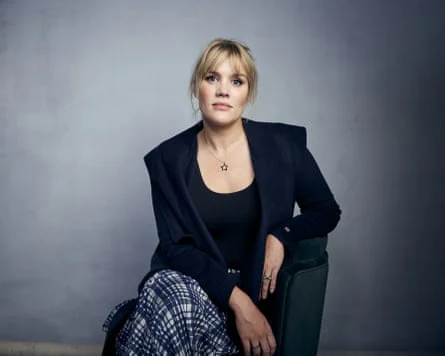
Director Emerald Fennell has offered a candid glimpse into the creative process behind her recent, audacious adaptation of "Wuthering Heights," revealing that a deliberate choice to depict Margot Robbie’s character, Cathy, with unshaven armpits did not make the final cut. The revelation, shared during a Q&A session at the prestigious Hay Festival in Wales on Friday evening, highlights a broader artistic intention to challenge conventional, often sanitized, portrayals of women in period dramas. Fennell expressed her disappointment that the scene featuring Robbie’s character’s "extremely hairy armpits" was ultimately omitted from the 2026 film, a decision she found "unfortunate" given its significance to her vision.
Challenging Period Drama Tropes: The Unseen Armpits
Fennell’s commitment to historical accuracy, or rather, to a more truthful representation of human physicality, was evident in her comments. "It was so important to me," she stated, referring to Cathy’s unshaven underarms. This detail, she explained, stemmed from a recurring observation she makes when viewing other period adaptations, particularly those based on Jane Austen’s novels. "I often wonder where are the razors that these women are using?" Fennell mused to the audience, painting a vivid, if humorous, picture of her critique. "They’re all kind of hairless like eels. I’m like: ‘What’s going on? It’s completely mad.’"
This observation underscores a common convention in historical filmmaking where female characters, regardless of the era depicted, are frequently presented with meticulously groomed underarms, a practice that has become an unspoken, yet pervasive, aesthetic standard. Fennell’s desire to deviate from this norm was not merely a stylistic choice but a conscious effort to imbue her adaptation with a sense of rawer, more grounded reality, even within the heightened emotional landscape of Emily Brontë’s gothic masterpiece. The deliberate inclusion of this detail, even if ultimately unseen, speaks volumes about Fennell’s commitment to portraying characters with a level of unvarnished authenticity that often gets lost in translation on screen.
The Genesis of a "Sister, Not a Twin" Adaptation
The 2026 film, which premiered on Valentine’s Day this year, is Fennell’s bold reimagining of Brontë’s classic novel. Starring Margot Robbie as Cathy and Jacob Elordi as Heathcliff, the adaptation has been described by Fennell herself as a "sister, not a twin" to the original book. This distinction is crucial, as Fennell acknowledged the impossibility of directly replicating the profound literary genius of Brontë’s work. "It’s so brilliant," she remarked, referring to the novel, "I couldn’t make [the original]." Her approach, therefore, was to capture the spirit and thematic intensity of "Wuthering Heights" through a modern, visceral lens, exploring the raw passions and destructive impulses that lie at its core.
The Hay Festival, a renowned literary and cultural event held annually in Wales, provided the perfect platform for Fennell to delve into the intricacies of her filmmaking process. The festival, which typically attracts a diverse range of authors, artists, and public intellectuals, offers a space for in-depth discussions on literature, art, and societal issues. Fennell’s appearance was a highlight of this year’s program, drawing significant attention from film critics, literary enthusiasts, and the general public alike, eager to understand the motivations behind her provocative cinematic choices.

Unpacking the "Skin Room" and the "Fish Scene"
Beyond the excised armpit detail, Fennell also elaborated on other distinctive elements of her "Wuthering Heights," including the now-infamous "skin room" and the "fish scene." The "skin room," a conceptually disturbing element where Cathy’s husband, Edgar Linton, commissions a bespoke bedroom with walls designed to resemble her skin, was a point of creative jest and ambitious execution. Fennell humorously recounted how marketing meetings considered approaching high-end paint companies like Farrow & Ball to develop a "Cathy’s skin" themed color. More strikingly, she revealed that the production team requested close-up images of Robbie’s wrist to accurately replicate her vein patterns on the room’s walls, a testament to the meticulous, albeit unconventional, attention to detail.
The "fish scene," which has garnered considerable discussion and debate since the film’s release, depicts Cathy impulsively sticking her finger into the mouth of a dead fish. Fennell explained the genesis of this scene as a moment of inspiration, sparked by observing a fish in aspic. "I saw a fish in aspic and I thought: ‘I want to stick my finger in its mouth,’" she stated. She further contextualized this act as a manifestation of intense frustration and desire: "And then I was like, ‘Well, I think if you were trapped, and you were extremely sexually frustrated, the first thing you’d do is…’" The scene’s visceral nature, achieved with real fish, involved a considerable effort, with Fennell noting, "Poor Margot. I mean, she had to do that. There were 12 of them." This anecdote highlights the film’s willingness to embrace the grotesque and the primal, aligning with the tumultuous emotional landscape of the source material.
The Art of Embracing "Cringe" and "Earnestness"
Fennell articulated her directorial philosophy as one that actively embraces what many might consider uncomfortable or awkward. "Being embarrassing, being cringe is a really big thing for me," she admitted. She sees this as a deliberate counterpoint to contemporary culture’s pervasive fear of vulnerability and authenticity. "Especially now in our culture, we are so phobic and terrified of being cringe, or being earnest, and so we’ve got this deadening ambivalence about everything," Fennell observed. Her directorial approach, therefore, is a conscious rebellion against this perceived cultural malaise. "I feel, for me, I want to get in and go for it, and push it off a cliff," she declared, emphasizing her commitment to bold, uninhibited storytelling.
This embrace of "cringe" and "earnestness" can be seen as a deliberate strategy to provoke a more profound emotional response from the audience, forcing them to confront uncomfortable truths about human nature and societal expectations. In an era where irony and detachment often dominate, Fennell’s work stands out for its willingness to be unabashedly emotional and, at times, even uncomfortable.
A Creative Hiatus and Future Endeavors
Currently, Fennell is taking a deliberate pause from filmmaking. She shared that this period is dedicated to personal pursuits such as completing jigsaw puzzles, spending time with her family, disconnecting from the internet, and indulging in the popular fantasy novels of Sarah J. Maas. This hiatus, however, is not a retreat from creative expression. Fennell hinted at future projects, stating with a mischievous tone, "And I’m coming up secretly with something so depraved, so profoundly evil, that nobody’s going to make it." This enigmatic statement suggests that her penchant for pushing boundaries and exploring the darker, more transgressive aspects of human experience is far from over, leaving audiences anticipating her next audacious cinematic endeavor.
The implications of Fennell’s comments extend beyond the specifics of her "Wuthering Heights" adaptation. Her remarks spark a broader conversation about the visual language of historical cinema and the often-unexamined conventions that shape our perception of the past. By questioning the ubiquitous "hairless like eels" aesthetic, Fennell implicitly challenges audiences and filmmakers alike to consider what other "truths" are being obscured by ingrained artistic habits. The success and critical reception of her film, despite (or perhaps because of) its unconventional elements, may pave the way for more diverse and historically nuanced representations of female physicality and experience on screen, encouraging a move away from idealized archetypes towards more complex and relatable portrayals. The film’s exploration of intense, often destructive, passion, combined with its willingness to confront the visceral and the unsettling, positions it as a significant contribution to contemporary cinematic discourse, prompting viewers to reconsider the boundaries of adaptation and the enduring power of classic literature when reinterpreted through a bold, modern lens.