The past folds into the present in this very fine debut feature from Canadian film-maker Sophy Romvari, a deeply personal and autofictional work that has resonated profoundly, particularly upon a second viewing. First presented at last year’s Locarno Film Festival, "Blue Heron" distinguishes itself through its deliberate quietude, eschewing overt sensationalism to explore real-life drama and tragedy with an intimate, almost confessional tone. Instead of Hollywood-style emotional orchestration, Romvari confides the raw agony of her past to the viewer, sotto voce.
This somber, poignant, and complex film is masterfully constructed on two distinct yet ultimately converging narrative levels. The metatextual approach culminates in a striking final cinematic coup, yet Romvari’s profound sophistication ensures that the film remains subtly, deeply moving. At its core, "Blue Heron" delves into the filmmaker’s own childhood and her fraught relationship with her profoundly troubled older brother. This exploration builds upon her award-winning 2020 short film, "Still Processing," the existence of which is seamlessly integrated into this new feature, demonstrating a mature and self-aware approach to artistic evolution.
Unpacking a Troubled Childhood on Vancouver Island
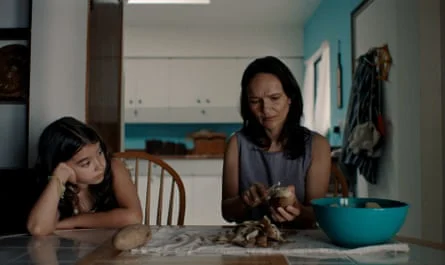
The narrative transports viewers to the mid-1990s on Vancouver Island, where a young girl named Sasha, portrayed by Eylul Guven (approximately 7-8 years old), navigates life with her two younger brothers and her older teen half-brother, Jeremy, played by Edik Beddoes. Their arrival at a new house signifies a recent period of frequent relocation, the reasons for which are gradually revealed. The parental figures, Iringó Réty as the mother and Ádám Tompa as the father, are of Hungarian descent, and their use of their native tongue when wishing to exclude the children from conversations underscores the underlying tension and unspoken dynamics within the family.
Emotionally, the family unit is depicted as being at its breaking point. Jeremy, in particular, is presented as a deeply troubled individual. A child psychiatrist identifies his condition as oppositional defiant disorder, a diagnosis that explains his persistent refusal to cooperate with his parents’ increasingly desperate pleas and interventions. His behavior is characterized by destructive and dangerous tendencies, including threats of arson, and he is frequently brought home by law enforcement, often in handcuffs. This pattern of behavior presents a significant challenge to the family’s stability and the parents’ capacity to cope.
The Insidious Grip of Family Dysfunction and Unanswered Questions
The resulting family dysfunction is insidiously gendered, highlighting subtle societal expectations and their impact on familial roles. Sasha exhibits distress over Jeremy’s actions in a manner that her brothers do not, and their mother finds herself increasingly burdened with the role of disciplinarian. She is the primary figure responsible for managing Jeremy’s behavior, a task that appears to weigh heavily upon her. It is implied that she may harbor resentment over the unspoken assumption that Jeremy’s struggles are her sole responsibility, perhaps stemming from the fact that he is her son from a previous relationship.
The film grapples with the elusive and seemingly insoluble mystery of what has caused Jeremy’s condition. This unresolved enigma inflicts pain on Sasha as a child and continues to wound her as an adult. In flashforward sequences, the adult filmmaker is depicted as a film-maker herself, portrayed by New York writer and comic Amy Zimmer. She is seen meticulously documenting a quasi-fictional panel of social workers who are discussing Jeremy’s case as a cold file, suggesting a prolonged and unresolved engagement with the trauma.
Examining the Impact of Disruption: Cause or Consequence?
"Blue Heron" prompts a critical examination of the meaning behind Jeremy’s disruptive behavior. The film intelligently poses the question of whether it is more pertinent to investigate the causes of his actions or to focus on the profound impact his behavior has had on those around him. Edik Beddoes imbues Jeremy with a disquietingly opaque and smug smirk, leaving the viewer to ponder whether this facade masks deep-seated fear and unhappiness, or if it is merely an outward expression with no underlying emotional complexity.
For Sasha, and by extension for the filmmaker, the film’s emotional core lies in the difficult negotiation of her feelings. She must contend with her own hurt and even rage towards Jeremy for inflicting lasting unhappiness, while simultaneously experiencing empathy and anger on his behalf. This latter emotion is directed towards a societal and social services system that is depicted as having failed to provide adequate support, and towards a universe that, inexplicably, afflicted him and the entire family with such a terrible trauma. This dual emotional landscape is rendered with remarkable nuance and sensitivity.

Thematic Depth and Cinematic Technique
Romvari’s filmmaking choices underscore the film’s thematic concerns. The deliberate pacing and understated performances create an atmosphere of raw authenticity. The visual style, often employing natural light and intimate framing, draws the viewer into the characters’ emotional world. The use of flashbacks and flashforwards is not merely a narrative device but serves to illustrate the enduring nature of trauma and memory, demonstrating how past events continue to shape present-day understanding and emotional responses.
The film’s autofictional nature allows for a unique exploration of personal history. By blending autobiographical elements with fictionalized scenarios, Romvari creates a space for both catharsis and critical reflection. The inclusion of the short film "Still Processing" within "Blue Heron" is a testament to this process, showcasing an artist confronting and re-examining her own creative output and the personal narratives that fuel it. This meta-cinematic approach adds layers of meaning, inviting audiences to consider the relationship between lived experience, artistic representation, and the ongoing process of making sense of one’s past.
Background and Context: The Challenges of Mental Health and Social Support
The depiction of Jeremy’s struggles and the family’s response can be contextualized within broader societal challenges related to mental health care and the support systems available to families dealing with complex behavioral issues. The 1990s, while seeing advancements in psychiatric understanding, also presented significant limitations in accessible and comprehensive care, particularly for children and adolescents exhibiting severe behavioral problems. The film implicitly critiques the fragmentation of social services and the often-insufficient resources allocated to mental health, which can leave families feeling isolated and overwhelmed.
The "oppositional defiant disorder" diagnosis, while a clinical identifier, does not fully encapsulate the complex interplay of environmental factors, potential underlying neurological conditions, and the emotional toll on the individual and their family. Romvari’s film avoids offering easy answers or simplistic diagnoses, instead focusing on the lived experience of navigating these complexities. The parents’ struggles, particularly the mother’s, highlight the immense pressure placed on caregivers when professional support is scarce or inadequate. The father’s retreat into work can be interpreted as a coping mechanism, albeit one that exacerbates the emotional burden on his wife and potentially alienates him from the immediate family crisis.
Critical Reception and Artistic Merit
"Blue Heron" has been lauded for its artistic integrity and its ability to connect with audiences on a deeply emotional level. Critics have praised Romvari’s directorial vision, her sensitive handling of difficult subject matter, and the nuanced performances of her cast. The film’s ability to evoke empathy without resorting to sentimentality is a testament to its sophisticated storytelling. Its selection for prestigious film festivals like Locarno underscores its recognition as a significant new voice in independent cinema. The film’s success suggests a growing audience appetite for personal, introspective narratives that tackle challenging themes with honesty and artistic flair.
The film’s impact extends beyond its narrative, offering a valuable contribution to conversations surrounding family dynamics, mental health, and the enduring power of memory. By choosing to confront her past through the lens of filmmaking, Romvari not only offers a personal account but also creates a work of art that can resonate with anyone who has experienced the complexities of familial relationships and the search for understanding in the face of adversity.
Broader Implications and the Future of Autofictional Cinema
"Blue Heron" exemplifies the growing trend of autofictional cinema, where filmmakers draw heavily from their own lives to create compelling narratives. This approach allows for a unique form of storytelling that can be both deeply personal and universally resonant. Romvari’s success suggests that audiences are increasingly receptive to films that prioritize authenticity and emotional truth over conventional plot structures or sensationalized drama.
The film’s implications extend to how we perceive and discuss mental health within families. By portraying the struggles with such honesty, "Blue Heron" can foster greater empathy and understanding for individuals and families facing similar challenges. It also implicitly advocates for improved mental health resources and support systems. The film’s quiet yet powerful approach challenges the viewer to engage with difficult emotions and to consider the long-term impact of trauma and unresolved issues. As Romvari continues her filmmaking career, "Blue Heron" stands as a powerful testament to her talent and her ability to craft deeply moving and thought-provoking cinema. The film is an intelligent, valuable piece of filmmaking that leaves a lasting impression, prompting reflection on the nature of memory, family, and the enduring search for meaning.