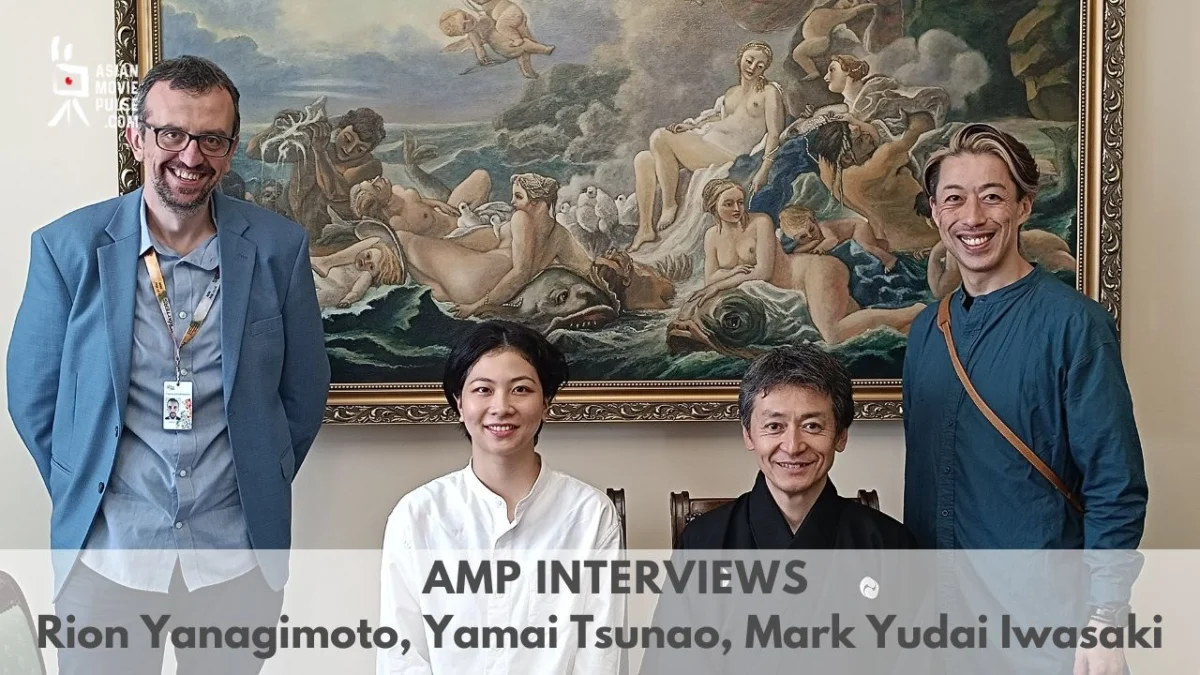
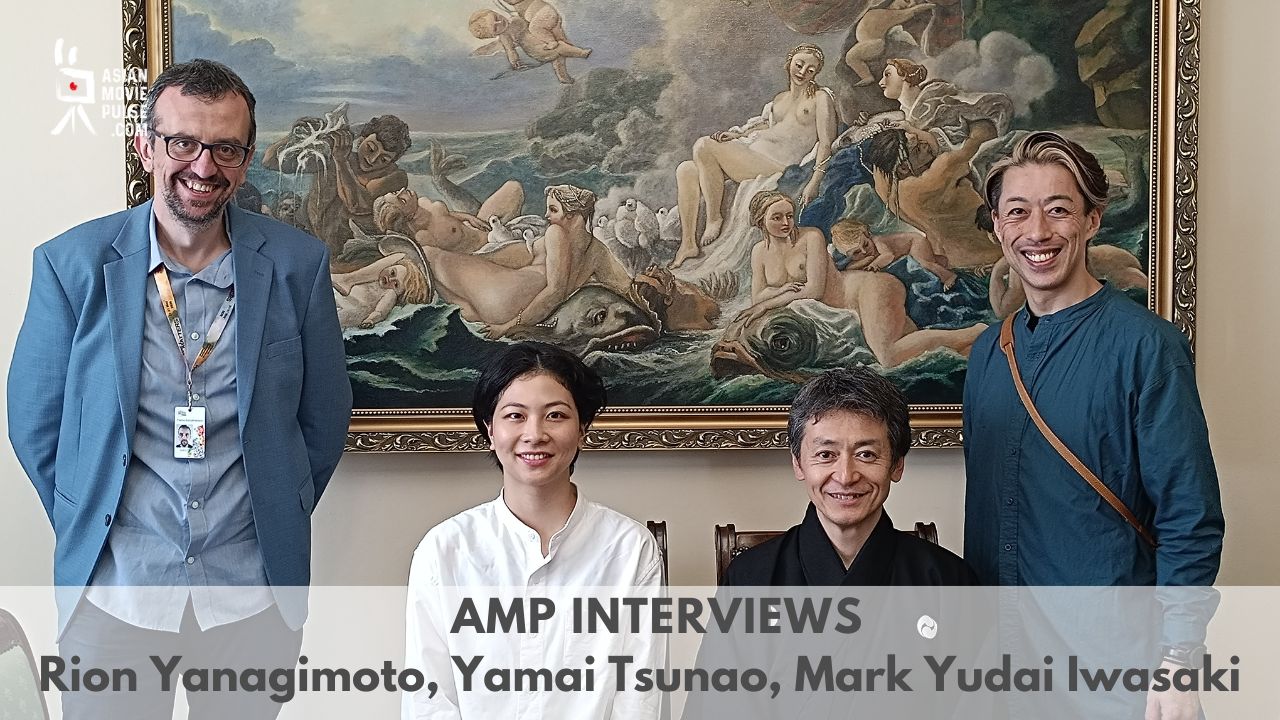
The Craiova International Shakespeare Festival recently hosted the critically acclaimed Japanese production "Titus Andronicus: Reborn," a groundbreaking reinterpretation of Shakespeare’s notoriously violent tragedy through the lens of traditional Japanese Noh theatre. This ambitious staging prompted a profound discussion with key cast members: Yamai Tsunao, a revered Kokuho (Living National Treasure) portraying the titular role; Mark Yudai Iwasaki, who not only played Bassianus but also served as the essential translator for the conversation; and Rion Yanagimoto, the actress embodying the traditionally male character of Lucius. Their insights illuminated the intricate confluence of Shakespearean drama and Noh tradition, the complexities of staging extreme violence, the prevailing conditions of theatrical arts in Japan, and the significant opportunities afforded by presenting a Japanese Shakespearean work to a global audience.
The Craiova International Shakespeare Festival: A Global Stage for Bardic Innovation
The Craiova International Shakespeare Festival, held biennially in Romania, stands as one of the world’s premier celebrations of William Shakespeare’s enduring legacy. Renowned for its innovative programming and its commitment to showcasing diverse interpretations of the Bard’s works from across the globe, the festival draws artists, scholars, and theatre enthusiasts. Its curatorial vision often seeks productions that push artistic boundaries, challenge conventional readings, and foster cross-cultural dialogue through the universal language of theatre. The selection of "Titus Andronicus: Reborn" for a prominent slot, despite the KAKUSHINHAN company not being universally recognized on the international stage, underscores the festival’s dedication to artistic merit and its belief in theatre’s power to provoke thought and connect diverse cultures. This decision, as noted by Rion Yanagimoto, was perceived by the company as a powerful affirmation of their artistic vision and a testament to the festival’s genuine commitment to the art form itself, rather than solely to commercial appeal or established international fame.
"Titus Andronicus: Reborn": A Cultural Synthesis
The essence of "Titus Andronicus: Reborn" lies in its bold synthesis of two distinct theatrical traditions: the visceral dramatic intensity of Shakespeare and the profound, ritualistic aesthetic of Noh. This fusion is particularly manifest in the central performance of Yamai Tsunao. As a Kokuho, a designation signifying a master practitioner of an important intangible cultural property, Yamai carries the weight of centuries of Noh performance history. His initial stage appearance at the tender age of five marked the beginning of a life entirely immersed in this ancient tradition, where precision, symbolism, and a deliberate, measured pace are paramount.
Yamai’s transition to the Shakespearean stage for "Titus Andronicus: Reborn" was far from straightforward. He detailed the radical temporal disparity between Noh and Shakespeare. Noh, characterized by its extremely slow, meditative rhythm, starkly contrasts with Shakespearean drama, which often demands a rapid-fire cadence, heightened emotional intensity, and a dynamic vocal delivery. Director Ryunosuke Kimura’s ingenious direction navigated this challenge by asking Yamai to oscillate between these two registers. The performance begins with Yamai embodying the more familiar, rapid speech patterns of a Shakespearean actor, gradually shifting towards the end into a more restrained, profound, and symbolically rich Noh mode of expression, mirroring Titus’s descent into a state beyond conventional human emotion.
Kimura’s choice of Yamai for the lead role was not merely an aesthetic decision but also a recognition of Yamai’s innate ability to portray figures of immense gravitas and power, roles he frequently embodies in Noh such as gods, shoguns, and kings. These inherent qualities, deeply ingrained from a lifetime of embodying elevated presences, were deemed perfectly suited for a Japanese actor taking on the tragic Roman general. Yamai himself discovered a deeply personal resonance with Titus, recognizing parallels between the general’s unwavering loyalty to Rome and his sense of duty to tradition, and his own profound commitment to preserving and transmitting the venerable art of Noh.
Mark Yudai Iwasaki: Bridging Cultures and Emotions
Mark Yudai Iwasaki, who portrayed Bassianus and acted as the vital translator, approached the production with an equally global perspective. For Iwasaki, Shakespeare transcends cultural and historical boundaries, offering a unique conduit for exploring universal human emotions and experiences. The opportunity to present such a profoundly Japanese interpretation to an international audience at Craiova was both a demanding artistic test and a valuable platform for cultural exchange. He emphasized the power of performance to facilitate an unspoken exchange of feelings, fostering a deeper understanding between diverse audiences and performers.
Iwasaki also underscored the paramount importance of Shakespeare’s original text. He articulated the core challenge as bringing these centuries-old words into a dynamic relationship with contemporary bodies, allowing the audience to witness and experience the new meanings that emerge in the interplay between actor, text, and the unique performance space. This approach highlights the production’s commitment to both honoring the source material and reimagining it for a modern context.
Rion Yanagimoto: Reimagining Gender and Authority
Rion Yanagimoto’s portrayal of Lucius introduced another layer of artistic transformation and commentary on traditional roles. As a woman taking on a historically male character, Yanagimoto stated that she found the role intellectually and emotionally natural. However, she acknowledged the inherent physical challenge of conveying a different gender identity through her own body. Her approach moved beyond superficial mimicry—such as simply lowering her voice or adopting stereotypical male mannerisms. Instead, she concentrated on embodying the core attributes of leadership, strength, and the authoritative presence required to guide and command others. Yanagimoto found immense artistic excitement in this challenge, precisely because Lucius’s gender, status, and social position were so far removed from her own, thereby offering a rich canvas for exploration.
Confronting Violence: Theatre as a Moral Mirror
The conversation inevitably gravitated towards the pervasive theme of violence, which lies at the heart of "Titus Andronicus." Yamai Tsunao drew a connection to the Noh tradition, where the overarching ideals of community harmony and peace are fundamental. From this perspective, he expressed a belief that violence can indeed be averted, and he even suggested that his participation in "Titus Andronicus: Reborn" was driven by a hope to contribute to the cessation of violence through the medium of theatre. This philosophical stance aligns with Noh’s capacity to transcend physical action through spiritual depth.
Yanagimoto, speaking from Lucius’s perspective, offered a more nuanced and somber counterpoint. She observed that for individuals trapped within a cycle of violence, particularly those who become victims, the space for prayer or peaceful resolution often vanishes, overwhelmed instead by consuming anger and hatred. Yet, she maintained that through the transformative power of performance, there remains a potential avenue for reclaiming or rediscovering that lost space, offering a glimmer of hope for catharsis or understanding.
Iwasaki further elaborated on this, positing imagination as a crucial antidote to violence. He argued that individuals embroiled in violent situations frequently lose the capacity to imagine the profound suffering they inflict or endure. Theatre, by artfully recreating such situations from a safe and reflective distance, empowers spectators to grasp the full extent of violence’s destructive potential before they themselves might act. For Iwasaki, this capacity to foster imaginative empathy is one of the enduring justifications for the necessity of art in society.
The Paradox of Entertainment and Trauma
One of the most compelling aspects of the interview concerned the inherent paradox of violence being presented as entertainment. Yamai pointed out that Noh theatre, too, often depicts wars, battles, suffering, and the spirits of those who lived painful lives. However, in Noh, the transformation of these harrowing experiences into performance allows the audience to acknowledge them, to reflect upon them, and perhaps even to alleviate the spiritual burden of suffering. The ritualistic nature of Noh often provides a framework for processing trauma, rather than merely observing it.
Yanagimoto, with specific reference to "Titus Andronicus: Reborn," highlighted a particularly provocative staging choice in the second act, where Lavinia’s brutal assault and mutilation are presented through a stylized golf scene and dance-like movement. This artistic decision creates a complex dynamic: the audience is drawn in by the aesthetic form and theatricality of the scene, yet in doing so, they become implicitly implicated in the "consumption" of violence. For Yanagimoto, this structural device serves as a powerful critique of how individuals in the real world might unknowingly participate in or condone violence through various forms of entertainment, often without fully realizing the profound implications of their engagement.
The Emotional Toll: Scenes of Profound Impact
The discussion of the most difficult scenes for the performers revealed the deep emotional and psychological impact of the production on the cast. Iwasaki identified the third act as particularly challenging, specifically the moments after Lavinia’s mutilation and the capture of Titus’s sons, when Titus desperately pleads for their lives, and Marcus brings Lavinia back. Despite Bassianus not being the focal point of this intensely distressing scene, Iwasaki confessed that merely existing within the same performance space as such overwhelming suffering made it simultaneously the hardest and one of his most cherished moments in the play, a testament to its raw power.
Yamai Tsunao chose the identical scene, explaining that witnessing Lavinia, portrayed by Fuka Haruna, without her hands and tongue becomes physically and emotionally unbearable. The profound connection he felt was amplified by the fact that Haruna is close in age to his own son, prompting him to imagine his child in such a devastating condition, which made the scene profoundly heartbreaking. For Yamai, this sequence is also artistically fascinating due to its aftermath. At the zenith of Titus’s grief and rage, he undergoes a radical transformation, becoming demon-like. In Noh, the transformation of humans into demons at the peak of anger and sorrow is a recurring motif, yet the actual process of this metamorphosis is rarely depicted directly. "Titus Andronicus: Reborn" uniquely stages this explicit transformation, a choice Yamai found particularly compelling and innovative within the context of his traditional training.
Yanagimoto’s most difficult scene was the exchange between Lucius and Aaron in Act Five. She described how Aaron’s confessions of his horrific acts of violence repeatedly trigger flashes of trauma in Lucius, an experience that begins as anger but progressively morphs into something akin to Post-Traumatic Stress Disorder (PTSD) as images of past violence overwhelm him. Conversely, her favorite scene was Lavinia’s poignant use of a stick to write the names of Chiron and Demetrius after being robbed of her hands and tongue. In this moment, an individual stripped of her ability to communicate verbally finds an ingenious and deeply moving way to reclaim her voice, symbolizing resilience and the indomitable human spirit.
The State of Theatre: A Global Perspective
The interview also delved into the broader context of theatre in Japan. Both Yamai and Yanagimoto voiced significant concern regarding what they perceive as a weakening of government and societal support for cultural arts. Their experience in Romania, where they felt a palpable sense of deep respect for theatre and its artists, made this contrast even more stark. Yanagimoto specifically noted the Craiova Festival’s decision to feature their company for the opening night, despite KAKUSHINHAN not possessing extensive international renown, as compelling evidence of a genuine belief in theatre’s intrinsic value and its capacity to profoundly matter to society.
Iwasaki broadened the discussion, asserting that challenges such as digitalization, escalating economic pressures, and the dwindling engagement of younger audiences are not isolated Japanese phenomena but rather global issues impacting the performing arts worldwide. Financially, he conceded that sustaining a livelihood solely as a theatre actor in Japan is exceedingly difficult, with only a small, fortunate cohort managing to secure a stable income within the profession. This highlights the precarious economic realities faced by many artists, even in countries with rich cultural traditions.
Future Horizons: International Ambitions and Artistic Evolution
Looking ahead, all three performers expressed a fervent hope for the continued international touring of "Titus Andronicus: Reborn." Yamai and Yanagimoto envision the production as a powerful vehicle to unlock further opportunities abroad for their company and for Japanese theatre at large. Iwasaki added an intriguing perspective, suggesting that the unique artistic style forged through this ambitious fusion of Noh and Shakespeare could be successfully applied to other works, potentially even comedies, with the same core team of actors and Noh performers. This vision speaks to the potential for a new hybrid theatrical form, capable of transcending genre and tradition.
The conversation concluded on a lighter, more anecdotal note, with Iwasaki revealing a charming detail about the infamous final eating scene. The "human flesh" consumed by Titus was, in fact, cinnamon rolls thoughtfully provided by sponsor Oizumi Kojo, also known as Oizumi Factory. This small detail offered a moment of levity amidst the production’s intense themes, underscoring the collaborative and often resourceful nature of theatrical creation.
Through the thoughtful and candid responses of Mark Yudai Iwasaki, Yamai Tsunao, and Rion Yanagimoto, "Titus Andronicus: Reborn" emerges as far more than a mere Japanese reinterpretation of a Shakespearean tragedy. It stands as a testament to the power of cultural translation, physical and emotional transformation, the enduring weight of historical memory, and the profound conviction that theatre retains its vital role as a space where the most brutal aspects of the human condition can be meticulously examined, critically dissected, and ultimately understood, rather than simply consumed as spectacle. The production’s journey to Craiova has not only enriched the festival but has also offered a compelling vision for the future of global theatre, where tradition and innovation converge to create something entirely new and deeply resonant.