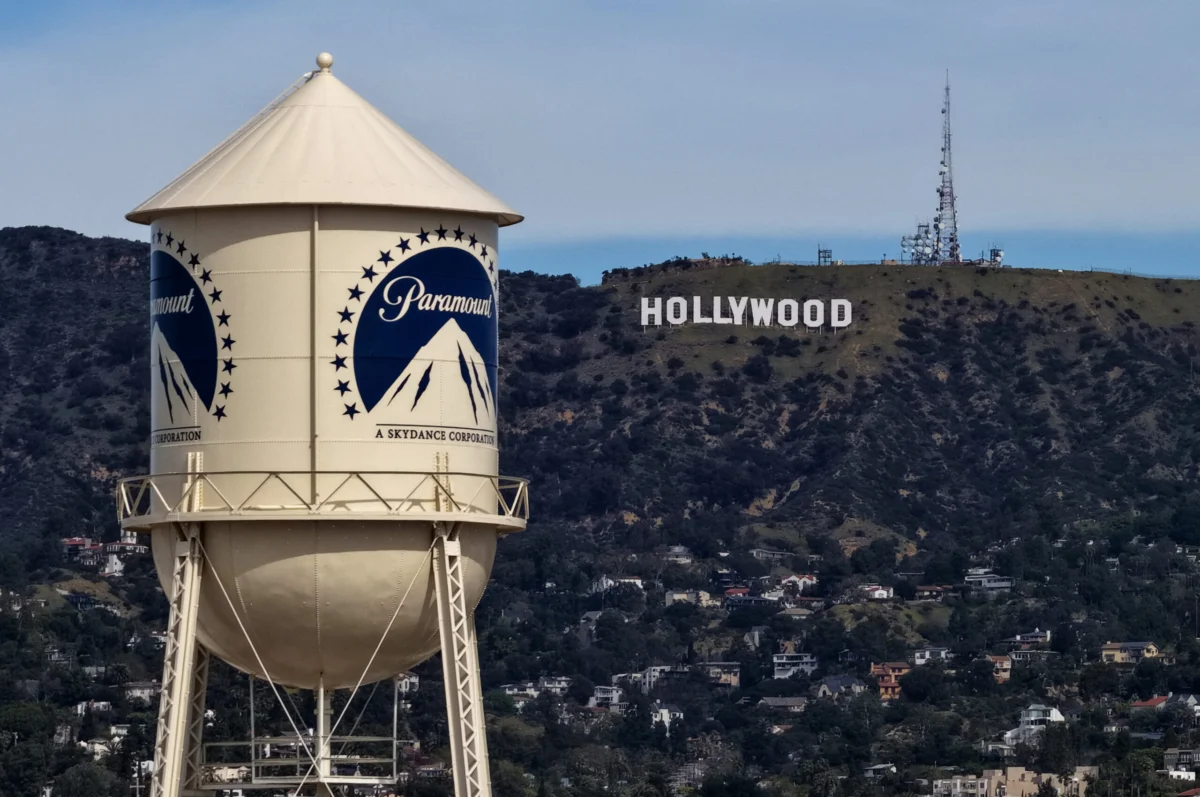
Paramount Global has officially fortified its legal defense by retaining Jeffrey Kessler, a preeminent figure in antitrust litigation, to protect its proposed $110 billion merger with Warner Bros. Discovery. This strategic appointment comes as the entertainment industry faces unprecedented consolidation and increasing scrutiny from both private litigants and federal regulators. Kessler, who recently spearheaded a landmark victory against Live Nation, is expected to lead the studio’s response to a mounting wave of legal challenges, starting with a consumer-led lawsuit that seeks to derail the deal on the grounds of anti-competitive practices.
The addition of Kessler to Paramount’s legal roster signifies the studio’s commitment to an aggressive defense strategy. While Paramount executives have publicly stated they do not anticipate formal intervention from the Department of Justice (DOJ), state attorneys general, or international regulatory bodies, the retention of such a high-profile litigator suggests a "prepared for all outcomes" approach. Kessler joins an already formidable team that includes Makan Delrahim, who served as the Assistant Attorney General for the Antitrust Division during the Trump administration, and David Gelfand, a former deputy assistant attorney general for litigation under the Obama administration. This bipartisan legal "dream team" is further supported by specialists from elite firms Latham & Watkins and Cravath, Swaine & Moore, who have been navigating the complex regulatory approval process behind the scenes.
The Consumer Challenge: A Threat to the Megadeal
On Friday, a federal judge formally accepted Kessler’s application to represent Paramount in a lawsuit filed by a group of consumers and subscribers. This litigation represents the first significant legal hurdle for the $110 billion transaction, which aims to combine two of Hollywood’s most storied "Big Five" studios. The plaintiffs argue that the merger would create a monolithic entity with the power to stifle competition across multiple sectors, including streaming services, theatrical distribution, and national news.
The lawsuit, filed last month, alleges that the combination of Paramount and Warner Bros. Discovery would substantially reduce the number of major content producers, leading to higher subscription fees for consumers and lower quality of service. Lawyers for the plaintiffs moved for a preliminary injunction on Wednesday, seeking to freeze the merger proceedings before the companies can integrate their operations. They contend that the deal violates the Clayton Antitrust Act, which prohibits mergers and acquisitions where the effect "may be substantially to lessen competition, or to tend to create a monopoly."
In a forceful statement following his appointment, Kessler dismissed the consumer complaint as "baseless." He characterized the litigation as a form of "political scaremongering" that relies on rhetoric rather than sound antitrust analysis. "What we do learn from the complaint is that there is no credible antitrust case to be brought against the Paramount/Warner Bros. merger," Kessler stated. "In my many years of practice championing competition and the interests of consumers, athletes, and workers, I have rarely seen such a weak case seeking to block a transaction."
Jeffrey Kessler’s Record of High-Stakes Litigation
Jeffrey Kessler, the co-executive chairman of Winston & Strawn, brings a reputation as a "giant-killer" in the courtroom. His career is defined by taking on massive institutions and winning transformative victories. For Paramount, his involvement provides a layer of credibility and tactical brilliance that is difficult to match in the specialized field of antitrust law.
Kessler is perhaps most famous for his 2019 victory against the National Collegiate Athletic Association (NCAA). Representing student-athletes, Kessler argued that the NCAA’s restrictions on education-related benefits were a violation of federal antitrust laws. The Supreme Court eventually upheld a lower court ruling in favor of the athletes, a decision that fundamentally altered the landscape of college sports by allowing players to profit from their name, image, and likeness (NIL). This case proved Kessler’s ability to dismantle long-standing institutional monopolies through rigorous legal argument.
More recently, Kessler was a central figure in the legal battle against Live Nation and its subsidiary, Ticketmaster. Representing a coalition of more than 30 states, he challenged the company’s dominance in the live events industry. The case culminated in a jury finding that Live Nation had operated as an illegal monopoly, a verdict that has since emboldened regulators to look more closely at vertical integrations in the entertainment sector. His success in the Live Nation case is particularly relevant to the Paramount-WBD merger, as both involve the consolidation of content creation and distribution channels.
Furthermore, in 2023, Kessler secured the dismissal of an antitrust lawsuit brought by Broadway producer Garth Drabinsky against the Actors’ Equity Association. This victory demonstrated his versatility in defending labor-related antitrust claims within the entertainment industry, further solidifying his position as the go-to attorney for complex studio-related disputes.
Financial and Industry Context of the $110 Billion Merger
The proposed merger between Paramount and Warner Bros. Discovery is valued at approximately $110 billion, a figure that includes equity value and the assumption of significant corporate debt. To put this in perspective, the deal would rival the scale of Disney’s $71 billion acquisition of 21st Century Fox in 2019. The logic behind the Paramount-WBD deal is driven by the necessity of scale in the "Streaming Wars." Both companies have struggled to compete with the sheer subscriber volume and content spend of industry leaders like Netflix and Disney+.
Supporting data suggests that a combined Paramount and Warner Bros. Discovery entity would control a massive share of the global media market:
- Streaming Dominance: The merger would unite Paramount+ and Max (formerly HBO Max). Based on 2023 year-end data, the combined subscriber base would exceed 160 million globally, placing it within striking distance of Disney+ and Netflix.
- Theatrical Distribution: In 2023, Warner Bros. and Paramount Pictures together accounted for approximately 25-30% of the domestic box office market share. Combining these two studios would leave Disney as the only other comparable competitor in terms of annual theatrical output.
- Content Library: The merger would bring together the DC Cinematic Universe, the Star Trek franchise, Mission: Impossible, Game of Thrones, and the vast libraries of CBS and HBO.
However, the financial health of the two entities is a point of concern for analysts. Warner Bros. Discovery has been aggressively cutting costs to manage a debt load exceeding $40 billion following the Discovery-WarnerMedia merger. Paramount Global has similarly faced credit rating downgrades and has been exploring various divestiture options to shore up its balance sheet. Proponents of the deal argue that the merger is a defensive necessity to ensure the survival of traditional Hollywood studios in a tech-dominated era.
Timeline of the Merger and Legal Proceedings
The path to the $110 billion deal has been marked by rapid developments and immediate legal pushback. The following timeline outlines the key events in the merger’s trajectory:
- December 2023: Initial reports surface regarding high-level discussions between Paramount CEO Bob Bakish and WBD CEO David Zaslav.
- February 2024: Paramount Global enters an exclusive negotiating window with potential suitors, with WBD emerging as the primary contender.
- March 2024: The $110 billion valuation is finalized, and the boards of both companies signal intent to proceed with a formal merger agreement.
- April 2024: A group of Paramount+ and Max subscribers files a class-action lawsuit in federal court, alleging that the merger will lead to "monopolistic pricing" and reduced content diversity.
- May 2024: Lawyers for the consumers officially move for a preliminary injunction. Paramount responds by assembling its elite legal defense team.
- June 2024: Federal judge approves Jeffrey Kessler’s application to join the defense. Paramount’s legal team begins preparing a motion to dismiss the consumer complaint.
Broader Implications for Hollywood and Antitrust Policy
The outcome of this legal battle will serve as a bellwether for future consolidation in the media industry. If Kessler and his team successfully beat back the consumer lawsuit and any subsequent regulatory challenges, it may trigger a final wave of mergers among the remaining "mid-tier" media companies. Conversely, a victory for the plaintiffs or a successful intervention by the DOJ could signal the end of the era of the "Mega-Studio."
The Biden administration, under the leadership of FTC Chair Lina Khan and DOJ Antitrust Chief Jonathan Kanter, has adopted a significantly more aggressive stance toward mergers than previous administrations. They have emphasized that antitrust enforcement should look beyond just "consumer prices" and consider the impact on labor markets, innovation, and the overall health of the competitive ecosystem. While Paramount’s team includes veterans of both Republican and Democratic administrations, the current regulatory climate remains the most challenging for large-scale M&A in decades.
Beyond the courtroom, the merger has sparked concern among creative guilds, including the Writers Guild of America (WGA) and SAG-AFTRA. These organizations fear that fewer studios mean fewer "greenlight" opportunities for new projects and less leverage for creators during contract negotiations. While the consumer lawsuit focuses on subscribers, the underlying anxiety in Hollywood is about the shrinking number of buyers for original content.
As the case moves forward, the legal community will be watching Kessler’s strategy closely. By framing the consumer lawsuit as "political scaremongering," Kessler appears to be pivoting the conversation toward the economic realities of the modern media landscape—arguing that in a world dominated by tech giants like Amazon, Apple, and Alphabet, the merger of two traditional media companies is not an act of aggression, but an act of survival.
For now, the $110 billion deal remains in a state of legal limbo. With a preliminary injunction hearing on the horizon and a team of the nation’s most expensive and successful antitrust lawyers at the helm, the battle for the future of Paramount and Warner Bros. Discovery is just beginning. The resolution of this conflict will ultimately determine whether Hollywood continues its trend toward consolidation or if the era of the media conglomerate has finally reached its limit.