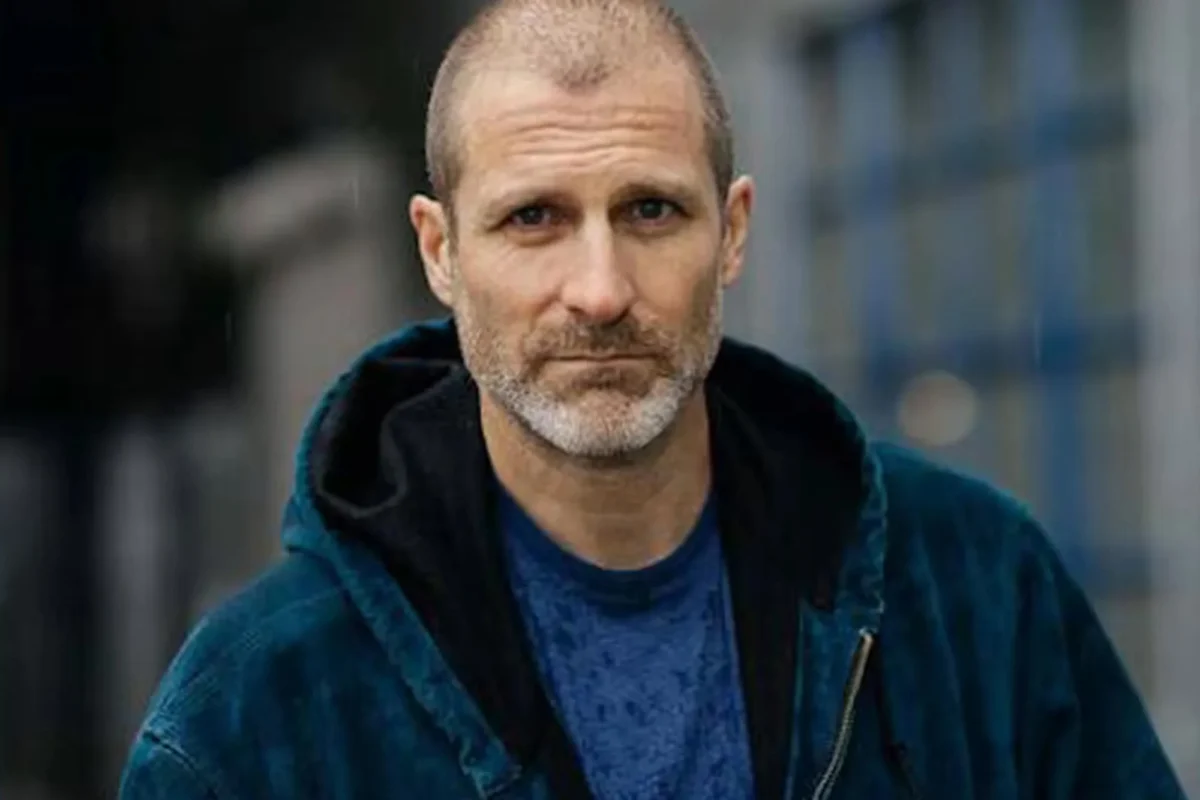
The Integrated Homicide Investigation Team (IHIT) of British Columbia has officially confirmed the death of 45-year-old actor Stewart McLean, whose body was discovered in the Lions Bay area following a week-long search. McLean, a veteran performer with a career spanning several decades in both the United Kingdom and Canada, had recently appeared in the seventh season of the popular Netflix drama Virgin River. His disappearance, which was first reported to authorities in mid-May 2026, has since transitioned from a missing persons case into a full-scale homicide investigation. While the circumstances surrounding his death remain under tight scrutiny by forensic specialists, law enforcement officials have characterized the tragedy as an isolated incident, suggesting there is no ongoing threat to the general public in the Squamish or Lions Bay regions.
The discovery has sent shockwaves through the local acting community and the quiet residential enclave of Lions Bay, where McLean resided. As the investigation enters its second week, homicide investigators are meticulously piecing together the final days of the actor’s life, seeking to establish a definitive timeline that might lead to the identification of a suspect or a motive. The transition of the case to IHIT signifies that evidence of foul play was substantial enough to warrant the involvement of the province’s specialized murder investigation unit, which typically handles the most complex and high-profile violent crimes in the Lower Mainland.
A Detailed Chronology of the Disappearance and Discovery
The timeline of events surrounding Stewart McLean’s death began on May 15, 2026, when the actor was last seen at his residence in Lions Bay. Lions Bay, a small, picturesque village located along the Sea-to-Sky Highway between Vancouver and Squamish, is known for its tight-knit community and low crime rate, making the sudden disappearance of a resident a matter of immediate local concern. For three days, McLean’s whereabouts remained unknown to his inner circle, leading to the filing of an official missing person report with the Squamish Royal Canadian Mounted Police (RCMP) on May 18.
Following the report, the Squamish RCMP initiated a standard missing person protocol, which included wellness checks and preliminary inquiries into McLean’s recent communications and travel patterns. However, by May 20, the nature of the investigation shifted dramatically. According to official releases from the RCMP, investigative efforts uncovered specific evidence—the nature of which has not been disclosed to the public to protect the integrity of the case—that led authorities to believe McLean had fallen victim to a homicide. At this juncture, the Integrated Homicide Investigation Team was deployed to take conduct of the file, working in tandem with the Integrated Forensic Identification Service (IFIS).
The search reached a grim conclusion on Friday, May 22, when search teams located McLean’s body in a wooded area within the Lions Bay vicinity. The recovery of the remains allowed the British Columbia Coroners Service to begin their independent investigation into the medical cause of death, while IHIT investigators pivoted toward the collection of digital and physical evidence.

Investigative Procedures and the Role of IHIT
The involvement of IHIT is a critical component of the provincial justice system in British Columbia. Established to provide specialized investigative resources to various RCMP detachments and municipal police departments, IHIT is the largest homicide unit in Canada. Their presence in Lions Bay indicates that the case is being treated with the highest level of priority. Cpl. Esther Tupper, speaking on behalf of IHIT, emphasized that the current phase of the investigation is heavily reliant on the analysis of technical data and community cooperation.
"As the investigation continues to unfold, homicide investigators are working to collect and analyze evidence, review CCTV footage, and conduct interviews to build a timeline of Mr. McLean’s activities prior to May 15, 2026," Cpl. Tupper stated in a formal briefing. The use of CCTV (Closed-Circuit Television) has become a cornerstone of modern homicide investigations, particularly in residential areas like Lions Bay where many homeowners utilize doorbell cameras and private security systems. Investigators have spent the days following the discovery canvassing the neighborhood, requesting any footage that might show McLean or suspicious vehicle activity in the 48 hours surrounding his disappearance.
Furthermore, the Integrated Forensic Identification Service (IFIS) has been tasked with processing the site where the body was found. This involves a painstaking search for DNA evidence, fiber samples, and any other microscopic traces that could link a suspect to the scene. In homicide cases where the incident is deemed "isolated," investigators often look into the victim’s immediate social and professional circles to determine if there were any pre-existing conflicts, though police have not yet named any persons of interest in McLean’s death.
Career Profile: From Scottish Classics to Virgin River
Stewart McLean’s death marks a somber loss for the television industry, particularly within the realm of British and Canadian co-productions. At 45, McLean had established himself as a reliable and versatile character actor. His early career was rooted in the United Kingdom, where he earned credits on several long-running and critically acclaimed series. Among these was Rab C. Nesbitt, a staple of Scottish comedy, and Doctor Finlay, a period drama that showcased his ability to handle more dramatic, historically grounded roles.
McLean also appeared in Taggart, one of the world’s longest-running police procedurals, and Monarch of the Glen, a drama set in the Scottish Highlands that gained a significant international following. These roles helped build a foundation for his move into the North American market, where he eventually landed a guest role in the seventh season of Virgin River.
Virgin River, a flagship series for Netflix, is filmed primarily in British Columbia, utilizing the province’s rugged landscapes to portray a fictional town in Northern California. The show has become a massive success for the streaming giant, recently receiving a renewal for an eighth season. McLean’s involvement in the production placed him among a cast that includes Alexandra Breckenridge, Martin Henderson, and Tim Matheson. While his role was limited to a single episode in the most recent season, the production community in Vancouver is known for its close ties, and news of his death has prompted a wave of private condolences among crew members and fellow performers who worked alongside him during the filming of the Season 7 block.

Contextualizing the Safety of the Sea-to-Sky Corridor
The classification of McLean’s death as an "isolated incident" is a standard phrasing used by law enforcement to de-escalate public anxiety in the wake of a violent crime. For the residents of Lions Bay and Squamish, the news is particularly jarring given the region’s reputation as a safe, outdoor-oriented community. Statistics from the BC RCMP generally show that while property crimes occur with some frequency in the Sea-to-Sky corridor, homicides are exceedingly rare.
Lions Bay, with a population of just over 1,300 people, rarely sees significant police activity. The village is nestled between the mountains and Howe Sound, and its geography—with limited entry and exit points via the Sea-to-Sky Highway—makes it a unique location for a criminal investigation. Investigators are likely looking at highway camera data to track vehicles entering and leaving the village during the window of McLean’s disappearance. The "isolated" nature of the crime suggests that investigators may believe the act was targeted or that the parties involved were known to one another, rather than a random act of violence that would pose a broader risk to hikers or residents in the area.
Broader Implications and Next Steps in the Case
The death of Stewart McLean highlights the ongoing challenges faced by the film and television industry regarding the safety and well-being of its members, though there is currently no evidence to suggest his death was related to his professional life. As the industry continues to flourish in British Columbia—often referred to as "Hollywood North"—the personal lives of those who move to the region for work are increasingly intertwined with the local social fabric.
The next steps for IHIT involve the completion of the autopsy and the formal filing of a report by the BC Coroners Service. These findings will determine the exact cause of death and provide a clearer window of when the actor died. Simultaneously, digital forensics teams will be examining McLean’s phone records and social media activity to identify any anomalies in the days leading up to May 15.
The family of Stewart McLean has requested privacy during this time, and no public memorial services have been announced as of yet. Law enforcement continues to urge anyone with information regarding the case, or anyone who may have had contact with McLean in the first half of May 2026, to contact the IHIT Information Line.
As the legal process moves forward, the focus remains on providing answers to a grieving family and ensuring that the person or persons responsible for the actor’s death are brought to justice. The case serves as a stark reminder of the complexities involved in homicide investigations, where the transition from a missing person search to a criminal prosecution requires a meticulous, multi-agency approach to ensure that the evidence gathered can withstand the rigors of the Canadian judicial system.