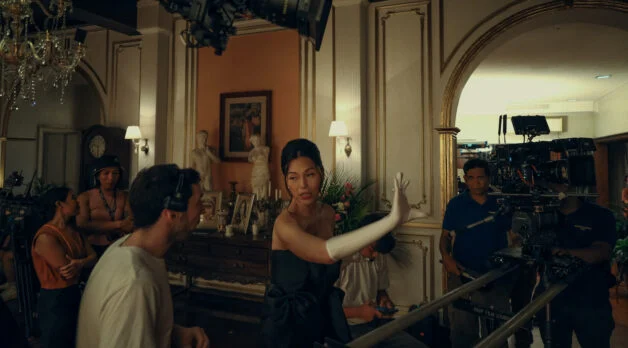
Filipino filmmaker and actress Isabel Sandoval’s highly anticipated latest work, Moonglow, is set to make its North American premiere as the closing night screening of First Look 2026 at the esteemed Museum of the Moving Image (MoMI) on Sunday, May 3. The announcement, accompanied by an exclusive teaser released by Filmmaker magazine, signals a significant moment for independent cinema, promising a "noir melodrama" that traverses the intricate landscapes of personal memory, national history, and clandestine operations against a backdrop of authoritarian rule. This marks Sandoval’s return following her critically acclaimed 2019 feature, Lingua Franca, which garnered international praise for its poignant exploration of identity and migration.
A Return to the Big Screen: Moonglow‘s North American Debut
The selection of Moonglow as the closing night feature for First Look 2026 is a testament to its perceived artistic merit and thematic resonance. The First Look festival, known for showcasing innovative and emerging international cinema, often highlights non-fiction, experimental, and narrative works that challenge conventional storytelling. Its programming consistently seeks out films that push boundaries and offer unique perspectives, making Sandoval’s Moonglow a fitting capstone. The Museum of the Moving Image, a premier institution dedicated to the art, history, technique, and technology of film, television, and digital media, provides an ideal platform for such a significant premiere, attracting cinephiles, industry professionals, and critics alike. The May 3 screening will not only introduce Moonglow to North American audiences but also feature a preceding "Production Diary" artist talk, offering invaluable insights into the filmmaking process. Director Isabel Sandoval will be joined by key collaborators, including cinematographer Isaac Banks, co-editor Daniel Garber, composer Keegan DeWitt, and producer Alemberg Ang, providing a rare opportunity for attendees to delve into the creative intricacies behind the film’s realization.
Synopsis: A Noir Melodrama Unveiled
Moonglow immerses audiences in 1970s Manila, a period fraught with political tension under the Ferdinand Marcos dictatorship. Isabel Sandoval herself stars as Dahlia, a police officer navigating the morally ambiguous landscape of her profession. The official synopsis describes the film as a "noir melodrama," a genre choice that immediately signals a narrative rich in moral complexity, heightened emotions, and stylish visual aesthetics. Dahlia finds herself entangled in a clandestine scheme reminiscent of a Robin Hood narrative: stealing from a corrupt superior officer and redistributing the ill-gotten wealth to the struggling residents of the city. This act of defiance, born out of a desire for justice in a corrupt system, inevitably draws her into a perilous web.
The plot thickens when Dahlia is tasked with investigating her own crimes, leading to a fateful reconnection. She encounters the nephew of her mark, a seemingly upstanding lawyer with whom she shares a romantic past. This rekindling of a past connection introduces a potent layer of personal entanglement into her already dangerous double life. The teaser provides a glimpse into Dahlia’s internal turmoil, with her haunting line, "I’ve summoned a ghost, and I’m powerless to stop it." This declaration not only hints at the inescapable nature of her past and actions but also aligns perfectly with Sandoval’s broader thematic intentions, setting the stage for a narrative where personal and historical specters loom large.
The Vision of Isabel Sandoval: Director’s Statement and Thematic Depths
Isabel Sandoval’s artistic vision, as articulated in her director’s statement, provides a profound lens through which to understand Moonglow. She eloquently posits that the film "is about the ghosts that linger inside a love story." This statement immediately elevates the film beyond a mere genre exercise, suggesting a deeper psychological and historical exploration. Sandoval distinguishes between two types of ghosts: those belonging to "personal memory, to the life two people might have lived together," and those belonging to "history itself, to a nation struggling to define itself in the shadow of empire and authoritarian power." This duality is crucial to appreciating the film’s ambition.
Her desire for Moonglow to "feel lush and romantic on the surface, but quietly unsettled underneath, as if the past were always waiting just beyond the frame," reveals a sophisticated approach to storytelling. It implies a visual and emotional aesthetic that is both alluring and disquieting, mirroring the complex realities of life under a repressive regime where beauty and danger often coexist. This thematic richness is a hallmark of Sandoval’s work, which consistently delves into the intricate interplay between individual desires and broader socio-political forces. The "ghosts" metaphor can be interpreted in multiple ways: the specter of past relationships, the lingering trauma of a nation’s history, the unseen consequences of morally ambiguous actions, and the haunting presence of an authoritarian state.
Historical Canvas: The Philippines Under Marcos
To fully appreciate the narrative context of Moonglow, it is essential to understand the historical backdrop of 1970s Manila under the Ferdinand Marcos dictatorship. Marcos declared Martial Law in September 1972, ostensibly to curb rising communist insurgency and civil disorder. However, this period, which lasted until 1981, was characterized by widespread human rights abuses, political repression, censorship, and rampant corruption. Thousands of political opponents, journalists, and activists were arrested, tortured, or disappeared. The military and police, ostensibly upholders of the law, often became instruments of state repression and personal enrichment for those in power.
Economically, while Marcos initiated various infrastructure projects, the country saw a significant increase in foreign debt, and the wealth accumulated by Marcos and his cronies was staggering, estimated in the billions of dollars. This systemic corruption exacerbated economic disparities, leaving many ordinary citizens struggling while the elite prospered. The "struggling city residents" mentioned in Moonglow‘s synopsis were a stark reality of this era, facing poverty and injustice with little recourse. Dahlia’s "Robin Hood-adjacent scheme" thus takes on profound historical significance, representing a desperate act of resistance and redistribution in a system designed to concentrate power and wealth. The film’s setting during this tumultuous decade provides a potent environment for its exploration of moral compromise, personal sacrifice, and the enduring struggle for justice against an oppressive state. It allows Sandoval to weave personal drama with a powerful critique of authoritarianism, making the "ghosts of history" palpably real.
Isabel Sandoval’s Acclaimed Trajectory: From Lingua Franca to Moonglow
Isabel Sandoval has emerged as a distinct and powerful voice in contemporary independent cinema. Her journey as a Filipina transgender filmmaker, actress, and writer has been marked by a commitment to nuanced storytelling that often explores themes of identity, migration, love, and the complexities of human experience. Before Lingua Franca, Sandoval garnered attention with films like Señorita (2011) and Apparition (2012), both of which showcased her unique directorial style and ability to elicit profound performances.
Lingua Franca, released in 2019, was a critical breakthrough. The film, which Sandoval wrote, directed, and starred in, tells the story of Olivia, a trans Filipina undocumented immigrant working as a caregiver in Brooklyn, who attempts to secure a green card through marriage while navigating a budding romance. It premiered at the Venice Film Festival and was praised for its intimate portrayal of a marginalized character, its subtle exploration of political anxieties, and its tender depiction of human connection. The film’s success established Sandoval as a filmmaker capable of blending deeply personal narratives with broader socio-political commentary, often placing her characters in liminal spaces—geographical, emotional, or legal. Moonglow, with its focus on a police officer in Marcos-era Manila entangled in a Robin Hood scheme and a rekindled romance, represents a thematic evolution while retaining Sandoval’s signature blend of introspection and external conflict. It demonstrates her continued interest in characters grappling with difficult choices under immense pressure, often against a backdrop of significant social or political upheaval. This trajectory solidifies her position as a director unafraid to tackle challenging subjects with sensitivity and artistic flair.
Crafting the Cinematic Experience: Production Insights
The "Production Diary" artist talk scheduled before the MoMI screening offers a rare glimpse into the collaborative alchemy that brings a film like Moonglow to life. The involvement of key personnel such as cinematographer Isaac Banks suggests a visually rich film. Banks’s previous work indicates an ability to craft evocative imagery, which would be crucial for establishing the "lush and romantic" surface Sandoval envisions, while simultaneously hinting at the "unsettled underneath." The aesthetics of a noir melodrama depend heavily on chiaroscuro lighting, atmospheric framing, and meticulous mise-en-scène, all of which fall under the cinematographer’s purview.
Co-editor Daniel Garber’s contribution will be vital in shaping the film’s rhythm and narrative flow, especially in a genre that often relies on suspense and emotional pacing. The challenge of balancing the personal romance with the political thriller elements would largely rest in the edit. Keegan DeWitt, the composer, is tasked with creating a score that enhances the film’s emotional depth and genre leanings. A noir melodrama’s score often plays a critical role in building tension, expressing inner turmoil, and underscoring romantic longing. Finally, producer Alemberg Ang’s presence signifies the logistical and creative support essential for an independent production of this scope, especially one set in a historical period that demands careful attention to detail and authenticity. The collective insights from this team will undoubtedly illuminate the complexities of recreating 1970s Manila and translating Sandoval’s ambitious vision to the screen.
The "Noir Melodrama" Genre: A Perfect Vessel
The designation of Moonglow as a "noir melodrama" is particularly significant. Film noir, a genre that flourished in the 1940s and 50s, is characterized by cynical anti-heroes, femme fatales, moral ambiguity, stark visual contrasts, and often explores themes of crime, corruption, and fatalism. Melodrama, on the other hand, emphasizes heightened emotion, dramatic narratives, and often focuses on the struggles of individuals within social or familial constraints. The fusion of these two genres allows Sandoval to explore the intense personal stakes of Dahlia’s story—her romance, her moral quandaries, her internal conflict—within the gritty, dangerous, and morally complex world of political corruption and authoritarianism.
This genre hybrid provides a powerful framework for addressing the "ghosts" Sandoval mentions. The noir elements will likely manifest in the clandestine operations, the dangerous investigations, and the shadowy figures of the dictatorship. The melodrama will allow for a deep dive into Dahlia’s emotional life, her past romance, and the profound personal cost of her actions. The "lush and romantic surface" could be a nod to the melodrama’s often opulent visual style, while the "quietly unsettled underneath" captures the essence of noir’s inherent dread and fatalism. This combination offers a unique opportunity to comment on the political climate of the 1970s Philippines through a deeply human and emotionally resonant lens, ensuring the historical context is not merely a backdrop but an integral, felt component of the characters’ journeys.
First Look Festival: A Platform for Global Cinema
The First Look festival at the Museum of the Moving Image holds a distinctive position in the film festival landscape. Unlike larger, more commercial festivals, First Look is celebrated for its curator-driven programming, often prioritizing artistic innovation and diverse international perspectives. It focuses on films that push formal boundaries, engage with urgent social and political themes, and represent a broad spectrum of global filmmaking. The festival’s emphasis on non-fiction, experimental, and hybrid forms means that the narrative features selected are often those that demonstrate a unique artistic voice and a willingness to explore complex subject matter.
By selecting Moonglow as its closing night film, First Look not only champions Isabel Sandoval’s work but also reaffirms its commitment to presenting cinema that is both culturally significant and artistically challenging. This platform provides Moonglow with an immediate stamp of critical approval and ensures it will be seen by an audience that appreciates thoughtful, independent filmmaking. The festival’s reputation for fostering dialogue and critical engagement further enhances the film’s potential impact, setting the stage for robust discussions about its themes, historical context, and artistic execution.
Anticipating Critical Acclaim and Broader Impact
The North American premiere of Moonglow at First Look 2026 comes with considerable anticipation, fueled by the critical success of Lingua Franca and Sandoval’s established reputation for incisive storytelling. Critics and audiences will be eager to see how she navigates a historical period piece, especially one imbued with such potent political and emotional themes. The film’s exploration of the Marcos dictatorship is particularly timely, given ongoing discussions about historical revisionism and authoritarianism globally.
Moonglow has the potential to contribute significantly to contemporary cinema by offering a fresh perspective on a crucial period of Philippine history, told through the unique lens of a trans Filipina filmmaker. Its genre-blending approach could appeal to a wide array of viewers, from those interested in historical dramas to fans of noir and melodrama. The film’s premiere at a prestigious festival like First Look suggests it is poised for a strong critical reception, potentially leading to further festival selections, distribution deals, and awards consideration. Ultimately, Moonglow promises to be more than just a film; it is an artistic statement, a historical reflection, and a deeply personal narrative that continues Isabel Sandoval’s impactful contribution to global independent cinema, leaving audiences to ponder the enduring "ghosts" that shape our past, present, and future.