The 15th Taiwan International Documentary Festival (TIDF), held this May, served as a crucial platform for exploring the intricate tapestry of political nonfiction cinema across Asia, presenting a compelling program of both newly released and meticulously restored films. Since its inception in 1998, a decade after martial law was lifted on the island, TIDF has been a beacon for politically engaged nonfiction cinema, particularly championing regional Asian narratives often overlooked by larger, more commercially focused festivals. Its foundational commitment to an "Asian Visions Competition" and a dedicated "Taiwan Competition" strand underscored its mission to foster independent video activism and cultivate alternative structures for production and distribution within community media, a particularly exciting development in Taiwan’s burgeoning documentary scene at the time.
Unearthing Hidden Histories: Archive: Li Guang-hui (1979/2024)
Among the most significant revelations at this year’s festival was the screening of Archive: Li Guang-hui (1979/2024), a 30-minute work compiled from TV newsreel outtakes by the late, renowned photographer Chang Chao-tang. This film offers a profound glimpse into a pivotal moment in Taiwanese history, documenting the extraordinary return of Suniuo, an Indigenous Amis Taiwanese soldier. Known also by his Japanese name, Teruo Nakamura, and later assigned the Mandarin name Li Guang-hui upon his return, Suniuo was drafted into the Japanese Imperial Army during World War II and dispatched to the Indonesian island of Morotai. Astonishingly, he was discovered in the jungle 30 years later, in 1974, living in complete isolation and entirely unaware that the war had ended decades prior.
His miraculous re-emergence captured global attention and was swiftly co-opted into the Kuomintang (KMT) government’s nationalist narrative, which sought to highlight the Republic of China’s triumph over the Japanese empire. Suniuo was recast as a national hero, a symbol of resistance against the Japanese Imperial Army, despite some historical accounts suggesting he may have deserted as the tide of the war turned against Japan. His story, however it was interpreted, became a powerful lodestar for the nascent identity of a "new Taiwan" in the post-war era.
Chang Chao-tang, then working as a photojournalist for the China Television Company (CTV) between 1975 and 1979, meticulously filmed the events surrounding Suniuo’s return. The film is chronologically assembled, moving from early press interviews with Suniuo’s family before their reunion, through the spectacle of his highly mediated homecoming, and concluding with his struggle against the lung cancer that ultimately led to his death in 1979. Crucially, Chang deliberately confines the footage to Suniuo’s public appearances, integrating original narration by news reporters but never featuring a single word uttered by Suniuo himself.
Across the numerous ceremonies staged to welcome him back into public life, Chang’s camera frequently employs close-ups on Suniuo’s face. One particularly striking sequence shows the celebrated Taiwanese folk singer Chen Da serenading Suniuo with a song narrating his "story" – an epic of Ulyssean return to family and nation. What initially appears as contemplation on Suniuo’s face slowly morphs into an unsettling expression of incomprehension for the viewer, as he listens to a Mandarin folk song in a language and tradition utterly alien to his Indigenous Amis heritage. Chang’s deliberate refusal to impose any new voiceover, combined with the cumulative power of his associative montage, crafts a fragmentary yet potent portrait of a man mythologized as a national symbol, his profound personal trauma subsumed by a historical narrative he had no agency in crafting.
The Legacy of Chang Chao-tang and Taiwanese Documentary History
Archive: Li Guang-hui remained unseen by the public for decades, housed within Chang’s private archives until his son donated them to the Taiwan Film and Audiovisual Institute (TFAI) following Chang’s passing in 2024. This film challenges the long-standing academic and critical assertion that Taiwanese documentary filmmaking only truly emerged after the end of martial law in 1987. Chang Chao-tang, a pivotal figure in Taiwanese photography and experimental cinema, was also featured in TIDF in 2018 for his short, diaristic 8mm films. These early experimental works were catalyzed by the avant-garde postwar Taiwanese periodical Theatre Quarterly (劇場), which actively encouraged Taiwanese youth to organize and imagine their own avant-garde movement. Archive: Li Guang-hui finds Chang at a unique crossroads, blending the constellational style of his experimental shorts with the observational discipline of his photojournalistic work, presenting a rare gem that pushes back the perceived origins of Taiwanese documentary.
Reconsidering Taiwanese Identity and Colonial Legacies
The festival’s archival programs, "Reel Taiwan" – focusing on social movements in the 1980s – and "War Memories, Shifting Identities" – which explored the experiences of conscripted Taiwanese soldiers during the Japanese colonial period – collectively invited a profound reconsideration of Taiwan’s hybrid identity. This identity, shaped by centuries of colonial subjugation and diverse modes of collective resistance, was a central theme. These works deliberately foreground the island’s contested relationship with the Sinocentric world, its long-suppressed Indigenous Amis and Tayal histories, and its wider archipelagic connections across the Pacific and with the United States.
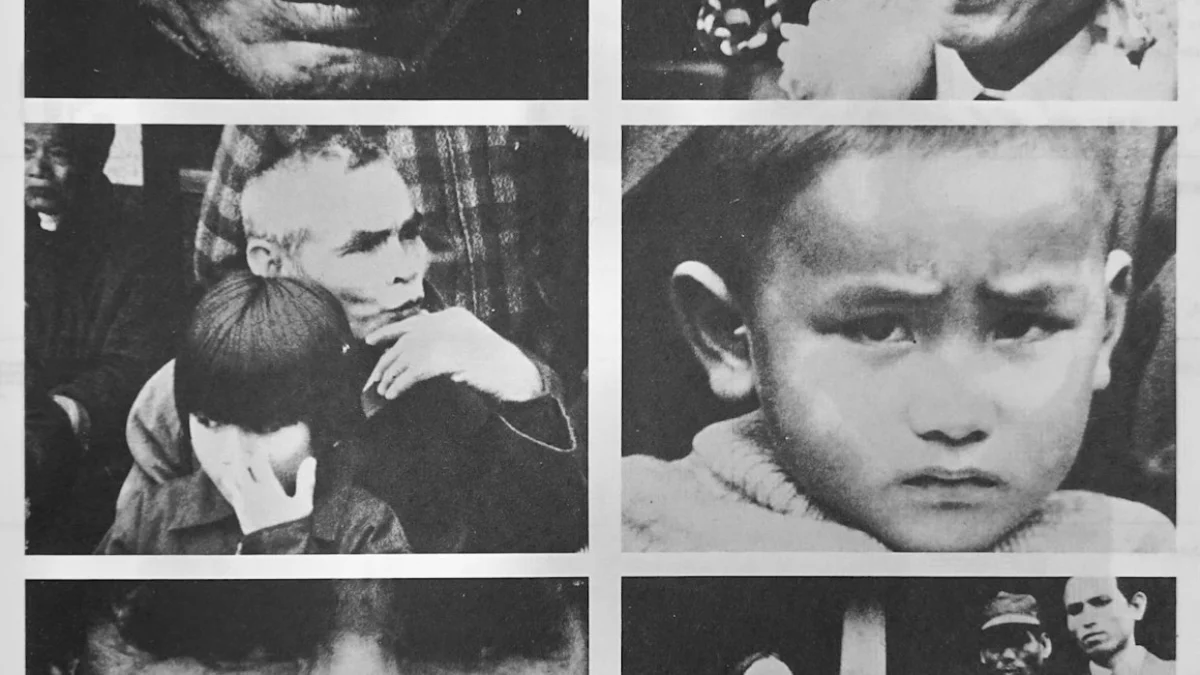
This theme became particularly poignant in Asia Is One (1973) by the leftist collective NDU. The film masterfully stitches together various testimonies from postwar Taiwanese fishermen in Okinawa, Zainichi Okinawan miners on mainland Japan, and rural villagers from Tayal communities. It intricately limns their complex and often contradictory relationships to Japanese colonialism – some are critical, others express loyalty or nostalgia. The expansive sea, ceaselessly traversed by these seasonal laborers, serves as a powerful metaphor for the inherent heterogeneity of East Asia, an immense region continually pulled between multiple forces of territorializing nationalisms.
In an era where Taiwan’s self-governance faces increasing precariousness, frequently framed through the competing imperial interests of the U.S. and China, the festival’s deep dive into the island’s multifaceted histories is defiantly prismatic. This archival focus on local history resonates strongly with global struggles, a connection nowhere more evident than in the program "Palestine and Its Archiveless Archive," which frames solidarity with Palestine as an integral part of a broader, ongoing continuum of anti-imperial struggle worldwide.
Confronting Urban Development and Environmental Transformation
A significant portion of the festival’s program centered on the increasingly common confrontations between individuals and predatory urban development. These films ask a fundamental question: what recourse does an individual have when pitted against the overwhelming force of a bulldozer? Hu Sanshou’s Xiangzidian Village: The Stage (2026), a monumental 150-minute work, provides a powerful answer. Over its runtime, viewers witness the gradual, inexorable transformation of earth and grass into crushed rock, dust, and ultimately, the flattened gray expanse of a highway. Paradoxically, this highway becomes a stage upon which generations of village life continue to unfold.
Unlike his previous film, Resurrection (2025), where he directly interviewed villagers, Hu adopts a more distanced and reflective approach in Xiangzidian Village: The Stage. Assuming the role of a storyteller through voiceover, he offers intimate vignettes of individual villagers against a backdrop of sustained wide shots. These shots meticulously bind each subject to their surrounding environment, where they appear dwarfed by vast hills, colossal mounds of rock, and bulldozers looming like new, formidable deities. Hu consistently refers to his subjects in terms of their familial relations – "that is the aunt, uncle, cousin, wife of so-and-so." Despite this formal distance, the film gleans its profound emotional force from Hu’s personal relationship with his subjects; the villagers who once watched him grow up are now the ones he quietly observes growing old. Each subject is presented as the center of an entire universe, held together by gingerly interlocking webs of community and kinship, all taking the stage for the film’s final, poignant act.
Filmed over six years, the film patiently mourns each elder who passed away during its production. In the film’s sole close-up, presented as a coda, the camera delicately pans across the villagers as they watch one of Hu’s previous films during his father’s funeral, their faces illuminating with bursts of recognition and wonder. In contrast to the abundance of independent Chinese documentaries often offering a pic-n-mix cinéma vérité of the marginalized for a ravenous European circuit, Hu’s film distinguishes itself with its distinctly patient and deeply empathetic approach.
Echoes of Resistance and Disillusionment in Hong Kong and Thailand
Many films at the festival were refreshingly unpretentious, mediating real-life horrors with a certain distance and avoiding any half-hearted claims that cinema could "change the world." In Compact Disc (2026) and Maps of Traces (2025), filmmakers portray their subjects in the aftermath of Hong Kong’s political revolt. These individuals are depicted as disillusioned, yet crucially, not apathetic. Similarly, in the urban-development documentaries, many older generations appear to plod on, still clinging to the hopes of securing the "good life." Within the specific textures of their physical and emotional worlds, these filmmakers uncover resilience and endurance where others might perceive only failure or passivity.
Anocha Suwichakornpong’s Narrative (2026) courageously circles the quagmire at the heart of contemporary political cinema. The film stages a theatrical workshop with family members of the Red Shirts pro-democracy activists who were tragically killed in Bangkok during the 2010 massacre. It structures the film according to three workshop exercises that imitate an abstract, three-act narrative. Act one involves participants describing a memory corresponding to a primal emotion without explicitly naming it. Act two features a discussion with a lawyer mediating a conversation about the future of their legal action. Act three asks participants to describe an experience for which they feel thankful.
This codified narrative structure subtly exposes the ways in which stories of trauma are frequently shaped: suffering followed by a perceived resolution, often designed to assuage any feelings of guilt on the part of the spectator. Most suggestively, during the final act, Eiko Ishibashi’s poignant score overrides the dialogue, rendering the participants’ words inaudible at the very moment the film asks them to articulate gratitude.
During act two, the participants converge to discuss their fifteen-year pursuit of justice for their family members. The 2010 inquest, the film highlights, treats each death as an isolated case rather than as part of a collective tragedy. Families are thus sent on an exhausting, Kafkaesque chase across different military units in search of individual soldiers, effectively fragmenting violence enacted on a mass scale to prevent any comprehensive reckoning with the military state as a whole. By juxtaposing the way Thai law disaggregates a collective case with how popular representations of political trauma often center individual testimonies, Narrative powerfully exposes the inherent impossibility of individual healing without collective restitution. Suwichakornpong, however, troubles the rigidity of her own imposed structure by interspersing each workshop scene with intimate glimpses into the participants’ everyday lives, taking them out of the sterile brightness of the studio and back into the private rituals of mourning. A mother retrieves a notebook in which she meticulously records her dreams, often filled with visits from her deceased son. These deeply affective sequences draw the viewer back to the raw root of the struggle. Yet, by continually returning to the workshops – which themselves form part of the research for Suwichakornpong’s forthcoming courtroom drama, Fiction – the filmmaker thoughtfully considers both the veracities and the potential falsehoods of testimony: how its tenderness has been invoked and shaped across therapeutic, legal, and filmic frameworks.
The Absurdity of Post-Pandemic Life: Wuhan’s Air Base
Perhaps the most memorable film of the festival similarly upended any conventional notion of resolution, transforming its own premise into an ouroboric, Beckettian walkaround. It is 2023 in Wuhan, the pandemic has officially ended, and the city slowly, warily, returns to a new form of public life. Canada-based Chinese filmmaker Luo Li’s Air Base (2025) has been described by some as a city symphony, yet it perhaps makes more sense to interpret the metropolis as a stage for a motley crew of performers engaged in seemingly absurd acts. A man pretends to be a traffic operator from an overpass, issuing commands to pedestrians below; a young woman diligently collects recordings of sighs from passersby; two men fish in a man-made pond, often failing to catch anything; another man meticulously divides fallen autumn leaves into symmetrical piles atop city bikes, or earnestly attempts to straighten out the crumpled curtains of public buses.
These staged sequences evoke the same peculiar intrigue as early-2000s prank shows, skillfully provoking unscripted public reactions: pedestrians mostly obey the traffic commands to stop; passersby treat the young woman with suspicion, often refusing to sigh as it is perceived as a "pessimistic" and "ungrateful" action. The man who appears to "fix" the city’s asymmetries ultimately accomplishes nothing tangible. Even a broom takes center stage in one recurring motif, constantly falling on an ascending escalator, with people gingerly stepping to one side, watching its Sisyphean descent but doing little about it. These motifs recur throughout the film, spiraling into a pervasive sense of "limp time": a suspended duration without end, stripped of conventional narrative propulsion. Such reactions capture the stark nature of interpersonal relationships in the present – a world where no one truly bears responsibility for another, and individuals often acquiesce to authority with shrugs of apathy. Reality, as depicted, is not merely tired; it is utterly exhausted.
Despite the proliferation of repeated empty gestures in Air Base, the film’s profound force lies in the accumulation of these public responses. Repeated conversations by the lake, while yielding no fish, nevertheless produce a strange, quiet form of camaraderie. Occasionally, some people sigh without prompting, a gesture revealing an exhausted mind that subtly refuses to admit defeat. These films, rather than collapsing with exhaustion, re-perform it across new permutations, finding peculiar, prickly forms that bend around the edges of the possible, still daring to imagine what comes after all that we have already seen before. The TIDF, through its curated selection, continues to affirm the enduring power of documentary cinema to not only reflect but also reshape our understanding of history, identity, and the resilient human spirit in an ever-changing Asia.