Narrative Overview and Structural Framework
The film follows the trajectory of Lucila, portrayed by Anna Díaz, whose life is defined by two major departures. The narrative begins in Mexico City, establishing a foundational trauma when her mother, Isabel (Adriana Paz), abruptly leaves for Madrid, entrusting the care of her younger son, Diego, to a teenage Lucila. This initial act of abandonment serves as the catalyst for the film’s exploration of "maternal regret" and the economic desperation that drives parents to seek opportunities abroad, often at the expense of their children’s emotional stability.
Years later, the timeline shifts to Madrid, where Lucila and Diego have finally reunited with Isabel. However, the anticipated relief of a family restored is quickly overshadowed by the "bitter, suffocating reality" of immigrant life. The family finds themselves in a cycle of low-wage labor and social isolation. The story further expands as Lucila moves to Barcelona, attempting to carve out an identity independent of her domestic responsibilities. She takes on roles as an au pair and a food delivery driver—industries heavily reliant on immigrant labor—while maintaining a deceptive relationship with an English musician (Charlie Rowe). The final act necessitates a return to Mexico City following a family tragedy, bringing the narrative full circle as Lucila seeks clarity from her grandparents regarding the generational cycles of flight and silence that have defined her lineage.
Production Background and Source Material
The adaptation of Brenda Navarro’s Ceniza en la boca represents a significant collaboration between Mexican and Spanish creative forces. Navarro, an award-winning author known for her visceral prose regarding motherhood and social inequality, published the novel in 2022 to critical acclaim. Diego Luna, alongside co-writers Abia Castillo and Diego Rabasa, sought to translate Navarro’s interior monologue-driven narrative into a visual medium.
Luna’s directorial career has often focused on intimate human stories set against broader social backdrops, including his previous works Abel (2010), Cesar Chavez (2014), and Mr. Pig (2016). With Ashes, Luna continues this trend, though critics have noted a shift toward a more "emotionally muted" tone compared to his earlier, more overtly political or sentimental projects. The production involved a 102-minute runtime and utilized locations across Mexico City, Madrid, and Barcelona, intentionally selecting suburban settings that emphasize the uniformity and "drudgery" of the immigrant experience.
Socio-Economic Context and Supporting Data
The film’s themes are anchored in the contemporary reality of the Mexican diaspora in Spain. According to data from Spain’s National Statistics Institute (INE), the number of Mexican-born residents in Spain has seen a steady increase over the last decade, with approximately 70,000 Mexican nationals currently residing in the country. Unlike the migration patterns toward the United States, which are often characterized by border crossing narratives, migration to Spain is frequently legal but fraught with "invisible" barriers, including the non-recognition of professional degrees and a reliance on the informal or service-based economy.
The "gig economy" depicted in the film, particularly Lucila’s work as a food delivery driver, mirrors a significant labor trend in Europe. Spain has been at the forefront of regulating this sector with the implementation of the "Ley Rider" (Rider’s Law) in 2021, which aimed to classify delivery workers as employees rather than independent contractors. However, for many undocumented or newly arrived immigrants, these platforms remain a primary source of income, often involving grueling hours for minimal pay. The film uses these elements to illustrate the "fragile new life" Lucila attempts to build—one where a single accident or a chance encounter with a boyfriend can jeopardize her survival.
Performance and Technical Analysis
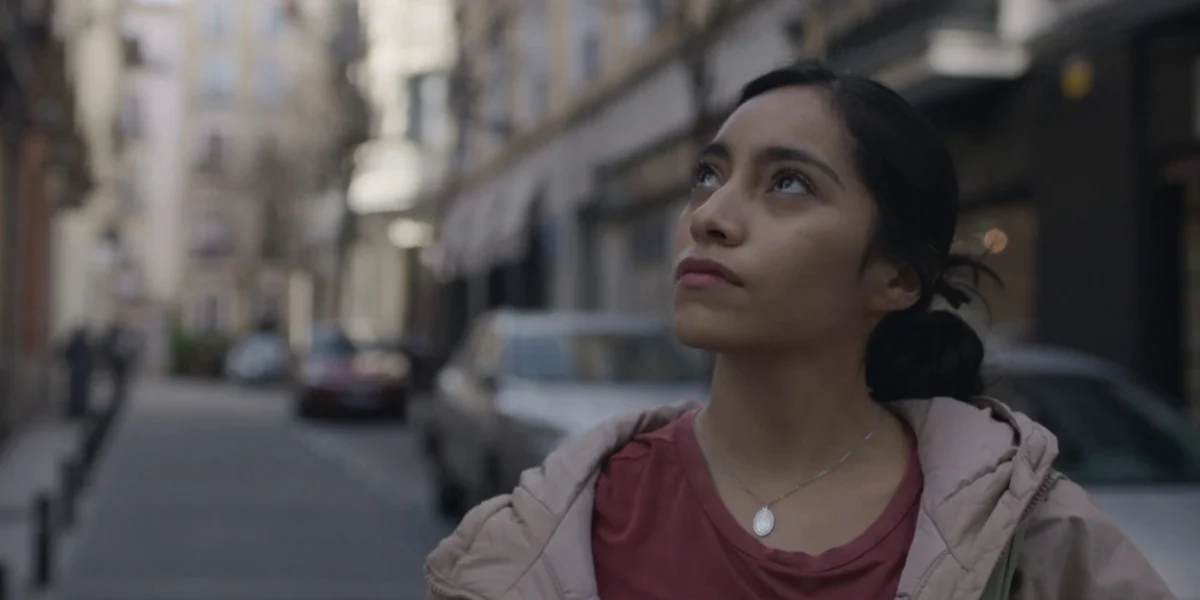
Central to the film’s reception is the performance of Anna Díaz. Following her acclaimed turn in Alonso Ruizpalacios’s La Cocina, Díaz has been recognized for her ability to convey complex internal states with minimal dialogue. Cinematographer Damián García, known for his work on Narcos: Mexico and Gueros, utilizes tight close-ups to capture Díaz’s "expressive, cinematic face," effectively centering the film’s emotional weight on her perspective.
The supporting cast features Adriana Paz, a three-time Ariel Award winner and recent recipient of the Best Actress award at Cannes for Emilia Pérez. Paz’s portrayal of Isabel is intentionally enigmatic, reflecting the distance between a mother and the children she left behind. Irene Escolar and Laura Gómez provide additional depth to the Spanish setting, with Gómez’s character, Jimena, offering a stark contrast to Lucila’s stoicism through her more hedonistic and outspoken approach to life in Barcelona.
However, critical analysis has pointed to certain "underwritten" elements in the screenplay. The characters of Diego (Sergio Bautista) and the English musician (Charlie Rowe) have been described as "thinly sketched," potentially diminishing the emotional impact of the film’s more tragic developments. Furthermore, the decision to maintain a visual uniformity across different geographic locations has been interpreted by some as a metaphor for the "drabness" of poverty, while others find it creates a "disconnected" viewing experience that lacks a sense of place.
Chronology of Development and Release
The journey of Ashes from page to screen followed a relatively rapid timeline:
- 2022: Brenda Navarro’s Ceniza en la boca is published, quickly becoming a bestseller in the Spanish-speaking world and winning the Cálamo Prize for "Best Book of the Year."
- Late 2022: Diego Luna and his production company, La Corriente del Golfo (co-founded with Gael García Bernal), option the film rights.
- 2023: Principal photography takes place across Mexico and Spain, navigating the logistical challenges of international filming.
- 2024: The film enters the international festival circuit, premiering at major venues to showcase the latest in Mexican cinema.
Official Responses and Creative Intent
In various press engagements, Diego Luna has expressed that his primary interest in the story lay in the "complexity of the return." He has noted that while many films focus on the journey of leaving, few adequately address the "shame and silence" involved in returning to one’s home country after a failed or difficult migration experience. Luna aimed to highlight the "generational trauma" that occurs when economic necessity forces a breakdown in the traditional family structure.
The production team also emphasized the importance of the "female gaze" in this adaptation. By focusing on Lucila’s experience as an au pair—a role that involves caring for others’ children while her own family remains fractured—the film critiques the global "care chain" where women from the Global South migrate to provide domestic labor in the Global North.
Broader Impact and Industry Implications
Ashes represents a broader trend in Mexican cinema toward "transnational" storytelling. As filmmakers like Luna, Iñárritu, and Cuarón have gained global stature, there is an increasing movement to tell stories that bridge the gap between Mexico and the rest of the world, moving beyond traditional border narratives. The film’s focus on the psychological and "muted" aspects of displacement aligns it with a new wave of Latin American cinema that prioritizes character studies over overt melodrama.
Furthermore, the film’s technical execution, supported by Raquel García-Tomás’s score, underscores the high level of craft currently present in Spanish-Mexican co-productions. While the script has faced criticism for its "unfocused" nature, the film serves as a significant showcase for Anna Díaz, solidifying her status as one of the most compelling young actors in contemporary cinema.
In conclusion, Ashes is a "well-intentioned immigrant drama" that succeeds as a character study while struggling with the breadth of its narrative ambitions. It provides a sobering look at the realities of 21st-century migration, suggesting that for many, the "better future" sought across the ocean is often just a different version of the struggle left behind. The film leaves the audience with a "frustrating sense of a richer story buried beneath the surface," yet it remains a poignant entry in Diego Luna’s filmography and a vital contribution to the ongoing dialogue regarding the human cost of global inequality.