Rediscovered Footage Unearths a More Visceral Dracula for October Rerelease
A significant piece of British cinematic history, long thought lost, is set to return to the big screen this October. Hammer Films’ iconic 1958 horror masterpiece, Dracula, starring the legendary Christopher Lee in his definitive portrayal of the Count and Peter Cushing as the formidable Doctor Van Helsing, will be rereleased in UK cinemas after a meticulous 4K restoration. This highly anticipated rerelease will feature newly reinstated footage, previously unseen by UK and US audiences for over sixty years, which was deemed too terrifying for contemporary viewers and had only been shown during the film’s original Japanese theatrical run in 1958.
The discovery of this lost material, unearthed from a Warner Bros. warehouse, marks a momentous occasion for horror aficionados and film historians alike. The restored footage promises to offer a more complete and unadulterated vision of director Terence Fisher’s groundbreaking work, delving deeper into the visceral horror that shocked audiences and censors of the era.
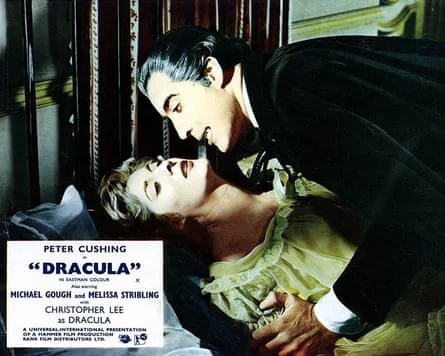
John Gore, the chief executive of Hammer Films, hailed the find as “the recovery of a piece of British film history that audiences believed had been lost for ever.” Speaking to Deadline, Gore elaborated on the reasons behind the original cuts. “Censors and distributors had cut the footage after audiences fainted during screenings when Lee’s vampire lunged at the neck of his victims, his fangs dripping with blood. It was the fangs that scared them,” he explained. “People were screaming, which was the point.” This revelation underscores the film’s intended impact and the era’s stricter censorship standards.
A Revolutionary Portrayal of the Vampire King
Christopher Lee’s performance as Count Dracula fundamentally redefined the on-screen vampire. Moving away from the more romanticized or supernatural interpretations, Lee injected a primal, predatory physicality into the character. His Dracula was a creature of dark charisma and terrifying power, characterized by bloodshot eyes, prominent fangs, and a palpable menace. This visceral approach, coupled with the film’s atmospheric gothic setting and bold use of colour, irrevocably altered the landscape of horror cinema. A particularly iconic scene, where Lee looms at the top of a dark staircase and declares, "I am Dracula," became a touchstone for future vampire portrayals.
Complementing Lee’s chilling performance was Peter Cushing’s equally definitive turn as Doctor Van Helsing. Cushing’s portrayal captured the intellectual rigor, unwavering courage, and relentless determination of the vampire hunter, establishing him as the archetypal adversary to Dracula. The on-screen chemistry and rivalry between Lee and Cushing, first ignited in Hammer’s 1957 film The Curse of Frankenstein, became one of cinema’s most celebrated pairings, a testament to their enduring legacy in the horror genre.
The Genesis of the Modern Vampire: A Timeline of Transformation
The 1958 Dracula, often referred to in its original script title as Horror of Dracula in the UK to avoid confusion with the earlier Universal film, arrived at a pivotal moment in cinematic history. The vampire genre had a rich but varied past. Bram Stoker’s original novel, published in 1897, had been adapted numerous times, with early cinematic interpretations often focusing on different aspects of the legend.
-
1922: Nosferatu – F.W. Murnau’s unauthorized adaptation, Nosferatu the Vampyre, presented a gaunt, rat-like creature played by Max Schreck. This Count Orlok was a far cry from the seductive aristocrat, emphasizing the monstrous and plague-like nature of the vampire. As John Gore noted, this iteration was “like a rabbit” with no overt fangs.
-
1931: Dracula – Tod Browning’s Universal Pictures version, starring Bela Lugosi, brought a more hypnotic and aristocratic Count to the screen. Lugosi’s suave, Eastern European accent and imposing presence became synonymous with Dracula for decades. However, as Gore pointed out, Lugosi’s Count lacked prominent fangs. The focus was more on psychological manipulation and supernatural allure than outright gore.
-
1957: The Curse of Frankenstein – Hammer Film Productions, under the leadership of producers Sir James Carreras and Anthony Hinds, had already begun to carve out a niche in gothic horror. Their vibrant, often shocking Technicolor adaptations of classic Universal monsters, starting with The Curse of Frankenstein, proved immensely popular. This film marked the first collaboration between Christopher Lee and Peter Cushing, setting the stage for their iconic rivalry.
-
1958: Dracula – Terence Fisher’s direction, combined with the innovative visual style of Hammer, allowed for a bolder, more explicit depiction of horror. Christopher Lee’s interpretation, with its emphasis on primal urges and visceral threat, was a stark contrast to Lugosi’s. The inclusion of visual elements like dripping fangs, as described by Gore, was a deliberate attempt to amplify the terror and shock value, pushing the boundaries of what was acceptable on screen.
The rediscovery of the lost footage for Dracula offers a chance to see this revolutionary film as Fisher and his team originally intended, before the constraints of censorship softened its impact.
The Discovery and Restoration: A Journey from Vault to Screen

The extensive archive of Warner Bros., located near Los Angeles International Airport (LAX), is a legendary repository of film history, housing countless treasures from the golden age of Hollywood and beyond. It is within this vast storage facility, a place described by Gore as containing “like 10 Batmobiles and god knows what,” that the original director’s cut of Dracula was found. The discovery was not a random event but a deliberate search by Hammer Films to reclaim and restore their cinematic heritage.
The restoration process, involving meticulous digital cleanup and color correction in 4K resolution, aims to preserve the film’s original visual integrity while enhancing its impact for modern audiences. The reintegrated scenes, which were deemed too gruesome at the time, are said to include moments of heightened sexual tension and more explicit depictions of violence.
“Other reintroduced footage,” Gore continued, “is a bit that’s so famous. It’s where Christopher Lee descends on the woman and is about to bite her. It’s so sexual and they had to trim that because it just looked like it was nothing to do with vampires. So they had to trim a bit of the sexual stuff and then how he’s destroyed at the end. They cut quite a lot out because they went: ‘It’s too gruesome’… All the crucial points that were axed are now back in.”
This suggests that the recovered material offers not just more gore, but also a more nuanced exploration of the vampire’s seductive and predatory nature, aspects that were likely considered too daring for the 1950s British and American markets. The decision to cut these scenes highlights the prevailing moral and censorship codes of the era, which often sought to sanitize or downplay overt sexuality and extreme violence in films.
The Impact of the "Hammer Fang" and its Legacy
The "Hammer fang," as it were, became a symbol of the studio’s bold approach to horror. John Gore attributed the widespread adoption of fangs in vampire imagery, a common sight during Halloween, directly to Hammer and Christopher Lee. “Think of every Halloween and you see all those fangs – that’s a Hammer and Christopher Lee invention,” Gore stated. He even recounted Lee’s own input into the design: “It all started when Christopher Lee said ‘I want more teeth with this,’ so they came up with something that had some bite.”
This innovation, while seemingly small, had a profound impact on the visual lexicon of the vampire. It transformed the creature from a purely supernatural entity into a more tangible, physical threat, a predator with sharp, deadly weapons. This visual cue became an indelible part of the vampire mythos, influencing countless subsequent adaptations and popular culture representations.
Gore’s comments also place Hammer’s innovations within the broader context of vampire cinema. He noted that the censors’ discomfort with the blood and visceral elements was a driving force behind their business model. “Hammer’s business was based on the censor,” he said. “Getting that X-rated certificate was crucial to marketing, but they could only go so far because the censors didn’t like what they saw, all that blood.” This created a delicate balance where Hammer could push boundaries just enough to generate controversy and attract audiences, without completely alienating the censors.
A Dual Celebration: World Dracula Day and Birthdays
The announcement of the Dracula rerelease and restoration coincided with a significant date for horror enthusiasts: World Dracula Day, celebrated annually on May 26th. This date is chosen to commemorate the publication of Bram Stoker’s seminal novel. Coincidentally, May 26th is also the birthday of Peter Cushing. Christopher Lee’s birthday, May 27th, falls just one day later, making the timing of the announcement a fitting tribute to two of the genre’s most iconic figures.
The rerelease is not limited to cinema screens. The film will also be made available on home entertainment platforms, allowing a wider audience to experience this newly restored version of a classic. This dual release strategy acknowledges the evolving ways audiences consume film, from theatrical events to home viewing.
Broader Implications: Preserving and Reinterpreting Cinematic Heritage
The rerelease of Hammer Films’ Dracula with its lost footage has several broader implications for the film industry and its audiences. Firstly, it underscores the importance of film preservation. The recovery of lost or cut material from studio archives is crucial for understanding the evolution of filmmaking and for presenting films as their creators originally intended. This project highlights the value of investing in digital restoration technologies to bring these historical artifacts back to life.
Secondly, it reignites interest in Hammer Films’ significant contribution to the horror genre. For decades, Hammer was a powerhouse of gothic horror, producing films that were both commercially successful and artistically significant. This rerelease serves as a reminder of their innovative spirit and their ability to capture the zeitgeist of their time, often by challenging societal norms and cinematic conventions.
Finally, the event offers a unique opportunity for audiences to engage with a pivotal work of horror cinema in a new light. The reintegration of previously censored scenes promises a more intense and perhaps even more controversial viewing experience. It allows for a re-evaluation of the film’s impact and its place in the history of horror, inviting fresh critical analysis and debate. As John Gore stated, the goal is to honor Hammer’s legacy, and by bringing back these "crucial points that were axed," they are undoubtedly offering a more complete and potent vision of their enduring masterpiece. The October rerelease is more than just a revival; it’s a cinematic excavation, unearthing a more potent and perhaps more terrifying Dracula for a new generation to experience.