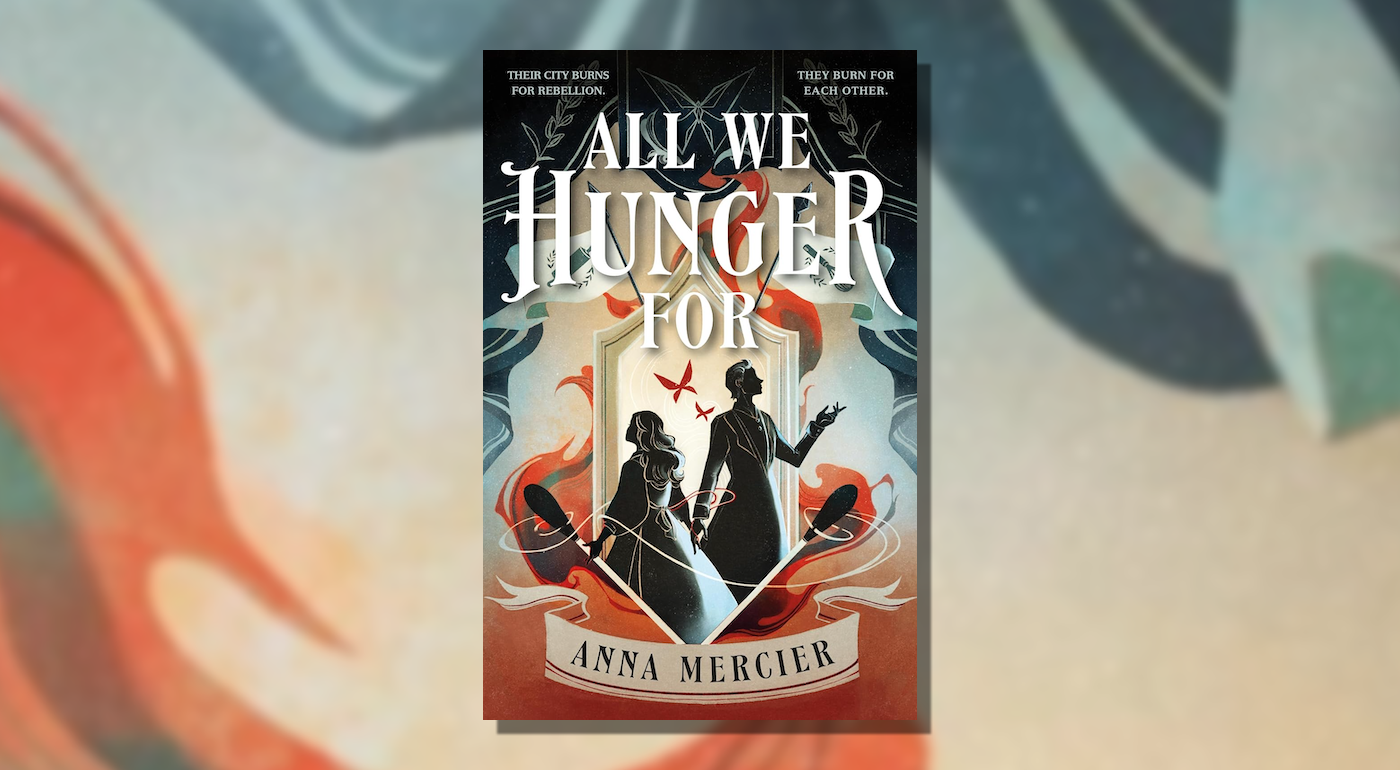
Henry Holt and Co. is set to release Anna Mercier’s latest young adult fantasy novel, All We Hunger For, on June 23rd. The highly anticipated book plunges readers into the vibrant, magic-infused city of Anespérer, where artistic talent is the conduit for magical power. The narrative centers on Elara Rousseau, a young woman from the impoverished slums, whose aspirations clash with the rigid social structures of her society.
A World of Art, Magic, and Stratification
Anespérer operates on a unique system where magical abilities are intrinsically linked to artistic skill. This creates a deeply stratified society, with those possessing exceptional artistic talent often rising to positions of power and influence. At the heart of this power structure lies the Objet d’Art, a prestigious and high-stakes baking competition. The winner of this competition is granted the coveted position of Souverain, a seat on the ruling council. However, for individuals from the underprivileged sectors of Anespérer, known as the Restes, the Objet d’Art remains an unattainable dream. The established elite, including the Souverains, largely disregard or actively suppress the aspirations of those from the slums.
The novel introduces Elara, who, despite her innate talent, believes she will never be chosen to compete in the Objet d’Art due to her origins. Her world is turned upside down when a figure from her past, Nikolas Dupont, orchestrates her clandestine entry into the competition. This unexpected opportunity presents Elara with the chance to vie for a better future, but it comes with a perilous secret that could unravel her entire existence if exposed.
Nikolas Dupont, the son of a Souverain, is driven by a desperate need to gain his father’s recognition. His father, a powerful figure on the ruling council, has yet to officially acknowledge Nikolas. In an effort to secure his father’s favor, Nikolas devises a plan to manipulate the Objet d’Art by selecting a contestant to win and serve as his father’s political pawn. However, Elara proves to be far more than he anticipated. Her talent and spirit ignite a spark within him, challenging his carefully constructed motivations.
As the competition progresses, Elara’s exceptional skills begin to shine, making her a beacon of hope for the downtrodden citizens of the Restes. Simultaneously, Nikolas’s unwavering faith in his father’s integrity erodes, and the connection between him and Elara deepens. The narrative builds towards a critical juncture where Elara and Nikolas must make a profound choice: pursue victory in the competition for personal safety and advancement, or leverage Elara’s magical artistry to ignite a revolution against the entrenched inequalities of Anespérer.
An Excerpt: The Weight of Deception
The following excerpt from All We Hunger For offers a glimpse into the tension and high stakes Elara faces as she navigates the opulent world of the Souverains:
Elara had never seen the Souverains before. Not in person. They never visited the Restes before the uprising, and they sure as hell steered clear after. Only their likenesses had been captured on propaganda plastered to brick walls. The real subjects were haunting.
While each Souverain was different in skin color and size, they were all . . . perfect. Not a blemish or scar, not a blush or a dark shadow beneath their eyes. It was if some delicate hand had sculpted each of them from the purest stone and polished their features to ethereal smoothness. Some, like Souverain Gabriel of Arts Manufacturiers, looked ageless despite their white hair, but the eyes gave them away. Each of them looked down at her with indifference, gargoyles upon a parapet. Of time and beyond it. One of the people and nothing like them.
A final seat at the end remained open: a somber prize. Elara approached.
“Please state your name clearly for the Counseil,” Souverain Lafontaine called.
Elara’s mouth dried. She couldn’t fail. In order to help her mother’s recipes live on, she needed to let her name go.
“I . . . I am Elouise Auclair.”
She didn’t know her heart could beat so loud until Souverain Lafontaine muttered a terse thank-you. He turned over a crisp paper filled with very few words: Auclair’s acceptance into Arts Culinaires. “You are quite the mystery. We’ve checked with the board of Arts Culinaires’ Directeurs, and none recognize your name.”
“I doubt they remember everyone they’ve ever admitted.” The line she’d practiced with Fernand came easy. “Did you not find my name in the records?”
“Indeed we did.” Lafontaine’s fingers stroked the paper in thought. “How did your name come to be in the pool of Favored? A Restes Aspirant in the Objet d’Art? Quite uncommon.”
“That abysmal place across the river?” The comment came from someone in a brilliant yellow dress flapping an annoyingly loud fan. “The poor thing!” Some snickered. Worse, others pitied her.
“Chef?” Lafontaine prompted.
She released her fists. “I was just as stunned when the coat arrived. Perhaps my Professionnelle recommended me to the board of Directeurs?”
“So you have formal training?” Souverain Tremblay of Arts Visuels asked.
“Enough to have earned my Aspirant colors.” She indicated her brown skirts. “Unfortunately, Professionnelle Prevel passed recently, and I was let go from my newest position.”
“Whatever for?”
“My innovation, Souverain.”
Fernand was ready near the doorway to the foyer. Showtime.
Elara ascended the dais and laid her porcelain dish upon the table. Any other party would lean forward to inspect the sweet dessert. The Counseil were as statues, barely letting their eyes swoop down as she scooped the still-bubbling cherry and custard mixture onto individual plates. Elara made sure each Souverain had enough crunchy topping because texture was just as important as taste.
“What is this?” Souverain Gabriel asked.

“Clafoutis,” Elara replied. “Cherries marinated in—”
“You’re dishing it out like we’re hogs to a trough,” Souverain Cormier sneered.
She managed to smile through clenched teeth. “I intended to feed you like I would anyone else at my table. My apologies if such compassion isn’t custom here in Galerie.”
Gasps whispered around her, followed by the person in yellow muttering, “Oh, I like her.” They were probably alone in that.
Elara placed each helping before the Souverains. “I present cherry clafoutis made with umber rum and almond crumble. Enjoy.”
She’d been wrong to think they’d tuck in. Instead, they ate as if forced, dipping the prongs of their forks into the liquid before begrudgingly going back for a granule of crumble. That didn’t stop her from holding her breath. Restes or not, food was food. They’d either love it or hate it, and the truth would be in their reactions. Even the most powerful people couldn’t deny their tongues. The Souverains’ eyes dilated, their nostrils flared, and their expressions took on that of children consuming their first taste of sugar—wonderment. The simple truth of knowing they’d enjoyed it would have been enough, but they surprised her by taking more. It wasn’t the ravenous hunger of the Restes, but the slow, savoring enjoyment the rich could afford.
“A unique marriage of flavors,” Cormier said.
“And the textures are interesting to explore,” Faucher added. All said as if they were performing for a packed audience rather than offering feedback.
Lafontaine, the only Souverain who let his wrinkles show, patted his mouth with a napkin. “And the magie?”
Elara couldn’t contain her smile when the audience burst into giggles. “You tell me, Souverain,” she replied. He turned his head down the line and recoiled. Six different Elaras stared back at her, each stretched or narrowed to fit the original owner’s body. Their faces, though, were entirely her, from the smattering of freckles on her nose and cheeks to the little scar at her eyebrow from when she’d sloshed a drop of hot oil on herself. Perfectly imperfect, just the way she liked it. One of the Elaras glared into the crowd. The moment they locked eyes with someone else, Elara’s dark hair extended into beautiful scarlet locks, her full cheeks caved inward, and her eyes sparkled brilliant hazel.
“My goodness!”
The chaos began. The Souverains broke into cackles, taking turns to gaze at one another, changing their forms. They found ways to entertain themselves, winking, flirting, and picking at hard-to-reach body parts. As planned, the audience moved in, eager to be the next face the Counseil impersonated. Curious servants collected from other rooms, and the police gravitated closer to protect the Counseil. Fernand saluted from the darkened foyer and darted upstairs, out of sight. Done. All he had to do was get out without being caught.
When Elara turned back to the revelry, she felt . . . different. With her part of the deal finished, she could enjoy this moment. For all their pomp and authority, the Counseil were laughing like children. Deep belly laughter and rolling giggles as they played and delighted in the magie, eating more bites to keep their games going. This was what Elara wanted to do for the rest of her life. She wanted to bring the joy of food to everyone. Tonight, she could start that journey again with a clean slate—her job for Fernand now complete. Hell, someone here could invest in her. Offer her an apprenticeship on her way out. It was more than she’d ever allowed herself to hope for before.
“Amusing,” Lafontaine said. Elara choked back a gasp. He wasn’t himself. He was a boy with dark hair slicked back, perfectly controlled save for the little curls at the base of his neck. His nose was wider and cheekbones fuller, with eyes like shards of glass. Striking. Elara could think of no other word to describe him. She turned back to find the original boy in the crowd, and warmth flooded her body. All that intensity in those blue eyes was narrowed on her. Not the powerful Souverains. Not the chattering aristocracy. Her. His brow ticked, eyes darting over her shoulder. She spun back to Lafontaine, who was himself again.
“Unfortunately,” Elara said, “the effect doesn’t last long.”
“While your trick is amusing, we cannot ignore the potential of this magie,” Lafontaine murmured to his colleagues, who hummed in response, all the joy replaced by business. Elara waited for someone else to speak. Anyone else. Time to make a graceful exit. She did her best to look dismayed as she collected the plates. “Thank you for the opportunity—”
Lafontaine stabbed his fork onto the porcelain, pinning it to the table. His face was close enough to see the age he refused to hide, the little scar at his hairline, a blemish on his cheek. “That was not a dismissal.”
The Sociopolitical Landscape of Anespérer
The societal structure of Anespérer, as depicted in All We Hunger For, mirrors historical and contemporary examples of class division and the control of resources by an elite few. The concept of magic being tied to artistic skill creates a unique form of inherited privilege and opportunity, where artistic talent becomes a commodity to be exploited or hoarded. This system inherently disadvantages those born without the innate ability or access to the education required to cultivate it, thus perpetuating a cycle of poverty and disenfranchisement within the Restes.
The Objet d’Art competition serves as a microcosm of this societal dynamic. It is a mechanism designed to identify and reward talent, but its exclusivity and the power it bestows upon the winners—the Souverains—ensure that the existing power structure remains largely unchallenged. The fact that Souverains do not visit the Restes, and actively avoid them after any unrest, highlights the deep chasm of separation and the ruling class’s indifference to the plight of the lower strata. Their idealized, almost sculpted appearances further emphasize this detachment from the common populace.
The introduction of Elara, a character from the slums, into this elite competition signifies a potential disruption to the established order. Her success, even if initially facilitated by deception, poses a threat to the carefully maintained hierarchy. The narrative implies that the Souverains, while seemingly perfect, are not immune to genuine artistic expression and its impact. Elara’s clafoutis, described as a "unique marriage of flavors" and with "interesting textures," demonstrates that her culinary artistry transcends mere sustenance; it evokes genuine pleasure and wonder, even among those who appear jaded.
Analysis of Elara’s Magical Aptitude
Elara’s skill in the kitchen is not merely about taste and presentation; it is intertwined with her magical abilities. Her "innovation" in the clafoutis, particularly the use of umber rum and almond crumble, suggests a sophisticated understanding of flavor profiles and their potential to evoke specific reactions. The excerpt explicitly links her "magie" to her artistic expression, culminating in the astonishing feat of altering her appearance and those of the Souverains. This transformative magic, capable of mimicking features and imbuing them with emotional resonance, is a powerful tool.
The immediate and visceral reaction of the Souverains to this display of magic underscores its significance. Their transition from detached indifference to gleeful amusement and then back to calculating business interest reveals the dual nature of their power: they are capable of enjoying art and magic, but they are also acutely aware of its potential for control and influence. Lafontaine’s statement, "While your trick is amusing, we cannot ignore the potential of this magie," signals a critical turning point. It suggests that Elara’s talent, once a means of survival and a hidden aspiration, has now caught the attention of the very powers that have historically suppressed her kind.
The Implication of Revolution
The underlying theme of revolution is palpable throughout the excerpt. Elara’s actions, born from a desire to honor her mother’s legacy and secure a better future, inadvertently position her as a leader for the oppressed. Her ability to evoke genuine emotion and joy in the Souverains, even momentarily, highlights the potential for art and culinary skill to bridge divides and challenge established norms. The narrative poses a direct question: will Elara and Nikolas choose to exploit this power for personal gain within the existing system, or will they harness it to dismantle the oppressive structures of Anespérer?
The broader impact of Elara’s participation in the Objet d’Art, and the potential for her magic to inspire widespread change, resonates with historical movements advocating for social justice and equality. The novel explores how art, in its various forms, can be a potent catalyst for both personal transformation and societal upheaval. As All We Hunger For unfolds, readers will likely witness the consequences of Elara’s daring act and the choices she makes in the face of immense pressure and opportunity.
The publication of All We Hunger For by Anna Mercier is poised to offer a compelling narrative that delves into themes of class struggle, the power of art and magic, and the courage required to challenge an unjust world. The detailed world-building and the introduction of complex characters like Elara and Nikolas promise a rich and engaging reading experience for young adult fantasy enthusiasts.