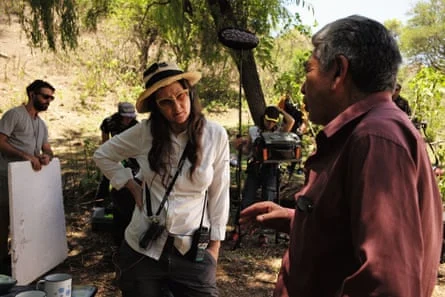
Argentinian filmmaker Lucrecia Martel’s latest work, "Landmarks," is a profound and unflinching documentary that excavates the systemic erasure of Indigenous peoples in Argentina, using the tragic 2009 murder of Diaguita leader Javier Chocobar as a potent focal point. The film, which garnered top honors at last year’s BFI London Film Festival, is Martel’s first foray into documentary filmmaking after a celebrated career in fiction, including acclaimed works like "Zama" (2017) and "The Headless Woman" (2008). "Landmarks" is not merely a recounting of a single event but a deep dive into a historical conflict and the enduring struggle for recognition and justice faced by Indigenous communities across the nation.
The documentary opens with a stark juxtaposition that immediately sets the tone. In a scene filmed within a Catholic church, a tour guide points to a ceiling fresco, explaining to children how "Indigenous attempted to break into the city." The guide interprets the painted angels as divine protectors, actively repelling Indigenous peoples with celestial beams. The subsequent scene shifts to members of an Indigenous community, including a child baptized in that very church, watching footage of this tour on a mobile phone. Their reaction is one of poignant disbelief and sorrow, with one individual remarking, "Listening to him [the guide], you realise how convinced he is that even God wants to erase us for good." This powerful juxtaposition encapsulates the film’s central thesis: the pervasive narrative of Indigenous invisibility and subjugation ingrained within Argentinian society, often perpetuated through historical interpretations and institutional indifference.
The Chocobar Case: A Catalyst for Confrontation
At the heart of "Landmarks" lies the assassination of Javier Chocobar, a respected activist and leader of the Diaguita people from the Chuschagasta community in Tucumán province. Chocobar, 68 at the time of his death, was fatally shot on his ancestral lands on October 12, 2009, amidst a protracted land dispute. The perpetrator was Darío Luis Amín, a mining businessman who claimed ownership of the contested territory. Amín arrived at the community accompanied by two former police officers, Luis Humberto Gómez and Eduardo José del Milagro Valdivieso Sassi.
The harrowing incident was captured on video by Amín himself. The footage, which Martel incorporates into her documentary, begins with an argument escalating between Amín and his companions and members of the Indigenous community. It then captures the moment Gómez opens fire, striking one of the Indigenous individuals. In the aftermath, as Amín’s camera shifts focus, eight more gunshots can be heard. Crucially, the accused men were armed, while the Indigenous community members were not. Chocobar succumbed to his injuries, while others were wounded but survived. This act of violence, recorded by one of the aggressors, became a stark and undeniable piece of evidence in the ensuing legal battle.
A Decade of Advocacy and the Birth of a Documentary
Lucrecia Martel’s engagement with the Chocobar case began serendipitously during her research for "Zama," a period film exploring an 18th-century Spanish colony. While browsing YouTube, she stumbled upon the video of Chocobar’s killing. This discovery ignited her interest, leading her to investigate the long-standing land dispute involving the Chuschagasta community and non-Indigenous families asserting ownership. The idea for "Landmarks" emerged organically from this investigation, as Martel initially sought to assist the community by building an archive of their history and legal struggles before conceptualizing it as a film.
The legal process for the Chocobar case was protracted and arduous. The trial did not commence for nearly nine years after the incident. Martel and her team were present for the entirety of the 14 days of hearings, which she described as "one of the most extraordinary spectacles I’ve ever witnessed." Her observations during the trial highlighted the deeply entrenched "racism against Indigenous peoples" in Argentina. This racism, she noted, manifested through paternalism, the infantilization of Indigenous communities, and the pervasive notion that their communal assets were subject to state administration rather than their own collective decision-making.

Systemic Neglect and the Erasure of Identity
"Landmarks" powerfully illustrates how the trial questioned not only the centuries-long presence of the Chuschagasta community but also the very existence of Indigenous Argentinians. This experience, Martel asserts, is not unique to the Diaguita people. She points to a critical deficit in the national education system, stating, "At school, we receive no information on Indigenous communities or their rights." This lack of formal acknowledgment and education contributes to a broader societal amnesia regarding the nation’s Indigenous heritage.
Martel, who hails from Salta, a province neighboring Tucumán in northern Argentina, links this pervasive racism to Argentina’s national self-perception. She argues that the country cultivates an image of itself as a "white" nation, heavily influenced by European immigration, while actively downplaying or ignoring its diverse ethnic makeup. According to the 2022 census, Indigenous peoples constitute approximately 3% of Argentina’s population. Martel criticizes this national delusion, stating, "We are always behaving as if we don’t belong to Latin America… Argentina needs to put an end to this fantasy of being a nonexistent European country." This self-imposed identity crisis, she suggests, fuels the continued marginalization and denial of Indigenous rights and historical narratives.
Challenging the Discourse on Cultural Representation
Lucrecia Martel, who identifies as white, addresses potential concerns regarding cultural appropriation by firmly asserting her right, and indeed the right of all storytellers, to engage with issues beyond their immediate lived experiences. She acknowledges the historical dominance of white, middle-class men in cinema and celebrates the increasing diversity within the industry, which enriches the medium. However, she also critiques the "discourse around cultural appropriation" that, in her view, has created a climate of fear among aspiring filmmakers.
"You see men terrified of making films about women, women uncertain about what subjects they are allowed to address, everyone trying to work out what it’s legitimate for them to speak about," Martel observes. While she concedes the importance of being mindful of appropriation, she maintains that this concern should not stifle dialogue about pressing contemporary issues. "I understand that concern," she states, "and we should have it, but we cannot stop talking about the issues of our time simply because the protagonists have not lived the same lives we have." Her perspective underscores a belief in the power of cinema to bridge divides and foster understanding across different cultural backgrounds.
Justice and the Ongoing Struggle for Recognition
The legal battle following Javier Chocobar’s death was lengthy. The three accused men were initially convicted, but they appealed their sentences and remained free pending the outcome. In 2021, Darío Luis Amín died of COVID-19. Late last year, Argentina’s Supreme Court reordered the imprisonment of the two former police officers, Gómez and Sassi, marking a significant, albeit delayed, step towards accountability.
Despite these legal developments, the Chuschagasta community continues its fight for official state recognition of their ancestral lands. "Landmarks," while centering on Chocobar’s assassination, transcends the specifics of one community’s plight. Martel emphasizes that the film is a broader commentary on "a historical conflict and the usurpation of Indigenous lands in Argentina." It serves as a powerful testament to the enduring resilience of Indigenous peoples and a stark indictment of a nation’s historical complicity in their marginalization.
A Call for Societal Health
As the promotional tour for "Landmarks" draws to a close, Martel plans to transfer the film’s rights to the Chuschagasta community, who were the first to view the completed documentary. This act of solidarity underscores the film’s intention to empower and amplify Indigenous voices. Martel’s motivation for creating "Landmarks" is deeply rooted in a desire to contribute to a more accurate and inclusive national history. "I made this film because I wanted to contribute to the history of our country, and to the health of Argentine society," she declares. She argues that Argentina has long grappled with this issue, characterized by "indifference, denial and constant doubt regarding the existence or legitimacy of Indigenous claims." "Landmarks" stands as a crucial intervention, urging a reckoning with this painful past and fostering a path toward a more just and equitable future for all Argentinians.