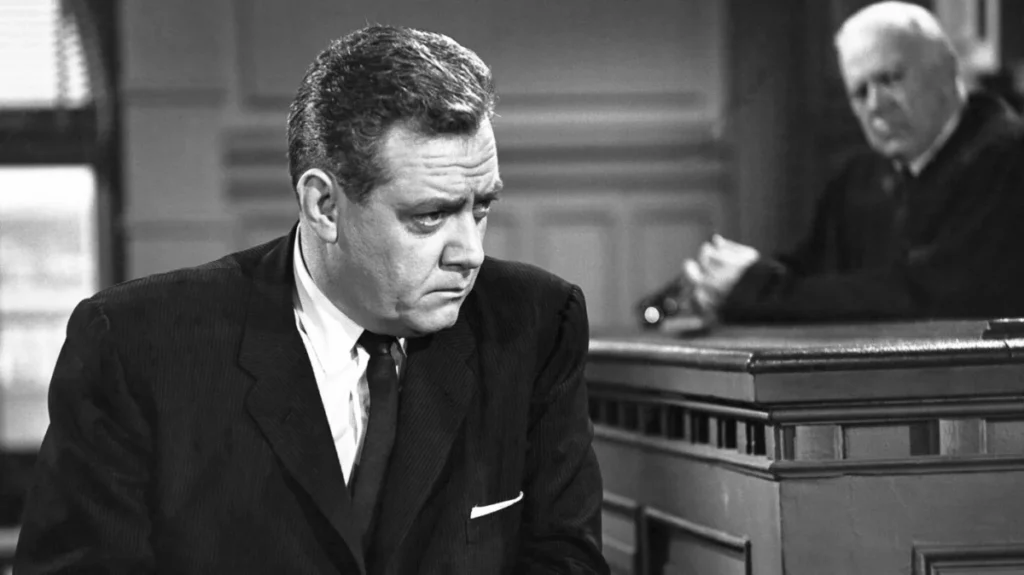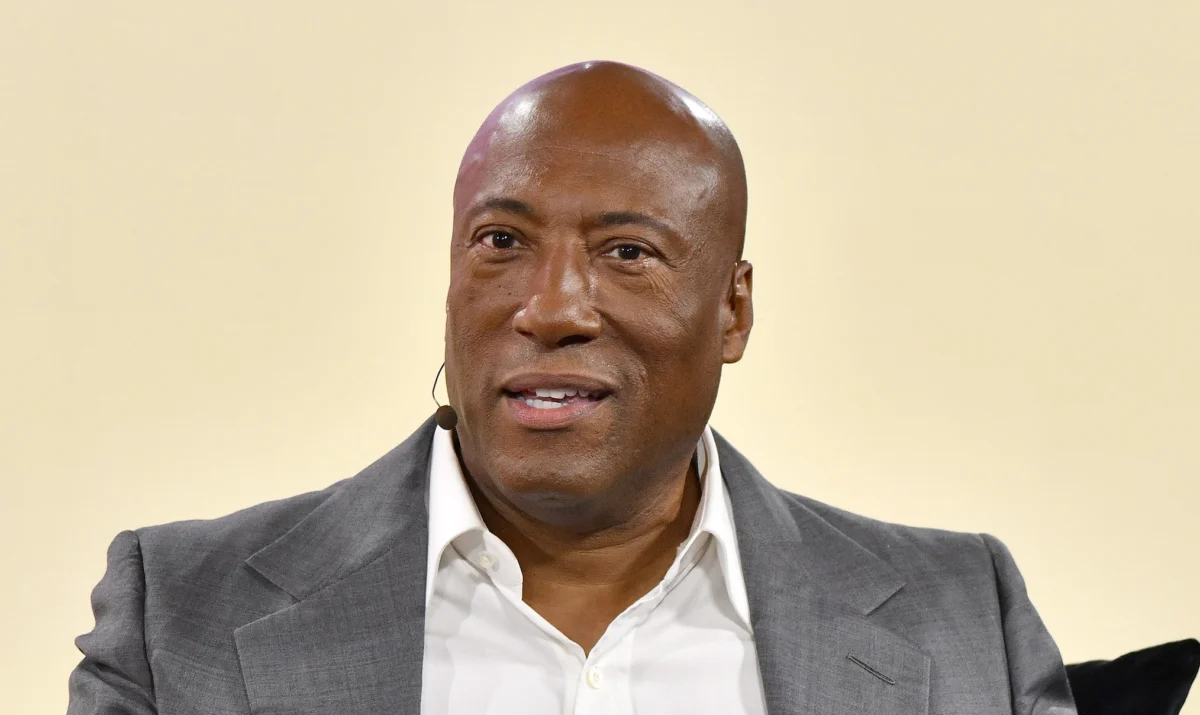
The transition of CBS’s late-night lineup reached a pivotal milestone last week as Byron Allen’s Comics Unleashed officially took over the 11:35 p.m. ET time slot, marking the end of the decade-long tenure of The Late Show with Stephen Colbert. While the initial ratings for the debut broadcast on May 22, 2026, showed a significant decline in viewership compared to its predecessor, CBS executives have signaled that the move is a strategic success based on a radical new financial model. According to internal network projections and public statements, the shift from a network-produced talk show to a syndicated "time buy" arrangement is expected to generate a $15 million annual profit for the network, effectively reversing a $40 million yearly deficit previously attributed to The Late Show.
The debut of Comics Unleashed averaged approximately 1.1 million viewers across its first two episodes. The first half-hour featured a brand-new episode of the comedy panel show, while the second half-hour consisted of a repeat from September. This viewership figure represents a sharp drop from the 2.7 million average viewers Stephen Colbert maintained during his final season, and it stands in stark contrast to Colbert’s series finale, which drew a record-breaking 6.7 million viewers. However, CBS remains steadfast in its defense of the programming change, emphasizing that the traditional metrics of "prestige" and high-volume viewership are being superseded by the necessity of fiscal sustainability in a fractured media landscape.
The Financial Mechanics of the "Time Buy" Model
The decision to replace a high-profile, critically acclaimed program like The Late Show with a lower-cost comedy panel show is rooted in a fundamental change in how CBS manages its late-night "daypart." Under the previous model, CBS was responsible for the massive production costs associated with The Late Show, including Stephen Colbert’s multi-million dollar salary, a full house band, a large writing staff, and the maintenance of the historic Ed Sullivan Theater in New York City. As linear television audiences have declined due to cord-cutting and the rise of digital streaming, the advertising revenue generated by the show reportedly failed to cover these overhead costs, leading to a $40 million annual loss.
To address this, CBS entered into a "time buy" agreement with Byron Allen’s Allen Media Group (AMG). In this arrangement, AMG pays CBS for the 11:35 p.m. time slot, effectively acting as a tenant on the airwaves. AMG assumes all production expenses and risks associated with Comics Unleashed. In return, AMG retains the right to sell the majority of the commercial inventory within the hour, allowing the company to recoup its costs through its own advertising sales network.
"We’re proud to partner with Byron Allen on a new business and programming model for late night that proactively addresses a network daypart that was cost-prohibitive to continue," a CBS spokesperson stated via Variety. "With this ‘time buy’ model, we have shifted an hour that was losing roughly $40 million annually to $15 million in profit—a $55 million swing."
This $55 million swing is a critical metric for CBS’s parent company, Paramount Global, which has faced intense pressure from shareholders to streamline operations and improve margins. By offloading the production risk to Allen Media Group, CBS has guaranteed a revenue stream from a time slot that had become a financial liability.
A Timeline of the Transition
The path to this transition began in July 2025, when CBS shocked the industry by announcing that The Late Show with Stephen Colbert would conclude at the end of the 2025-2026 broadcast season. At the time, the network cited "financial reasons," though the announcement was met with skepticism by media analysts who noted that Colbert remained the most-watched late-night host in total viewers.
Throughout the fall of 2025 and the spring of 2026, Colbert used his platform to deliver a long-running farewell, culminating in the May 15 finale. The gap between Colbert’s departure and the premiere of Comics Unleashed was filled with retrospective specials and transition programming.
The debut of Comics Unleashed on May 22 marked the first time in decades that a major broadcast network did not have a traditional, personality-driven talk show in the 11:35 p.m. slot. Byron Allen, a former stand-up comedian who built a media empire through the acquisition of local television stations and cable networks (including The Weather Channel), has long championed the efficiency of his production model. Comics Unleashed, which features a rotating panel of comedians discussing topical issues and sharing anecdotes, is produced at a fraction of the cost of a traditional late-night talk show, allowing it to be profitable even with a smaller audience.
Political Allegations and the Skydance Merger
Despite the financial justifications provided by CBS, the cancellation of The Late Show has remained a subject of intense political debate. Critics and industry insiders have suggested that the move was influenced by external political pressure rather than purely economic factors. Specifically, allegations have surfaced suggesting that the Trump administration and its allies pressured Paramount Global to remove Colbert, a vocal and frequent critic of the president, as a condition for favorable regulatory treatment.
This speculation is tied to the merger between Paramount Global and Skydance Media, a deal that required federal oversight and approval. Longtime media reporter Bill Carter, appearing on MS NOW’s The Weekend, suggested that the administration was "personally involved" in the decision to end Colbert’s run.
"The government was pushing to get rid of this man because he was a critic," Carter stated. "And, you know, that is so alien to our values that I think most Americans—even people who are kind of neutral about it, maybe not his strong supporters—know this is not something we do. We don’t shut people up because they criticize us."
While CBS and Paramount have denied any political motivation, the timing of the cancellation during the high-stakes merger negotiations has fueled a narrative of "corporate appeasement." Analysts note that Colbert’s monologues frequently targeted the administration’s policies and personal conduct, making him a lightning rod for political controversy. By replacing him with the relatively apolitical, evergreen comedy of Comics Unleashed, the network may have sought to lower its political profile during a sensitive regulatory window.
Impact on the Late-Night Landscape
The shift at CBS represents a watershed moment for the late-night television genre. For decades, the 11:35 p.m. hour was the crown jewel of broadcast networks, serving as a platform for cultural commentary and a primary vehicle for Hollywood promotion. The rivalry between hosts like Johnny Carson, Jay Leno, David Letterman, and later Colbert and Jimmy Fallon, defined the medium.
However, the 1.1 million viewer debut for Comics Unleashed suggests that the era of the "must-see" late-night host may be waning. Audiences are increasingly consuming late-night content via short clips on YouTube, TikTok, and Instagram rather than watching full hour-long broadcasts. This shift in consumption habits has devalued the linear time slot, making the high production costs of traditional shows difficult to justify for networks.
Byron Allen’s entry into this space with a syndicated-style model could provide a blueprint for other networks. If CBS successfully maintains its $15 million profit margin despite lower ratings, NBC and ABC may face pressure to reconsider their own investments in The Tonight Show Starring Jimmy Fallon and Jimmy Kimmel Live!.
Analysis of Implications
The "Byron Allen Model" at CBS highlights a broader trend in the entertainment industry: the prioritization of "cash-flow positive" content over "prestige" programming. While Stephen Colbert provided CBS with a significant cultural footprint and critical acclaim, the network’s current leadership appears to have determined that those intangible benefits do not outweigh a $40 million annual loss.
For Byron Allen, the deal is a major victory in his ongoing quest to become a dominant player in the broadcast space. By securing a nightly hour on a major network, Allen Media Group has gained a massive platform to cross-promote its other properties and expand its advertising reach. Allen has historically utilized a high-volume, low-cost production strategy, and Comics Unleashed is the quintessential example of this approach.
For the audience, the change represents a loss of topical, personality-driven satire in exchange for more generalized entertainment. The disappearance of Colbert’s nightly monologues leaves a void in the cultural conversation, particularly during an election cycle.
As the 2026-2027 television season progresses, industry analysts will be closely watching the "reach vs. revenue" balance of Comics Unleashed. If the show can maintain a steady audience of over 1 million viewers while keeping production costs low, it will likely be viewed as a masterstroke of corporate restructuring. However, if viewership continues to erode, CBS may find that even a "time buy" model cannot save a time slot that is losing its relevance in the digital age.
For now, Comics Unleashed With Byron Allen continues its run on weeknights at 11:35 p.m. ET, standing as a symbol of a new, leaner era for American broadcast television.