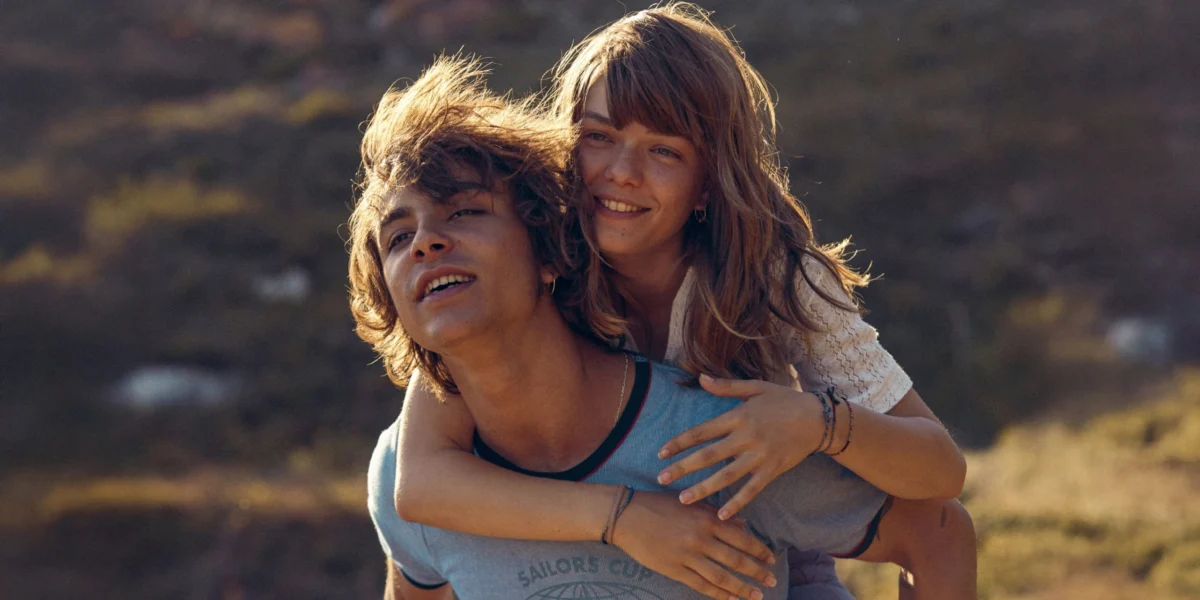
The 2025 drama film Romería, written and directed by the celebrated Spanish filmmaker Carla Simón, has emerged as a significant touchstone in contemporary European cinema. Following its world premiere at the 78th Cannes Film Festival, where it competed for the prestigious Palme d’Or, the film has transitioned to a highly anticipated theatrical rollout in the United States. Distributed by Janus Films in partnership with Sideshow, the feature represents a culmination of Simón’s thematic obsession with family dynamics, the fragility of memory, and the intersection of personal and national history. Starring newcomer Llúcia Garcia in a breakout role, the film serves as a fictionalized exploration of Simón’s own life, specifically her quest to understand the legacy of her biological parents who died during the AIDS epidemic in Spain.
Narrative Core and Semi-Autobiographical Foundations
At the center of Romería is Marina, portrayed by Llúcia Garcia, a young woman who embarks on a journey to piece together the fragmented history of her deceased biological father. The narrative is structured as a dual exploration: one of physical travel and another of emotional excavation. Marina’s journey takes her into the heart of her family’s past, confronting the silence and stigma that often surround the deaths of parents from a previous generation.
The film is the third installment in what many critics are calling Simón’s "autobiographical trilogy." Her debut feature, Summer 1993 (Estiu 1993), explored her childhood transition into an adoptive family after her mother’s death. Her second film, the Golden Bear-winning Alcarràs, shifted focus to the disappearance of traditional farming life in Catalonia. Romería completes this thematic cycle by addressing the "missing piece" of her history—the father figure and the social context of the 1980s and 90s in Spain. By blending factual elements of her life with fictionalized dramatic arcs, Simón creates a universal story about the necessity of narrative in forming one’s identity.
Critical Reception and Technical Achievement at Cannes
The 78th Cannes Film Festival served as the global launchpad for Romería, where it was met with a sustained standing ovation and critical acclaim. Jurors and critics alike highlighted Simón’s maturing directorial voice, noting her ability to capture profound emotional truths through a naturalistic, almost documentary-like lens. The film’s inclusion in the Main Competition solidified Simón’s status as one of the preeminent auteurs of the "New Spanish Cinema" movement.
Technical aspects of the film have been singled out for particular praise. The cinematography, characterized by its use of natural light and intimate framing, creates a sense of voyeuristic proximity to Marina’s internal struggle. The editing plays a crucial role in the film’s pacing, oscillating between the slow, contemplative moments of Marina’s research and the more kinetic, emotionally charged encounters with her extended family. Critics have noted that the film avoids the pitfalls of melodrama, instead opting for a restrained, observational style that allows the audience to experience the protagonist’s revelations in real-time.
Llúcia Garcia’s performance has been described as the "beating heart" of the production. As a relatively unknown actress, Garcia brings a raw, unvarnished quality to the role of Marina. Her ability to convey complex internal shifts—ranging from curiosity and hope to grief and disillusionment—with minimal dialogue has positioned her as a frontrunner for various international acting awards in the upcoming season.
Chronology of Production and Distribution
The development of Romería began shortly after the international success of Alcarràs in 2022. Simón spent nearly two years refining the script, which required a delicate balance between her personal memories and the demands of a narrative feature. Production took place primarily in Catalonia and other regions of Spain, utilizing local landscapes to ground the film in a specific sense of place.
Following its Cannes premiere in May 2025, the film underwent a strategic international festival circuit run, appearing at major venues in Toronto and San Sebastian. The U.S. distribution rights were acquired by Janus Films and Sideshow, companies known for their curated selection of high-end international cinema, such as Ryusuke Hamaguchi’s Drive My Car and Jerzy Skolimowski’s EO.
The domestic release strategy for Romería follows a traditional prestige rollout:

- New York City: The film opened in select arthouse theaters to strong per-screen averages, signaling a robust interest among cinephiles.
- Los Angeles: The film is scheduled to open on July 1st, 2025, with several Q&A sessions featuring the director.
- Nationwide Expansion: Following the Los Angeles premiere, Janus Films plans a gradual expansion into major metropolitan markets across the United States throughout the summer.
Supporting Data and Market Impact
The release of Romería comes at a pivotal time for Spanish cinema on the global stage. Data from the last five years indicates a 15% increase in the international box office share for Spanish-language features, driven largely by the success of directors like Simón, Pedro Almodóvar, and Rodrigo Sorogoyen. In the United States, the market for subtitled international dramas has shown resilience, with audiences increasingly seeking out "elevated" genre pieces and personal dramas that offer a window into diverse cultural experiences.
Industry analysts suggest that Romería is well-positioned for the upcoming awards season. Based on its performance at Cannes and its critical aggregate scores—which currently sit in the high 80s on major review platforms—the film is expected to be a strong contender for the Academy Award for Best International Feature Film. Furthermore, the partnership with Janus Films provides the film with the institutional support necessary to sustain a long-term campaign.
Official Responses and Directorial Insight
In a series of interviews following the film’s premiere, Carla Simón has been candid about the challenges of dramatizing her own life. Speaking on the Next Best Picture Podcast, Simón emphasized that Romería was not merely an exercise in catharsis, but an attempt to understand the collective silence of a generation. She noted that many families in Spain, and globally, still struggle to discuss the impact of the late-20th-century health crises, leading to a "void" in the identity of their children.
"Making this film was a way to give my father a voice he never had in my life," Simón remarked during a press conference. "It is about the stories we tell ourselves to survive, and the courage it takes to look for the truth behind those stories."
Lead actress Llúcia Garcia also shared insights into her preparation for the role, stating that she spent weeks with Simón’s family archives to understand the emotional weight of the project. This collaboration between director and actor has been credited with the film’s authentic atmosphere, as Garcia was encouraged to find her own version of Marina rather than simply mimicking the director’s persona.
Broader Implications for International Cinema
The success of Romería highlights several evolving trends in the film industry. First, it underscores the continued importance of the "autofiction" genre, where directors use their own biographies as a canvas for universal themes. Like Alfonso Cuarón’s Roma or Steven Spielberg’s The Fabelmans, Romería demonstrates that the most specific, personal stories often resonate most deeply with a global audience.
Second, the film’s trajectory reinforces the critical role of the Cannes Film Festival as a gatekeeper for prestige cinema. In an era dominated by streaming platforms, the "Cannes bump" remains a vital mechanism for ensuring that smaller, director-driven films receive the theatrical attention and critical scrutiny they deserve.
Finally, Romería serves as a testament to the strength of the Spanish film industry’s infrastructure. Supported by regional grants and international co-production deals, filmmakers like Simón are able to maintain creative control while producing work that meets the highest technical standards of global cinema.
As Romería moves into its nationwide expansion, it stands as a poignant reminder of the power of film to bridge the gap between the past and the present. For audiences in New York, Los Angeles, and beyond, the film offers more than just a character study; it provides an opportunity to reflect on the nature of truth, the complexity of family, and the enduring quest for a sense of belonging. With its masterful direction and a central performance that is likely to be remembered for years to come, Romería is not only a highlight of the 2025 cinematic calendar but a definitive entry in the canon of modern Spanish film.