Prapat Jiwarangsan, a prominent visual artist and director hailing from Thailand, recently garnered significant attention with his short film, "Parasite Family," screened at the prestigious Vienna Shorts festival. Jiwarangsan’s artistic practice is distinguished by his eclectic incorporation of diverse media, primarily photography, slides, and video, which he masterfully employs to dissect and articulate the intricate interplay between history, memory, and the political landscape of Thailand. A recurring and central theme in his explorations is the concept of migration, which he often ties into broader narratives of national identity and power structures. "Parasite Family" serves as a compelling testament to his innovative approach, offering viewers a disquieting yet profoundly analytical glimpse into the undercurrents of Thai society.
The Artist’s Vision: Prapat Jiwarangsan’s Distinctive Approach
Prapat Jiwarangsan’s artistic journey is deeply rooted in an investigative methodology, often turning his lens towards the overlooked or suppressed narratives within his homeland. Born and raised in Thailand, his personal experiences and observations inform a critical perspective on the nation’s socio-political fabric. His academic background, often involving studies in fine arts or film, typically provides a strong theoretical foundation for his experimental work. Jiwarangsan is not merely a documentarian; he is an interpreter, an archaeologist of visual culture, meticulously excavating fragments of the past to illuminate contemporary issues. His previous works, while varied in their specific subjects, consistently demonstrate a commitment to challenging official histories and questioning dominant narratives, frequently through the manipulation and recontextualization of archival material. This consistent engagement with the politics of representation positions him as a significant voice in contemporary Southeast Asian art, one that courageously confronts uncomfortable truths. His decision to utilize a mixed-media approach — blending still images, moving pictures, and digital manipulations — underscores his belief that no single medium can fully capture the multifaceted nature of memory and history. Each medium contributes a unique texture and layer to his overarching critique, allowing for a dynamic and often unsettling viewing experience that mirrors the complexity of the subjects he addresses.
Vienna Shorts: A Platform for Experimental Cinema
The selection of "Parasite Family" for Vienna Shorts underscores the festival’s commitment to showcasing innovative and boundary-pushing cinematic works. Vienna Shorts, an international short film festival held annually in Vienna, Austria, is renowned for its diverse programming across various categories, including fiction, documentary, animation, and experimental films. It serves as a vital platform for emerging and established filmmakers to present their short-form narratives and artistic expressions to a global audience of critics, industry professionals, and cinephiles. The festival’s focus on short films often means it becomes a fertile ground for artistic experimentation, where directors like Jiwarangsan can explore unconventional narrative structures and technical innovations without the commercial pressures often associated with feature-length productions. Being an Oscar-qualifying festival, its selections carry significant weight, signaling the artistic merit and cultural relevance of the chosen works. For "Parasite Family" to be featured here indicates its recognized artistic value and its capacity to provoke thought and discussion, aligning perfectly with Vienna Shorts’ ethos of promoting cinema that challenges perceptions and expands artistic horizons.
Deconstructing "Parasite Family": Visuals, Sound, and Subtext
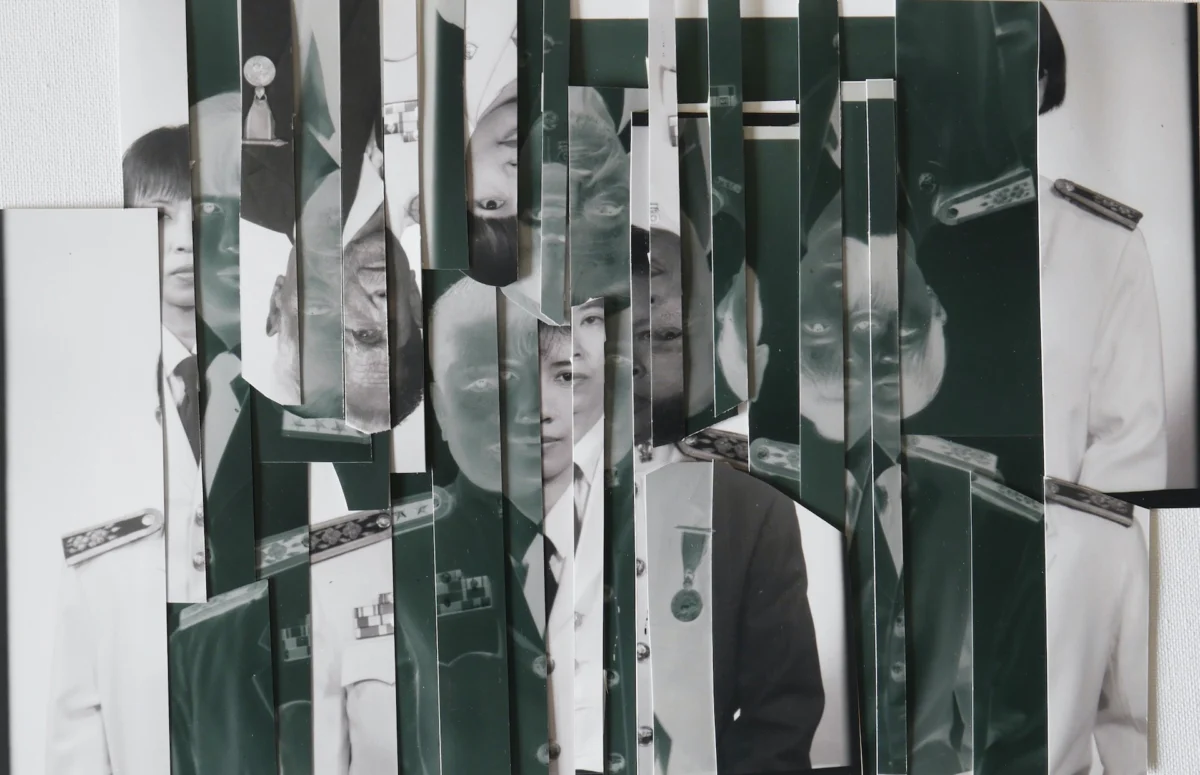
"Parasite Family" immediately immerses the viewer into a disorienting visual landscape. The film commences with a striking collage of numerous half-faces, their eyes blinking in unison to the insistent rhythm of a camera shutter. This initial sequence is profoundly unsettling, creating a sense of fragmented identity and pervasive surveillance. A significant portion of these faces appears to belong to military officers, subtly hinting at their familial ties to the royal family – a potent symbol of traditional power in Thailand. The rapid succession of these photographs is relentless, punctuated only by brief, fleeting appearances of seemingly "proper" or official portraits. This juxtaposition immediately establishes a tension between public image and underlying reality, between curated perception and raw, unvarnished truth.
Following these initial flashes, a series of photographic negatives are introduced. Some are stripped of color, stark and ghostly, while others bear vibrant splashes of color, as if history itself is being stained or re-painted. The persistent shutter sound continues unabated, a sonic metaphor for the continuous capture and manipulation of images and, by extension, narratives. This rapid-fire visual assault culminates in a flowing, almost liquid-like effect, presenting a man and a woman within the same photographic frame, their forms merging and distorting. This visual fluidity challenges fixed notions of identity and lineage, suggesting a continuous, perhaps insidious, evolution of power.
The film then reverts to its previous style of rapid image juxtaposition, integrating actual photographs with these experimental effects. Broken images, featuring flowing backgrounds and briefly accompanied by ambient, almost ethereal sounds, appear next. These fractured visuals enhance the sense of historical rupture and the elusive nature of memory. A pivotal technical shift occurs with the introduction of AI morphing. Two photos of children, a boy and a girl, seamlessly transition, their ages and even races altering before the viewer’s eyes. This sophisticated digital manipulation is then applied to a single photo, where the subject’s sex also undergoes a fluid transformation.
The Technical Evolution: From Analog to AI-Generated Art
One of the most compelling aspects of "Parasite Family" lies in its sophisticated technical evolution, charting a journey from the analog world of traditional photography and slides to the cutting-edge realm of AI-generated images and the conceptual space of NFT artworks. This progression is not merely a display of technical prowess but a deliberate artistic choice that underpins the film’s thematic depth.
The initial use of analog photography and slides grounds the work in a historical reality, referencing the traditional means by which memories are recorded and preserved. The rapid succession and manipulation of these "original" documents – be they official portraits or fragmented negatives – immediately raise questions about the integrity and reliability of historical archives. It suggests that even seemingly objective records can be reinterpreted, distorted, or weaponized. The transition to digital video further modernizes this critique, reflecting how easily images can be copied, altered, and disseminated in the contemporary era, blurring the lines between reality and fabrication.
However, it is the integration of AI morphing that truly elevates the film’s technical and conceptual ambition. The artificial intelligence algorithms employed to seamlessly alter the age, race, and even sex of individuals within photographs move beyond simple digital editing. AI’s capacity to generate hyper-realistic yet entirely synthetic images introduces a profound commentary on authenticity in the digital age. In a world increasingly populated by deepfakes and AI-generated content, Jiwarangsan uses this technology to highlight how easily identities can be constructed, deconstructed, and manipulated. This technological progression within the film itself mirrors a broader societal shift, where the very nature of truth and representation is being redefined by advancements in artificial intelligence.
The conceptual link to NFT (Non-Fungible Token) artworks, though not explicitly shown as NFTs, is implied by the exploration of unique digital creations and their provenance. NFTs represent a new frontier in digital ownership and authenticity, yet even they exist within a volatile and often speculative market. By invoking this trajectory, Jiwarangsan subtly critiques the commodification and potential decontextualization of art and information in the digital economy, while also demonstrating the immense power of these new tools in shaping perception. This technical journey, therefore, is not just about showing off new tools; it is a meticulously crafted narrative about the evolving nature of images, their power, and their susceptibility to manipulation across different eras of media technology.
A Monstrous Presentation and the Critique of Power
The cumulative effect of these visual and sonic elements is a presentation of the people in the photographs that can only be described as monstrous. The relentless shutter sound, combined with the distorted, morphing faces and fragmented identities, creates a deeply unsettling atmosphere. This "monstrous" portrayal is not merely for shock value; it serves as a potent metaphor for the insidious nature of power and wealth accumulation within specific Thai families and institutions.
While never explicitly stated, the film’s critique of these powerful entities becomes undeniably evident. Thailand has a long history of concentrated wealth and influence held by a select few elite families, often intertwined with the military and the monarchy. This system, sometimes described as a form of clientelism or oligarchy, has historically absorbed vast amounts of national wealth and maintained significant political control. Jiwarangsan’s "Parasite Family" metaphorically depicts these entities as parasitic, feeding off the national body and perpetuating their power through generations. The seamless morphing of faces across age, race, and sex can be interpreted as a commentary on the enduring and adaptable nature of these power structures, suggesting that despite superficial changes, the underlying "family" of power remains, merely shifting its outward appearance. The lack of explicit explanation within the film itself, while contributing to its experimental nature, also necessitates a viewer familiar with the intricate socio-political context of Thailand to fully grasp the depth of its critique. For those uninitiated, the film’s potent imagery might remain an abstract artistic expression, highlighting the challenge of communicating nuanced political commentary through purely visual means.
Installation vs. Conventional Cinema: A Deliberate Choice
"Parasite Family" often feels less like a conventional movie and more akin to an art installation. This structural and communicative choice is deliberate, imbuing the work with a distinctive artistic force while simultaneously narrowing its appeal. Unlike traditional narrative films that guide the viewer through a linear story, Jiwarangsan’s creation demands active engagement and interpretation. The rapid, non-linear succession of images, the cyclical nature of its visual motifs, and the fragmented presentation of its subjects encourage a contemplative, almost meditative viewing experience.
This approach is characteristic of many experimental moving-image practices, where the emphasis shifts from storytelling to sensory experience, conceptual exploration, and emotional resonance. The film acts as a dynamic collage, inviting viewers to connect the dots, to piece together the implicit narrative, and to draw their own conclusions about the relationships between history, memory, and power. This makes "Parasite Family" a powerful work for audiences already conversant with experimental cinema and the socio-political context of Thailand. For such viewers, the film offers a rich, multi-layered experience, prompting deep reflection on the themes presented. However, for those accustomed to more conventional cinematic narratives, the film’s abstract nature and lack of explicit exposition might prove challenging, potentially limiting its broader accessibility. This deliberate choice by Jiwarangsan reflects a commitment to artistic integrity over mass appeal, positioning "Parasite Family" as a significant contribution to the avant-garde cinema landscape.
Broader Impact and Implications
The implications of "Parasite Family" extend beyond its immediate artistic merit, touching upon significant contemporary discussions in both art and society. The film’s innovative use of AI technology for artistic and critical commentary positions it at the forefront of a growing movement exploring the ethical and aesthetic dimensions of artificial intelligence in creative fields. By demonstrating how AI can be utilized not just for entertainment or commercial purposes, but as a tool for political critique and historical interrogation, Jiwarangsan opens new avenues for artistic expression and societal commentary. This encourages a broader dialogue on the role of technology in shaping our understanding of reality, memory, and identity in the 21st century.
Furthermore, the film contributes to the ongoing discourse surrounding contemporary Thai art and its engagement with national identity and political history. Artists in Thailand, often operating under complex socio-political conditions, frequently employ allegorical and experimental methods to navigate sensitive subjects. "Parasite Family" stands as a powerful example of how art can serve as a vital medium for nuanced critique, offering perspectives that might be challenging to articulate through traditional journalistic or political channels. It reinforces the idea that art is not merely an aesthetic pursuit but a potent force for social commentary and intellectual provocation.
The film’s exploration of migration, though subtly woven into its fabric, also holds significant global relevance. In an era of unprecedented human mobility, the theme of migration often intersects with issues of identity, belonging, and the economic and political forces that compel people to move. While the film’s primary focus is on Thai internal power dynamics, the notion of shifting identities and the "parasitic" nature of certain structures can be broadly interpreted to reflect how dominant groups often frame or exploit migrant populations, or how historical movements of people shape national narratives.
In conclusion, Prapat Jiwarangsan’s "Parasite Family" is a compelling and challenging work that leverages cutting-edge technology and experimental artistic practices to deliver a potent critique of power and history in Thailand. Its screening at Vienna Shorts reaffirms its status as a significant piece of contemporary visual art. While demanding an informed and engaged viewer, its innovative structure, disquieting visuals, and profound thematic depth make it a crucial contribution to discussions on art, technology, and socio-political commentary in the modern world, solidifying Jiwarangsan’s reputation as a fearless and visionary artist.