The trajectory of Clint Eastwood’s career represents one of the most enduring and influential narratives in the history of global cinema. Spanning more than seven decades, Eastwood’s transition from a contract television actor to a definitive Western icon, and eventually to a multi-Academy Award-winning director, serves as a blueprint for professional longevity and creative evolution. With the 2024 release of his latest directorial effort, Juror #2, Eastwood continues to command the attention of the industry at the age of 94, solidifying a legacy built on stoic performances, directorial efficiency, and a deep exploration of American morality.
The Formative Years and the Television Breakthrough
Clint Eastwood’s ascent began in the mid-1950s, a period characterized by the dominance of the studio system and the rise of television as a primary medium for Western storytelling. After a series of uncredited roles and minor appearances in B-movies such as Revenge of the Creature (1955), Eastwood secured the role that would define the first phase of his career: Rowdy Yates in the CBS series Rawhide.
Premiering in 1959, Rawhide became a staple of American television, running for eight seasons and 217 episodes. Eastwood’s portrayal of the spirited cattle driver provided him with a steady platform and a national profile. However, the constraints of television acting and the repetitive nature of the "good guy" archetype prompted Eastwood to seek more complex material. This search led him to Europe, where a burgeoning subgenre known as the "Spaghetti Western" was beginning to take shape under the direction of Sergio Leone.
The Italian Revolution and the Man with No Name
In 1964, Eastwood starred in A Fistful of Dollars, a reimagining of Akira Kurosawa’s Yojimbo directed by Sergio Leone. The film, followed by For a Few Dollars More (1965) and The Good, the Bad and the Ugly (1966), fundamentally altered the Western genre. Moving away from the clear-cut morality of traditional Hollywood Westerns, Leone’s "Dollars Trilogy" introduced a gritty, cynical, and violent world.
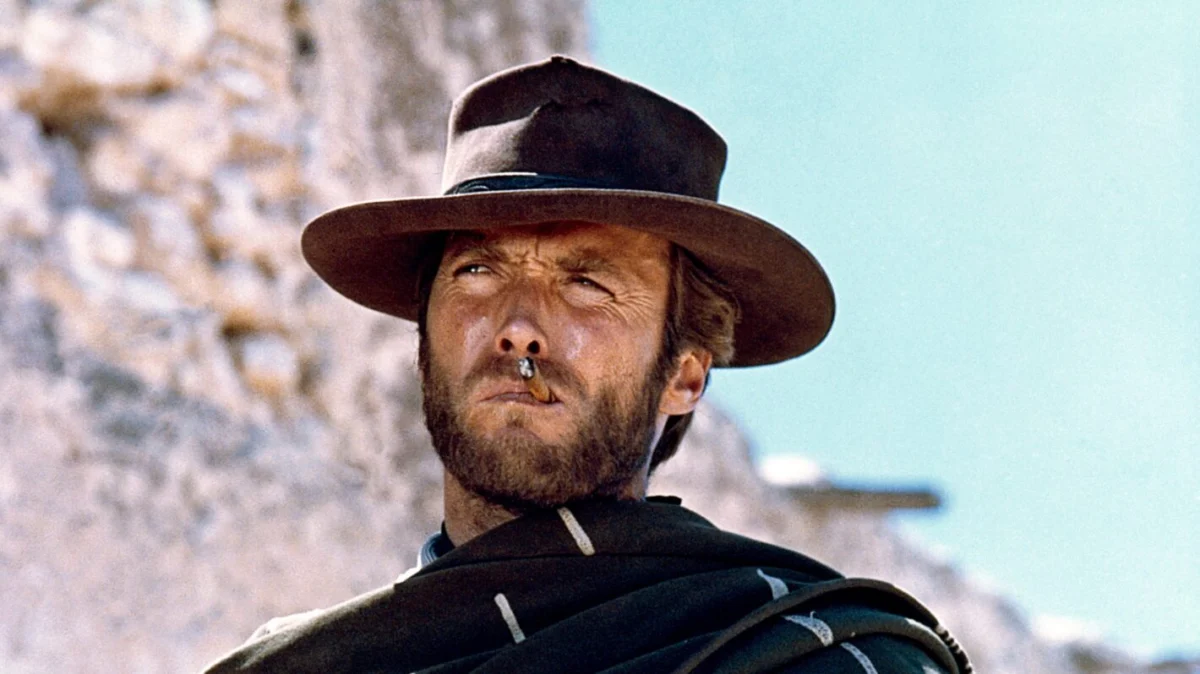
Eastwood’s "Man with No Name" character—defined by a distinctive squint, a weathered poncho, and a minimal approach to dialogue—became a cultural phenomenon. Statistical data from the era highlights the impact of these films; despite modest budgets (A Fistful of Dollars was produced for approximately $200,000), the trilogy earned millions globally and catapulted Eastwood to international superstardom. This period established his "tough guy" persona, a characterization that would persist for decades.
The 1970s and the Birth of Dirty Harry
As the 1970s commenced, Eastwood diversified his portfolio, alternating between Westerns and contemporary crime dramas. In 1970, he starred alongside Shirley MacLaine in Two Mules for Sister Sara, further refining his screen presence. However, it was the 1971 release of Dirty Harry that redefined his career and the action genre as a whole.
Directed by Don Siegel, Dirty Harry introduced Detective Harry Callahan, a San Francisco police officer who operated on the periphery of the law to secure justice. The film resonated with a public increasingly concerned about rising crime rates and the perceived limitations of the legal system. Callahan’s use of the .44 Magnum and his uncompromising stance made him a polarizing but immensely popular figure. The film grossed over $35 million domestically against a $4 million budget, spawning four sequels and cementing Eastwood’s status as the quintessential anti-hero of the era.
Transitioning to the Director’s Chair
While Eastwood’s acting career was at its peak, he began laying the groundwork for a second career behind the camera. In 1967, he founded his own production company, Malpaso Productions, which allowed him greater creative control and a larger share of the profits. His directorial debut came with the 1971 psychological thriller Play Misty for Me.
The 1970s and 1980s saw Eastwood hone his directorial style, characterized by a preference for lean storytelling, a limited number of takes, and a "one-and-done" philosophy on set. Films such as The Outlaw Josey Wales (1976) and Pale Rider (1985) allowed him to revisit the Western genre through a more mature and often deconstructive lens. By the late 1970s, he also demonstrated comedic versatility with Every Which Way but Loose (1978), which became one of the highest-grossing films of his career, earning over $100 million.
Critical Acclaim and the Academy Award Era
The 1990s marked a significant shift in the critical perception of Eastwood’s work. In 1992, he directed and starred in Unforgiven, a film that served as a meditation on the violence he had spent his career portraying. The film was a critical and commercial triumph, earning $159 million worldwide. At the 65th Academy Awards, Unforgiven won four Oscars, including Best Picture and Best Director for Eastwood, officially elevating him from a genre star to a respected filmmaker.
This period of critical success continued into the 21st century. In 2004, Million Dollar Baby, a gritty drama about a female boxer and her aging trainer, repeated the success of Unforgiven. The film won four Academy Awards, including Best Picture and a second Best Director trophy for Eastwood. Data from this era shows that Eastwood had become one of the most reliable directors in Hollywood, consistently delivering profitable films that also garnered awards recognition.
Other notable successes during this period include:
- Mystic River (2003): Received six Academy Award nominations.
- Letters from Iwo Jima (2006): A critically acclaimed Japanese-language war film.
- Gran Torino (2008): Grossed $270 million, proving his continued draw as an actor-director.
- American Sniper (2014): Grossed over $547 million, becoming the highest-grossing war film of all time in the United States.
Juror No. 2 and the Final Act
In 2024, Eastwood released Juror #2, a legal thriller starring Nicholas Hoult and Toni Collette. The film focuses on a juror who realizes he may be responsible for the crime he is judging. The production of Juror #2 has been a point of significant industry discussion, as it showcases Eastwood’s continued productivity well into his 90s.
Industry analysts note that Juror #2 reflects Eastwood’s long-standing preference for character-driven stories and ethical dilemmas. Despite shifts in the cinematic landscape toward high-budget franchises and streaming-first releases, Eastwood has remained committed to the mid-budget theatrical drama. His ability to secure studio backing for such projects in the current climate is a testament to his unique standing within the Warner Bros. ecosystem, a partnership that has lasted over half a century.
Directorial Philosophy and Technical Impact
Eastwood’s impact on the technical side of filmmaking is characterized by efficiency and fiscal responsibility. He is famous for finishing productions ahead of schedule and under budget. According to various cast and crew accounts from his sets, Eastwood avoids the use of "Action" and "Cut," preferring quieter cues to maintain a calm atmosphere for actors.
His lean approach to production has made him a favorite among studio executives. In an era where blockbuster budgets often exceed $200 million, Eastwood’s ability to produce high-quality, Oscar-contending films for a fraction of that cost—often between $25 million and $60 million—represents a rare model of sustainable filmmaking.
Broader Impact and Cultural Implications
The cultural impact of Clint Eastwood extends beyond the box office. He has become a symbol of a specific type of American masculinity—silent, capable, and morally complex. However, his work as a director has often subverted these very archetypes. From the vulnerability shown in The Bridges of Madison County (1995) to the exploration of trauma in Flags of Our Fathers (2006), Eastwood has used his platform to examine the costs of the "tough guy" image.
Furthermore, his career timeline reflects the broader history of the American film industry, moving from the tail end of the Golden Age through the New Hollywood movement of the 1970s and into the modern era of independent-style features backed by major studios.
As Juror #2 likely marks one of the final chapters in his storied career, the industry’s reaction has been one of universal respect. Fellow directors and actors frequently cite his work ethic and his ability to adapt to changing audience tastes without losing his creative voice. Whether through the squint of a gunfighter or the lens of a director, Clint Eastwood’s contribution to the cinematic arts remains a cornerstone of the medium’s history, bridging the gap between old-world Hollywood and the contemporary era.