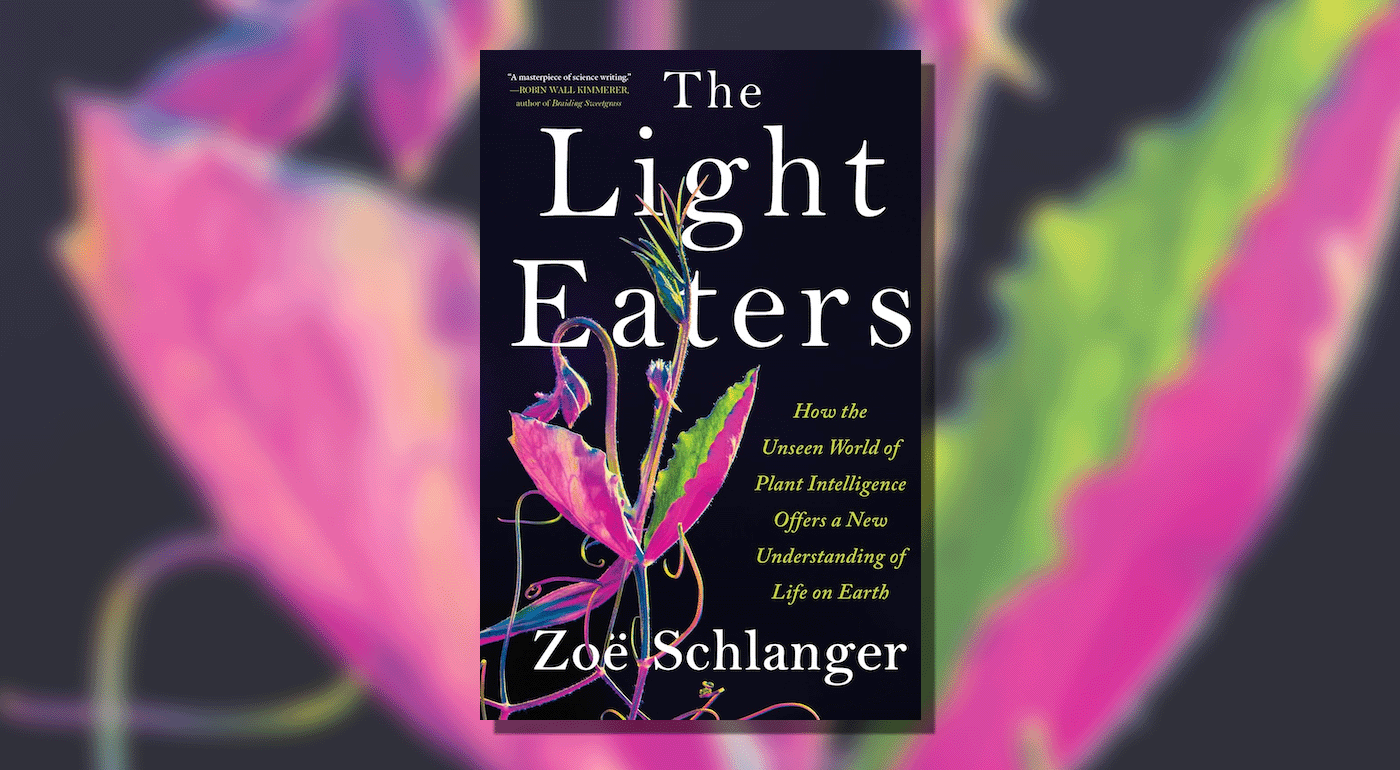
Zoë Schlanger’s groundbreaking work, The Light Eaters: How the Unseen World of Plant Intelligence Offers a New Understanding of Life on Earth, is fundamentally reshaping our perception of the botanical kingdom, moving beyond the passive, purely photosynthetic entities of traditional understanding to reveal active, responsive, and remarkably intelligent organisms. This exploration into plant sentience and communication, once relegated to the fringes of scientific inquiry and even dismissed as pseudoscience, is now backed by a growing body of evidence, offering profound implications for fields ranging from ecology and agriculture to speculative fiction.
A Paradigm Shift in Plant Perception
For generations, popular culture has often depicted plants as silent, static beings, a notion exemplified by whimsical songs that playfully imagined the "screams of vegetables." This anthropocentric view has historically overlooked the intricate and dynamic lives of plants. Schlanger’s book meticulously details the scientific advancements that are dismantling this long-held perception. Researchers are now employing sophisticated techniques to observe plant responses to stimuli that were previously unimaginable.
For instance, experiments involving the Arabidopsis plant demonstrate a startling sensitivity to touch. When a leaf is lightly rubbed, simulating a potential predatory threat, the entire organism becomes electrically active. This electrical signaling, occurring as rapidly as a human might experience a physical sensation, allows the plant to initiate defense mechanisms. These can include producing bitter-tasting chemicals to deter herbivores or secreting sticky substances to incapacitate insects. Furthermore, plants have been shown to communicate these threats to neighboring plants through airborne chemical signals. This inter-plant communication allows unthreatened flora to proactively bolster their defenses before any direct encounter with a pest, highlighting a sophisticated form of ecological networking.
This revelation challenges the anthropocentric notion that only animals possess complex sensory and communication capabilities. The research detailed in The Light Eaters suggests that plants engage in active negotiations with their environment, not just reacting to it but actively shaping it. This paradigm shift is not merely academic; it has direct consequences for our understanding of ecosystems and the vital role plants play within them.
From Pseudoscience to Plausible Science: The Reclaiming of Plant Intelligence
The journey toward scientific acceptance of plant intelligence has been fraught with challenges, largely stemming from the controversial legacy of the 1970s book, The Secret Life of Plants. This work, while fueling a significant houseplant fad, was criticized for its anecdotal evidence and speculative claims, leading many scientists to shy away from any research that touched upon vegetal consciousness for fear of being associated with pseudoscience. This historical backlash created a scientific reluctance, a "shyness" regarding plant intelligence, that mirrors the delayed acceptance of airborne transmission of diseases during the early stages of the COVID-19 pandemic, which initially sounded too similar to outdated miasma theories.
However, the tide is turning. Modern scientific inquiry, as presented by Schlanger, distinguishes itself from earlier claims. The current research does not suggest plants have preferences for specific musical genres or possess human-like emotions. Instead, it focuses on verifiable physiological and behavioral responses. For example, studies indicate that plants can alter root growth towards the sound of running water, and some species produce tannins in response to recordings of chewing caterpillars. These findings are grounded in measurable biological processes, not subjective interpretations.
The capacity for vision in plants, once considered far-fetched, is also gaining traction. The evolutionary advantage of sensing light is obvious, as it is crucial for photosynthesis. Schlanger’s work points to research showing how plants use changes in light patterns filtering through leaves to recognize and interact with other plants. The chameleon vine (Boquila species) offers a particularly striking example, altering its leaf shape and coloration to blend with surrounding vegetation. Remarkably, studies have shown this mimicry occurring even with plastic plants, suggesting a sophisticated level of visual processing and environmental adaptation.
The Complex Social Fabric of the Plant World
Beyond individual sentience, The Light Eaters delves into the intricate social lives of plants, building upon earlier explorations like Merlin Sheldrake’s Entangled Life, which highlighted the crucial role of mycelial networks in plant communication and resource sharing. Schlanger expands this understanding to include direct plant-to-plant interactions. Like animals, plants exhibit preferential treatment towards kin. Sunflowers, for instance, may orient themselves differently to avoid shading their close relatives, maximizing light exposure for the entire group. Many species will actively compete for nutrient-rich soil with unrelated plants while sharing resources with siblings and cousins. This behavior is likened to the strategic machinations of Renaissance families, vying for control of resources, illustrating a form of botanical social Darwinism. The author references J.B.S. Haldane’s quote, "I would lay down my life for two brothers or eight cousins," to underscore this evolutionary drive for kin selection within the plant kingdom.
These findings have significant implications for agriculture. Research suggests that a carefully managed level of genetic diversity within a crop can lead to considerably higher yields from the same area, challenging the efficiency of large-scale monocultures.
Furthermore, plants demonstrate remarkable interspecies cooperation. They thrive in diverse "neighborhoods" and form beneficial relationships with other species. Schlanger references the work of Robin Wall Kimmerer, highlighting how visually appealing flower combinations, favored by humans, also tend to attract a wider array of pollinators. This mutual benefit leads to increased flowering and energy investment by the plants. Plants exhibit a plasticity in their growth, adapting height, leaf structure, and root systems to harmonize with their surrounding communities. They engage in reciprocal relationships with fungi, exchanging carbon for phosphorus, and can maintain these complex, season-spanning alliances.
While plant interactions may not resemble the rapid movements of animals, their chemical adaptability is extraordinary. Orchids can tailor their fragrances to attract specific pollinators, sunflowers can inhibit the growth of nearby seedlings, and many species possess sophisticated defenses against a wide range of predators. Ironically, modern agricultural practices, which often prioritize uniformity and select for traits that diminish natural pest resistance, may be working against these innate plant capabilities. Schlanger argues for a serious re-evaluation of plant behavior, advocating for a more collaborative approach that leverages their natural intelligence rather than suppressing it.
Seeds for Speculative Fiction: A New Frontier for Storytelling
Schlanger’s research provides fertile ground for speculative fiction writers, offering compelling "seeds" for new narratives:
-
Growing Together: The Cooperative Garden and Rights of Nature
The concept of regenerative agriculture and the move away from monocultures are already inspiring solarpunk narratives. The Light Eaters elevates this by suggesting stories where farming involves actively mediating relationships between plant communities or designing gardens where plants themselves cooperate. Imagine a future where food forests are cultivated not just for human consumption but for their own ecological integrity, with human "translators" deciphering inter-plant communications to ensure the health of spicebush or the flourishing of a complex ecosystem.
The book also touches upon the burgeoning Rights of Nature movement, referencing efforts like the Ojibwe attempt to grant legal standing to wild rice. This opens avenues for stories where the testimony of plants, facilitated by new understanding and technology, could fundamentally alter legal and ethical frameworks. The idea of a plant being able to "testify" in its own defense or to advocate for its ecological role presents a powerful narrative device. -
Talking to Trees: Interspecies Communication and Mutual Domestication
The idea of communicating with non-human life, a perennial fascination in science fiction, is given new depth by Schlanger’s work. The prospect of engaging in meaningful conversations with ancient trees requires a profound shift in perspective—a slowing down, a re-evaluation of what constitutes intelligence, and an understanding of what a redwood might have to say. Such communication would likely differ vastly from human dialogue, possibly involving the interpretation of chemical, electrical, or even acoustic signals.
The concept of "mutual domestication" is particularly intriguing. Just as humans have shaped grains and animals, plants have influenced human evolution and societal structures. Stories could explore futures where technology allows us to bridge the communication gap, building on millennia of co-evolution and reciprocal shaping. This could lead to narratives about understanding and co-creating with the natural world on an unprecedented level. -
About That Mean Green Mother…: The Darker Side of Plant Intelligence
The "killer plant" trope, a staple of science fiction since the days of Little Shop of Horrors and Triffids, can be reimagined with the insights from The Light Eaters. If plants possess sophisticated defense mechanisms and communication networks, what are the implications if these capabilities are turned against humanity? Stories could explore how advanced plant intelligence, perhaps manipulated or simply evolved, could pose existential threats. This could range from sophisticated biological warfare waged by plants to a world where humanity finds itself outmaneuvered and outsmarted by a botanical intelligence it has long underestimated.
New Growth: Further Reading and Exploration
Schlanger’s work is part of a growing wave of literature that reconceptualizes our relationship with the natural world. She recommends Sue Burke’s novel Semiosis, where humans adapt to alien plant life, and Ursula K. Le Guin’s short story "The Author of the Acacia Seeds," which explores interspecies communication. The poetry of Báyọ̀ Akọmọláfẹ́, a Yoruba poet focusing on interspecies connection, is also highlighted as a significant source of inspiration.
For readers interested in the burgeoning "soilpunk" genre, the magazine Tractor Beam offers innovative stories that push the boundaries of ecological science fiction, with pieces like T.K. Rex’s "Like a Skeleton in Desert Sand" exploring less-trodden paths within speculative fiction.
Those seeking more recent explorations of dangerous or sentient plant life might find Mira Grant’s Overgrowth, an alien invasion narrative in the vein of classic killer plant stories, and Jenn Lyons’ epic fantasy Green Deadly Things, which offers a surprising critique of established power structures alongside its fantastical elements, compelling.
The broader landscape of non-fiction exploring the sentience and interconnectedness of life continues to expand. Ed Yong’s I Contain Multitudes: The Microbes Within Us and a Grander View of Life and Peter Godfrey-Smith’s Living on Earth: Forests, Corals, Consciousness, and the Making of the World offer deep dives into the microbial world and multi-kingdom intelligence, respectively. Riley Black’s When the Earth Was Green: Plants, Animals, and Evolution’s Greatest Romance provides a historical perspective on the early symbiotic relationships that shaped life on our planet.
As we continue to unravel the complexities of plant intelligence, the dialogue between scientific discovery and creative interpretation promises to yield rich and transformative narratives, challenging our fundamental understanding of life and our place within it. The question remains: as we learn to listen, what will the plants tell us?