Chilean filmmaker Dominga Sotomayor, known for her distinctive cinematic style characterized by intimate narratives set within confined yet expansive landscapes, has once again captivated audiences with her latest feature, La Perra. Premiering at the prestigious Cannes Film Festival, this character study marks a significant evolution in Sotomayor’s acclaimed career, venturing beyond her previous autobiographical frameworks into the uncharted territory of literary adaptation. The film, set on a windswept island off Chile’s southern coast, delves into the profound relationship between humans, animals, and their environment, questioning the very essence of belonging and domestication.
Dominga Sotomayor: A Visionary Filmmaker’s Evolving Style
Dominga Sotomayor has carved a unique niche in contemporary world cinema through her meticulous exploration of personal and societal anxieties, often framed within strikingly beautiful, yet increasingly claustrophobic, settings. Her filmography serves as a testament to a consistent artistic vision, where physical spaces become extensions of her characters’ psychological states. Her 2012 debut, Thursday till Sunday, garnered critical attention for its poignant portrayal of a family road trip, largely unfolding within the confines of a car traversing northern Chile. This early work established her predilection for contained environments, where interpersonal dynamics are magnified and subtly interrogated.
Her international breakthrough arrived with Too Late to Die Young (2018), a film that cemented her reputation as a formidable voice in Latin American cinema. This coming-of-age drama, set in a bohemian commune during Chile’s post-Pinochet transition, earned Sotomayor the Golden Leopard at the Locarno Film Festival, making her the first woman to win the top prize in the festival’s then 71-year history. The film was lauded for its evocative atmosphere, naturalistic performances, and its ability to capture the liminal space between childhood and adulthood, freedom and societal constraints. Its narrative rarely ventured beyond the commune’s borders, reinforcing Sotomayor’s thematic interest in how enclosed communities shape individual identities. More recently, her Netflix-produced Swim to Me (2025) zoomed in on the intricate lives within an affluent Santiago villa, further demonstrating her mastery of the "confined space" motif, albeit for a global streaming audience.
La Perra continues this thematic thread, but with a crucial distinction: it is Sotomayor’s first feature not directly drawn from her own childhood experiences. This departure signals a new phase in her artistic journey, one that she describes as offering "more freedom and lightness." The film explores the intricate relationship between landscapes and the individuals who inhabit them, examining how geographical settings subtly influence self-perception and one’s place in the world. This focus on the permeable border between the human and non-human, and the profound impact of environment on existence, remains a cornerstone of her cinematic philosophy, deeply resonating with her earlier works.
From Autobiography to Adaptation: A New Creative Freedom
The decision to adapt Pilar Quintana’s 2017 novel of the same name for La Perra, co-written with Inés Bortagaray, represents a significant shift for Sotomayor. For years, her projects, such as Too Late to Die Young and Thursday till Sunday, were deeply intertwined with her personal memories and the arduous process of reconstructing fragmented recollections into fiction. This intense, often challenging, method of creation, particularly in terms of financing within Chile, left her seeking a different approach.
Sotomayor articulated this transition, stating, "True, I had to set aside my own stories for a change, but I think that when you move away from those private realms you often wind up finding things that are even more personal and intimate. It’s a beautiful contradiction." She found working with a pre-existing text—one already "digested" and penned by another woman—to be incredibly liberating. This allowed her to embark on an "exercise in empathy," approaching the unknown rather than solely striving to understand her own self. The novel’s inherent qualities, particularly its unexplained elements and sense of mystery, resonated deeply with Sotomayor’s own cinematic sensibilities.
Pilar Quintana’s novel, La Perra, itself received critical acclaim upon its publication, exploring themes of motherhood, loss, and the complex bond between a woman and an animal in the harsh, humid environment of the Colombian Pacific coast. Sotomayor, while drawn to the novel’s core narrative, recognized the necessity of translating its spirit rather than its literal setting. She expressed to producer Rodrigo Teixeira her discomfort with setting the film in a Colombian jungle she didn’t intimately know, emphasizing her belief that "cinema has the potential to do so much more than simply bringing a book to the screen." Teixeira’s trust granted her the autonomy to relocate the story to a Chilean island, allowing her to imbue the adaptation with her distinct vision and geographical understanding. This collaborative yet independent approach ultimately led to what Sotomayor considers a "rawer, more obscure work," benefiting from a different kind of creative freedom.
The Enigmatic Narrative of La Perra: Time, Space, and Perspective
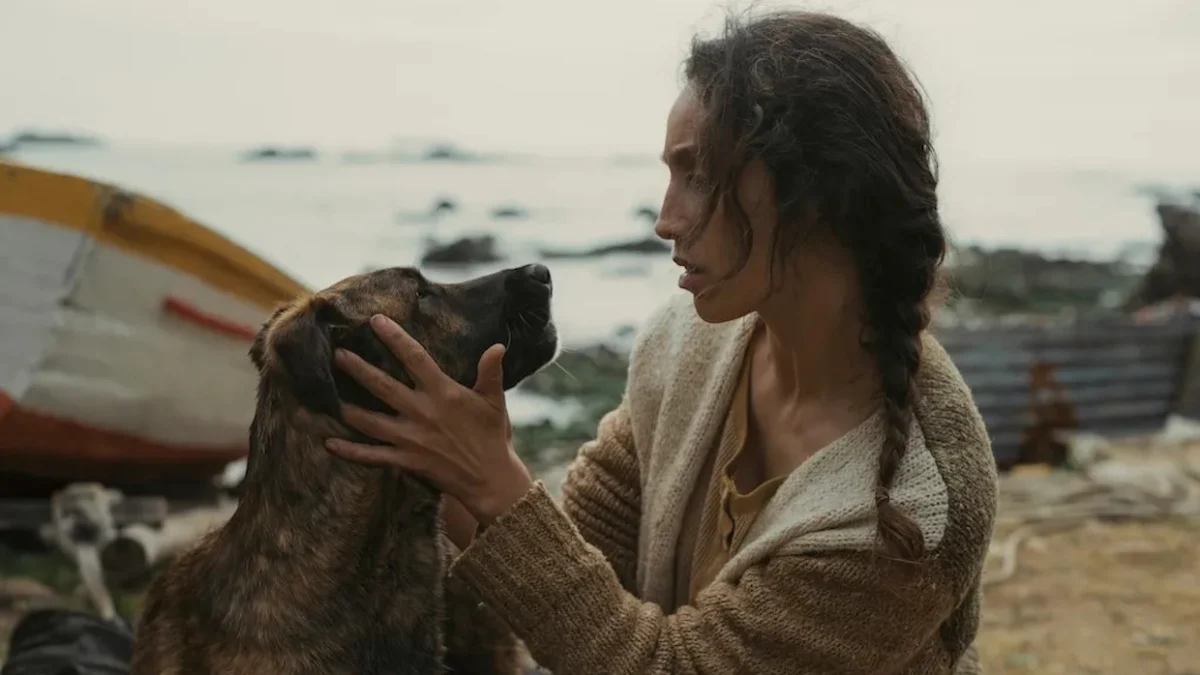
La Perra centers on Silvia (Manuela Oyarzún), a childless woman in her 40s living an isolated existence on a remote island, earning a living by selling seaweed. Her solitary life takes an unexpected turn when she adopts a stray puppy she discovers on the shore. Named Yuri, after a Mexican pop star whose 1980s hits form part of Clint Mansell’s evocative score, the dog profoundly impacts Silvia’s world. What truly distinguishes Sotomayor’s approach is her deliberate refusal to reduce Yuri to a mere metaphor or a tool for Silvia’s character development.
"I’m interested in the concept of domestication," Sotomayor explained, "the extent to which an animal can ever really be ours." This philosophical stance elevates Yuri to a protagonist in her own right. The film subtly shifts perspectives, with cinematographer Simone D’Arcangelo at times abandoning Silvia’s point of view to follow Yuri as she roams freely across the beach. This narrative choice underscores the dog’s agency and independent existence, challenging conventional human-centric storytelling. The relationship between Silvia and Yuri is portrayed with nuanced complexity; what begins as warm affection gradually evolves, revealing the unpredictable and sometimes threatening aspects inherent in the attempt to "domesticate" the wild. This echoes Sotomayor’s recurring theme that "the most familiar can become the most foreign," a concept previously explored in the shifting dynamics of family in Thursday till Sunday and the commune in Too Late to Die Young.
Beyond its unique character dynamics, La Perra is notable for its disorienting temporal ambiguity. The film exists in a "temporal limbo," where contemporary elements like smartphones and modern cars appear alongside vintage TV sets and props from past decades. This deliberate mixing of period details makes it challenging for the viewer to pinpoint the exact era in which the story unfolds. Even the film’s first-ever flashback sequence for Sotomayor, designed to explore an unresolved childhood trauma, eschews typical temporal markers. Unlike many films that use distinct palettes or costumes to delineate past from present, La Perra maintains a consistent aesthetic, inviting viewers to "luxuriate in its enigmas" rather than demanding a linear understanding. Sotomayor views cinema as having less to do with linear time and more with imagined or remembered time, allowing for a diffused, meandering narrative that slowly unravels into something far more mysterious than its premise suggests.
The setting itself contributes to this enigmatic quality. While partially shot on the real Santa Maria island, Sotomayor emphasizes that the film constructs an "imaginary geography." Elements like Silvia’s shack and the abandoned beachside villa were fabricated or situated elsewhere, creating a fictional territory that evokes a documentary feel without serving as a mirror of reality. Even the seaweed industry, central to Silvia’s livelihood, was creatively reimagined to enhance the film’s visual narrative, demonstrating Sotomayor’s love for cinema’s ability to "create a fake reality and then document it as if it was real." This blurring of reality and invention, past and present, human and non-human, forms the intricate fabric of La Perra.

Crafting the Visual World: Collaboration and Artistic Influences
For La Perra, Dominga Sotomayor collaborated for the first time with cinematographer Simone D’Arcangelo, known for his work on critically acclaimed films such as Felipe Gálvez Haberle’s The Settlers (2023) and Alessio Rigo de Righi and Matteo Zoppis’s The Tale of King Crab (2021). Their partnership, though operating under tight deadlines that precluded a traditional storyboard, was built on a foundation of shared artistic sensibilities and a deep exploration of visual references.
The duo compiled a "storyboard of photos" from the island and spent weeks discussing films and paintings that resonated with the atmosphere of La Perra. Sotomayor drew inspiration from her own family’s artistic heritage, referencing the dramatic, 19th-century landscape paintings of her grandmother, Carmen Couve, and uncle, Adolfo Couve, which evoked barren islands and bulbous clouds. These were juxtaposed with works from artists like Lucien Freud and Francis Bacon, known for their psychologically charged portraits, to inform the film’s approach to character.
Cinematically, their discussions spanned a diverse range of influences. Films like Barbara Loden’s Wanda (1970) and Michael Roemer’s Vengeance is Mine (1984) were key touchstones. Sotomayor noted Vengeance is Mine‘s "very odd structure" and "meandering" quality, which, despite its rigid mise-en-scène, resonated with her desire for a less linear narrative. Michelangelo Antonioni’s L’avventura (1960), a landmark in art cinema known for its ambiguous plot and focus on atmosphere over action, was another acknowledged influence. Australian films such as Nicolas Roeg’s Walkabout (1971) and Henri Safran’s Storm Boy (1976), celebrated for their open cinematic language and portrayal of human-nature interactions, also provided inspiration. Sotomayor admitted to traditionally being "quite strict" in her filmmaking but embraced a more fluid approach for La Perra, learning "how to let go of the idea that each scene had to have its own logic."
The practicalities of filming with animals presented unique challenges. Two mutts were cast as Yuri—a puppy and her adult version—sourced from animal shelters in Santiago just weeks before the shoot. The adult Yuri, a one-year-old with "so much wild energy," was untrained. Extensive sessions between the dog and lead actress Manuela Oyarzún were arranged to build familiarity. The production faced moments where the dog would "just run away for miles in the middle of a scene," demanding improvisation and adaptability. Sotomayor found that "a lot of Manuela’s performance was just based on her reactions to whatever the animals offered her." This demanding, yet spontaneous, environment ultimately contributed to the film’s raw, organic quality. Sotomayor reflected that the difficulties encountered during the shoot "became the film’s language," proving that embracing adversities can enrich the final artistic fabric.
Navigating Production Landscapes: Independent Cinema vs. Streaming Giants
Dominga Sotomayor’s experience with La Perra offers a fascinating contrast to her work on Swim to Me, a commission for Netflix. This juxtaposition highlights the distinct freedoms and constraints inherent in independent filmmaking versus global streaming productions. While she values both projects, Sotomayor unequivocally states that La Perra is "a film I made for the cinema, and that changes everything. It’s a completely free film." This creative autonomy, she notes, is something that cannot be taken for granted, especially for a project of La Perra‘s scale, benefiting from the trust of "big producers."
Her experience with Netflix, while offering certain liberties—such as choosing the cast—came with an implicit understanding that the film needed to "cater to a bigger audience" and adhere to a "much more straightforward" narrative structure. Sotomayor, known for her "dispersed cinema" characterized by diffused, meandering narratives, acknowledged that such stylistic choices were less feasible under a streaming giant’s framework. She stated, "I knew I couldn’t do that with Netflix."
In contrast, La Perra allowed her to explore formally freer territory, pushing boundaries that felt "new to me all the same." While Swim to Me relied on her established tools—working with children and a lead actress in a performance-heavy film—La Perra deepened her exploration of the relationship between people and landscapes, bringing it closer to the thematic core of her earlier independent works. Despite these differences in creative latitude and audience objectives, Sotomayor maintains that her affection and connection with characters and actors remained consistent across both projects, a testament to her unwavering artistic commitment. The remarkable feat of shooting two such "polar opposites" within the same year—a period she typically dedicates to a single film—underscores her versatility and dedication.
The Broader Impact: Dominga Sotomayor’s Place in Contemporary Cinema
Dominga Sotomayor’s artistic journey, culminating in La Perra, solidifies her position as a significant voice in contemporary cinema, not just within Chile but globally. Her films consistently challenge conventional narrative structures, offering audiences a more contemplative and immersive experience. By moving beyond autobiographical narratives, she demonstrates a mature evolution, proving her ability to infuse external stories with deeply personal and universal resonance. This transition not only broadens her thematic scope but also inspires other filmmakers to explore diverse source materials with a distinctive personal vision.
Her unwavering commitment to exploring the complex interplay between characters and their environments, particularly in her "confined spaces," provides a unique lens through which to examine human psychology and societal dynamics. The deliberate atemporality and "imaginary geography" in La Perra encourage viewers to engage with cinema not as a mirror of reality, but as a constructed world that provokes thought and feeling. This approach positions her as an auteur who prioritizes atmosphere, enigma, and emotional truth over linear plot progression.
Furthermore, Sotomayor’s ability to navigate both independent and large-scale streaming productions speaks to the changing landscape of film financing and distribution. Her success in maintaining her artistic integrity while working within different models serves as a valuable case study for aspiring filmmakers. Her distinct style, combined with her critical acclaim and festival presence, continues to elevate the profile of Chilean cinema on the international stage, inspiring a new generation of filmmakers, particularly women, to pursue their unique artistic visions.
La Perra, with its profound character study, innovative narrative structure, and deep exploration of human-animal bonds, stands as a testament to Dominga Sotomayor’s evolving mastery. It is a film that defies easy categorization, inviting audiences into a world of subtle mysteries and profound emotional depth, ultimately reinforcing her status as one of the most compelling and thoughtful directors working today.