John Travolta’s feature directorial debut, Propeller One-Way Night Coach (2026), has emerged as a significant cinematic discovery, captivating audiences at the Cannes Film Festival and subsequently achieving widespread acclaim on Apple TV. The film, which premiered on a bustling Friday night at Cannes, was met with an honorary Palme d’Or bestowed upon Travolta by festival director Thierry Frémaux, an emotional moment preceding the screening of the much-anticipated picture. This 60-minute cinematic journey, a deeply personal adaptation of Travolta’s 1997 novella of the same name, offers an "absolutely charming portrait of experience," steeped in meticulous detail and a profound sense of nostalgia for a child’s first airplane flight in 1962. Its unexpected success, described by Travolta as an "extraordinary thing," underscores its unique appeal as an "uncynical oasis" in the contemporary film landscape, resonating with viewers globally and becoming the most-streamed film on Apple TV in its debut week.
The Genesis of a Vision: From Novella to Screen
The roots of Propeller One-Way Night Coach stretch back decades, long before its Cannes premiere. Travolta first penned the story as a novella in 1993, initially creating 70 copies exclusively for his family. The overwhelmingly positive reception from his loved ones encouraged him to pursue wider publication, leading to its release by Warner Books in 1997. Despite significant interest from producers eager to adapt it into a film, Travolta consistently declined, citing the intensely personal and intimate nature of the narrative. He harbored concerns that an external production might fail to capture the nuanced, subjective vision he held for the story, which draws directly from his own childhood memories with his mother and sister, and other family members.
For over two decades, the project remained dormant on the screenwriting front, a cherished personal narrative awaiting the right moment for its cinematic realization. That moment arrived approximately a year and a half ago when Travolta, approaching his 70th birthday, made a decisive commitment. Recognizing the finite window for such a deeply personal project, he resolved to self-finance and produce the film, ensuring complete creative control over his vision. This strategic decision allowed him to translate his novella directly to the screen without external interference, treating the filmmaking process much like a painter approaching a canvas. The objective was to create a piece of art that faithfully reflected his internal world, then present it to the world to gauge its resonance.
A Journey Back to 1962: Capturing Childhood Memory
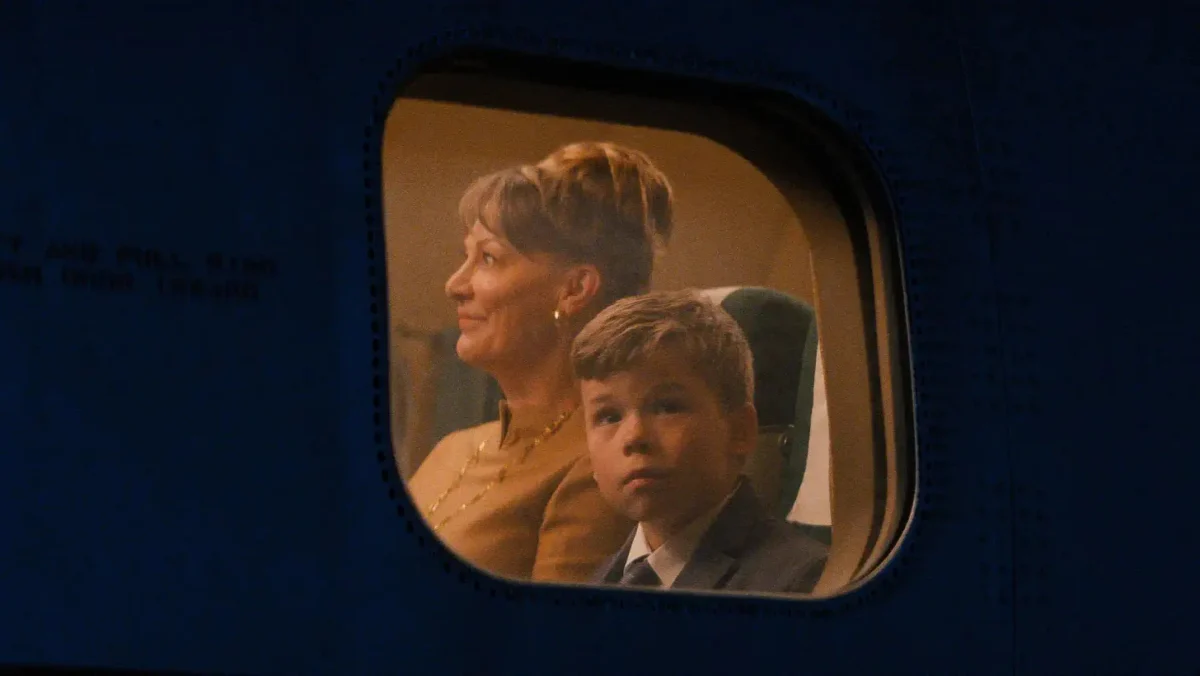
The film delves into the vivid sensory experiences of a young boy named Jeff (played by Clark Shotwell, whom Travolta’s daughter, Ella Bleu, noted for his resemblance to her father) on his inaugural airplane journey in 1962. It masterfully uses a fascinating voiceover narration, offering an internal monologue and commentary from Jeff’s adult perspective, recalling the fleeting, yet profound, thoughts of his younger self. This narrative device provides an intimate window into the child’s world, where every detail, every interaction, and every observation holds immense significance.
Travolta meticulously crafted this voiceover, adopting a "childlike tonality" to articulate adult recollections of innocent thoughts. He recalls a specific memory of being served cordon bleu on a late-night, nearly empty flight, and his childlike uncertainty about the dish despite liking both chicken and cheese individually. This level of granular detail and emotional honesty is a hallmark of the film’s narrative. Jeff, portrayed with a remarkable sincerity by Shotwell, is presented as a "precocious" and highly observant child, absorbing every minute of his life without judgment. He notes his mother’s flirtatiousness and habits, yet his perspective remains one of curiosity and understanding rather than condemnation. Even amidst discussions of tragic events like the 1960 Idlewild plane crash or the harrowing past of a neighbor, Jeff’s innocent thought process is evident, demonstrating empathy while his "survival instincts" allow him to recover and seek solutions, such as asking the pilot to fix his broken toy plane. This unfiltered, empathetic gaze allows the audience to experience the world of 1962 through an exceptionally pure lens.
Crafting the Mid-Century Aesthetic: A Symphony of Senses
One of the film’s most striking features is its immersive recreation of the 1960s, achieved through an extraordinary "loving attention to detail and sense memory." Travolta, a self-professed "voyeur, an observer of life," channeled his childhood fascination with airline tickets, schedules, and advertising into the film’s visual and auditory tapestry. He was "more than tenacious" in ensuring the historical accuracy of every element, from the vibrant interior colors of the aircraft to the exotic meals (Chateaubriand, chicken cordon bleu with colorful veggies) served on divine plateware. The elegance of the flight attendants’ uniforms, designed by renowned figures like Don Loper, Dior, and others, is faithfully depicted, reflecting the era’s emphasis on style and vision. The film even captures the often-forgotten detail of smoke mingling with the scent of food in the cabins of a time when planes rarely flew at full capacity, feeling "a fourth full" due to the prohibitive cost of air travel.
The soundtrack is a carefully curated masterpiece, acting as a direct conduit to Travolta’s childhood experiences. He seamlessly integrates a "beautiful onslaught of Brazilian samba music" from artists like Antônio Carlos Jobim and Sérgio Mendes, which gained worldwide popularity at the time, alongside the enduring tunes of American legends like Frank Sinatra, Tony Bennett, and Barbra Streisand. These were not just ambient sounds but the actual "soundtrack" of his life, played on radios and records at home. The film brilliantly matches these musical selections to specific visuals and emotional beats: "Breakfast at Tiffany’s" for a walk through the iconic red corridor of the TWA terminal, Dave Brubeck’s "Take Five" accompanying the modernist architecture, and "A Girl from Ipanema" setting the scene for Ella Bleu Travolta’s slow-motion walk as a captivating flight attendant. Even Barbra Streisand’s "Lazy Afternoon" is perfectly timed to a mother’s reminiscence, its golden light matching the mood. This symphonic approach to music and visuals transforms the film into a profound "homage to mid-century everything: architecture, design, clothing, music, the spirit in which we viewed things."
The film extends its homage beyond music, referencing iconic cinema of the era. Travolta cites influences ranging from Breakfast at Tiffany’s (1961) and An American in Paris (1951) to European masters like Bertolucci (Last Tango in Paris, 1972) and Fellini, whose surreal touches, like a "ten-foot tall man," were integrated based on real-life observations. He also nods to The V.I.P.s (1963), A Man and a Woman (1966), Two for the Road (1967), and the South American film Black Orpheus (1959). This eclectic mix, Travolta explains, works because these diverse artistic expressions, much like the architectural styles of Saarinen, Lapidus, and Frank Lloyd Wright, share a "similar era" and "speak to you in a similar way." This stylistic freedom allowed Travolta to "jump around and mix and match" in a way that authentically mirrored his own life’s visual experiences.
Lessons from the Masters: Travolta’s Directorial Approach
Travolta’s extensive career as an actor, working with acclaimed directors like Quentin Tarantino and Brian De Palma, provided him with an invaluable education in filmmaking. He meticulously "sifted down the things that were valuable and mattered" from watching the production of both great and mediocre films. From Quentin Tarantino, he absorbed the principle of narrative efficiency, learning that an audience is "smart" and doesn’t require every detail explicitly shown. The Pulp Fiction scene where his character discovers Mia Wallace overdosed, for example, taught him that a well-placed close-up and sound can convey immense information without needing to depict every action.
Another crucial lesson was the importance of thorough rehearsal and minimizing takes. Travolta believes that well-prepared actors "won’t be rehearsing on screen," leading to immediate, strong performances in the initial takes. This approach not only enhances the quality of the acting but also creates a dynamic, productive atmosphere on set, keeping both actors and crew "excited" by the swift pace.
Perhaps the most significant lesson, echoed by directors like Mike Nichols and Brian De Palma, was the paramount importance of casting. Travolta’s mother, an acting teacher, instilled in him the belief that acting talent is "inborn" rather than taught. He applies this to directing, stating that "90% of your issues are: is everyone right for those characters?" When actors are perfectly cast, they "already own that character," allowing the director to focus on subtle suggestions that add "color and dimension" rather than micromanaging performances. This philosophy underpinned his selection of actors like Clark Shotwell as Jeff and Kelly Eviston-Quinnett as his mother, Helen, whose "keen interest in the world" clearly mirrored the character’s infectious joie de vivre. Ella Bleu Travolta’s portrayal of the flight attendant further exemplifies this, embodying the captivating figure through the young boy’s eyes.
Defying Convention: Narrative Structure and Emotional Resonance
Propeller One-Way Night Coach intentionally diverges from traditional narrative structures that often rely on overt conflict or dramatic plot twists. Travolta openly admits he felt "the opposite" of pressure to introduce a major conflict, such as the boy getting lost in the airport. His confidence stemmed from the inherent richness of the "cool journey" and the "interesting and bizarre" characters encountered along the way. The film’s primary objective is to transport the audience to another era, allowing them to experience the world through the child’s perspective.
The drama, in Travolta’s view, lies not in external events but in the "observation of these fascinating people" and the awakening of the senses. He compares the experience to a Michelin-star restaurant, where new tastes create an internal drama of sensation. The film’s subtle conflicts, such as a nervous passenger or the boy’s broken toy plane, are enough to engage the audience because they are framed within a deeply immersive, transportive experience. The stewardess’s kind words about even "real planes break" resonate profoundly within this context, becoming a moment of significant emotional impact.
At a precise 60-minute runtime, the film’s length was also a deliberate choice. Both Thierry Frémaux and Apple executive Eddie Cue lauded Travolta for finding the "exactly right" duration, affirming that any deviation would have compromised its effectiveness. This brevity allows the film to maintain its focused, sensory-driven narrative without succumbing to unnecessary elongation, preserving its unique charm and impact.
A Timely Debut: Why Now?
The decision to finally bring Propeller One-Way Night Coach to the screen after decades was a confluence of personal timing and opportune circumstances. As Travolta reflected on his age and the desire to see his deeply personal vision realized, he made the commitment to self-finance and produce it without compromise. Once completed, the film’s initial presentation to Apple executive Eddie Cue proved pivotal. Cue immediately recognized its unique quality, declaring it "spectacular" and an "important movie," and committed to ensuring its global reach.
This led to a remarkable sequence of events. Three months later, Thierry Frémaux of the Cannes Film Festival viewed the film, unaware of Apple’s interest. Frémaux was equally captivated, expressing his admiration and engaging Travolta in a 45-minute discussion. In an unprecedented move, he declared Propeller One-Way Night Coach the "first selection of the Cannes Film Festival five months before," promising a "very special night." Upon learning of Apple’s prior commitment, Frémaux, rather than deterred, embraced a collaborative spirit, stating, "Let me lead the way, and let Apple lead the way, and together we’ll make this beautiful for you."
This partnership between Cannes and Apple provided the film with "two pillars of strength," catapulting it onto the global stage with immense prestige and reach. Frémaux further highlighted the film’s significance upon discovering its modest budget, declaring it "the most important film in the festival" as a testament to impactful, low-cost filmmaking. This endorsement resonated deeply with Travolta, who described the experience as "so not show business. It’s so human. It’s special."
Critical Acclaim and Commercial Success: Broader Implications
The journey of Propeller One-Way Night Coach from a deeply personal novella to a critically acclaimed, globally streamed film highlights several key implications for the film industry. Its premiere at Cannes, coupled with the honorary Palme d’Or, solidified its artistic credibility and Travolta’s newfound status as a director. The festival’s embrace of a shorter, non-traditional narrative underscores a potential shift towards valuing unique artistic expression over conventional commercial formats.
The film’s subsequent success on Apple TV, where it achieved the distinction of being the most-streamed film globally for seven consecutive days, demonstrates the power of streaming platforms to provide a vast audience for diverse cinematic works. This commercial validation, following its festival triumph, validates Travolta’s belief in his vision and the universal appeal of his deeply personal story. It also signals that audiences are receptive to films that prioritize sensory experience and emotional resonance over high-stakes drama.
Moreover, Thierry Frémaux’s emphasis on the film’s low production cost as a model for "impactful" filmmaking sends a powerful message to independent filmmakers worldwide. In an era dominated by tentpole blockbusters and high-budget productions, Propeller One-Way Night Coach serves as a compelling example that artistic integrity, meticulous craftsmanship, and a compelling vision can yield significant cultural and commercial success without requiring exorbitant financial investment. It champions the idea that compelling storytelling, particularly when infused with such a genuine and "uncynical" spirit, can transcend budgetary constraints and resonate deeply with a global audience.
In conclusion, John Travolta’s Propeller One-Way Night Coach is more than just a directorial debut; it is a meticulously crafted homage to a bygone era, a deeply personal recollection of childhood, and a testament to the enduring power of genuine storytelling. Its success at Cannes and on Apple TV positions it as a significant cultural artifact and a beacon for independent, vision-driven cinema in the contemporary landscape.