The Banff World Media Festival has long been a staple of the international entertainment calendar, known for its picturesque setting in the Canadian Rockies where the weather is famously mercurial. However, as the 47th edition of the festival commences this weekend, the unpredictability of the mountain climate has been eclipsed by a far more volatile front: the escalating cross-border trade and political tensions between the United States and Canada. The arrival of industry delegates coincides with a period of intense diplomatic friction, characterized by protectionist rhetoric and the looming threat of significant shifts in North American trade policy.
Central to the anxiety permeating the festival is the influence of former U.S. President Donald Trump, whose recent commentary regarding Canada has sent ripples through the media and cultural sectors. With talk of annexing Canada as a "51st state" and the proposed imposition of heavy tariffs on non-U.S. films and television productions, the prospect of a renewed trade war is no longer a distant hypothetical. These developments follow a series of high-stakes regulatory retreats by the Canadian federal government in Ottawa, which recently abandoned plans to significantly increase taxes on foreign streaming services—a move widely interpreted as a concession to avoid U.S. retaliation during the renegotiation of the Canada-United States-Mexico Agreement (CUSMA).
A Timeline of Regulatory Retreat: From Bill C-11 to Trade War Threats
The current crisis has its roots in the Online Streaming Act (Bill C-11), which became law in 2023. The legislation was designed to modernize Canada’s Broadcasting Act by requiring digital giants like Netflix, Amazon Prime Video, and Disney+ to contribute to the creation and promotion of Canadian content (Cancon). For decades, traditional broadcasters have been mandated to invest a portion of their revenue into local productions; Bill C-11 sought to level the playing field by extending these obligations to foreign streamers.
However, the implementation of the Act has faced fierce opposition. The timeline of this friction highlights the rapid escalation of the dispute:
- April 2023: The Online Streaming Act receives Royal Assent, despite intense lobbying from Silicon Valley.
- Late 2023 – Early 2024: The Motion Picture Association (MPA) and U.S. trade representatives begin branding the legislation as "discriminatory." The U.S. Ambassador to Canada explicitly calls for the repeal of certain provisions, suggesting they violate the spirit of free trade.
- Early June 2025: Facing threats of retaliatory tariffs on Canadian steel, aluminum, and automobiles, the federal government in Ottawa kills a planned regulatory measure that would have tripled the local tax on foreign streamers.
- June 2025: Plans to levy a separate digital services tax on companies like Apple and Meta are scrapped after Trump characterizes the tax as a "blatant attack" on American interests.
- June 2026: As the Banff World Media Festival opens, the Canadian government pivots to a taxpayer-funded model to support local media, seeking to fill the void left by the abandoned streamer levies.
This sequence of events marks a significant departure from Canada’s traditional stance on cultural sovereignty. For years, the prevailing logic in Ottawa was that foreign entities profiting from Canadian audiences should reinvest in the local creative ecosystem. Now, that logic has been subsumed by the broader necessity of maintaining access to the U.S. market for Canada’s primary industrial exports.
The $600 Million Taxpayer Pivot and Cultural Sovereignty
The decision to cave to U.S. pressure has left the Canadian production industry in a state of flux. To mitigate the loss of anticipated funding from foreign streamers, the Canadian government has asked taxpayers to provide an additional $600 million for homegrown media content. This infusion of public capital is intended to sustain the industry while the Canadian Radio-television and Telecommunications Commission (CRTC) reconsiders how to enforce the Online Streaming Act without triggering further trade hostilities.
Catherine Warren, president of FanTrust and a prominent voice in the Vancouver media scene, notes that the shift has transformed a cultural funding issue into a geopolitical bargaining chip. "We thought we were negotiating an infusion of capital for Cancon based on streaming and viewership and taxation," Warren told reporters. "Instead, it has become a trade issue at a delicate time for cross-border relations."

The sentiment is echoed by many indie producers and labor unions who had initially championed Bill C-11. The promise of a self-sustaining ecosystem funded by the world’s wealthiest digital platforms has been replaced by a reliance on government checks—a model that many fear is vulnerable to future political shifts and budgetary constraints.
Alberta’s Production Paradox: Oil Wealth and Political Uncertainty
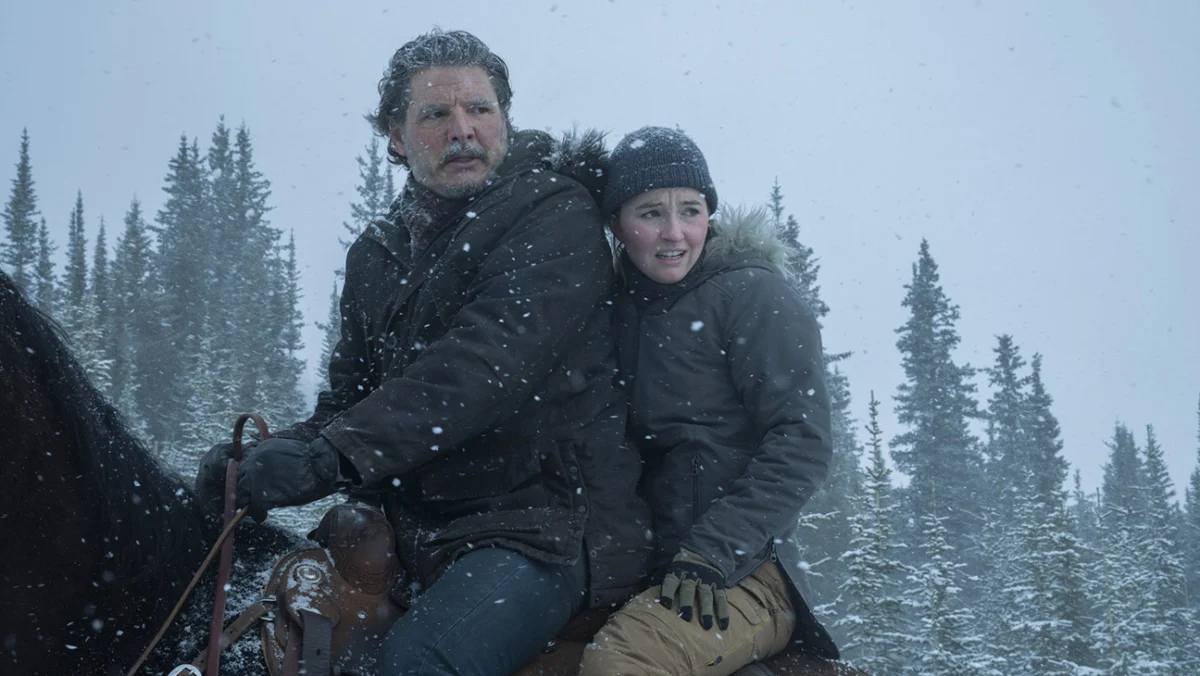
The festival’s host province, Alberta, serves as a microcosm of these broader tensions. Alberta has recently seen a resurgence in its film and television sector, bolstered by high-profile productions like HBO’s The Last of Us. The province’s ability to attract major Hollywood studios has historically been tied to its competitive Film and Television Tax Credit.
However, the provincial government’s recent fiscal maneuvers have introduced new variables. In March 2026, Alberta slashed its film incentive budget from $95 million to $60 million, citing a need to manage payouts based on fluctuating production levels. Despite this cut, the province remains an attractive destination due to a surge in oil royalties—driven by global energy prices amid the ongoing U.S.-Iran conflict—which provides a stable economic backdrop for infrastructure investment.
Compounding the economic factors is a deepening political divide within the province. An upcoming referendum in October 2026 will ask Albertans if they wish to remain part of Canada or pursue independence. This separatist movement has created a sense of unease among creators, particularly those working on Indigenous content.
Gerald Augur, a veteran actor and producer with 4 Directional Studios, expressed concern that political instability could stifle storytelling. Augur is currently developing Watcher, an Indigenous true-crime drama starring Colm Feore. "There’s people who don’t feel safe to tell stories or bring projects here if it has any Indigenous content because of what’s happening in the political arena," Augur explained. He emphasized that projects like Watcher are intended to foster unity and reconciliation, goals that become increasingly difficult to achieve in a polarized environment.
Strategic Pragmatism: The Producer’s Response
Despite the "dark cloud" of trade wars and domestic politics, many Canadian producers are adopting a stance of strategic pragmatism. The consensus among many attendees at Banff is that while the regulatory environment is fraught, the demand for high-quality content remains global.
Uga Carlini of Towerkop Creations, who is pitching projects such as the film Ghost Bear and the comedy series The Man Manual, argues that collaboration with American partners is often the most viable path forward, regardless of the political climate. "I’m practical," Carlini stated. "If it means I partner with Americans, and that’s the best for my story, which will always be Canadian… then great. Why not?"
This sentiment reflects a broader industry trend toward international co-productions. As domestic funding models become less certain, Canadian creators are looking to leverage their expertise and the favorable exchange rate to secure foreign investment. The Canadian dollar’s current position against the U.S. greenback provides a significant "discount" for American producers, making Canadian locations and crews highly attractive for budget-conscious projects.

Regional Competition and the Global Locations Business
The festival also serves as a battleground for Canadian provinces vying for a share of the global production market. While Alberta touts its mountainous vistas and oil-backed stability, other provinces like Manitoba are aggressively marketing their own incentives.
Meghan Duffy, CEO of Black Watch Entertainment, is in Banff to promote Manitoba’s film tax credit, which she describes as one of the most aggressive in the world. The Manitoba credit can offset up to 65 percent of production salaries and, notably, does not require the project to be "Canadian content." This makes it an ideal tool for American producers looking to close budgetary gaps.
"We bring to the table a very low Canadian dollar, which helps maximize low budgets by making them look larger on screen," Duffy noted. She also highlighted the flexibility of the credit, which can sometimes apply to co-productions shot outside the province if they are led by Manitoba-based production teams.
Analysis: The Future of the North American Media Ecosystem
The 47th Banff World Media Festival marks a turning point in the relationship between the Canadian government, the domestic creative sector, and the global streaming giants. The events of the past year suggest that Canada’s ability to regulate the digital economy is strictly bounded by the realities of its trade relationship with the United States.
The implications of this shift are manifold:
- Erosion of Cultural Sovereignty: The retreat on streamer taxes suggests that cultural policy is now secondary to industrial trade concerns (steel, auto, aluminum). This may limit the government’s ability to protect local media in the future.
- Increased Reliance on Public Funds: With streamers no longer mandated to pay into the system, the burden of "Cancon" falls back on the taxpayer. This may lead to increased scrutiny of how those funds are allocated.
- Hyper-Regionalism: As federal policy wavers, provinces like Alberta and Manitoba are becoming more autonomous in how they attract and fund production, leading to internal competition within Canada.
- The "Trump Factor": The threat of 2026 CUSMA renegotiations will likely keep the Canadian government in a defensive posture, discouraging any bold regulatory moves that could be perceived as "anti-American."
As Jenn Kuzmyk, executive director of the festival, observed, the industry is navigating "unprecedented disruption." The discussions held in the hallways of the Fairmont Banff Springs Hotel this week will not just be about scripts and casting; they will be about survival in a world where the lines between entertainment and geopolitics have permanently blurred. While the "Ghost Bears" and "Watchers" of the Canadian creative world continue to seek their audience, they do so under a political sky that remains as unpredictable as the mountain weather.