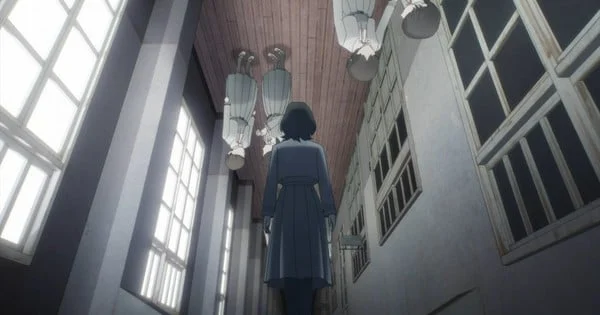
The latest installment of A Hundred Scenes of Awajima delves deeply into the intricate tapestry of familial legacy, exploring how the shadows of parental careers and expectations shape the identities of their offspring. This week’s episode, released on [Insert Date, e.g., June 14, 2026], navigates the complex terrain of inherited ambition, personal aspiration, and the often-unseen emotional landscapes that form within families, particularly those touched by the demanding world of the performing arts and entertainment industry. The narrative threads weave together personal interviews, retrospective accounts, and symbolic imagery to present a nuanced exploration of self-discovery against the backdrop of established familial paths.
The Weight of Parental Pedigree
The episode opens with a focus on individuals whose parents are alumni of the prestigious Awajima Academy, a fictional institution that serves as a central motif for artistic training and the pursuit of celebrity. This thematic exploration of lineage is not new to A Hundred Scenes of Awajima, which has consistently examined the concept of legacy. However, this week’s offering provides a more direct and in-depth look at how this inheritance manifests in the lives of the younger generation, both within and outside the immediate sphere of Awajima.
One of the primary narrative arcs features an interview with Wakana, a character who, it is revealed, has followed in the footsteps of her parent by pursuing a career in writing. This interview format, a recurring device in the series, allows for characters to articulate their motivations and internal reflections. While the use of interviews can sometimes feel like a direct narrative tool to convey information efficiently, particularly in an anthology series with a large cast and episodic structure, it also serves a crucial thematic purpose within A Hundred Scenes of Awajima. The series often interrogates the nature of performance and public persona, and interviews become a space where characters, much like actors, present curated versions of themselves. This raises questions about authenticity and the difficulty of self-representation, a point that is further underscored by the content of the interviews themselves.
Shinji Hasegawa: The Writer’s Reflection
The scriptwriter, Shinji Hasegawa, offers a poignant account of his upbringing with a famous actress mother. This segment directly addresses the complex dynamics of a child raised in the orbit of a parent with a demanding public career. Shinji’s narrative highlights the early development of an almost editorialized perspective on his home life, a coping mechanism to render his experiences more palatable to the outside world. While he maintains a functional, albeit distant, relationship with his mother, the familial portrait painted is far from the archetypal nuclear unit, instead reflecting the realities of a parent whose professional life necessitates significant absence.
Shinji’s reflections reveal a sensitivity to his mother’s career and a lack of resentment, yet he acknowledges a pervasive sense of detachment. As a child, he was unable to attend Awajima himself, thus preventing him from directly following his mother’s path. However, he finds a parallel in his own chosen profession. Taking his mother’s words to heart, he embarks on a career as a writer, a path that, in its own way, mirrors her artistic endeavors. This choice becomes a means of navigating his identity in relation to his mother’s legacy.
The analysis of Shinji’s adult perspective, particularly as he himself becomes a parent, offers a profound layer of introspection. He comes to understand that he projected onto his mother the very qualities he aspired to embody. His writing, in this context, becomes a tool for self-exploration, a method of excavating his own psyche. This resonates with the broader human experience of using creative outlets to process personal feelings and aspirations. The episode imbues this segment with a bittersweet conclusion, shifting focus to the character of Utako, Shinji’s mother. With Utako now living with him again and both parties having reached adulthood, Shinji begins to perceive his mother as an individual beyond the public persona. He grapples with the realization that there is a person beneath the carefully constructed image of the renowned actress, a person who is lonely and vulnerable. The narrative suggests that Shinji, like many others, had internalized Utako’s public image. The final moments of this arc leave him uncertain about the identity of the elderly woman tending the garden, questioning if she is the same person who was largely absent during his childhood, hinting at a disconnect that may persist.
Yukari: Navigating the "Nepo Baby" Discourse
The second narrative thread, while perhaps less impactful than Shinji’s story, gains strength through its thematic resonance with the preceding segment. Yukari, also the daughter of a celebrated actress and an Awajima alumna, finds herself in a different position. Unlike Shinji, Yukari has the opportunity to attend the academy, but this very possibility introduces the pain of potential failure and the struggle against predetermined paths. Her introduction, identified as "Fumiko Shiro’s daughter," immediately draws parallels to Shinji’s photo with Utako, where his mother’s presence overshadowed his own.
Yukari actively attempts to embody the identity of "Fumiko Shiro’s daughter," enrolling in the dance academy owned by her mother and setting her sights on Awajima. This pursuit is undertaken with a subconscious awareness of the privileges afforded by her parentage, leading her to view her application as a mere formality. The moment of rejection, however, forces a conscious re-evaluation of her situation.
The episode then explores Yukari’s confrontation with the "nepo baby" discourse, a contemporary term referring to individuals who benefit from familial connections in their careers. She acknowledges the possibility of leveraging her connections to gain admission, understanding that this would likely incur resentment from her peers. Instead, Yukari opts for a more principled approach, accepting her initial hubris and committing to intensive practice for a subsequent application. This resolution, while appearing somewhat neat, mirrors the thematic balance found in Shinji’s arc. Yukari declines her mother’s offer of assistance, such as a letter of recommendation, but her underlying desire to attend the academy remains, signifying that she is, in essence, still her mother’s daughter, albeit one determined to forge her own path through merit.

Ibuki’s Echoes: Regret and Confinement
The final third of the episode revisits Ibuki’s past experiences at Awajima with Emi. This narrative segment, previously explored, is presented this time with a detached, almost fable-like tone. The reason for this shift in narration becomes clear in the closing scene, where the audience is pulled out of the immediate narrative to witness Wakana at Ibuki’s hospital bedside. This structural choice transforms the final segment into an echo of the first, replacing Shinji’s airy introspection with the profound weight of Ibuki’s regret.
In this retelling, Ibuki explicitly draws a connection between her grandmother and Emi. She recounts having hardened herself against her grandmother’s harsh criticisms, but finding herself unable to withstand similar barbs from Emi, whom she considered a friend, regardless of their potential validity.
The adaptation’s strength truly shines in its depiction of Emi’s subsequent ostracization from her peers. This is rendered with an unsettling surreality: rain falls outside, yet a puddle forms within the room around Emi’s feet; former friends pass by indifferently, while Emi finds herself walking on the ceiling. Eventually, water engulfs her, pulling her away from Awajima’s halls and into darkness. This symbolic drowning signifies a profound isolation. The episode frames this as a narrative of proxies, where Ibuki, in the present, is the one metaphorically drowning. The initial interpretation of Ibuki’s hospital stay as a respite from Awajima is challenged by her conversation with Wakana, revealing that the academy’s influence is not easily escaped. For Ibuki, Awajima has become a mausoleum, a place where she is metaphorically interred, trapped by its memories and the weight of her past experiences.
Broader Implications: The Enduring Power of Legacy
The thematic explorations within this episode of A Hundred Scenes of Awajima carry significant implications beyond the fictional narrative. The series taps into a universal human experience: the complex relationship between individual identity and the legacies inherited from one’s parents. In an era where the concept of legacy, particularly within artistic and professional spheres, is constantly debated, the show offers a nuanced perspective.
The "nepo baby" discourse, while a contemporary phenomenon, highlights a long-standing societal concern about meritocracy versus inherited advantage. Yukari’s struggle, and her eventual decision to pursue her goals through hard work rather than privilege, reflects a desire for authentic achievement. Shinji’s story, conversely, illustrates the emotional and psychological toll that parental careers can take, even in the absence of overt conflict. The need to construct a narrative, to reconcile the public image of a parent with the private reality, speaks to the often-unseen emotional labor involved in familial relationships.
The episode’s concluding arc, with Ibuki’s profound regret, underscores the lasting impact of formative experiences, particularly within highly competitive and emotionally charged environments like the fictional Awajima Academy. The inability to escape the psychological confines of such institutions, even when physically removed, speaks to the deep-seated nature of identity formation and the challenges of overcoming past traumas or disappointments.
As A Hundred Scenes of Awajima continues to unfold, its commitment to exploring these intricate human dramas within the context of artistic ambition and familial bonds positions it as a compelling and thought-provoking series. The episode effectively uses its diverse narrative threads to illuminate the multifaceted ways in which legacy shapes individual destinies, prompting viewers to reflect on their own relationships with heritage and self-identity.
Rating: [Insert Rating Here, e.g., 4 out of 5 stars]
A Hundred Scenes of Awajima is currently streaming on Crunchyroll.