The intricate tapestry of "The Vampire Lestat," particularly in its second episode, demands a meticulous approach to comprehension, often requiring multiple viewings to fully absorb the layered narratives and thematic complexities. This episode plunges viewers into the tumultuous inner world of Lestat de Lioncourt, a narrative meticulously crafted and presented through his own recollections, which, as the series progresses, increasingly reveal themselves as subjective and potentially unreliable. The review process for such a dense installment necessitates a departure from typical episodic analysis, delving into the nuanced construction of Lestat’s personal history.
The Weight of Touring and the Echoes of Childhood
The episode opens with a stark depiction of the less glamorous aspects of life on tour. The monotonous, gray expanse of endless highways serves as a potent visual metaphor for the repetitive and often isolating nature of life on the road, even for a rock star with supernatural abilities. The contrast between the outward glamour of a touring band and the internal ennui is palpable. While the tour bus may boast opulent amenities, such as a mid-cabin shower, these superficial comforts do little to alleviate the fundamental challenges of constant travel and the logistical demands of maintaining a band and its entourage. This visual underscores a recurring theme: the limitations that even immense power cannot entirely overcome.
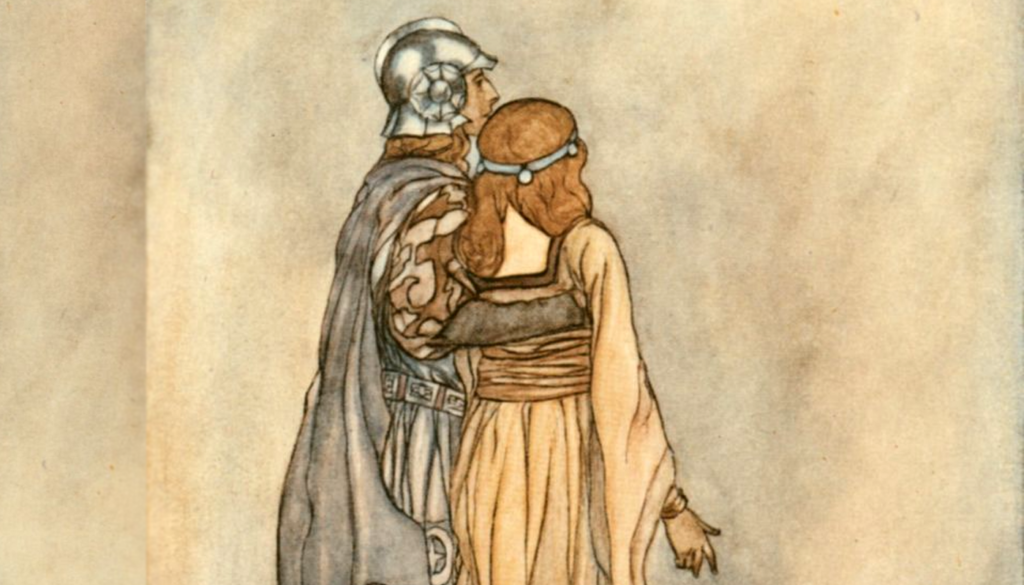
This somber road imagery then seamlessly transitions into Lestat’s recollections of his childhood. Contrary to the reviewer’s initial expectation of a more overtly gothic setting, Lestat’s past is presented with a surprising degree of sunlight, though the true darkness stems not from the environment but from the interpersonal dynamics. The narrative unfolds through a series of escalating sequences, revealed to be Lestat’s deeply troubling dreams. These dreams serve as a vehicle to illustrate the oppressive atmosphere he and his mother, Gabriella, endured at the hands of his father and brothers, whom they derisively refer to as "the cabbages." Their cruelty is depicted through their mockery of Lestat’s stutter and their confiscation of Gabriella’s book, highlighting a deeply dysfunctional family unit characterized by boorish behavior and emotional abuse.

The Unreliability of Memory: Lestat’s Wolf Narrative
A pivotal element of Lestat’s recounted past involves the killing of wolves, an event he previously stated defined him for a period. However, the episode significantly glosses over the details of this formative experience. This narrative choice raises critical questions about Lestat’s motivations and the veracity of his storytelling. While the outcome—villagers subsequently worshipping him—suggests the wolves were indeed eliminated, the narrative elides the specifics of how this transpired.
The reviewer posits that this omission might be a strategic choice by Lestat, the narrator, to prioritize his complex relationship with his mother over the details of the wolf incident. He explicitly states that Gabriella sent him out to die, a revelation delivered without subtext, emphasizing his mother’s perceived desire to liberate him from his oppressive home life. This aligns with a classic Lestat characteristic: a primal will to survive, regardless of the circumstances. However, the fundamental question remains: can Lestat’s account be trusted? The narrative structure actively invites this skepticism, prompting an examination of why Lestat chooses to present his history in this particular, often selective, manner.
The Art of Storytelling: Lestat as the Ultimate Editor
"The Vampire Lestat" positions Lestat as an active editor of his own life story. The format of his oral history, presented through 111 vinyl albums, is explicitly stated as something that cannot be altered in the way he manipulated Louis’s book. Listeners can skip tracks or jump around, but they cannot fundamentally change the content. This suggests Lestat’s desire to control the narrative entirely, ensuring it is told precisely as he intends. The documentary segments, in this context, function as supplementary material, offering external perspectives that coexist with, but do not overwrite, Lestat’s curated account.
This dynamic draws parallels to the narrative structure of the previous season, where Armand provided his version of events alongside Louis’s. In Louis’s storytelling, there is a theoretical framework of cooperation, with an active listener (Daniel Molloy) and the introduction of other voices, such as Armand’s, which can corroborate or complicate the narrative. However, Lestat’s approach is more singular; he has created a story where his voice is paramount, while simultaneously allowing for—or perhaps inviting—a secondary interpretation. This is juxtaposed with his apparent fury towards Louis for sharing his own narrative without Lestat’s prior knowledge, an act Lestat perceives as a relinquishing of control and an attempt to cast him as the villain. Lestat’s retaliation, as hinted at, involves manipulating Louis’s own words within his constructed narrative.

Gabriella: A Mother of Ambiguity and Manipulation
The character of Gabriella is presented with a deliberate layer of ambiguity, partly because she, too, is a creation of Lestat’s memory. Yet, Lestat is also a product of her influence, shaped by her "manipulation," her "slipperiness," and what can only be described as her "damage." Their intertwined existence is central to Lestat’s psychological landscape. The reviewer notes that Lestat may be attempting too hard to portray Gabriella as purely positive and magical, a subtle indication of his underlying complex feelings.
Their scenes together possess a languid quality, distinct from the chaos that often surrounds Lestat. However, this intimacy is confined to just the two of them. Lestat demands her attention, and she, in turn, toys with him, and even her food, demonstrating a subtle power dynamic. Gabriella’s "slinkiness," her distinctive facial mannerisms, and her persistent accent, even after decades, feel somewhat contrived and campy. This artificiality, paradoxically, serves a brilliant narrative purpose. Ehle’s performance, particularly her physical demeanor, often contradicts Lestat’s idealized descriptions of his mother. While he claims to love her, he is clearly aware of her true nature, but he struggles to convey this awareness directly to the audience.
The scene where Gabriella provocatively interacts with Lestat’s wounds before walking away after he asserts her continued belonging to him is described as grotesque, cruel, and definitive. It illustrates a profound moment of rejection, where Lestat’s plea for confirmation of their bond is met with abandonment. This experience undeniably contributes to Lestat’s complex psychological makeup. The fact that Louis, presumably, remains unaware of Gabriella’s existence further highlights the compartmentalization of Lestat’s life and his carefully guarded secrets.
The Band’s Revelation: A Crucible of Curiosity and Fury
When Lestat is not engaged with Gabriella, he finds himself in confrontations with his bandmates regarding his vampiric nature. Each member reacts with a distinct blend of fury, curiosity, and disbelief. Alex’s primary concern is Lestat’s dietary habits, inquiring whether he consumes humans. Larry expresses anger when Lestat refers to the band as "his," suggesting a territorial dispute. Salamander, engrossed in Daniel Molloy’s book, poses specific, probing questions, eliciting tailored, and perhaps disappointing, responses from Lestat, such as his declaration that he refrains from romantic entanglements with bandmates. TC offers snarky commentary while also demonstrating an interest in the details of vampiric existence.
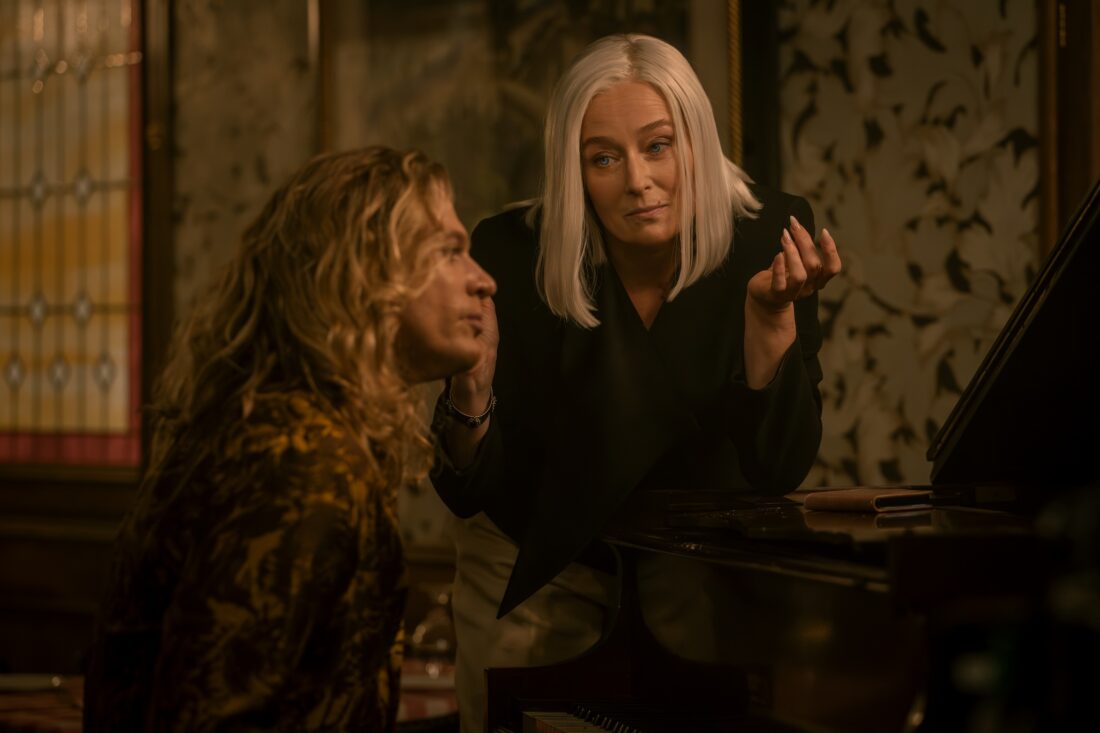
Sam Reid’s portrayal of Lestat in these scenes suggests a complex emotional state. There appears to be a sense of relief in no longer having to conceal his true identity. Simultaneously, there’s an underlying wish that these humans would simply accept the reality of his nature and move forward. Lestat masterfully deflects the majority of their questions, with his claim of possessing "the blood of Akasha" proving uninformative, as its significance remains obscure to his bandmates. This interaction highlights Lestat’s desire for acceptance, yet his reluctance to fully divulge the intricacies of his existence.
The Exes’ Showdown: Louis and Lestat’s Legal and Emotional Battleground
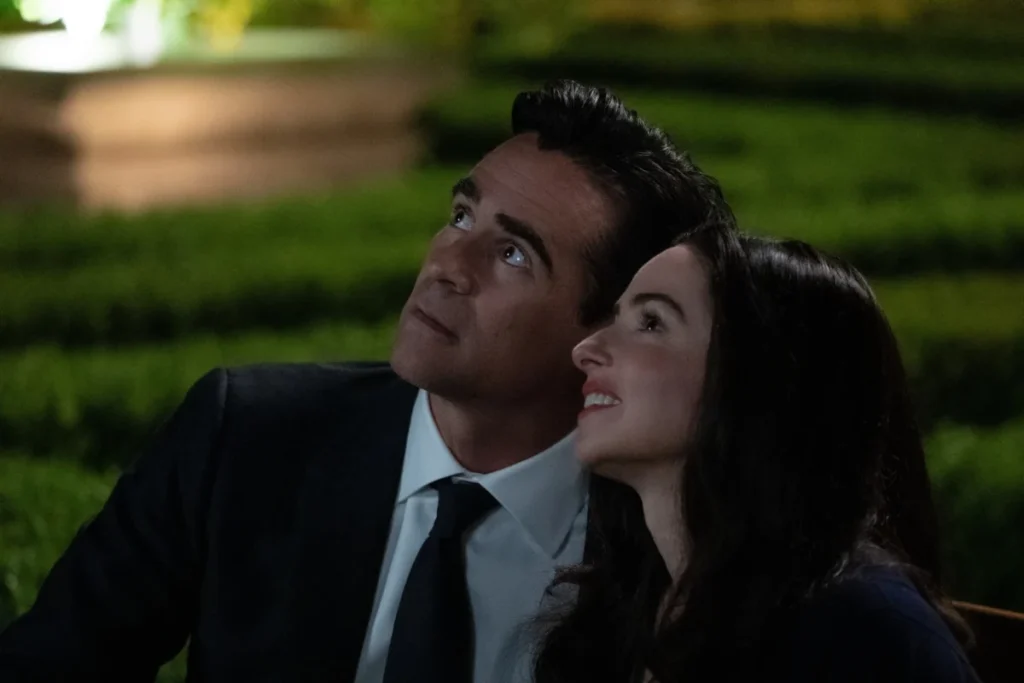
The confrontation between Lestat and Louis, mediated by their respective legal representatives and companions, proves to be the episode’s most dramatic and revealing scene. Jacob Anderson’s interpretation of Louis as intentionally "trolling" Lestat resonates with the performative aspects of their interactions. Louis’s carefully worded statements—expressing concern for Lestat, interpreting his songs as cries for help, and asserting ownership of 45 percent of Lestat’s merchandise—are designed to provoke and undermine. The logistical and legal basis for Louis’s claim to merchandise rights remains a perplexing detail for the reviewer, hinting at the vast financial empire Louis has amassed through various ventures, including real estate, hotels, and potentially malls, as mentioned by Daniel Molloy. The revelation of Louis’s financial acumen provides context for the destruction of his vampire-themed hotel.
The "he said/he said" nature of this meeting is compelling, particularly Louis’s team’s suggestion that Lestat initiated the meeting. This raises further questions about Lestat’s narrative control: is this another instance of Louis’s calculated provocation, or a detail Lestat omitted from his own account? The episode’s focus on the competing narratives underscores the central theme of subjective truth and the power of persuasion.
Visual Storytelling: Lestat’s Attire and Demeanor
A deeper analysis of Sam Reid’s performance, particularly his physicality and costume choices in each encounter, reveals significant thematic insights. During the meeting with Louis, Lestat is depicted in layers and sunglasses, projecting an image of self-protection and deflection. His attire during a dinner date with Gabriella is more subdued, though still clothed. In contrast, his interactions with his bandmates find him emerging from his coffin, half-dressed, and notably relaxed, suggesting a degree of comfort in this less guarded state. On stage, he is again partially undressed, signifying his perceived control and his performance of curated narratives.

The presence of an NDA during his interactions with the band underscores his continued efforts to manage the flow of information. With Gabriella, the layers of protection are psychological, as she subtly manipulates his self-perception. Louis’s disruption of Lestat’s narrative control, however, forces Lestat into a defensive posture. His only direct eye contact with Louis occurs under specific circumstances: during a staged performance, a seemingly romantic gesture that is dramatically altered by the arrival of Louis’s book, mirroring a similar encounter via FaceTime in Montreal. These visual cues reinforce the idea that Lestat only engages on his own terms, when he feels he has the upper hand or can control the narrative.
The Concert Scene: A Spectacle of Observation
The concert scene, while musically brief, serves a crucial narrative purpose by focusing on the audience and their interactions. The presence of Daniel directing his cameraman to film Louis and Gabriella, his displeasure at Rashid’s arrival, and his private conversation with Louis, all highlight the act of observation and the construction of visible narratives. Gabriella’s watchful gaze, first on Lestat and then on Louis, adds another layer of interpersonal dynamics. The scene is, in essence, a meta-commentary on who is watching, what they are seeing, and how these perceptions are being shaped, whether through a camera lens or the jealous eyes of a lover. Meanwhile, the band continues their performance, largely oblivious to the complex dramas unfolding around them, with Alex still nursing his grievance.
The Climax: A Mother’s Influence and a Calculated Narrative
The episode’s climax unfolds on two distinct fronts. The first involves Lestat’s private meal with Gabriella, where she delivers manipulative commentary regarding Louis and Claudia, successfully provoking Lestat. This is followed by a brief, almost reluctant, flashback to their joint act of murdering the "cabbages." The scene is characterized by its disjointed nature, as if Lestat wishes to minimize his engagement with this violent past. Their immediate reactions post-turning—Lestat’s desire for safety and Gabriella’s immediate urge for revenge—reveal their core personalities. Gabriella’s swift action to eliminate their family, despite Lestat’s apparent reluctance, underscores her dominant influence.
The second, and arguably more compelling, climax involves a scene described as "Daniel and Louis Go to Dinner: Lestat’s Version." This segment explicitly showcases Lestat’s manipulation of narrative, with him stating his intention to speak for tertiary figures like Daniel and Louis within his own timeline. He asserts his authority, declaring, "I am everywhere," in his quest to explain how he inadvertently awakened the "queen" and unleashed her wrath. This declaration provides a more concrete, albeit Lestat-centric, explanation for the calamities that ensued from his album and tour.

Hints of a Wider World: The Great Conversion and Growing Numbers
The episode offers subtle yet significant hints about a world beyond Lestat’s immediate concerns. Gabriella alludes to the "Great Conversion," a term Lestat acknowledges without overt reaction. Raglan James informs Louis of "exponential growth" in "your numbers," suggesting a burgeoning vampire population or influence. These details, casually delivered, are impactful because they contrast with the show’s predominantly Lestatian perspective, which has been narrowly focused on his personal relationships, music, and touring. Episode two, with only seven episodes in the season, begins to reveal the precarious and threatening global context outside Lestat’s insulated world.
The Dinner Scene: A Masterclass in Narratorial Control and Emotional Resonance
The dinner scene between Daniel and Louis, framed by Lestat’s narrative, is a highlight. The reviewer expresses particular enjoyment in the revelation of Lestat’s control over his "narrative devices"—be they fledglings or other significant figures. The story Daniel recounts, detailing his perception of Armand’s presence and Louis’s dissatisfaction with Daniel’s portrayal of him, adds layers of complexity. Louis’s recounting of seeing a girl resembling Claudia is a poignant moment, weaving themes of love, guilt, grief, and the enduring nature of haunting. Daniel’s apology and Louis’s assertion that he and Lestat were reconciling before the publication of his book—"Is any of this even real?"— encapsulates the episode’s central exploration of subjective reality and the unreliability of memory.
Raglan James: A Harbinger of Untold Histories
Raglan James, portrayed with relish by Justin Kirk, emerges as an even more exaggerated figure within Lestat’s narrative. He offers the first glimpse into events following the conclusion of season two, specifically Louis’s invitation to vampires worldwide to confront him. James reveals that Louis subsequently dispatched a significant number of them. This revelation positions Louis, the "sensitive" vampire who abstains from consuming humans, as the chosen agent of the Talamasca to neutralize a troublesome, drug-distributing coven. The personal connection for Lestat and Louis lies in the fact that the leader of this "Fang Gang," whose nickname was tattooed on Baby Jenks’s neck, is identified as Bruce, a figure Lestat clearly disdains. This plot point introduces a new antagonist and a potential nexus of conflict, drawing Lestat and Louis into a shared, albeit adversarial, objective.
The episode, through its intricate narrative structure and thematic exploration of memory, manipulation, and the construction of truth, offers a compelling installment that demands careful attention. The interplay between Lestat’s curated past and the burgeoning hints of a larger, more perilous world outside his immediate experience sets the stage for future conflicts and revelations.