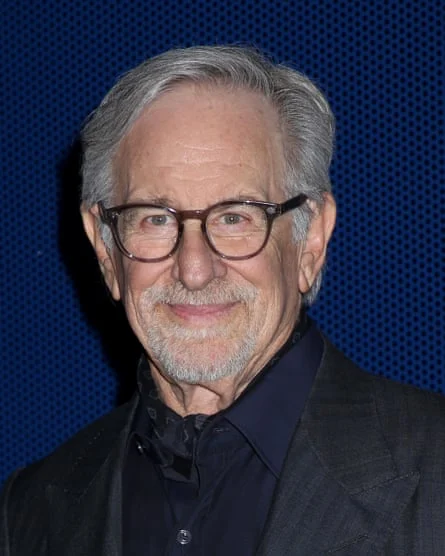
In an era of increasingly bizarre and often demeaning celebrity press tours, Steven Spielberg has, for the most part, navigated the promotional circuit for his latest project with a remarkable degree of decorum and intellectual engagement. While many of his contemporaries have subjected themselves to viral challenges involving extreme spice consumption or awkward crafting sessions for online platforms, Spielberg has instead been immersed in a retrospective exploration of his unparalleled career. This approach, far from being a mere avoidance of modern media trends, represents a deliberate and dignified elevation of the art of filmmaking and the legacy of its most celebrated practitioners.
The contrast between Spielberg’s current promotional strategy and the more outlandish tactics employed by other public figures is stark. He has, refreshingly, sidestepped the ubiquitous "hot wing challenges" or the forced jollity of presenting a "cloche-covered sausage roll" to a camera. Nor has he engaged in the more performative digital spectacles, such as fashioning clay effigies for YouTube videos. This commitment to a more substantive engagement with his work deserves commendation, setting a precedent for how artistic legacies can be honored and discussed.
Instead of participating in such fleeting, often superficial, digital trends, Spielberg’s promotional cycle has been characterized by a "maestro tour." This approach allows him to contextualize his new work against a body of cinematic achievements that is, by any measure, extraordinary. Publications have seized this opportunity to delve deep into his filmography, producing extensive oral histories that chart his remarkable journey from a young wunderkind to a globally recognized auteur. His appearances on prestigious platforms, such as the final week of Stephen Colbert’s late-night talk show, underscore his stature. Furthermore, a particularly noteworthy interview with The New York Times saw him meticulously dissecting the tactile qualities of E.T. the Extra-Terrestrial’s skin.
The E.T. Skin Conundrum: A Viral Moment of Cinematic Inquiry
One particular interview segment, captured in a widely shared clip from The New York Times, has become a focal point of discussion. In this exchange, interviewer Rachel Abrams posed a question that, while seemingly trivial, sparked considerable public interest: "Was E.T. slimy or dry?" Spielberg’s reaction, a mixture of bewilderment and thoughtful consideration, resonated with viewers. He definitively responded, "E.T. was a little moist but never slimy." He further elaborated, explaining that the beloved alien character was only dry when he was unwell, and crucially, that "E.T. never had tendrils of drool," a characteristic he reserved for creatures like Xenomorphs from the "Alien" franchise.
This specific exchange, while generating mild viral attention, highlights a broader phenomenon in celebrity interviews. The "anecdote jukebox" effect, where long-established figures often fall back on well-worn stories due to the sheer volume of interviews they have conducted, is a known occupational hazard of sustained fame. While the question about E.T.’s skin texture might appear to be a simple, almost absurd inquiry, it can also be viewed as an attempt to elicit fresh perspectives from a filmmaker who has been interviewed extensively over decades. The potential value lies in uncovering genuinely novel insights, even about seemingly minor details of his iconic films. The determination of E.T.’s skin texture as "moist but never slimy" might, in its own peculiar way, add a nuanced layer to the public’s understanding and appreciation of the film’s intricate design.

The Rationale Behind the Inquiry: Public Interest or Clickbait?
The motivation behind Abrams’ question has been a subject of debate. A charitable interpretation suggests that it was an effort to draw out new information from a seasoned interviewee, recognizing that even the most familiar stories can hold fresh appeal when framed with a specific, perhaps unexpected, angle. The goal, in this view, is to extract genuinely new data points that contribute to the ongoing cultural conversation surrounding a celebrated artist.
However, an alternative perspective raises concerns about whether the question was deliberately provocative, designed to generate online traction rather than genuine insight. If the intention was purely to capitalize on the virality of sensational or quirky content, then the approach could be seen as undermining the gravitas of interviewing a filmmaker of Spielberg’s caliber. The debate over the question’s intent underscores the complex relationship between journalistic inquiry, celebrity promotion, and the demands of the modern digital media landscape.
Deconstructing the E.T. Texture: A Visual and Narrative Analysis
Abrams’ justification for the question, citing its prevalence within her social circle, also warrants scrutiny. The argument that the public interest in E.T.’s skin texture stems from a long-standing social discussion seems somewhat disingenuous. After all, the visual evidence within the film itself is readily available. E.T. is a consistently visible character, and his tactile qualities are, for the most part, apparent to any viewer. The film’s narrative and visual design clearly establish E.T.’s skin as having a texture akin to "pleather or pleather-adjacent," or perhaps more evocatively, the skin of a "Mediterranean grandmother." There is a distinct absence of any visual cues suggesting sliminess.
Had E.T. possessed a slimy exterior, the film’s narrative would likely have incorporated explicit visual or situational evidence. For instance, one might expect scenes depicting Drew Barrymore slipping in E.T.’s "slug trail," or a moment during the climactic farewell between E.T. and Elliott where Elliott might have commented on his slime-covered clothing, perhaps with a sigh of exasperation, "These were new on today." The absence of such moments strongly suggests that the premise of a "slimy" E.T. is a misinterpretation.
The Future of Celebrity Interviews: Navigating the Digital Frontier
The enduring appeal of the "E.T. slimy or dry?" question, despite its seemingly straightforward answer, points to a broader trend in media consumption. The digital age thrives on replicable formats and easily digestible content. It is plausible that The New York Times, recognizing the viral potential of such inquiries, might be developing a series that probes prominent filmmakers with self-evident questions. One can envision future installments that might challenge Martin Scorsese on the number of ears possessed by Jake LaMotta, or question Paul Thomas Anderson about Daniel Day-Lewis’s potential hidden identity as a mouse. While these examples are hyperbolic, they illustrate the potential for this approach to generate significant engagement, albeit with a degree of absurdity.
Spielberg’s Career: A Foundation of Cinematic Excellence
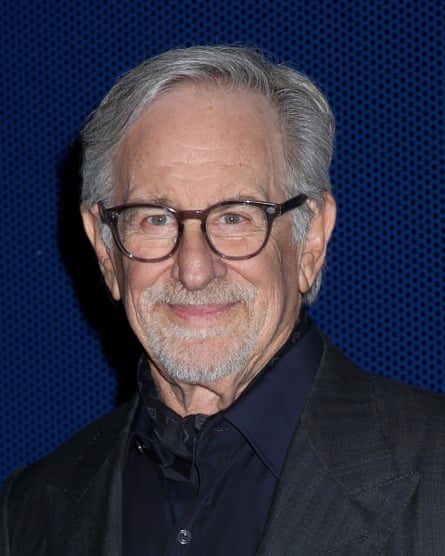
The promotional discourse surrounding Steven Spielberg’s current project is not solely defined by the E.T. skin debate. It is fundamentally an opportunity to engage with a career that has shaped the landscape of modern cinema. Since his early directorial efforts, Spielberg has demonstrated an uncanny ability to blend commercial appeal with artistic merit, a rare feat in Hollywood.
Early Career and Breakthroughs:
Spielberg’s career trajectory began in television with episodes of "Night Gallery" and "Columbo" before his feature film debut with "Duel" (1971), a tense thriller that immediately showcased his directorial prowess. However, it was "Jaws" (1975) that catapulted him to international stardom, revolutionizing the summer blockbuster. This was followed by "Close Encounters of the Third Kind" (1977), a scientifically grounded yet emotionally resonant science fiction epic.
The Blockbuster Era and Critical Acclaim:
The 1980s saw Spielberg solidify his reputation with a string of commercially and critically successful films. "E.T. the Extra-Terrestrial" (1982) became a cultural phenomenon, captivating audiences worldwide with its heartwarming story of friendship and belonging. "Indiana Jones" franchise, beginning with "Raiders of the Lost Ark" (1981), delivered thrilling adventure narratives that became enduring classics. He also explored more mature themes with films like "The Color Purple" (1985), earning significant critical recognition.
Mastering Historical Narratives:
The 1990s marked a period where Spielberg delved into profound historical narratives with unparalleled success. "Schindler’s List" (1993) was a monumental achievement, earning him Academy Awards for Best Director and Best Picture, and providing a visceral account of the Holocaust. This was followed by "Saving Private Ryan" (1998), a searing depiction of World War II that redefined war filmmaking with its unflinching realism and emotional depth, also earning him a Best Director Oscar.
Continued Innovation and Legacy:
In the 21st century, Spielberg has continued to innovate, tackling diverse genres and subjects. From the groundbreaking CGI of "Jurassic Park" (1993) to the political intrigue of "Lincoln" (2012) and the deeply personal "The Fabelmans" (2022), his output remains consistently compelling. His work often explores themes of childhood wonder, the human capacity for both good and evil, and the enduring power of connection.
The Significance of Spielberg’s Promotional Approach
Spielberg’s decision to engage in a career-spanning retrospective during his current press tour is more than just a strategic choice; it is a statement about the enduring value of cinematic art. By focusing on the depth and breadth of his filmography, he invites audiences and critics alike to consider his contributions not just as individual films, but as a cohesive body of work that has influenced generations. This approach allows for a more profound and lasting engagement with his legacy, moving beyond the ephemeral trends of digital media. It reinforces the idea that substantial artistic achievement warrants substantive discussion, a refreshing departure from the often superficial nature of modern celebrity promotion. The "maestro tour" is, in essence, a masterclass in how to champion a lifetime of creative endeavor.