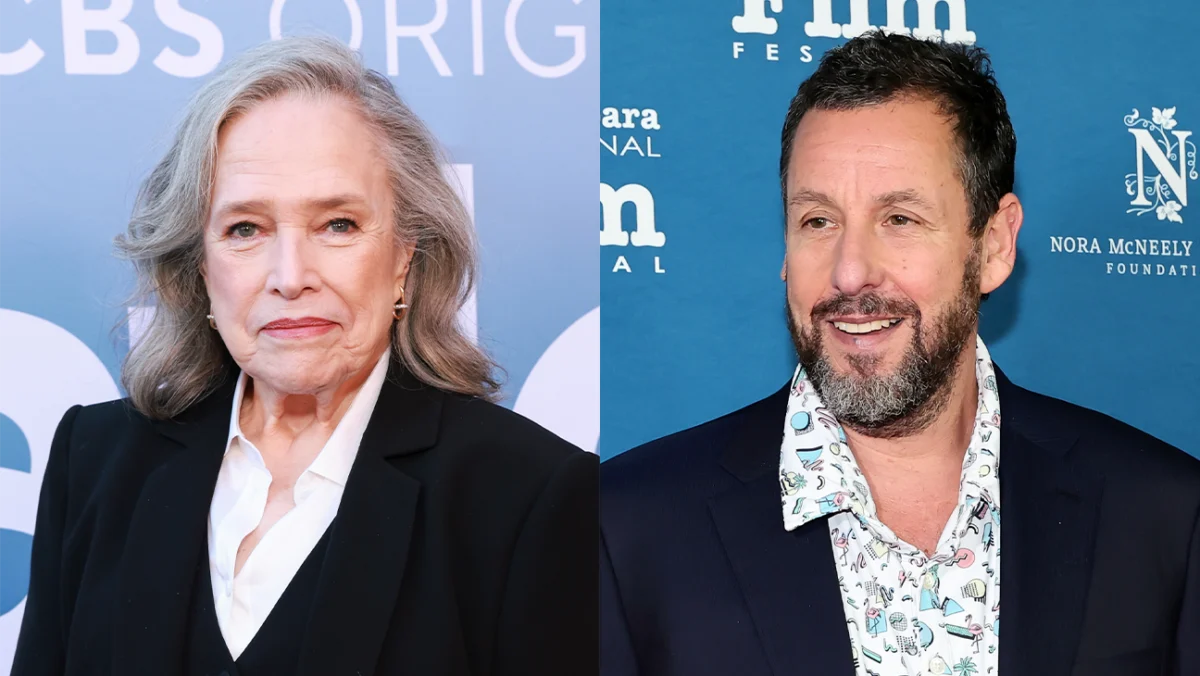
Veteran actress Kathy Bates, an acclaimed Emmy and Oscar winner renowned for her formidable performances across diverse genres, has recently unveiled a fascinating anecdote about her initial dismissal of the script for the 1998 sports comedy hit, The Waterboy. Speaking in a candid video interview with The Hollywood Reporter, Bates admitted to initially throwing the screenplay in the trash, citing her unfamiliarity with the film’s star, Adam Sandler, at the time. This revelation underscores the unpredictable paths that lead to cinematic success and highlights the often-pivotal role of personal connections and serendipitous interventions in an actor’s career decisions. Furthermore, Bates disclosed a similar moment of hesitation regarding her current role in the CBS legal drama reboot, Matlock, emphasizing a pattern of almost passing on projects that ultimately became significant milestones in her distinguished filmography.
The "Waterboy" Revelation: A Misunderstood Script and a Niece’s Intervention
Bates recounted the surprising origin story of her involvement with The Waterboy, a film that would go on to gross over $188 million worldwide and solidify Adam Sandler’s comedic stardom. "I didn’t know who Adam Sandler was and I got a script. It was a football script, and I was like, ‘Oh, let’s give me a football,’" Bates explained, setting the scene for her initial reaction. Her expectation, perhaps for a more serious dramatic role given her established gravitas from films like Misery and Fried Green Tomatoes, was quickly unmet by the script’s early pages. "Twelve pages I read and I thought, ‘Oh man, I can’t do this thing. This is ridiculous,’" she confessed, detailing her immediate impulse to discard the material.
The script’s journey from the wastebasket back to consideration was orchestrated by Bates’ niece, Linda, who also works with her. "So, I just tossed it in the waste basket, and my niece, who works with me, saw it and picked it out of the [trash]. She said, ‘What is this?’" Bates recalled. Her niece’s curiosity proved to be a turning point. Bates’ dismissive response — "It’s a script that some kid Adam Sandler [wrote]" — was met with an incredulous retort: "Adam Sandler! You don’t know the Hanukkah song?" This specific reference to Sandler’s popular novelty track, "The Chanukah Song," which he famously debuted on Saturday Night Live in 1994, was the key that unlocked Bates’ reconsideration. The song, a humorous ode to Jewish celebrities and cultural figures, had become a widespread cultural phenomenon, particularly among a younger demographic, highlighting the generational gap in Bates’ awareness of Sandler’s burgeoning fame.
Adam Sandler’s Rise and "The Waterboy"’s Cultural Impact
Adam Sandler’s career trajectory leading up to The Waterboy had been a rapid ascent from sketch comedy to leading man status. After gaining national recognition as a cast member on NBC’s Saturday Night Live from 1990 to 1995, Sandler transitioned successfully into film with hits like Billy Madison (1995) and Happy Gilmore (1996). These films, characterized by their blend of juvenile humor, relatable underdog protagonists, and Sandler’s distinctive comedic persona, resonated strongly with audiences, particularly younger demographics. By the time The Waterboy was released in November 1998, Sandler was a proven box office draw, and the film, directed by Frank Coraci, became another cornerstone of his Happy Madison Productions empire, which he co-founded to produce his own comedic vehicles.
The Waterboy cast Bates as Mama Boucher, the fiercely overprotective and devoutly Christian mother of Bobby Boucher (Sandler), a socially awkward but kind-hearted water boy who discovers an unexpected talent for football. Her portrayal of Mama Boucher was a masterclass in comedic timing, allowing her to inject a theatrical intensity into the character that perfectly complemented Sandler’s quirky performance. The film’s success was not just financial; it further cemented Sandler’s brand of humor and showcased his ability to attract established talent like Bates, lending a layer of unexpected credibility to his often-zany projects. Critics, while often divided on Sandler’s style, frequently praised Bates’ commitment to her role, acknowledging her ability to elevate the material. Her participation signaled a willingness from serious actors to engage with mainstream comedy, often with rewarding results.
Bates’ Perspective on Comedy and Collaboration
Following her niece’s intervention, Bates revisited the script with a new perspective, spurred by the cultural phenomenon of "The Chanukah Song" and perhaps a growing understanding of Sandler’s unique appeal. "So I took another look at it, and I thought, well, I’ll do this for Linda," Bates mused, acknowledging the personal motivation. Her initial skepticism quickly dissolved into genuine enjoyment during production. "Turns out we had the most fun. He’s brilliant. He’s a genius," she stated unequivocally about Sandler. This high praise from an actress of Bates’ caliber speaks volumes about Sandler’s creative process and the collaborative environment he fosters on his sets.
Bates elaborated on her experience, stating, "I dove in the deep end and just had a great time. Just screwed around. And I loved working with him. That’s when he first started really getting known and people really flocking to see him." This sentiment is not uncommon among actors who have worked with Sandler; his reputation for creating a relaxed, family-like atmosphere on set often translates into authentic performances and a palpable camaraderie that resonates with audiences. For Bates, a performer celebrated for her dramatic depth, The Waterboy offered a refreshing opportunity to embrace uninhibited comedic performance, proving her versatility and adaptability to different genres. This experience likely broadened her artistic horizons and demonstrated her ability to connect with a wider audience through comedic roles.
Another Near Miss: The "Matlock" Reboot
The anecdote about The Waterboy is not an isolated incident in Bates’ career. She revealed a similar moment of indecision and almost passing on the script for the CBS legal drama reboot, Matlock, in which she now stars. This recurrence highlights a pattern of initial skepticism followed by a deeper appreciation for the material, often guided by trusted advisors.
"Matlock is a miracle for me," Bates declared, reflecting on her state of mind prior to taking on the role. At 75, with a career spanning decades, Bates confessed to a period of disillusionment. "I had one foot out the door. A film that I did not too long before just was such a heartbreaking disappointment. You know, at my age, I’m going to be 80 in two years, I just thought, this is not working out, it’s not giving me any happiness." This candid admission speaks to the emotional toll and creative frustrations that even highly successful actors can face, particularly as they navigate later stages of their careers in an industry often focused on youth.
It was during this period of contemplation that the Matlock script arrived. Bates’ initial assessment was again dismissive: "Then I got the script for Matlock. And at first I was reading, and I was talking to my friend in New York, Billy. I said, ‘Ah, this is just a procedural.’" Her friend, however, played a role similar to her niece in the Waterboy scenario. "He said, ‘Did you read it? Did you finish it?’ He said, ‘Read it to the end.’" This simple advice proved crucial. Bates followed through, and the script’s conclusion shifted her perspective entirely. "So, I read and, of course, it’s got this great twist at the end. And I thought, ‘OK, now we’re talking.’"
The "Matlock" Journey: From Skepticism to Significance
The appeal of the Matlock reboot, for Bates, lay in its deeper thematic resonance beyond a typical legal procedural. "I wanted it to be about something. I didn’t want it just to be a case of the weak. And the fact that there’s this woman who’s got a real mission and something in the real world that people are struggling with," she articulated. This desire for meaningful storytelling, for characters that grapple with relevant societal issues, underscores Bates’ artistic integrity and her commitment to projects that offer more than superficial entertainment.
In the contemporary Matlock, Bates portrays Madeline Matlock, a sharp and wily septuagenarian who re-enters the workforce at a prestigious law firm. Drawing upon her extensive experience and unconventional tactics, Madeline tackles complex cases, exposes wrongdoing, and champions justice, often against formidable opponents. The series, which has garnered a strong following and was recently renewed for a third season, taps into the broader cultural conversation about ageism, career reinvention, and the enduring relevance of wisdom and experience in a fast-paced world. For CBS, securing an actress of Bates’ caliber for a high-profile reboot was a significant coup, signaling a commitment to quality storytelling and character-driven narratives. The show’s success demonstrates that audiences are receptive to narratives that feature older protagonists in dynamic, impactful roles, challenging traditional Hollywood demographics.
The Revival Landscape and Bates’ Enduring Appeal
The decision to reboot Matlock, a beloved legal drama that originally starred Andy Griffith and ran from 1986 to 1995, reflects a prevalent trend in the television industry: the revival of familiar intellectual property with a contemporary twist. Networks often turn to reboots and revivals to capitalize on established brand recognition and attract both nostalgic viewers and new audiences. The key to their success, however, often lies in casting the right lead, an actor who can both honor the spirit of the original while bringing a fresh perspective. Kathy Bates, with her formidable talent and widespread respect, was an inspired choice to reinvent the iconic character for a new generation.
Bates’ career is a testament to her remarkable versatility and longevity. From her Oscar-winning turn as the terrifying Annie Wilkes in Misery (1990) to her comedic brilliance in The Waterboy and her poignant dramatic work in films like About Schmidt (2002), she has consistently delivered memorable performances. Her ability to transition seamlessly between film, television, and stage, and across genres from horror to comedy to drama, has solidified her status as one of Hollywood’s most respected and enduring talents. Her willingness to embrace new challenges, even those she initially doubted, has allowed her to continually evolve and remain relevant in a dynamic industry.
Beyond the Script: Career Longevity and Industry Realities
Beyond the specific narratives of The Waterboy and Matlock, Bates’ reflections offer a broader perspective on the entertainment industry and the personal journey of a seasoned actor. She expressed profound gratitude for her role in Matlock, particularly in the current economic climate of Hollywood. "Times are hard. A lot of people in this industry are out of work," she noted, acknowledging the widespread challenges faced by many of her peers. This observation resonates with recent industry shifts, including the impact of streaming service changes, evolving production models, and labor disputes that have affected countless professionals.
In this context, having a consistent and fulfilling project like Matlock is not just a professional opportunity but a source of personal solace and purpose. Bates articulated this sentiment beautifully: "a big part of our joy is that we have a place to go every day. We have something wonderful to make." This statement underscores the intrinsic value of creative work beyond its commercial success – the camaraderie, the routine, and the shared purpose of bringing stories to life. For an actress who has dedicated her life to her craft, the ability to continue working on meaningful projects, especially in challenging times, is a profound blessing.
The Unseen Influence: Advisors and Instincts
The stories of Bates almost missing out on The Waterboy and Matlock vividly illustrate the often-underestimated role of trusted advisors in an actor’s career. Whether it’s a niece attuned to pop culture phenomena or a friend offering a crucial second opinion, these external perspectives can be invaluable in pushing artists beyond their initial reservations or blind spots. In an industry where scripts can be overwhelming in number and initial impressions can be misleading, having confidantes who encourage deeper engagement can be career-defining.
Bates’ experiences also speak to the evolving nature of artistic perception. Her initial dismissal of Sandler’s work highlights how certain comedic styles or emerging talents might not immediately register with those from different artistic backgrounds or generations. Similarly, her initial view of Matlock as "just a procedural" points to the challenge of discerning the true potential of a script before fully immersing oneself in its narrative arc. These anecdotes serve as a powerful reminder for artists and industry professionals alike: sometimes, the greatest opportunities lie just beyond an initial glance, waiting for a second read, a trusted nudge, or a willingness to "dive in the deep end."