Thank heavens for cinema, that light in the darkness and the source of all shocking scoops. It tells us to wake up and take action before it’s too late. That we live in the Matrix. That the CIA killed JFK. That our spouse is a robot and our boss an Andromedan. Also that there is an Escher-style staircase beneath the Tokyo subway and a disembodied zombie leg stalking the hook-up parks of Brazil.
How might we react if a trusted friend said all this? Would we be entertained or appalled, enlightened or freaked out? Would we even regard them as a trusted friend any more?
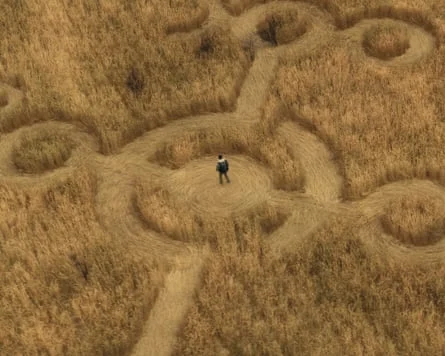
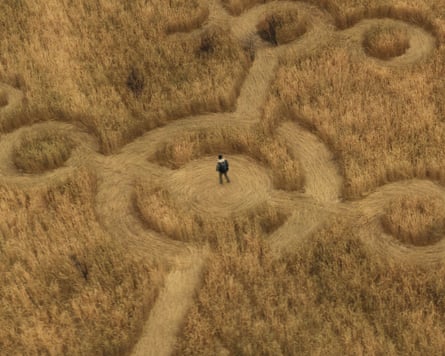
“People have a right to know the truth,” declares the young whistleblower in Steven Spielberg’s Disclosure Day, a line that echoes a thousand other whistleblowers. As played by Josh O’Connor, heroic Daniel Kellner has a backpack of state secrets that incontrovertibly prove the existence of aliens and points to a sinister government cover-up. Disclosure Day is fiction, but it hints at insider knowledge. The 79-year-old director – the most trusted brand in Hollywood – even appears in the trailer to vouch for the film’s authenticity. He splices himself amid the crop circles and spacecraft, commenting on the action like an authoritative news anchor. He says: “Wouldn’t it be wonderful for people to know that all of this is true?”
We are not alone, Spielberg tells us – and neither, for that matter, is his film. Disclosure Day is merely the biggest and splashiest in a wave of paranoid conspiracy tales that recall the 1970s heyday of The Parallax View, Soylent Green, Capricorn One, and The Conversation. These modern-day descendants tell different stories and wander down different rabbit holes. But they all speak the language of alienation and mistrust and seem to be groping towards a revelatory final truth.

The Resurgence of Suspicion: A Cinematic Trend
The current cinematic landscape is rife with narratives that tap into a deep-seated public unease, a pervasive suspicion that the reality we perceive is merely a carefully constructed facade. This trend is not new; it finds its roots in the socio-political anxieties of the 1970s, a period marked by the Vietnam War, the Watergate scandal, and a general erosion of trust in institutions. Films like The Parallax View (1974), which explored a shadowy organization manipulating political events, and The Conversation (1974), delving into the intrusive world of surveillance, captured the zeitgeist of paranoia and distrust.
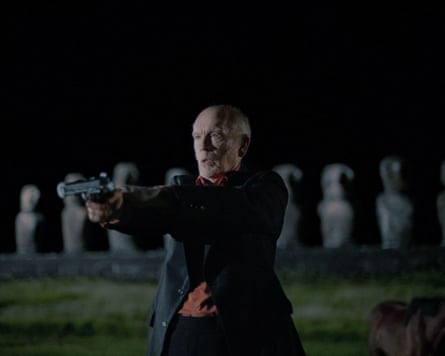
Today, this sentiment has found new cinematic expressions. Yorgos Lanthimos’s Bugonia posits a world where the wealthy elite are not merely detached but are, in fact, extraterrestrial beings. Olivia Wilde’s The Invite delves into the darker, more unsettling aspects of suburban life, hinting at hidden, sinister motives behind seemingly normal social interactions. The forthcoming Wild Horse Nine, directed by Martin McDonagh, promises to unearth buried secrets from America’s Cold War past, featuring CIA veterans played by Sam Rockwell and John Malkovich. Malkovich’s character’s question, “Do you ever get paranoid that you’re not being paranoid enough?” perfectly encapsulates the film’s thematic exploration of heightened suspicion in a world where even established intelligence agencies are subjects of doubt.
These narratives, while diverse in their specific plots, share a common thread: they reflect and amplify a growing public skepticism towards established narratives and authority. They offer audiences a vicarious exploration of the "what ifs" that simmer beneath the surface of everyday life, feeding a desire to uncover hidden truths and connect seemingly disparate events into a coherent, albeit often unsettling, whole.
The Appeal of the Unseen Hand
At the heart of the conspiracy theory genre is the allure of an unseen hand, a clandestine force orchestrating events behind the scenes. This appeal is deeply psychological, offering a sense of order, however sinister, in a world that often feels chaotic and unpredictable. As the article points out, “Common sense, our trusted friend, tells us that life is random and arbitrary and that we’re mostly making it up as we go along. But the conspiracy theory is like a seductive interloper, sidling up to assure us that, actually, that’s not true at all. Everything is connected, part of a grand design.”
This desire for connection and meaning is further evidenced by survey data. A 2024 poll suggested that a significant percentage of Americans believe in paranormal phenomena: 61% believe in ghosts, 57% in aliens, and 70% in the devil. More critically, a substantial minority harbors distrust in official accounts of major historical and contemporary events. An 18% belief that the 1969 moon landing was faked, a 20% suspicion that COVID-19 vaccines contain microchips, and a 29% conviction that voting machines were manipulated in the 2020 US elections underscore a widespread susceptibility to alternative explanations, particularly those that challenge official narratives. A 2024 study by the CHIP50 project further highlighted this, revealing that 78.6% of US citizens agree with at least one conspiracy theory, indicating a vast and receptive audience for such narratives.
This creates a fertile ground for films that explore these very beliefs. The Netflix thriller The Truthers, with its character’s pronouncement, “There are no coincidences, honey,” directly taps into this psychological need for interconnectedness. It suggests that these seemingly disparate films are not random occurrences but are part of a larger, perhaps even intentional, dialogue about the hidden workings of the world.
Backrooms: Navigating the Labyrinth of the Unknown
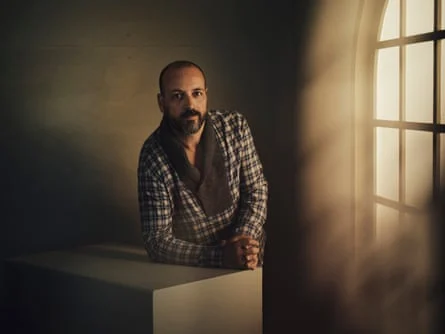
One of the most compelling examples of this trend is the film Backrooms, which emerged from the popular internet series of the same name. Chiwetel Ejiofor plays a furniture salesman who stumbles upon a mysterious, seemingly infinite labyrinth of sterile office spaces and corridors. The film’s director, Kane Parsons, a prodigy at 20 years old, reportedly road-tested the concept online before bringing it to the big screen. The film’s enigmatic nature, its refusal to provide easy answers, is precisely what makes it so effective.
“It’s like a maze,” marvels Ejiofor, describing his character’s descent into the unknown. “It just goes on and on.” This sense of an endless, unknowable space resonates with the feeling of being lost in a world overwhelmed by information and misinformation. The “backrooms” themselves can be interpreted as a potent metaphor for the hidden corners of the internet, the dark web, or even the unsettling spaces behind the screens we engage with daily, be it social media, streaming platforms, or the news itself.
Backrooms excels because it embraces ambiguity. It doesn’t feel the need to meticulously explain every detail, allowing the audience’s own anxieties and imaginations to fill the void. This aligns with a fundamental human need to find patterns and meaning, even in the absence of concrete evidence. The film taps into a primal fear of the unknown and the unsettling possibility that there are vast, unexplored territories just beyond our immediate perception.
The Political Dimension: Conspiracy as a Tool
The rise of conspiracy theories in cinema cannot be divorced from the current political climate, particularly in the United States. Ari Aster’s Eddington, set during the COVID-19 pandemic, features Joaquin Phoenix as a small-town sheriff who embodies anti-establishment sentiment, complete with a banner proclaiming, “YOUR [sic] BEING MANIPULATED.” This character is a reflection of a broader cultural shift where conspiracy thinking has moved from the fringes to the mainstream, amplified by social media and weaponized by political actors.

The article draws a sharp parallel between the cinematic exploration of conspiracy and the rhetoric of political figures, notably Donald Trump. His railing against the "deep state" and his positioning as a protector of a "dispossessed public" mirror the narratives of many conspiracy theories, suggesting a shared language and worldview. This phenomenon has led to a situation where, as the article suggests, "No modern-day film-maker, perhaps, speaks the language of the conspiracy thriller better and louder than the White House itself."
This blurring of lines between fiction and political discourse is a significant development. The 1970s conspiracy films were largely a form of resistance, a critique of government overreach and institutional failure. Today, the lines are more complex. Films like Eddington may satirize this culture, but they also become a symptom of it, reflecting a society where distrust is pervasive and the search for hidden truths has become a defining characteristic of public discourse.
The Media’s Role in the Conspiracy Ecosystem
The strategy of “flooding the zone with shit,” as attributed to Steve Bannon, a former strategist for Donald Trump, highlights the deliberate use of disinformation and confusion as a political tactic. This approach serves multiple purposes: it can distract from genuine issues, mask incompetence, and exhaust the public, making them less likely to engage critically with information. In this context, cinematic conspiracy thrillers can be seen as both a reflection of and a contributor to this information-saturated environment.
The article points out that while the best conspiracy tales can offer a path to liberation by exposing hidden truths, the genre’s power has been co-opted. Films like Bugonia and Backrooms, while excellent in their own right, are described as feeling like “offshoots of the Trump Cinematic Universe.” This suggests that the very narratives that once served as a counter-narrative to power have become intertwined with it, or at least are tapping into the same public consciousness that fuels such political movements.
The timing of Spielberg’s Disclosure Day coinciding with the White House’s release of declassified UFO files, and the subsequent online speculation of a coordinated effort, exemplifies this complex interplay. While Spielberg vehemently denied any such coordination, the very fact that the speculation arose underscores how deeply ingrained the idea of hidden agendas and coordinated narratives has become in the public imagination.
The Enduring Human Need for Narrative
Ultimately, the enduring appeal of conspiracy theories, both in cinema and in broader society, stems from a fundamental human need for narrative and meaning. In a world that can feel overwhelming and random, conspiracy theories offer a comforting illusion of order and control. They provide a coherent story, a sense that life, despite its complexities, ultimately makes sense.
Thomas Pynchon, a celebrated chronicler of conspiracy, identified a state that is even more challenging than paranoia: an "anti-paranoiac state" where nothing connects, where there is no discernible pattern or truth to uncover. This state, he argued, is difficult for many to bear for extended periods. Humans crave plot twists, cliffhangers, and reveals. They seek explanations, even if those explanations are unsettling.
Spielberg, Lanthimos, Aster, the young director of Backrooms, and even figures like Donald Trump, all understand this fundamental aspect of human psychology. They recognize that audiences and citizens alike are drawn to the idea that there is more to the story, that behind the mundane lies the extraordinary, and that the truth, however elusive, is out there waiting to be discovered. The cinematic resurgence of conspiracy thrillers is not merely a trend; it is a reflection of a deep-seated human impulse to make sense of a complex world, even if that sense-making leads us down the most improbable of rabbit holes. The question is not whether we are paranoid enough, but whether we can discern the difference between a compelling narrative and a dangerous delusion in an era where the lines between them are increasingly blurred.