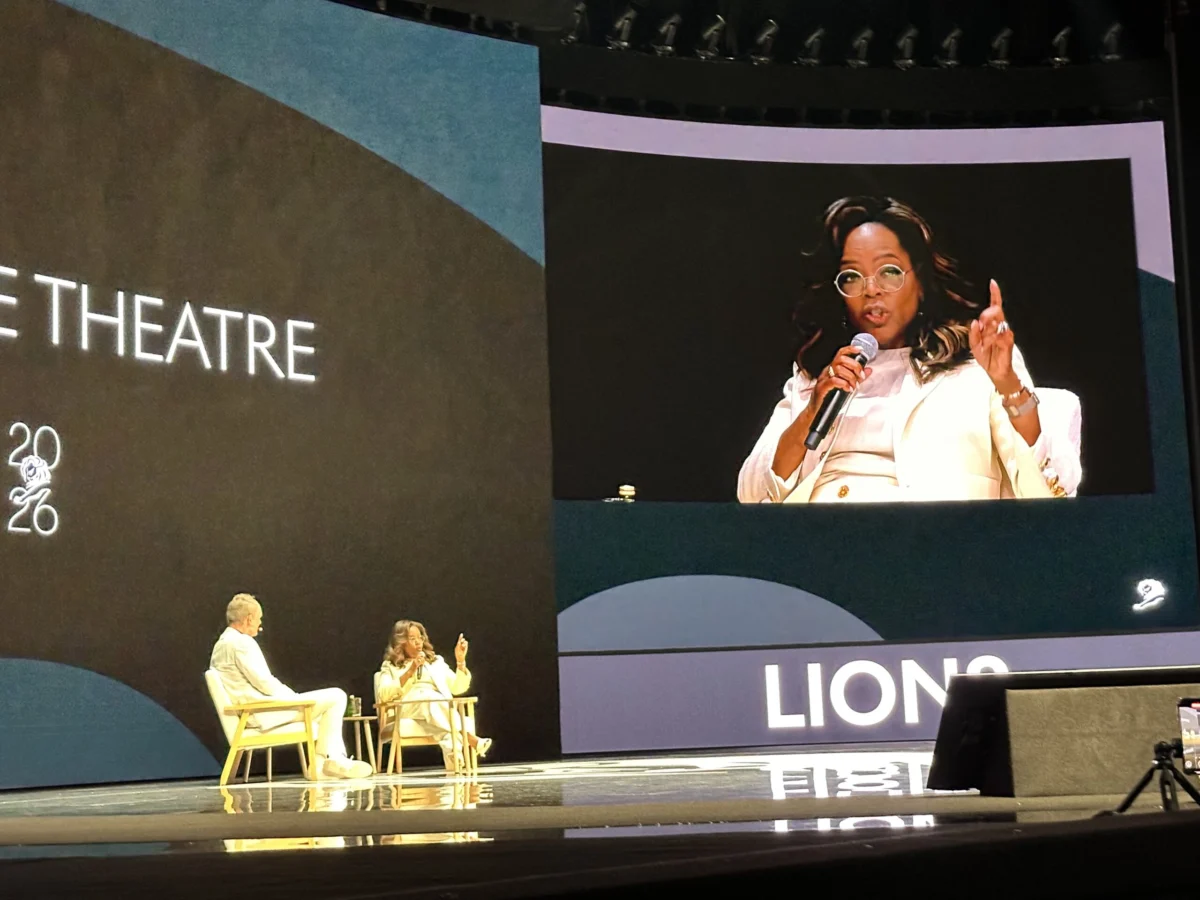
The Cannes Lions International Festival of Creativity, a global benchmark for the advertising and communications industry, witnessed a historic moment on Tuesday morning as Oprah Winfrey took the stage at the Lumière Theatre. The media mogul, whose career spans over four decades and encompasses roles as a talk show host, producer, actress, author, and philanthropist, was present to receive the 2024 Cannes LionHeart Award. The atmosphere inside the Palais des Festivals was electric, with attendees filling the stage-level seating nearly 30 minutes before the scheduled 10 a.m. start. As the venue reached capacity, latecomers were directed to the upper levels, eager to catch a glimpse of an individual widely regarded as one of the most influential figures in modern media history.
The Cannes LionHeart is an honorary accolade presented to individuals who have harnessed their personal influence and creative leadership to drive significant positive change in the world. Since its inception, the award has recognized a select group of global leaders and activists, including Bono, Malala Yousafzai, and former Unilever CEO Paul Polman. Winfrey’s inclusion in this roster underscores her lifelong commitment to social justice, education, and the empowerment of marginalized voices.
A Twelve-Year Journey to the Croisette
The session, titled the Cannes LionHeart Seminar, featured a deep-dive conversation between Winfrey and Phil Thomas, the Chairman of the Cannes Lions International Festival of Creativity. During his introductory remarks, Thomas revealed the long-standing effort required to bring Winfrey to the festival. He shared that his first email invitation to Winfrey’s team dated back to 2012, highlighting a twelve-year pursuit that finally culminated in her 2024 appearance. Winfrey, acknowledging the persistence of the festival organizers, expressed her gratitude for the warm reception, noting that despite the magnitude of the event and the high expectations of the audience, she felt entirely at ease.
Simon Cook, CEO of Cannes Lions, had previously emphasized that Winfrey embodies the "Lions spirit," a reference to the festival’s mission of celebrating work that impacts culture and drives progress. Her presence at the festival comes at a time when the advertising and media industries are grappling with the complexities of brand identity, digital transformation, and the ethical implications of artificial intelligence.
Redefining the Oprah Brand: From Resistance to Alignment
One of the central themes of the keynote was the concept of "branding." For years, Winfrey famously resisted the label of a "brand," fearing that the term suggested a manufactured persona rather than a genuine human connection. "I resisted 100 percent ever being called a brand," she told the audience. "My real intention was being authentic and being true to myself."
However, Winfrey explained that her perspective has evolved. She now recognizes that her public identity functions as a brand, but she maintains a strict requirement for that brand to remain a "full expression" of her values and mission. For the creators and marketers in attendance, her message was clear: authenticity is not a marketing strategy, but a foundational necessity. She cautioned against chasing trends or adopting personas that do not align with one’s core purpose. "Authentic empowerment is something nobody can take away from you," she remarked, adding that being in service to something larger than oneself is the ultimate key to professional and personal fulfillment.
Winfrey’s advice to the creative community focused on the human element of storytelling. She urged creators not to strive merely to be the best in their specific technical fields, such as hosting or content creation, but to focus on becoming the best possible human beings. "Your legacy is every life you touch," she reminded the crowd, a statement that resonated deeply in a room filled with professionals whose work reaches millions of people daily.
Media Ethics and the Protection of Human Dignity
A poignant moment in the seminar occurred when Winfrey reflected on the ethical responsibilities of media platforms. She shared a harrowing and previously detailed account involving the late Whitney Houston. Winfrey recalled a specific instance during the final years of The Oprah Winfrey Show when Houston appeared for a performance. While an earlier interview had shown Houston in a state of recovery, on this particular day, the singer was struggling with a relapse.
Winfrey described the moment Houston accidentally fell off the stage during the recording. In an era before the ubiquity of smartphones, Winfrey took the extraordinary step of appealing to the live studio audience. She asked them to protect Houston’s dignity by not sharing what they had witnessed, fearing that the images would "destroy" the singer. The audience complied—a testament to the deep level of trust Winfrey had cultivated with her viewers.
Winfrey used this anecdote to contrast the media landscape of the early 2000s with the current digital age. She noted that in today’s environment of social media and instant uploads, such a moment of collective protection would be nearly impossible. This reflection served as a broader critique of the "voyeuristic focus" that often dominates modern media, urging creators to prioritize the intentions behind their stories and the well-being of their subjects.
The Evolution of the Oprah Media Empire: The Amazon Wondery Deal
Beyond her philosophical reflections, the Cannes appearance highlighted Winfrey’s continued relevance in the evolving business of media distribution. Earlier this year, Winfrey made headlines by striking a significant multi-year deal with Amazon’s Wondery. This partnership signals a strategic shift for Winfrey’s audio and digital assets, moving The Oprah Podcast, Oprah’s Book Club, and other flagship properties to Amazon’s ecosystem.
Under the terms of the agreement, The Oprah Podcast is set to expand its frequency to two episodes per week starting in the summer of 2024. Wondery has secured exclusive distribution and advertising rights for both audio and video components of the show. Furthermore, the deal grants Amazon rights to the extensive library of The Oprah Winfrey Show, as well as integrations for "Oprah’s Favorite Things."
Starting in July, Wondery will distribute this content across a wide array of platforms, including Amazon Prime Video, Amazon Music, Fire TV Channels, and Audible. By leveraging Amazon’s massive infrastructure, Winfrey is ensuring that her content remains accessible to a global audience in a fragmented media market. This move aligns with broader industry trends where legacy media icons are partnering with tech giants to secure long-term distribution and monetization in the streaming and podcasting sectors.
Legacy and the Obama Presidential Center
Winfrey’s work extends beyond traditional media into the realm of historical preservation and civic engagement. It was recently confirmed that she, alongside actor Tom Hanks, will serve as a primary narrator for the audio tours at the Obama Presidential Center in Chicago. This project reflects her long-standing relationship with the Obama family and her commitment to narrating the American story through a lens of hope and progress.
Her involvement in the Obama Center project further illustrates her belief that "everyone wants to be heard, seen, and understood." During the Cannes seminar, she noted that this fundamental human desire is universal, whether she is interviewing global superstars like Beyoncé—who Winfrey humorously recalled taught her how to twerk—or world leaders like Barack Obama.
Industry Implications: The "Oprah Effect" in the Digital Age
The reaction to Winfrey’s keynote at Cannes Lions serves as a barometer for her enduring influence. At a festival often dominated by discussions of data analytics and programmatic advertising, Winfrey’s emphasis on "the energy of resentment" and the "force for good" provided a stark contrast. Her assertion that saying "yes" when one means "no" costs a person their vital energy was particularly resonant for an industry known for high-pressure environments and burnout.
From a strategic standpoint, Winfrey’s presence reinforced the value of high-trust media environments. For advertisers, her ability to maintain a loyal, engaged audience for over four decades offers a blueprint for brand longevity. The "Oprah Effect," a term coined to describe the massive surge in sales or popularity a product receives after her endorsement, remains a potent force, albeit one that has transitioned from linear television to podcasts, social media, and digital book clubs.
As the session concluded, Winfrey received a standing ovation that echoed through the halls of the Palais. The event underscored a recurring theme at this year’s Cannes Lions: while technology continues to change the "how" of communication, the "why"—rooted in human connection and authenticity—remains constant.
While the rest of the Croisette remained relatively quiet on Tuesday morning following a night of industry networking and parties, the Lumière Theatre stood as the epicenter of the festival’s creative energy. Winfrey’s departure was marked by the same enthusiasm that greeted her arrival, leaving the audience with a final, poignant reminder: "Never lose sight of the real reason you have come to Planet Earth." For Winfrey, that reason has always been, and continues to be, the elevation of the human spirit through the power of story.