Mary Harron’s seminal 1996 debut feature, I Shot Andy Warhol, is returning to screens in a meticulously crafted 4K restoration, offering audiences a fresh perspective on a pivotal moment in cultural history and a deeply complex figure. The film, which predated Harron’s equally incisive portrayal of Patrick Bateman in American Psycho (2000), delves into the life of Valerie Solanas, the radical feminist writer who attempted to assassinate pop art icon Andy Warhol in 1968. This restoration not only enhances the film’s visual and sonic integrity but also prompts a re-evaluation of its themes in the context of contemporary debates surrounding feminism, artistic autonomy, and societal marginalization.
Unveiling a Gritty Yet Magical World
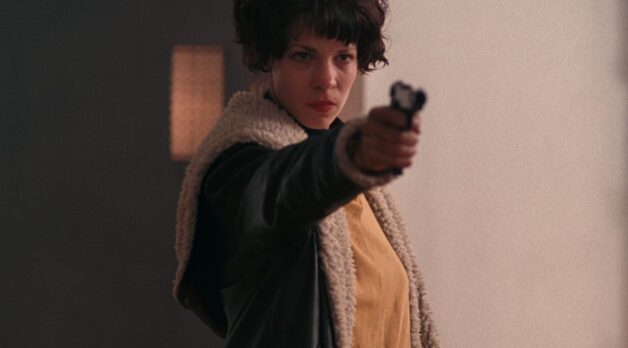
The newly restored version, supervised by cinematographer Ellen Kuras, brings a heightened clarity to Harron’s vision of 1960s New York City and the enigmatic world of Warhol’s Factory. Director Mary Harron recently reflected on the restoration, noting that watching it without sound allowed her to fully appreciate Kuras’s "beautiful lighting and the colors." Harron emphasized the film’s naturalistic aesthetic, describing how Kuras managed to create a "slightly magical world while keeping its grunginess." This delicate balance, resulting in a look that is "both gritty and beautiful—but not too beautiful," is crucial to the film’s authenticity and its portrayal of a bygone era. The restoration process involved a comprehensive digital remastering of the original film elements, ensuring that the film’s textures, hues, and subtle atmospheric details are preserved and presented with unprecedented fidelity for modern audiences.
The Enigma of Valerie Solanas and the SCUM Manifesto
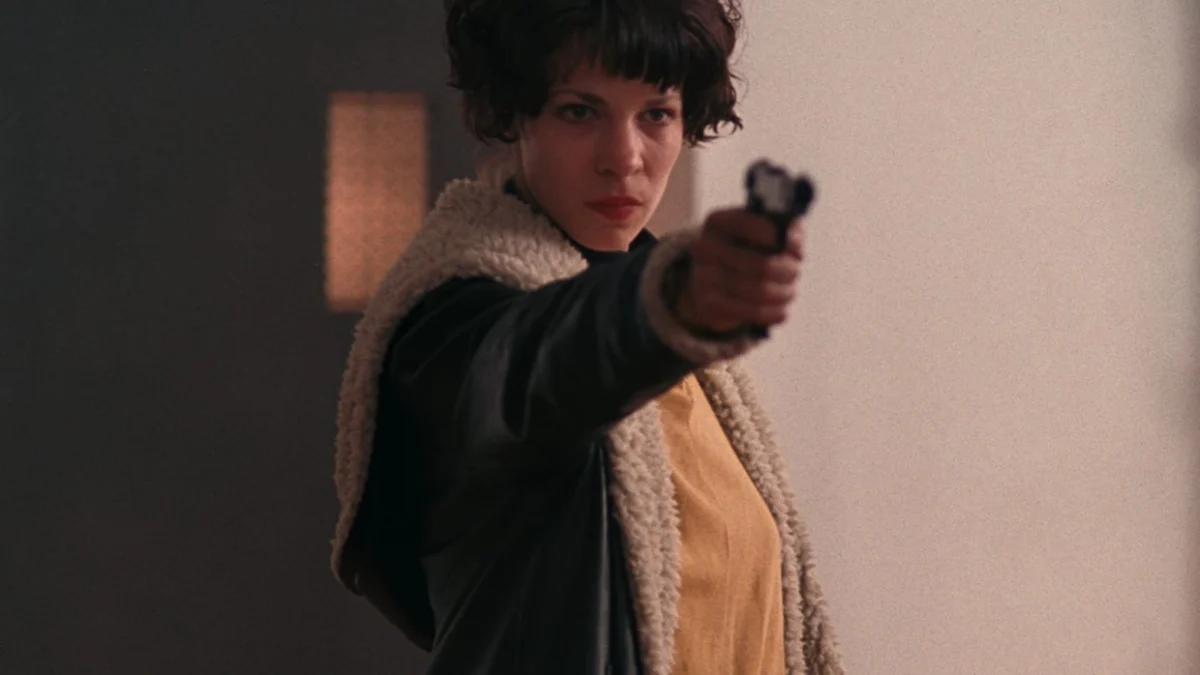
At the heart of I Shot Andy Warhol lies the compelling and often disturbing figure of Valerie Solanas, brought to life by Lili Taylor’s acclaimed performance. Solanas, an outsider navigating the bohemian art scene of downtown New York, is depicted hawking copies of her incendiary SCUM Manifesto (Society for Cutting Up Men Manifesto) for "Two dollars for men, one dollar for women," and struggling to gain recognition for her play, Up Your Ass. Taylor’s portrayal captures Solanas’s "deadpan swagger," embodying her as an uncontainable and undeniable force.
The SCUM Manifesto, first published in 1967, is a document that continues to provoke and intrigue. Harron recounted her initial discovery of the manifesto, initially as a "darkly comic" curiosity amidst her fascination with Warhol and the Velvet Underground. However, upon reading it, she was "completely stunned by how brilliant it was." She described the opening line—"Life in this society being, at best, an utter bore…"—as "so elegant, like Evelyn Waugh," highlighting Solanas’s sophisticated writing style and sharp irony, qualities often overlooked by those who dismiss her as merely "crazy." Harron was particularly struck by Solanas’s "dissection of the absurdity and injustice of modern society, built on this assumption of female inferiority," which resonated with her own experiences of condescension in the 1980s.
The manifesto’s cultural journey is complex. In the late 1980s and early 1990s, when Harron was developing the film, it was known primarily within a small circle of radical feminists and considered a "weirdo outlier" compared to other foundational feminist texts. Its broader circulation began later, spurred by French feminist reprints and even a graphic novel adaptation. Today, it has been "claimed and reclaimed by feminists, radicals, even TERFs," demonstrating its enduring, albeit contested, relevance. Harron acknowledges this fluidity, stating that people "get what they need from a text like that, and interpret it the way they need to for now."
A Chronicle of Radicalism and Artistic Collision
The events surrounding Valerie Solanas and Andy Warhol unfolded within a dynamic period of American history, marked by social upheaval, artistic experimentation, and emerging countercultures.
- 1936: Valerie Solanas is born in Ventnor City, New Jersey. Her early life is characterized by significant instability and trauma.
- 1950s-1960s: Solanas attends the University of Maryland, College Park, where she studies psychology, and later enrolls at the University of Minnesota. She begins to develop her radical feminist theories, fueled by personal experiences and observations of societal injustices.
- 1965: Solanas moves to New York City, immersing herself in the Greenwich Village bohemian scene. She begins writing Up Your Ass, a play exploring themes of female empowerment and male inadequacy.
- 1967: The SCUM Manifesto is self-published by Solanas. Its provocative, satirical, and often misanthropic declarations call for the elimination of men and the establishment of a female-dominated society. Around this time, Solanas attempts to get Andy Warhol to produce Up Your Ass. Warhol, known for collecting eccentric personalities, expresses some interest but ultimately fails to act, leading to Solanas’s growing frustration and sense of betrayal.
- June 3, 1968: Solanas goes to Andy Warhol’s Factory studio at 33 Union Square West. After a heated exchange, she shoots Warhol and art critic Mario Amaya. Warhol is severely wounded, suffering multiple organ damage, and barely survives, requiring extensive surgery and wearing a surgical corset for the rest of his life. Solanas also attempts to shoot Warhol’s manager, Fred Hughes, but the gun jams.
- June 3, 1968 (Later): Solanas turns herself in to the police, reportedly stating, "He had too much control over my life." She is charged with attempted murder, assault, and illegal possession of a weapon.
- 1969: Solanas is declared mentally unfit to stand trial and is committed to psychiatric hospitals. She is later diagnosed with paranoid schizophrenia.
- 1971: Solanas pleads guilty to reckless endangerment and is sentenced to three years in prison, including time served. She is released in 1971.
- Post-Release: Solanas continues to live a transient and increasingly isolated life, often homeless, struggling with mental illness and poverty. She sporadically attempts to re-engage with the feminist movement but remains a controversial and marginalized figure.
- 1988: Valerie Solanas dies of emphysema and pneumonia in a welfare hotel in San Francisco at the age of 52.
- 1996: Mary Harron’s I Shot Andy Warhol is released, bringing Solanas’s story and the SCUM Manifesto to a wider public and initiating new waves of discussion about her legacy.
The Factory and Its Gendered Economy
Harron’s film offers a distinct perspective on Andy Warhol’s iconic Factory, a hub of artistic innovation and complex social dynamics. Rather than presenting a mythologized version, the film positions Valerie Solanas as the audience’s guide into this world. Andy Warhol, as portrayed by Jared Harris, occupies a "strangely passive position," a figure with whom Solanas "can’t figure out" and with whom she shares a simultaneous pull and repulsion.
Harron, who met Warhol twice, was struck by his "incredible fragility and elusiveness." She described his dynamic of intensely engaging with individuals, allowing "hungry-for-attention people" to "blossom," only to then "turn away," leading some, like Solanas, to "go off the deep end." Harron’s portrayal of Warhol is nuanced; she sees him as "a great artist and a flawed human being who could be cruel and cold but was also kind and sensitive." This refusal to create clear heroes and villains was a conscious choice, often drawing criticism for not delivering a "clearer narrative of who’s right and who’s wrong." However, Harron’s aim was to "make you think," allowing sympathies to "ping-pong around" to evoke something "real."
The Factory, in many ways, operated with the "ruthlessness of a Hollywood studio," discarding individuals like Edie Sedgwick when they became "too difficult." Yet, Harron also acknowledges Warhol’s groundbreaking role in elevating marginalized figures, particularly "drag queens, the trans women," and "completely brilliant people who he gave, at least briefly, a form of stardom." She argues that Warhol "had more to do with bringing a gay sensibility into the mainstream than anyone—he just slipped it in." This complexity, however, did not erase the inherent power imbalances, particularly for biological women like Solanas, who experienced a "ruthlessness" and a sense of being "discarded." This "gendered economy" of the Factory, where certain women were celebrated and then cast aside, likely fueled Solanas’s rage, a sentiment echoed in her conviction that "the men who have control over her and over women in general."
Filming the Outsider: Harron’s Distinctive Approach
Mary Harron’s attraction to "loners, outsiders, people who have been disregarded or despised" is a defining characteristic of her filmography, a preoccupation she attributes to feeling like an outsider herself. I Shot Andy Warhol was a challenging project to bring to fruition, particularly as a woman filmmaker tackling an explicitly feminist subject in the 1990s. Harron credits her luck in securing initial funding from a BBC producer interested in radical feminism, followed by crucial support from Christine Vachon and Tom Kalin, key figures in the nascent New York independent film scene.
Harron’s filmmaking models were unconventional. Having worked as a researcher on documentaries, particularly a major Warhol documentary, and directing short films for the BBC, she developed an aesthetic informed by "filmed essays" that combined formats, voiceovers, and parodies. By the time she made I Shot Andy Warhol, she had cultivated the crucial ability to "trust my instincts against opposition." For the visual style, she and cinematographer Ellen Kuras drew inspiration from films like Larry Clark’s Kids (1995) for its "poetic realism, naturalism, available light." They also extensively utilized photographic sources, such as Diane Arbus for hotel sequences, and Magnum photos, to achieve an "energetic, naturalistic" shooting style. Harron notably avoids watching other dramatic films when working on period pieces, preferring to consult "magazines, real life, documentary material" to authentically recreate a world.
The film’s soundtrack also reflects this independent spirit. After Lou Reed denied permission to use Velvet Underground songs, Harron enlisted John Cale to compose the score. This decision, though born of necessity, ultimately contributed to the film’s unique atmosphere, feeling "less like a direct period reconstruction and more like a living document of New York at a particular moment."
Solanas’s Manifesto: Satire, Madness, or Prophecy?
A persistent question surrounding the SCUM Manifesto is its true nature: Is it satire, a product of madness, or a serious political statement? Harron’s intention was always to leave this question "productively open," believing that it "doesn’t really belong" in a single category. She argues that classifying it solely as satire, like Jonathan Swift’s A Modest Proposal, risks placing it "in a safe place it doesn’t really belong in." For Harron, the manifesto is "both brilliant and fantastically well-written but also disturbing and awful at moments," encompassing elements of "nihilistic" despair alongside sharp critiques of societal structures. Her refusal to definitively categorize it invites viewers to engage with its complexities and form their own conclusions.
The film’s ending also reflects this ambiguity. Originally, Harron considered a more biographical note about Solanas’s death in a welfare hotel. However, the chosen ending states that the SCUM Manifesto became a "classic radical feminist text." Harron now feels this decision makes more sense, given the manifesto’s increased recognition and discussion over the past three decades, acknowledging that it has "become true in a way it wasn’t 30 years ago."
Contemporary Resonance and Enduring Legacy
The 4K restoration of I Shot Andy Warhol arrives at a moment when "feminist rage and debates about what forms it’s allowed to take are very live." Harron observes a significant shift since the film’s original release in the mid-1990s, when feminism faced a "conservative reaction" and "nobody wanted to hear about angry women." Today, following periods of feminist resurgence and what she describes as an "extraordinary, brutal, clumsy backlash," the film’s themes resonate with renewed intensity. She is keen to observe "whether the film strikes a chord because of our current awful situation."
Harron also muses on how Valerie Solanas might have fared in the digital age. She believes Solanas "might have thrived" in a world where individuals can "make your own fame now in a way you couldn’t in the ‘60s." The opportunities for self-expression and finding an audience, particularly among Gen Z, could have provided Solanas with a platform she desperately lacked. Harron personally related to Solanas’s "longing to make something" and her "deep frustration" before finding her own voice as a director.
The film’s exploration of Solanas’s views on gender also invites contemporary discussion. While Solanas held an "essentialist philosophy" rooted in biology, viewing men as "biologically inferior" due to a "missing chromosome," Harron cautions against imposing modern ideological frameworks onto historical figures. She notes that Solanas was friends with trans women and drag queens, yet her theoretical framework was rooted in the language and understanding of 1968. While some contemporary critics argue the manifesto is a "trans-affirming text," Harron, while personally finding that a "stretch," remains "open to it," reiterating that "people get what they need" from such a complex work.
I Shot Andy Warhol remains a powerful and provocative examination of ambition, madness, misogyny, and the collision of art and ideology. The 4K restoration not only ensures its aesthetic longevity but also reaffirms its place as a vital cinematic text, continually challenging audiences to confront uncomfortable truths and engage with the enduring legacy of one of radical feminism’s most enigmatic figures. Its re-release provides a timely opportunity for new generations to discover Mary Harron’s audacious debut and grapple with the complex questions it continues to pose about gender, power, and the nature of artistic expression.