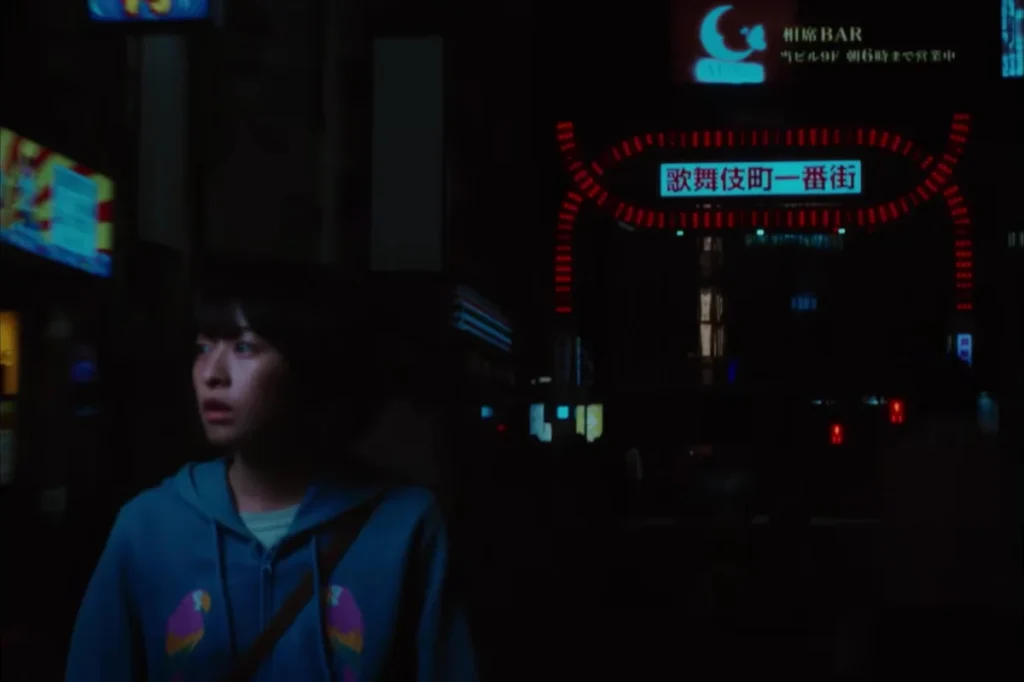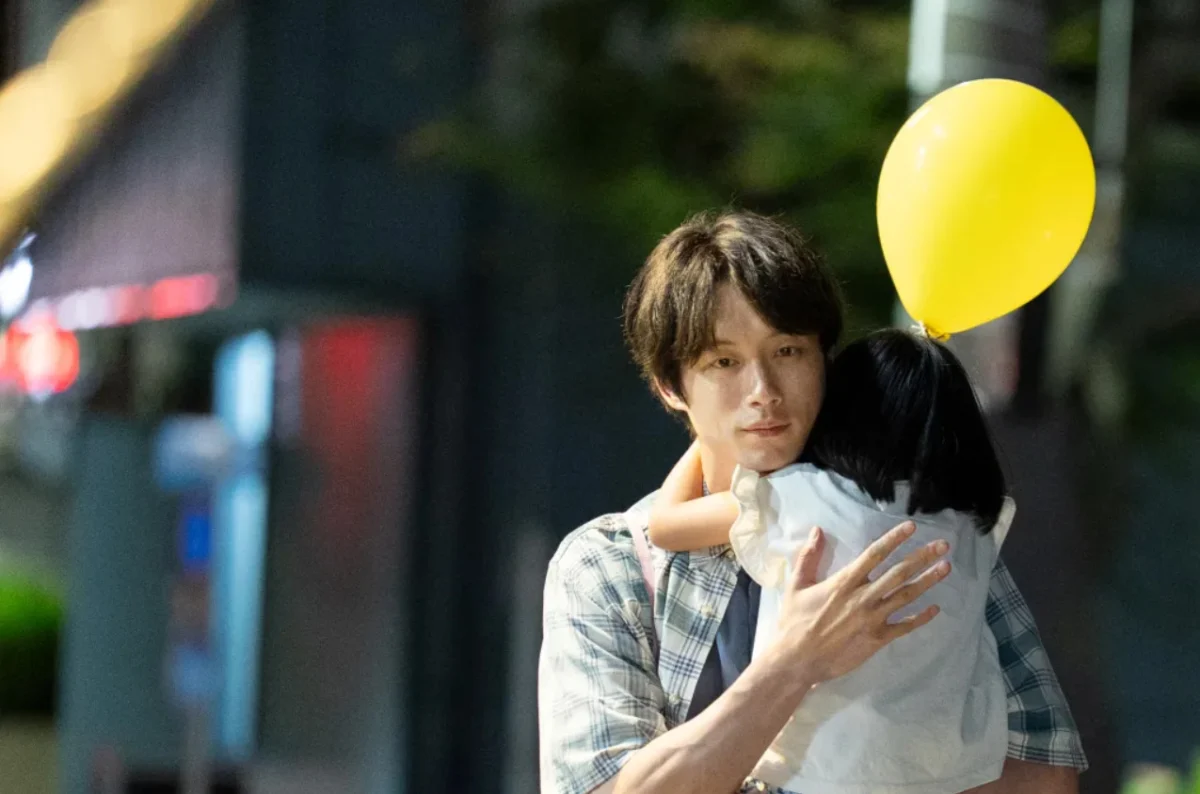
A newly released trailer for the upcoming feature film I Don’t Know You, slated for an August 28, 2026, release, has captivated audiences with its intricate portrayal of grief, justice, and the complex nature of truth. The film, which promises a profound exploration of human connection and the long shadow of past transgressions, introduces viewers to a gripping narrative centered on Asako (Hayase Ikoi) and Yuhei (Sakaguchi Kentaro), two individuals whose lives are irrevocably linked by a 13-year-old tragedy. The cinematic preview hints at a meticulously crafted psychological drama that delves into the aftermath of a devastating crime, questioning the very foundations of family, forgiveness, and the possibility of redemption.
Unraveling a 13-Year Mystery: Asako’s Quest for Truth
The central premise of I Don’t Know You begins with Asako, portrayed with compelling vulnerability by Hayase Ikoi. Following the recent death of her grandmother, Harada Mieko, who had lovingly raised her, Asako finds herself adrift in a world suddenly devoid of her primary caregiver. This profound loss serves as a catalyst, prompting her to confront a buried trauma: the murder of her mother 13 years prior. It is in this moment of renewed vulnerability and a search for her own identity that Asako uncovers the existence of Yuhei, the man convicted of her mother’s murder.
The trailer depicts Asako’s meticulous process of discovery, suggesting a deep dive into old news articles, court documents, and public records related to the harrowing case. Her motivation transcends mere curiosity; it appears to be a desperate need for closure and an understanding that has eluded her for over a decade. The weight of her grandmother’s passing seems to have removed the final emotional barrier, compelling Asako to seek out the truth directly from its source. This journey leads her to the stark confines of a prison, where Yuhei is serving his sentence, setting the stage for an emotionally charged confrontation that forms the narrative’s core. Her tearful plea to Yuhei, "I want you to tell me the truth, for my sake," underscores the immense personal stakes involved in her quest, positioning her not just as an investigator but as a victim seeking reconciliation with a fragmented past.
Yuhei’s World: A Search for Meaning Behind Bars
On the other side of the formidable prison walls is Yuhei, brought to life by the nuanced performance of Sakaguchi Kentaro. Convicted of murder 13 years ago, Yuhei’s existence has been defined by his incarceration and the crime that led him there. However, the trailer suggests that his story is far more complex than that of a simple perpetrator. The narrative intricately weaves in a present-day reality where Yuhei has found an unexpected semblance of happiness. He cherishes the bond he has formed with a woman (Hotta Mayu) and her daughter (Kurata Ema), whom he has come to love. This newfound connection highlights a profound internal conflict within Yuhei: the desperate desire to protect the fragile happiness he has discovered, even as his past threatens to dismantle it.
Yuhei’s introspection is vividly conveyed through his poignant questioning of his lawyer, Machimura: "What makes a family? Is it blood? Is it formalities? Is it the time spent together?" These questions serve as a thematic anchor, hinting at the film’s broader philosophical exploration of what truly constitutes kinship and belonging, especially for someone who has been ostracized by society and seemingly alone in the world. His personal journey within the prison system, the gradual rebuilding of his emotional landscape, and the unexpected emergence of a new family unit provide a stark contrast to Asako’s long-standing grief, setting up a dynamic exploration of shared trauma and individual paths to healing. The film appears poised to challenge conventional notions of guilt and innocence, presenting Yuhei not as a one-dimensional villain but as a man grappling with his past actions and their profound consequences, while simultaneously striving for a future defined by connection and love.
The Legal Labyrinth: Machimura’s Reflections on Justice and Intent
Takito Kenichi embodies Machimura, the lawyer who defended Yuhei during his original murder trial. Machimura’s perspective offers a critical lens through which the film examines the intricacies and limitations of the legal system. His reflection, "If he had said, ‘I didn’t intend to kill,’ the verdict might have been different," is a powerful statement that suggests a deeper, perhaps unrevealed, truth about the events of that fateful day. This single quote opens up a myriad of questions about legal strategy, the role of intent in criminal justice, and the profound impact of a defendant’s silence or lack of cooperation on the outcome of a trial.
Machimura’s character likely serves as a bridge between the past and present, privy to details that neither Asako nor the audience fully comprehend at the outset. His internal struggle, hinted at by his reflective tone, could involve grappling with the outcome of the trial, the potential for a different truth, or even the ethical dilemmas faced by legal professionals in high-stakes cases. His observations underscore the often-subjective nature of justice, where the narrative presented in court, rather than the absolute truth, can dictate a person’s fate. The lawyer’s continued engagement with Yuhei, implied by their philosophical discussions about family, suggests an ongoing professional and perhaps personal investment in Yuhei’s story, even years after the verdict was delivered. This dynamic adds another layer of complexity to the narrative, exploring how legal battles can leave indelible marks on all parties involved, extending far beyond the courtroom’s final judgment.
A Chronology of Unspoken Truths: 13 Years of Silence and Its Aftermath
The narrative of I Don’t Know You is fundamentally structured around a 13-year chasm of silence and its eventual confrontation. The initial event, the murder of Asako’s mother, shattered two lives instantly: Asako’s, by depriving her of her mother and setting her on a path of grief, and Yuhei’s, by condemning him to incarceration. For 13 years, Asako lived under the care of her grandmother, likely shielded from the full horror of the event, with the truth potentially compartmentalized or obscured to protect her. The death of her grandmother, however, serves as an emotional unsealing, compelling Asako to seek the truth that has festered beneath the surface of her life. This period represents not just a passage of time, but a sustained emotional stasis for Asako, her world effectively "stopped" at the moment of her mother’s death.
Conversely, Yuhei’s 13 years have been spent in a different form of stasis, confined and isolated, yet paradoxically, it is during this time that he appears to have undergone a significant personal transformation. The emergence of his new love and her daughter signifies a yearning for connection and normalcy, a testament to the human capacity for hope and the desire for a future, even in the bleakest circumstances. The film effectively uses this temporal gap to highlight divergent paths of coping and healing, leading to a climactic convergence where both individuals must confront the shared past that defines them. The narrative promises to explore how memories, sealed away for over a decade, begin to resurface and reshape perceptions, allowing time, which had stood still, to finally move forward. This chronological structure is vital for understanding the depth of the characters’ emotional journeys and the profound impact of unresolved trauma over an extended period.
The Broader Societal Canvas: Forgiveness, Redemption, and the Nature of Family
Beyond the individual narratives of Asako and Yuhei, I Don’t Know You delves into broader societal themes that resonate deeply with contemporary discussions surrounding crime, justice, and rehabilitation. The film’s exploration of Yuhei’s questions about family – its definition, its components – speaks to a universal human desire for belonging and identity. In a society often quick to condemn and slow to forgive, Yuhei’s struggle to protect his newfound happiness forces viewers to confront the possibility of redemption, even for those who have committed grave offenses. The film appears to challenge the notion that a single act can define a person forever, especially when juxtaposed with years of reflection and personal growth.
The trailer’s depiction of Asako’s quest for truth is also deeply resonant. It mirrors the real-world experiences of victims’ families who, years after a crime, continue to seek answers and closure, often finding that the legal verdict alone is insufficient. The film implicitly touches upon the psychological impact of unresolved trauma, a phenomenon widely studied in forensic psychology, where the lack of a complete narrative can impede the healing process for survivors. Asako’s insistence on hearing "the truth, for my sake" highlights the personal and subjective nature of truth-seeking, distinct from the objective facts presented in a court of law.
Furthermore, the film’s title, I Don’t Know You, carries multiple layers of meaning. It could refer to Asako’s initial perception of Yuhei, a man she only knows through the lens of a devastating crime. It could also reflect Yuhei’s own potential disconnect from his past self, or even a societal refusal to acknowledge the complexities of individuals shaped by incarceration. This thematic richness suggests a narrative that will provoke thought and discussion about empathy, the limitations of judgment, and the profound journey towards understanding another’s humanity, even in the face of immense suffering. The film positions itself as a commentary on whether society, and individuals, can allow for a fresh start, and what conditions are necessary for such a profound shift in perception.
Anticipation Builds for a Thematic Deep Dive
With its August 28, 2026, release date approaching, I Don’t Know You is poised to be a significant cinematic event. The trailer promises a compelling and emotionally charged drama, anchored by powerful performances from Hayase Ikoi, Sakaguchi Kentaro, Takito Kenichi, Hotta Mayu, and Kurata Ema. The intricate plot, which weaves together a devastating past with a fragile present, is set to explore universal questions about justice, personal accountability, and the enduring human need for truth and connection.
The film’s exploration of how love, family, and legal intervention can alter the course of a solitary life, as hinted by the statement that "The person he loves, her family, and his lawyer changed the fate of Yuhei, who was all alone in the world," suggests a narrative rich in emotional depth and moral ambiguity. The final question posed by the trailer – "What choice will Yuhei make ‘for you’?" – leaves audiences pondering the ultimate act of selflessness or self-preservation in the face of a resurfacing past. I Don’t Know You is shaping up to be more than just a crime drama; it is an intimate study of the human condition, challenging viewers to consider the multifaceted nature of truth and the enduring power of reconciliation. The film is expected to ignite conversations about empathy, the justice system’s capacity for nuance, and the possibility of finding solace and meaning after unimaginable loss.