In a recent and remarkably engaging interview with Gold Derby, Bob Gale, the acclaimed co-writer behind the iconic Back to the Future franchise, offered a treasure trove of behind-the-scenes revelations as he promoted his forthcoming book, Back to the Future: The Complete Screenplay. While the comprehensive discussion, rich with production materials and cherished memories, is packed with fascinating insights, perhaps the most startling disclosure is that actor Jeff Goldblum was a serious contender for the pivotal role of Dr. Emmett "Doc" Brown.
The quest for the perfect Doc Brown was, as expected for a film of such magnitude, a winding road. Over the years, various names have surfaced as potential candidates for the eccentric scientist. These have included Devo frontman Mark Mothersbaugh, who famously turned down the role, as well as esteemed actors like John Cleese, Gene Hackman, Albert Brooks, and Gene Wilder. However, Gale’s account narrows the crucial decision-making process to a final showdown between John Lithgow, Jeff Goldblum, and Christopher Lloyd. An intriguing commonality among these three actors is their prior involvement in the cult classic The Adventures of Buckaroo Banzai Across the 8th Dimension, a film for which Back to the Future co-producer Neil Canton had previously worked.
John Lithgow, Gale explained, was an early favorite but was ultimately unavailable due to scheduling conflicts, effectively removing him from the running. This left the field open to a compelling contest between Goldblum and Lloyd. Gale recounted that both actors were highly regarded by the production team, with co-producer Canton expressing strong positive sentiments towards both. Ultimately, the decision to cast Christopher Lloyd hinged on a more intangible factor: the palpable energy and presence he exuded in the room during auditions.
"There was just something about Chris that we responded to," Gale recalled. "We said, ‘He’s going to kill this.’ And he did. It’s become an enduring part of cinematic history, this role." Lloyd’s portrayal of Doc Brown has indeed become one of the most beloved and instantly recognizable characters in film history, a testament to Gale’s prescient observation.
Delving Deeper into Doc Brown’s Character and Controversies
Beyond the casting news, Gale also shed light on previously unconfirmed details about Doc Brown’s character, particularly his less-than-savory past. He confirmed that an official backstory, though ultimately unused in the final screenplay, established that Brown had intentionally burned down his family home to collect insurance money, which he then funneled into his scientific endeavors. While this might seem morally questionable, Gale defended the narrative choice, suggesting that such elements contributed to the franchise’s enduring appeal and uniqueness.
"I think that’s one of the things that people love about the movie – today it would all be homogenized," Gale commented on the character’s ethically ambiguous actions, specifically his dealings with terrorists to procure plutonium. "If we were making this movie today, they would say, ‘Well, you can’t have Doc Brown be in business with terrorists.’ Well, but we did. And nobody has a problem with it, really. Because you just say, ‘OK, this is how passionate the guy is. He had to get his hands on plutonium somehow, and he was going to do whatever he could, because it was his science…’ And in the way of the world today, that’s small beans right now." This perspective highlights a perceived shift in filmmaking standards, where complex or morally gray characters might be toned down for broader audience acceptance in contemporary productions.
The "What If" Scenario: Jeff Goldblum as Doc Brown
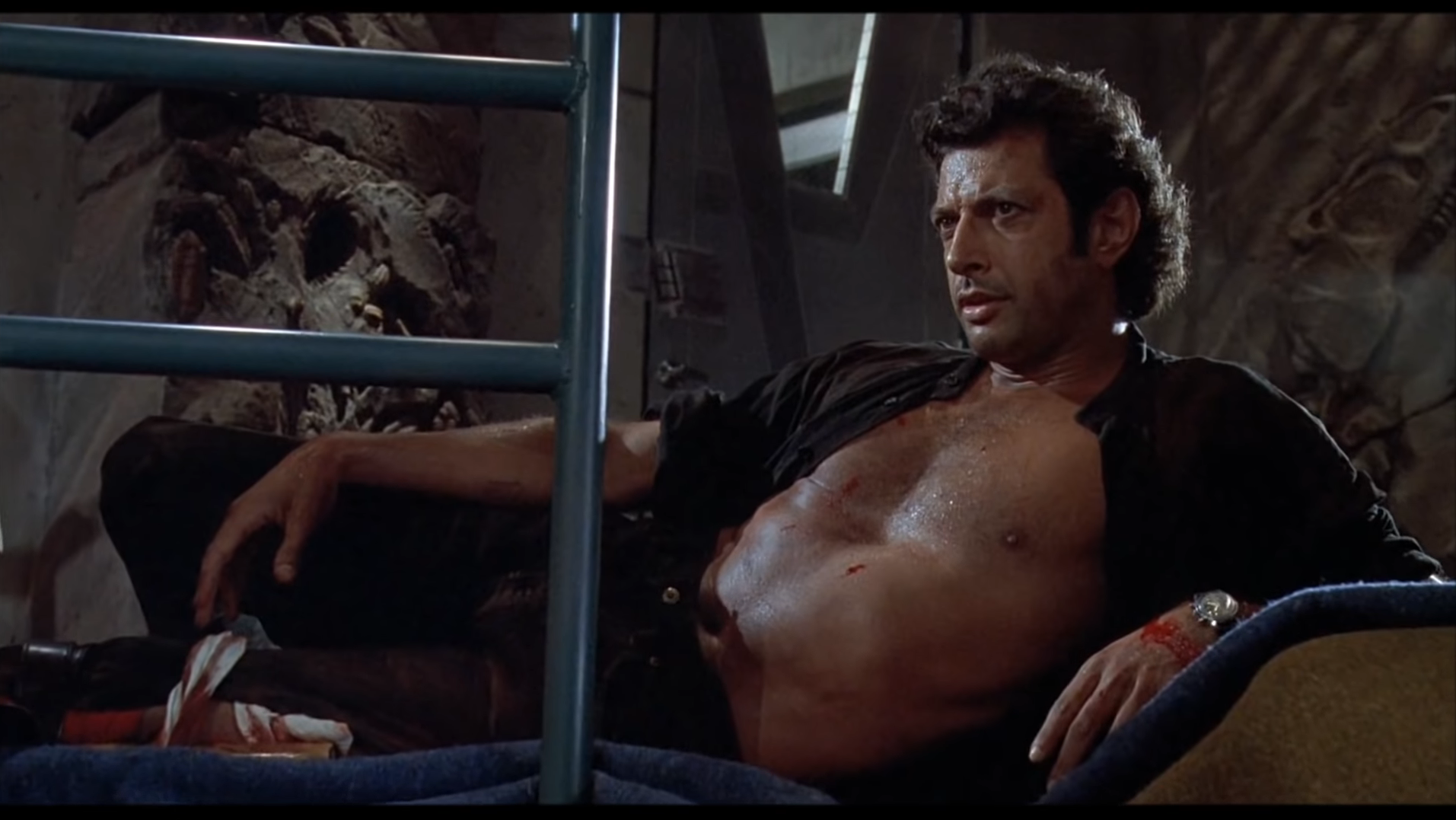
Gale’s assertion that Jeff Goldblum’s take on Doc Brown might have mirrored his performance in Jurassic Park offers a fascinating glimpse into an alternate cinematic reality. Goldblum’s signature style—a blend of intellectual intensity, quirky delivery, and a certain nervous energy—is undeniably recognizable. Imagining this persona as the brilliant but erratic inventor of the time-traveling DeLorean is an intriguing exercise.
"Ironically, Jeff Goldblum plays Doc Brown in Jurassic Park, right?" Gale posed, drawing a direct parallel. "That’s how his Doc Brown would have been. You can watch Jurassic Park and say, ‘Ah, that’s how Jeff would have played it.’" This comparison suggests that Goldblum’s Doc Brown might have leaned more into a slightly unhinged, perhaps more overtly anxious, scientist, a departure from Lloyd’s more grounded yet still eccentric portrayal.
The Legacy of Christopher Lloyd’s Doc Brown
Christopher Lloyd’s interpretation of Doc Brown is a masterclass in character acting. He imbued the role with a manic brilliance, a childlike wonder, and an unwavering dedication to his scientific pursuits. His physicality, vocal inflections, and ability to shift seamlessly between moments of profound insight and utter bewilderment cemented his place in cinematic history. The character’s iconic catchphrases, his wild white hair, and his signature goggles are indelibly linked to Lloyd’s performance. The chemistry between Lloyd and Michael J. Fox, who played Marty McFly, was a cornerstone of the film’s success, providing both comedic relief and emotional depth.
The Back to the Future trilogy, released between 1985 and 1990, achieved immense critical and commercial success. The first film, Back to the Future, was released on July 3, 1985, and became the highest-grossing film of that year. Its innovative storytelling, blend of science fiction, comedy, and adventure, and its exploration of themes like destiny, family, and the consequences of altering the past resonated deeply with audiences worldwide. The film’s impact on popular culture is undeniable, influencing countless subsequent films and television shows.
The Significance of "The Complete Screenplay"
Bob Gale’s forthcoming book, Back to the Future: The Complete Screenplay, promises to be an invaluable resource for fans and film scholars alike. By publishing the complete screenplay, Gale is offering an unvarnished look at the creative process that brought this beloved franchise to life. Screenplays often undergo numerous revisions, with deleted scenes, alternative dialogue, and evolving plot points. Having access to the definitive screenplay, alongside Gale’s annotations and anecdotes, will provide unprecedented insight into the meticulous craft behind Back to the Future.
The book’s content is expected to include not only the final shooting script but also early drafts, storyboards, character sketches, and perhaps even notes from the production meetings. This comprehensive approach allows for a deeper understanding of the challenges faced by the filmmakers, the creative decisions made along the way, and the evolution of the story and characters. The revelation about Jeff Goldblum’s near-casting is just one example of the many fascinating details that are likely to be unearthed within its pages.
Broader Implications for Hollywood’s Creative Process
Gale’s interview and upcoming book offer a valuable opportunity to reflect on the nature of creative collaboration and the casting process in Hollywood. The fact that such a pivotal role, now inextricably linked to Christopher Lloyd, was once a toss-up between three distinct and talented actors underscores the often-unpredictable path of filmmaking. It also highlights the subjective nature of casting decisions, where chemistry, timing, and intangible "it" factors can play as significant a role as an actor’s resume.
The enduring success of Back to the Future serves as a case study in effective storytelling and character development. The film’s ability to balance complex scientific concepts with relatable human drama, all while maintaining a brisk pace and genuine humor, is a testament to the vision of Gale and his collaborators. The continued interest in the franchise, evidenced by the anticipation for Gale’s book, speaks to its timeless appeal and its significant place in cinematic history. It suggests that audiences are eager to delve deeper into the mythology of their favorite stories, seeking out the details that shaped these enduring narratives. The insights provided by Gale reinforce the idea that even the most iconic elements of beloved films often have a complex and multifaceted origin story, shaped by a series of choices, serendipitous encounters, and a touch of creative magic.