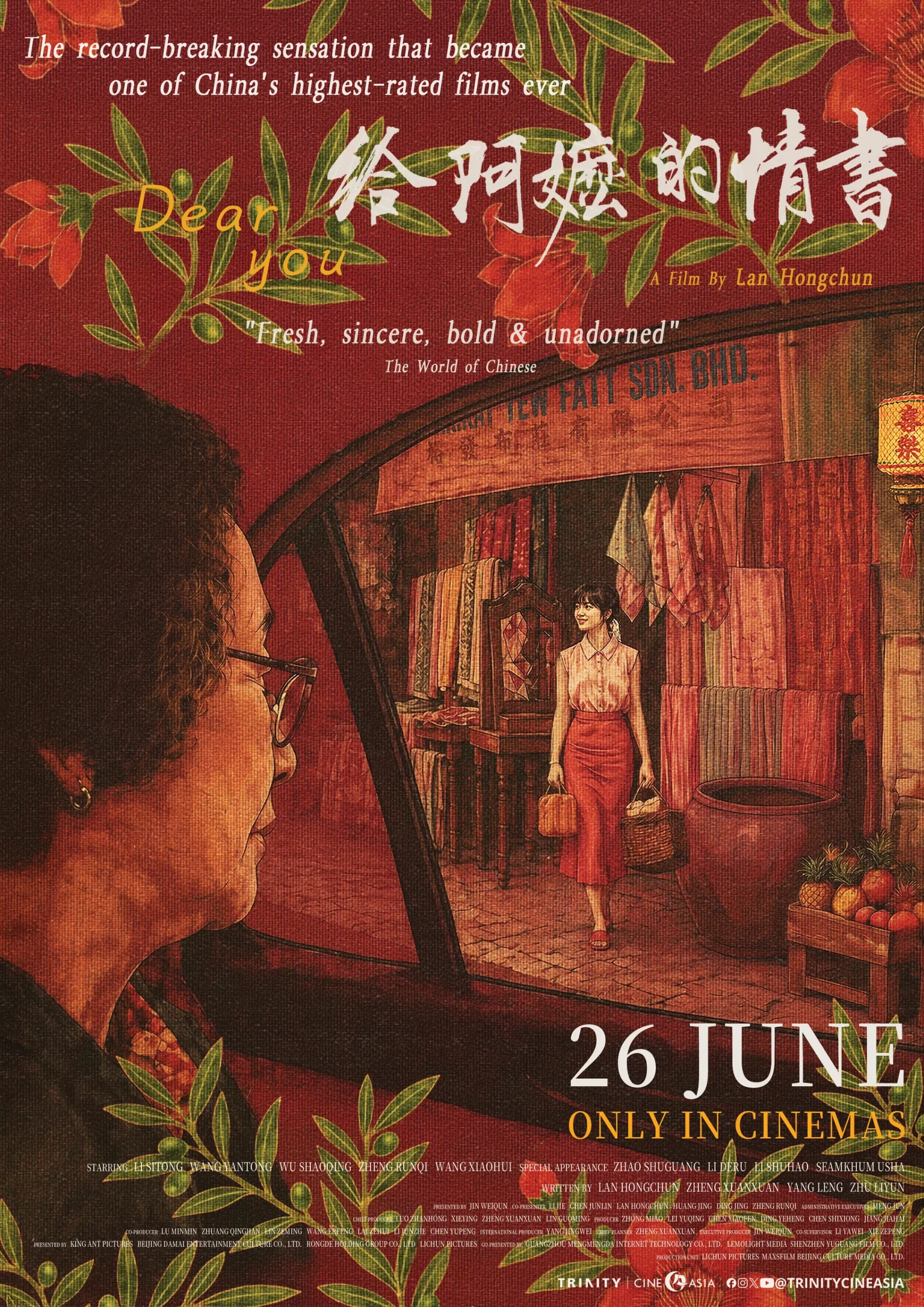
The Chinese family drama Dear You, a production primarily spoken in the Teochew dialect, has emerged as one of the most significant cinematic events of 2026, captivating audiences across mainland China and sparking crucial cultural debates in Singapore. This 118-minute feature, helmed by director Lan Hongchun, transcended its modest budget of approximately ¥14 million (around US$2.2 million) to become an unexpected box office titan, grossing over ¥1.8 billion (approximately US$280 million) and securing its place among the year’s highest-earning Chinese films. Beyond its commercial triumph, Dear You has been lauded for its authentic portrayal of the Chinese diaspora experience, particularly through the lens of qiaopi—historical remittance letters—and for its courageous use of the Teochew language, a decision that ignited a passionate discussion about linguistic preservation and cultural identity, especially in Singapore.
The Phenomenal Rise of a Sleeper Hit: A Box Office Chronicle
Dear You premiered in Shantou on April 17, 2026, setting the stage for a remarkable cinematic journey. Its initial release strategy was staggered, opening in selected Chinese regions on April 30 before expanding nationwide on May 3. Despite a relatively limited initial promotional push and a cast largely comprising nonprofessional actors, the film defied industry expectations. Word-of-mouth quickly transformed it into a cultural phenomenon, propelling it to the top of the mainland Chinese box office for an astonishing four consecutive weeks. This sustained success led to an eventual IMAX release, further amplifying its reach and cementing its status as a blockbuster. Its impressive performance also garnered international attention, with the film being presented at a market screening during the prestigious Cannes Film Festival, signaling its potential appeal beyond Asian markets.
Industry analysts attributed the film’s "sleeper hit" status to several factors. Firstly, its profound emotional resonance, tapping into universal themes of family, migration, and the enduring human spirit, struck a chord with a broad demographic. Secondly, the authentic depiction of Teochew culture and language, a rarity in mainstream cinema, offered a fresh and deeply personal perspective that resonated with regional audiences and those with ancestral ties to the Chaoshan region. Finally, the compelling narrative, enriched by historical elements and a genuine sense of nostalgia, provided a much-needed antidote to the often formulaic blockbusters, proving that heartfelt storytelling, even on a smaller budget, could command immense popular appeal.
Qiaopi: The Heartbeat of a Migrant Generation
Central to the narrative fabric of Dear You is the historical phenomenon of qiaopi, or remittance letters. These documents were far more than simple financial transactions; they served as vital lifelines, bridging the vast geographical and emotional distances between Chinese emigrants in Southeast Asia and their families in ancestral hometowns. Typically combining personal correspondence detailing daily life, hopes, and struggles with much-needed monetary support, qiaopi were tangible symbols of enduring familial connection and filial piety. They provided a crucial economic backbone for families left behind in China, particularly during periods of political instability and economic hardship, while also preserving cultural ties and shared memories.
The film masterfully employs qiaopi not just as a plot device but as a symbolic conduit for memory and historical truth. Its profound cultural significance is poignantly illustrated in the post-credits sequence, which features an authentic qiaopi written in 1960. This particular letter was penned by an eight-year-old Singaporean schoolgirl named Xie Yingdiao, who selflessly sent her scholarship money, earned for placing second in her examinations, to her grandmother in Chaoshan as a Chinese New Year gift. More than six decades later, Ms. Xie Yingdiao attended a Singapore screening of Dear You, only to discover, to her astonishment and profound emotion, that her childhood letter had been meticulously incorporated into the movie, bringing a powerful layer of real-world authenticity and emotional resonance to the film’s exploration of the diaspora experience. This particular detail underscored the film’s commitment to historical accuracy and its ability to connect with the personal histories of its audience.
A Historical Tapestry: Teochew Migration and Cultural Preservation
The narrative of Dear You is deeply rooted in the rich and often challenging history of Teochew migration from China, particularly during the tumultuous mid-20th century. The story itself was inspired by firsthand accounts of overseas Chinese communities, meticulously gathered during the production of the documentary Teochew, which explored the multifaceted aspects of Teochew cuisine and global migration patterns. This commitment to historical authenticity is evident in the film’s production design and locations. Principal photography commenced in October 2024, spanning across culturally significant locations such as Shantou, Chaozhou, and Jieyang in China, as well as Bangkok, Thailand. Notably, historic buildings in Jieyang were ingeniously utilized to meticulously recreate the vibrant and complex atmosphere of Bangkok’s Chinatown during the 1950s, a period marked by significant social and political shifts for the Chinese diaspora.
The film not only portrays the physical journey of migration but also the enduring struggle to preserve cultural identity in foreign lands. The Teochew people, originating from the Chaoshan region of Guangdong province, have a distinct dialect, cuisine, and customs that they carried with them across oceans. The film vividly depicts the challenges faced by these communities, including the protagonist Zheng Musheng, in maintaining their language and traditions amidst new societies, sometimes against official restrictions. This historical context provides a powerful backdrop for the personal dramas unfolding, highlighting the resilience and adaptability of the Teochew diaspora.
Cultural Crossroads: The Singapore Language Controversy
While Dear You celebrated a resounding success in mainland China, its commercial release in Singapore ignited a significant cultural debate. When the film opened commercially on June 18, it was presented in a Mandarin-dubbed version rather than its original Teochew language. This decision, a direct consequence of policies associated with Singapore’s long-standing "Speak Mandarin Campaign," stipulates that productions featuring non-Mandarin Chinese languages generally require individual approval for public screenings.
The "Speak Mandarin Campaign," launched in 1979, aimed to unify Singapore’s Chinese population under a single lingua franca, promoting Mandarin as the primary language for communication and cultural transmission, while gradually phasing out other Chinese dialects such as Hokkien, Cantonese, and Teochew. While the campaign achieved its objective of establishing Mandarin, it also led to concerns about the erosion of dialectal heritage.
Members of Singapore’s local Teochew community vehemently argued that the Mandarin version of Dear You stripped the film of an essential part of its cultural identity and historical authenticity. They contended that the Teochew dialect was not merely a linguistic choice but an integral narrative element, embodying the very soul of the migrant experience depicted. The controversy quickly escalated, with many viewers expressing their disappointment by traveling to Johor Bahru in neighboring Malaysia to watch the original Teochew version, underscoring the depth of their desire for an authentic viewing experience.
The overwhelming public demand for the original Teochew version in Singapore soon became undeniable. The first eight approved Teochew screenings, offering a total of 4,800 tickets, sold out within an astonishing two hours. An additional eight screenings followed suit, selling out in just 90 minutes. This unprecedented demand prompted authorities to approve 50 more Teochew screenings, signaling a crucial moment in Singapore’s ongoing discussion about the preservation and promotion of Teochew and other non-Mandarin Chinese languages. Cultural advocates and linguists lauded the public’s response as a powerful testament to the enduring value and emotional connection people feel towards their heritage languages, prompting renewed calls for a re-evaluation of language policies to foster greater linguistic diversity and cultural inclusivity.
A Multigenerational Saga: Unraveling Family Secrets
The narrative core of Dear You is a compelling multigenerational family drama that intricately weaves together past and present. The story begins in present-day Shantou, where Ye Shurou (portrayed by Iap Sok-jiu) harbors a decades-old belief that her husband, Zheng Musheng (Ten Bak-seng), abandoned his family after migrating from China to Southeast Asia during the tumultuous Chinese Civil War. This lingering resentment and a family myth of potential wealth fuel the desperation of her grandson, Xiaowei (Hiau-ui). Burdened by debt, Xiaowei embarks on a journey to Thailand, hoping to locate Musheng and secure financial assistance.
However, Xiaowei’s quest quickly reveals a truth far more complicated than his family had ever imagined. With the unexpected assistance of Xie Zehua (Tsia Tsek-hua), the adopted son of a Thai Chinese woman named Xie Nanzhi (Tsia Nam-ki), Xiaowei begins to examine a collection of old qiaopi connected to Musheng’s years in Bangkok. These letters serve as portals to the past, transporting the story back to the 1950s.
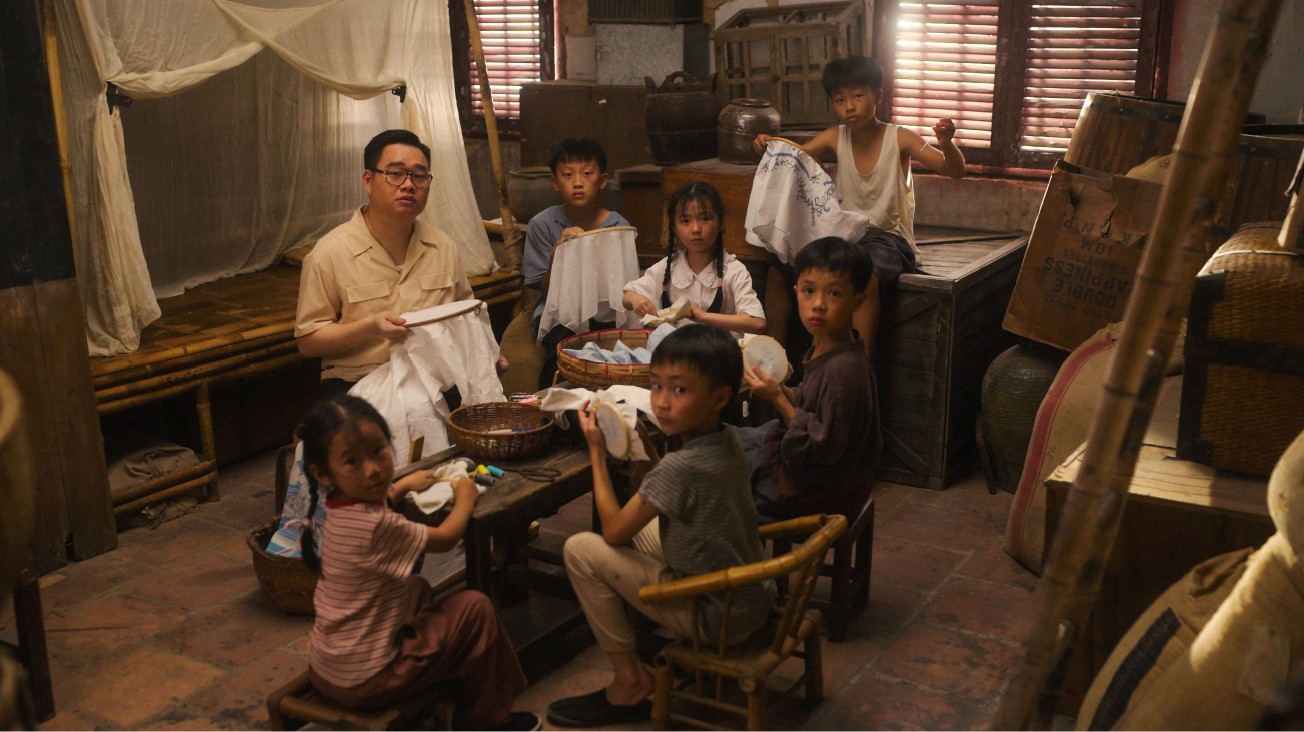
In this flashback, Musheng finds refuge at a hostel operated by Nanzhi and her father, Xie Laishun. He becomes deeply involved with the local Chinese community, even helping Di Gong (Tek Kong) teach Chinese to children despite official restrictions imposed during that era. As Xiaowei diligently follows the intricate trail left by the qiaopi, he gradually uncovers the complex web of relationships, profound hardships, and long-concealed decisions that inextricably linked the Zheng and Xie families across generations, revealing a story of sacrifice, resilience, and unexpected connections that challenge the family’s long-held assumptions.
Lan Hongchun’s Vision: Blending Epic Scope with Intimate Drama
Director Lan Hongchun’s artistic vision for Dear You is meticulously structured around three principal axes. The first is history, specifically the profound impact of qiaopi on the Chinese diaspora and the mainland. The second is a deep sense of nostalgia for an era that, despite its inherent difficulties, also fostered unity among people of diverse Chinese ancestries. Lastly, the film serves as a powerful celebration of the Chinese people’s remarkable ability to thrive in disparate parts of the world during extremely challenging times, all while fiercely retaining their language, even when doing so was against the law, and consistently supporting those left behind in China. This carefully crafted narrative recipe, combining historical gravitas with emotional resonance, positioned the film as an undeniable crowd-pleaser.
Hongchun’s directorial approach is characterized by its intelligent layering. The narrative skillfully begins in the present, following Xiaowei’s often comedic and tragicomic attempts to locate his estranged grandfather and secure money against his family’s wishes. This contemporary storyline then gracefully transitions back to 1945, initially presenting the blossoming romance between young Sok-jiu and Bak-seng before tracing the latter’s complex life in Thailand. The introduction of Nanzhi and the evident feelings she eventually develops for Bak-seng add another poignant layer to the romantic element, creating a compelling emotional triangle. Simultaneously, the film’s vivid presentation of the era and the immense hardships faced by Chinese immigrants, including the protagonist himself, imbues the narrative with an epic scope, elevating its entertainment value with significant historical and cultural weight.
The film’s ultimate strength lies in its ability to deliver satisfying answers to the questions posed from the outset, weaving in unexpected twists and a deeply moving resolution that completes an impressive and emotionally resonant story. Hongchun depicts these experiences in a manner that elicits profound sympathy for the protagonists, ensuring that viewers are touched and entertained by their journeys, even if certain nationalistic undertones are subtly embedded within the celebration of resilience. The decision to cast a majority of nonprofessional performers further enhances the film’s sense of originality and raw authenticity, an effect amplified by the predominant use of the Teochew dialect. While the production occasionally carries the charming appeal of a fairytale, the performances of the lead actors—Zheng Runqi as Hiau-ui, Wang Xiaohui as the young Iap Sok-jiu, Li Sitong as Tsia Nam-ki, and Wang Yantong as Ten Bak-seng—are universally excellent, showcasing remarkable chemistry that elevates the emotional depth of the narrative.
Technically, Dear You also shines. Hai Tao and Zhou Zemin’s cinematography, combined with an exceptional coloring palette, masterfully utilizes the diverse settings, creating a visual tapestry that blends realism with impressionism, resulting in numerous visually striking scenes. The editing, a collaborative effort by Lan Hongchun and Peng Dong, maintains a brisk pace that allows the intricate story to unfold in its full glory, with the temporal shifts between past and present ideally placed for maximum narrative impact. While the final section occasionally exhibits a slight lag and some instances of forced sentimentality, Hongchun generally keeps the narrative grounded, ensuring that the drama is communicated effectively without becoming overly excessive.
Broader Implications and Lasting Legacy
Dear You stands as more than just a successful film; it is a cultural touchstone that has ignited important conversations about heritage, language, and identity. Its commercial success demonstrates the significant public appetite for authentic, culturally specific stories that resonate with universal human experiences. For the Teochew community worldwide, the film serves as a powerful affirmation of their heritage, bringing their language and history to a global stage. The controversy in Singapore, while initially challenging, ultimately catalyzed a vital discussion about the nation’s linguistic policies and the critical need to balance national unity with the preservation of diverse cultural legacies.
The film’s impact could potentially influence future cinematic productions, encouraging more filmmakers to explore diaspora narratives and utilize regional languages, thereby enriching the tapestry of global cinema. Its ability to connect generations through the tangible link of qiaopi highlights the enduring power of personal history and the importance of remembering the sacrifices and journeys of ancestors.
In conclusion, Dear You is a definite crowd-pleaser, meticulously written and directed, offering an emotionally rich and historically significant narrative. It is a story destined to entertain and enlighten viewers who appreciate epic dramas that delve into the complexities of family, migration, and the enduring human spirit, leaving a lasting legacy in both the cinematic and cultural landscapes.