The Karlovy Vary International Film Festival (KVIFF), a jewel in the crown of Czech culture, stands as a testament to global cinematic dialogue, regularly welcoming films, filmmakers, and audiences from every corner of the world. As it celebrates its 60th edition within its 80th year of existence, KVIFF reaffirms its status as a vital international hub, transcending its Central European roots to foster profound cross-cultural exchange. Artistic Director Karel Och underscored this commitment by highlighting the "extraordinary geographical diversity" of the nearly 40 titles in the main program, a curation that speaks to a legacy of openness and discovery.
This year’s lineup, featuring first-time entries from Myanmar and Colombia in the prestigious Crystal Globe competition, draws a direct line back to the pioneering vision of A. M. Brousil, one of the festival’s founders and its long-time programming director. Brousil’s progressive decision to focus intensively on "then-young and undiscovered non-European cinemas" established a precedent for KVIFF’s enduring global outlook. This historical continuity underscores the festival’s unique position as both a venerable institution and a dynamic platform for emerging voices, bridging six decades of cinematic evolution.
The Indispensable Role of Linguistic Intermediaries
The seamless flow of international dialogue, where global stars connect with eager audiences and filmmakers discuss their craft, hinges on a specialized, often invisible, skill: professional interpretation. These linguistic architects facilitate the rich exchanges that define KVIFF, ensuring that every nuance, every emotion, and every insight is accurately conveyed across language barriers. Among the dedicated team of interpreters, one face has become synonymous with clarity, composure, and a welcoming demeanor: Helena Koutná.
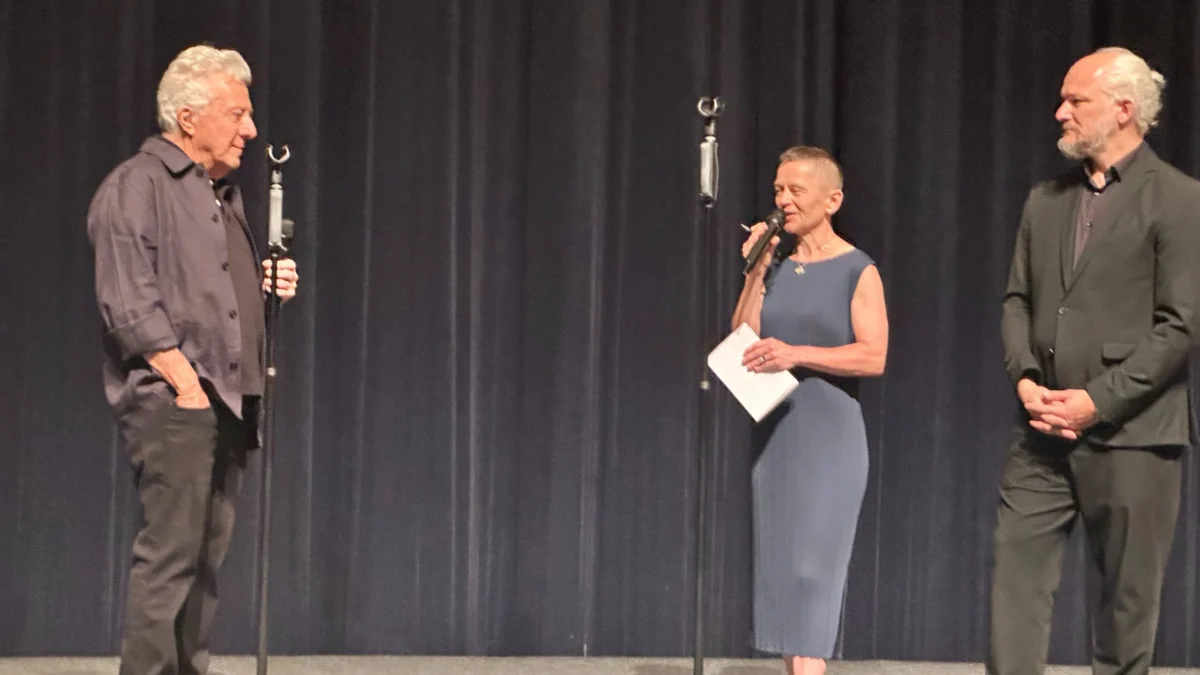
A familiar presence for regular KVIFF attendees, Koutná navigates the high-pressure environment of festival days and nights with remarkable aplomb. Whether interpreting the comments of Czech festival leaders into English, or translating the thoughts of English-speaking filmmakers into Czech during honors ceremonies or post-screening Q&As, her ability to make voices heard is central to the festival experience. Her calm presence, often accompanied by a reassuring smile, has graced stages alongside cinematic luminaries such as Dustin Hoffman and Jesse Eisenberg during the opening days of KVIFF 2026. Ahead of another demanding run, which extends through July 11, Koutná offered rare insights into her craft, her encounters with celebrities, and the meticulous preparation that makes her complex work appear effortlessly elegant.
Helena Koutná: A Quarter-Century of Cinematic Interpretation

Helena Koutná’s journey with KVIFF began in 1997, an invitation she accepted without hesitation. At that time, interpreting services were, and continue to be, provided by Artlingua, an agency she had been freelancing for. Her early years at the festival paint a vivid picture of a vastly different operational landscape. "Back in 1997, there was a large team of interpreters mainly because, with some exceptions, films were not screened with subtitles," Koutná recalls. "There were interpreting booths in the cinemas, and members of the audience listened to simultaneous interpretation via headphones."
The scope of linguistic support was extensive, encompassing English, German, French, Spanish, and Russian, alongside Czech. The workload was considerable, demanding intense preparation despite the limited availability of reference materials like screeners and scripts in comparison to today’s resources. Interpreters were not only confined to booths but also spent significant time preparing for their assignments, transforming the festival into a rigorous professional proving ground. Film introductions, post-screening Q&As, press conferences, and press interviews all required simultaneous interpretation. This era fostered a unique camaraderie, with up to 30 interpreters working at any given time, creating a professional gathering for colleagues who rarely intersected during their regular work.
The advent of subtitles revolutionized the festival’s interpreting needs. With films now accessible through on-screen text, the core team of interpreters dwindled to approximately eight professionals. This specialized group focuses primarily on live introductions, Q&As, and occasional press conferences and interviews, ensuring direct, real-time communication in the most interactive settings. Koutná remains a pivotal member of this elite team, her experience spanning the dramatic shifts in festival logistics and technological integration.
The Art of Rapid Recall: Decoding the Interpreter’s "Secret"
The speed and accuracy of live interpretation often leave audiences in awe. Koutná, often lauded as an "interpreter guru," demystifies this perception, explaining that there are "no magic or tricks, just some techniques all interpreters learn." She elaborates on the two fundamental types of interpreting: simultaneous and consecutive. Simultaneous interpreters, working with headphones, interpret spoken words concurrently with the speaker. Consecutive interpreters, on the other hand, make meticulous notes while the speaker talks, then render the message during pauses.
Note-taking is a highly specialized skill, taught rigorously in interpreting courses. It involves a personalized system of symbols, pictograms, lines, arrows, and abbreviations. While some symbols are standard across the profession, others are developed by individual interpreters for general use or specific assignments. For instance, at a film festival, "F" might quickly denote "film," a heart symbol could signify something positive, and a star might mark the beginning or launch of an idea. The core principle is to capture easily forgotten details like figures and crucial keywords that serve as anchors for recalling the entire narrative. This disciplined approach allows interpreters to maintain precision and fluidity even under the most demanding live conditions.
Koutná’s professional language combination is English and Russian. Additionally, she can work from Slovak into English, a capability rooted in her upbringing in Czechoslovakia, where Slovak was commonly heard across media channels. This linguistic versatility, combined with her structured approach to interpretation, forms the bedrock of her success.

A Life Beyond the Limelight: Diverse Linguistic Challenges
While KVIFF showcases Koutná’s high-profile stage presence, her professional life extends far beyond the red carpets and cinematic buzz. She remains an active interpreter at other significant film festivals, including the One World human rights documentary film festival in Prague and the Ji.hlava International Documentary Film Festival, where simultaneous interpretation is still widely employed. She was also involved in the organization of ÍRÁN:CI, a festival of Iranian films in Prague, currently on hiatus.
Her expertise also graces national and international television broadcasts, as she has interpreted the live broadcasts of the Academy Awards for Czech TV for several years. She is also a regular presence in the interpreting booth for the Czech national equivalent, the Czech Lion Awards. However, the bulk of her professional work lies within the demanding world of European Union institutions. She provides interpreting services for the Council, the Commission, the European Parliament, and the European Court of Justice in Brussels, Strasbourg, and Luxembourg. This work demands constant research and vocabulary building across an incredibly diverse range of topics, from intricate legal negotiations to complex arbitration hearings, reflecting a specialized expertise that underpins the daily functioning of international governance.
Stage Interpretation: A Discipline Apart
Live interpreting at film festivals presents a unique set of challenges that distinguish it from other forms of linguistic work. "Stage interpreting at film festivals is almost a discipline by itself," Koutná explains. The environment is dynamic and unpredictable; general conversations can suddenly pivot to technical jargon, jokes and wordplay are common, and cultural references often crop up unexpectedly. Moreover, interpreters sometimes become an integral part of the show, their reactions and delivery adding to the overall experience.
Yet, the fundamental objective remains unwavering: "to facilitate communication and to convey the message so that those who do not understand the language of the speaker have the same experience as if they did." This goes beyond mere word-for-word translation. Interpreters strive to pass on the core idea using phrases and expressions that would naturally be employed by a native speaker of the target language. This nuanced approach extends to capturing emotions, tone of voice, and even gestures, ensuring a holistic transfer of meaning and intent.
Koutná clarifies the distinction between "interpreting" and "translating." While both demand a profound knowledge of source and target languages, they involve distinct skill sets. Translators deal with written text, allowing for more time, research, and access to external resources. Interpreters, conversely, work with spoken words in real time. She likens this difference to an ice-hockey player and a figure skater: both master ice-skating, but their on-ice performances are entirely different, demanding unique applications of a shared foundational skill. Many professionals specialize in one or the other, though Koutná herself has always engaged in both translation and interpretation.

Encounters with Cinematic Icons
Over her extensive career, Koutná has shared the stage with an array of Hollywood film stars and directors. When asked about particularly special encounters, she offers a perspective shaped by professionalism and admiration. "The stars I have had the opportunity to encounter are highly accomplished professionals, and that generally means that they are hard-working, modest and humble people," she reflects. She views their mission as enriching the world through their art, offering joy, relief, beauty, or food for thought. This respect for their craft extends to their interactions with audiences and, crucially, to the work of interpreters.
Koutná cherishes moments where she can work alongside individuals whose artistry she deeply admires. A Q&A with Susan Sarandon stands out, not only because Thelma & Louise is one of her favorite films, but also because she had translated the subtitles for the film years prior. Similarly, having translated subtitles for Rain Man, she found immense satisfaction in sharing the stage with its director, Barry Levinson (and Dustin Hoffman this year). Her admiration extends to documentary filmmaker Vitaly Mansky, whose work she finds "amazing," and Alexander Payne, whose engaging interactions with audiences made their Q&As "great fun." The list of notable figures she has interpreted for is extensive, including Antonio Banderas, Zdeněk Svěrák, Patricia Clarkson, and Johnny Depp, underscoring the consistent high caliber of guests at KVIFF.
(Image: interpreter Helena Koutná and Dustin Hoffman at Karlovy Vary 2026)
(Image: (from left to right) interpreter Helena Koutná, ‘You Sing Loud, I Sing Louder’ director Emma Westenberg and stars Clara McGregor and father Ewan McGregor at KVIFF 2023, with late KVIFF president Jiří Bartoška in the background. Courtesy of Film Servis Festival Karlovy Vary)
(Image: interpreter Helena Koutná and ‘Sentimental Value’ star Stellan Skarsgård at KVIFF 2025, courtesy of Film Servis Festival Karlovy Vary)
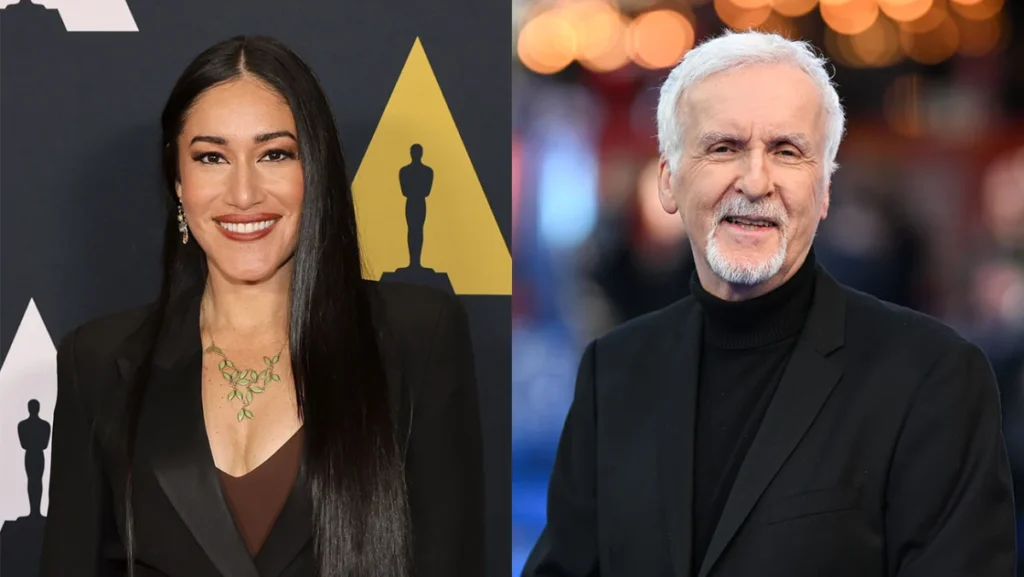
(Image: (from left to right) interpreter Helena Koutná, ‘Past Lives’ producer Christine Vachon, director Celine Song and festival artistic director Karel Och at KVIFF 2023. Courtesy of Film Servis Festival Karlovy Vary)
The Interpreting Profession in the Age of AI
The rise of Artificial Intelligence (AI) has sparked widespread debate about its potential impact on various professions, including interpreting. Koutná acknowledges the astonishing pace of AI development, noting its ability to provide increasingly usable translations for certain purposes. However, she also identifies significant limitations. "It is still not fully reliable, and AI output needs to be checked by humans," she states, highlighting that AI translations often lack depth, variety, and can be clumsy.
For interpreting, the challenges for AI are even more pronounced. Beyond mere linguistic conversion, human interpreters navigate cultural nuances, subtle contextual cues, implied meanings, and the complexities of diverse accents – a particularly challenging area in English, which serves as a global lingua franca. Experienced human interpreters are accustomed to deciphering a myriad of linguistic variants, a skill that AI currently struggles to replicate. Koutná posits that while AI interpreting may find acceptable applications in the future for specific, less critical scenarios, human interpreting will likely remain indispensable for situations demanding nuanced understanding, emotional resonance, mood creation, and, crucially, security. The human element, with its capacity for empathy, cultural sensitivity, and instantaneous judgment, remains irreplaceable in complex communication scenarios.

The Cruciality of Preparation and Collaboration
Koutná emphasizes that interpreters play a profound role in human interaction, enhancing experiences, boosting efficiency, and in some critical situations, even saving lives. This applies across a vast spectrum of contexts, from business negotiations and technical production to medical treatments, educational settings, cultural events, and even armed conflicts.
For an interpreter to deliver exceptional service, thorough preparation is paramount. Koutná stresses the importance of clients providing as much reference material as possible: speeches or their drafts (even unpolished versions are valuable for vocabulary preparation), draft documents, drawings, lists of participants (to correctly catch names), product specifications, patient histories, and event programs. For film festivals, access to guest names, film titles, screeners, or scripts is invaluable. Furthermore, open communication regarding technical arrangements helps determine the most suitable mode of interpreting.
Interpreters offer not just linguistic conversion but also the invaluable benefit of their accumulated experience. Their questions and requests for information are driven by a singular goal: to provide a high-quality service that ensures communication is relaxed, smooth, and efficient. And, as Helena Koutná’s ever-present smile suggests, if circumstances allow, to bring genuine joy and understanding to all involved, bridging not just languages, but hearts and minds across the global cinematic stage.