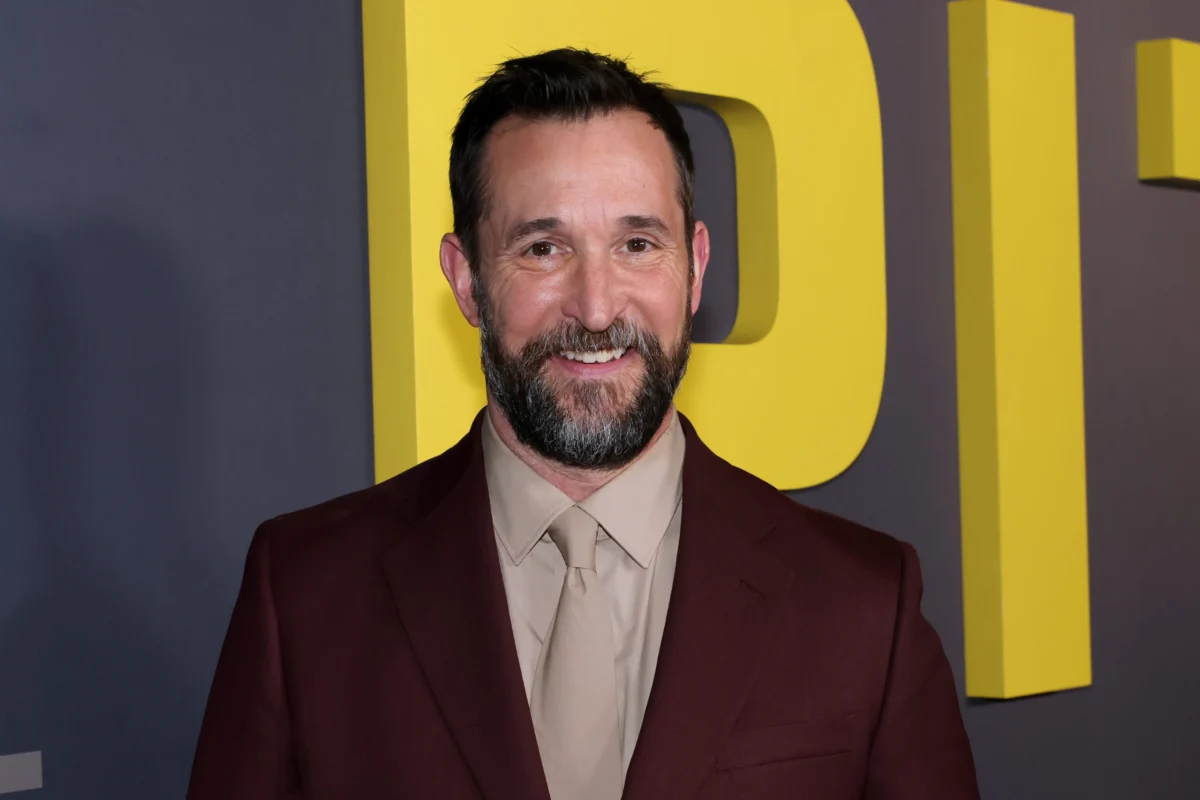
In a candid revelation that offers a rare glimpse into the complex trade-offs inherent in a successful acting career, veteran actor Noah Wyle, celebrated for his iconic role as Dr. John Carter on the critically acclaimed medical drama ER and currently starring in the acclaimed series The Pitt, has disclosed that his rigorous filming commitments to the long-running NBC series precluded him from accepting roles in multiple high-profile films, including one that garnered significant Academy Award recognition. This disclosure, made during a recent appearance on the Still Here Hollywood podcast, underscores the demanding nature of network television production during its golden age and the strategic decisions actors must navigate between consistent employment and potentially career-defining film opportunities.
The Revelation: A Candid Look at Career Crossroads
Wyle, who not only stars but also serves as an executive producer on The Pitt, a medical drama that has itself achieved critical and awards success, was prompted during the podcast interview about any significant roles he desired but ultimately did not secure. His response offered a surprising insight into the opportunities that slipped through his grasp due to the relentless schedule of ER. "Yeah, tons. Happens all the time," the actor admitted, before detailing two particularly prominent instances. "We talked about a couple of them, actually. Good Night, and Good Luck, George [Clooney] offered me a part in that. I couldn’t get out of ER to do it. I was offered the part of Private Ryan in Saving Private Ryan; couldn’t get out of ER to do it."
This statement immediately sparked widespread interest, highlighting the profound impact a television commitment can have on an actor’s cinematic trajectory. Saving Private Ryan, released in 1998, went on to become a monumental success, both critically and commercially, earning five Academy Awards, including Best Director for Steven Spielberg. Similarly, Good Night, and Good Luck, directed by Wyle’s former ER co-star George Clooney and released in 2005, garnered six Oscar nominations, including Best Picture and Best Director. The revelation casts a new light on Wyle’s career, illustrating the path not taken while simultaneously affirming the enduring legacy of his work on ER and his current triumph with The Pitt.
The ER Phenomenon: A Decade of Medical Drama Dominance
To fully appreciate the weight of Wyle’s missed film opportunities, one must contextualize the colossal phenomenon that was ER. From its premiere in September 1994, ER revolutionized medical dramas, setting new standards for realism, pacing, and ensemble storytelling. Wyle was an integral part of its initial success, portraying medical student John Carter, who evolved over 11 seasons from an earnest intern to a seasoned physician. He remained a central figure on the show until 2005, later returning for guest appearances in seasons 12 and 15.
The production schedule for a network drama of ER‘s magnitude was notoriously grueling. Actors routinely worked 12-16 hour days, five to six days a week, for nine to ten months out of the year. This intense commitment left little to no room for other projects, particularly feature films which often require several weeks or even months of an actor’s undivided attention. During its peak, ER was not just a hit; it was a cultural touchstone, routinely drawing tens of millions of viewers weekly, making it one of the most-watched shows in television history. Its impact was profound, influencing medical education, public perception of emergency medicine, and the television landscape itself. For an actor like Wyle, being a cornerstone of such a successful and demanding production meant unparalleled exposure and consistent employment, but also significant limitations on pursuing parallel film careers.
The Missed Opportunities: Saving Private Ryan (1998)
The first major film Wyle cited was Steven Spielberg’s epic World War II drama, Saving Private Ryan. Released in the summer of 1998, precisely when Wyle was in the thick of his ER commitments during the show’s fourth and fifth seasons, the film was an immediate critical and commercial juggernaut. It redefined the war genre with its visceral, unflinching depiction of combat and its powerful narrative exploring the sacrifices of war. The film grossed over $482 million worldwide and was lauded for its technical brilliance and emotional depth.
At the 71st Academy Awards, Saving Private Ryan was a dominant force, securing 11 nominations and winning five Oscars, including Best Director for Spielberg, Best Cinematography, Best Film Editing, Best Sound, and Best Sound Effects Editing. The film’s enduring legacy is cemented in its status as one of the greatest war films ever made.
Wyle’s revelation that he was offered the part of "Private Ryan" requires further clarification, which he himself provided. He clarified that he was not offered the titular role, which ultimately went to Matt Damon, but rather the part of Corporal Timothy Upham. Upham, a timid cartographer and translator, is a pivotal character whose struggles with the horrors of war and a crucial moment of inaction become one of the film’s most poignant and debated elements. The role was ultimately played by Jeremy Davies, whose nuanced and deeply affecting performance earned widespread critical acclaim. Davies’ portrayal captured the psychological toll of war on a non-combatant, offering a stark contrast to the hardened soldiers around him. Wyle’s passing on this role, while understandable given his ER schedule, meant missing out on a significant part in a film that would indelibly shape cinematic history.
The Missed Opportunities: Good Night, and Good Luck (2005)
The second film Wyle mentioned, Good Night, and Good Luck, holds a unique connection due to the involvement of his former ER co-star, George Clooney. Clooney, who portrayed Dr. Doug Ross on ER for five full seasons before transitioning to a hugely successful film career as both an actor and director, helmed and starred in this historical drama. Released in 2005, the year Wyle concluded his primary 11-season run on ER, the film chronicles the real-life conflict between broadcast journalist Edward R. Murrow and Senator Joseph McCarthy during the Red Scare era.
Good Night, and Good Luck was a stark, black-and-white film praised for its intelligent screenplay, compelling performances, and artistic direction. It resonated deeply with critics, earning six Academy Award nominations, including Best Picture, Best Director for Clooney, Best Actor for David Strathairn (who played Murrow), Best Original Screenplay, Best Art Direction, and Best Cinematography. Clooney himself played Fred Friendly, Murrow’s producer and co-creator of See It Now. The film’s themes of journalistic integrity, freedom of speech, and the dangers of political demagoguacy were highly relevant upon its release and remain so today.
While Wyle did not specify which role Clooney offered him, the film features a strong ensemble cast. Given Clooney’s personal connection, it’s highly probable he sought to collaborate with Wyle, understanding his talents. Missing out on this project meant not only forgoing a role in an Oscar-nominated film but also a chance to reunite creatively with a former colleague who had successfully transitioned to a new phase of his career.
Wyle’s Perspective: No Regrets and Appreciation for Fellow Actors
Despite the magnitude of the films he had to pass on, Wyle expressed a remarkable lack of regret. His perspective is one of professional admiration and philosophical acceptance, a testament to his character and understanding of the collaborative nature of filmmaking. "I almost am glad that I didn’t do them, because, you know, those guys made those parts," he stated on the podcast. This sentiment reflects a maturity often found in seasoned actors who recognize that certain roles are destined for specific performers.
His specific praise for Jeremy Davies’ portrayal of Upham in Saving Private Ryan is particularly telling. "Matt Damon was Private Ryan. There were two. I got offered the part of Upham, which was Jeremy Davies’ part, and he was so phenomenal in that I couldn’t imagine doing anything close to what he did." This acknowledgment speaks volumes about Wyle’s respect for his peers and his understanding that an actor’s unique interpretation can elevate a character beyond what might have been conceived on the page. It’s a gracious perspective that eschews "what ifs" in favor of celebrating the artistic achievements of others.
The Modern Landscape: ‘The Pitt’ and Wyle’s Resurgence
In a compelling twist of fate, Noah Wyle finds himself at the forefront of another critically successful medical drama, The Pitt, where he not only stars as Dr. Michael "Robby" Robinavitch but also holds an executive producer credit. The series has garnered significant acclaim, especially for its first season, which won an impressive five Emmys. This included a coveted award for Best Actor in a Drama Series for Wyle himself, marking a significant personal triumph and a testament to his enduring talent.
The success of The Pitt underscores a notable shift in the entertainment industry since Wyle’s ER days. The lines between film and television have blurred considerably, with prestige television now often attracting top-tier cinematic talent and offering complex, character-driven narratives on par with feature films. Platforms like HBO Max (where The Pitt streams) provide creative freedom and production values that were once exclusive to the big screen. The fact that The Pitt‘s second season was a strong frontrunner heading into the 2026 Emmy nominations further solidifies its standing as a major player in the current television landscape. This allows Wyle to enjoy both the consistent, deep character exploration of a long-form series and the critical recognition that often accompanies high-caliber film work, without the same binary trade-offs he faced decades ago.
Broader Implications of Career Choices and the Actor’s Journey
Noah Wyle’s experience highlights a universal dilemma for actors: the balance between stability and opportunity. A long-running, successful television series offers financial security, consistent work, and global recognition. However, it often comes at the cost of flexibility, potentially limiting an actor’s ability to pursue diverse roles in film, especially during a period when film was still unequivocally considered the pinnacle of an acting career.
Wyle’s career trajectory is a compelling narrative of sustained success, evolving with the industry. While he missed out on roles in two highly decorated films, his commitment to ER cemented his status as a household name and provided a foundation for a rich and varied career that has now culminated in renewed critical acclaim with The Pitt. His story is a powerful reminder that an actor’s journey is not solely defined by the roles they take, but also by the choices they make, the commitments they honor, and the grace with which they navigate the paths less traveled. It underscores that sometimes, the greatest career success is found not in avoiding missed opportunities, but in embracing the ones that define you.