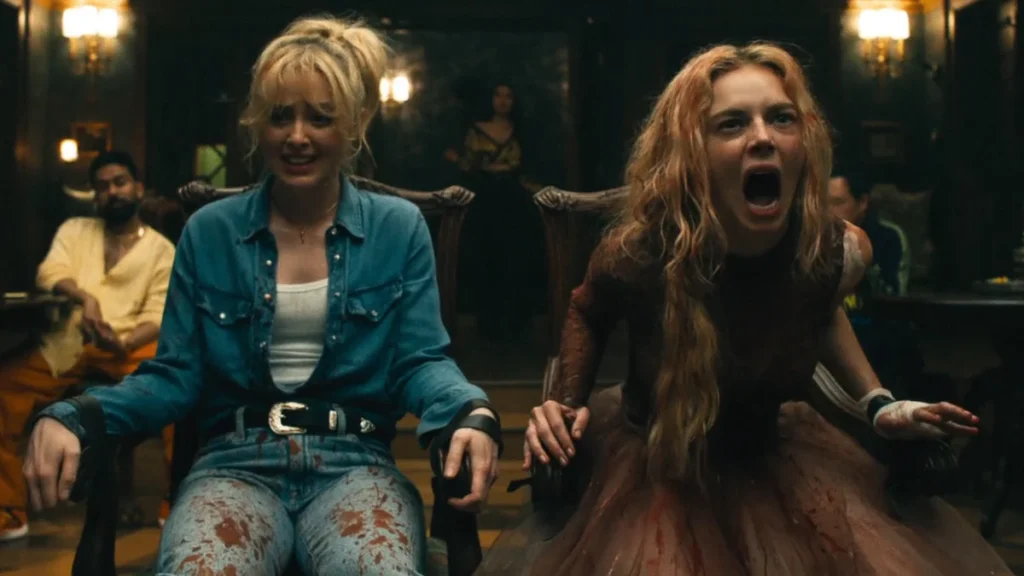
The landscape of modern storytelling is undergoing a profound transformation, with beloved literary and cinematic universes finding new life and expansive canvases on television. This era of intellectual property (IP) expansion sees revered creators and showrunners delving deeper into established lore, crafting prequels, sequels, and parallel narratives that enrich fan experiences and attract new audiences. Three prominent examples — the highly anticipated sequel series The Testaments (building on Margaret Atwood’s The Handmaid’s Tale), the chilling prequel It: Welcome to Derry (exploring Stephen King’s iconic horror), and the nascent sci-fi thriller Alien: Earth (extending Ridley Scott’s legendary saga) — exemplify this trend, each navigating the delicate balance between honoring source material and forging innovative paths. These projects underscore a pivotal moment where the serialized nature of television allows for unprecedented narrative depth, thematic exploration, and character development, often with the direct involvement and blessing of the original visionaries.
The Enduring Resonance of Gilead: The Journey to The Testaments
The dystopian world of Gilead, first introduced in Margaret Atwood’s seminal 1985 novel The Handmaid’s Tale, has experienced a remarkable resurgence in cultural relevance and narrative expansion. Showrunner Bruce Miller, who spearheaded the critically acclaimed Hulu series adaptation, admits that his initial encounter with Atwood’s novel left him yearning for more. "I was like, ‘Well, I hope there’s a sequel!’" Miller recounted, echoing the sentiments of countless readers captivated by the story’s abrupt, enigmatic conclusion. Two decades after his first read, Miller found himself at the helm of the very adaptation that would propel The Handmaid’s Tale into a global phenomenon.
Premiering in 2017 amidst a charged political climate, particularly during the early months of the first Trump administration, the Hulu series struck an immediate and powerful chord. Its themes of reproductive rights, totalitarian oppression, and female subjugation resonated deeply, transforming the evocative imagery of the handmaids’ red capes and white bonnets into potent symbols not only of oppression but also of burgeoning resistance. The show’s critical success was undeniable and swift, making history as the first streaming offering to win an Emmy for Outstanding Drama Series. Over its subsequent five seasons, it would accumulate 13 more Emmys, solidifying its place as a groundbreaking achievement in television and a cultural touchstone. Its impact extended beyond awards, influencing real-world protests and discussions around women’s rights, with activists donning handmaid costumes as a silent, powerful form of demonstration.
The idea of continuing Atwood’s narrative beyond the scope of her original novel was not exclusive to Miller. Unbeknownst to him, Atwood herself was pondering a literary sequel. Miller notes, "I’m sure it had been suggested a zillion times before." However, the success of the Hulu series, and Atwood’s personal connections formed with the cast and crew, seemed to galvanize the novelist. "I think with the show, and especially with her personal relationship with some of the cast, [she got to see] the fun of television in terms of expanding stories," Miller observed. This synergistic relationship blossomed as production on the second season of The Handmaid’s Tale commenced. Atwood approached Miller with the groundbreaking news: she had begun writing a sequel.
Published in 2019 to widespread anticipation and critical acclaim, The Testaments is set 15 years after the events of The Handmaid’s Tale. By the time of its publication, Atwood had already shared the core details of her expanded vision with Miller, providing a crucial directive for the conclusion of his Handmaid’s Tale series: Aunt Lydia, the menacing and complex figure brilliantly portrayed by Emmy winner Ann Dowd, must survive. This mandate was a clear indicator of the character’s pivotal role in the forthcoming narrative of The Testaments.
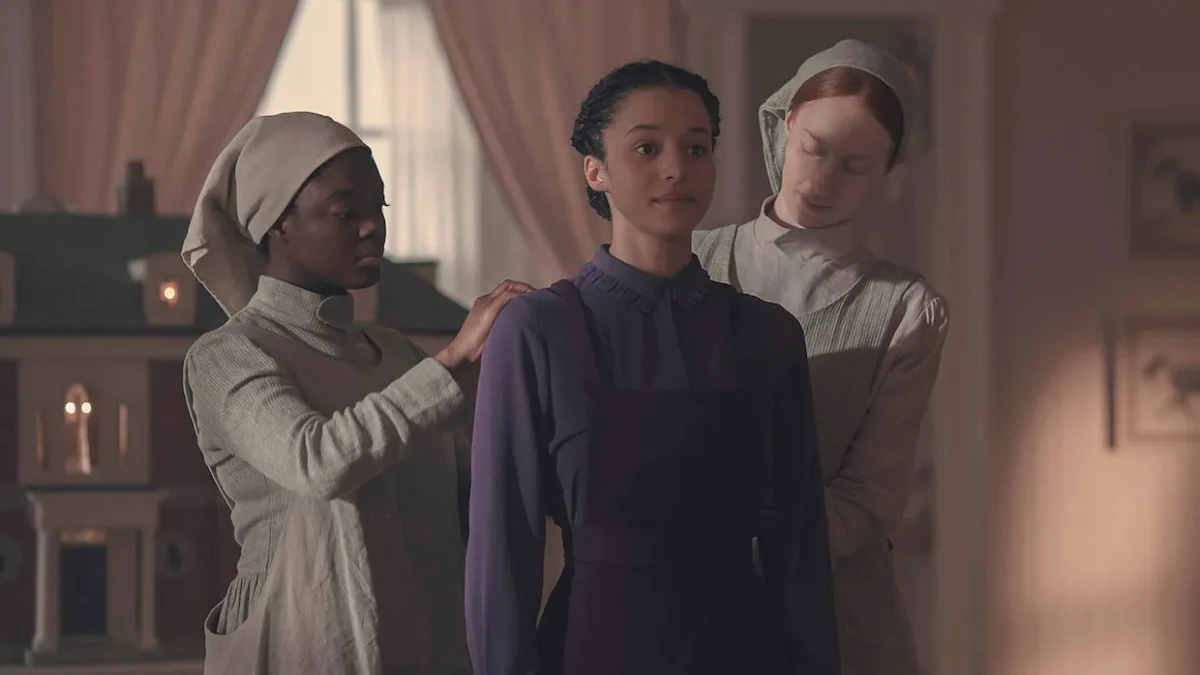
In Miller’s television adaptation, the protagonist Offred, whose real name is June Osborne (Elisabeth Moss), famously escapes the totalitarian clutches of the Republic of Gilead and finds refuge in Canada, albeit leaving her younger daughter behind. This is a significant deviation from Atwood’s original novel, where Offred’s fate remains ambiguous, her story presented as a recovered historical document, implying her capture or death. The Testaments novel, and consequently the upcoming series adaptation, primarily follows Agnes Jemima, a handmaid-in-training within Gilead who remains unaware that she is June’s daughter, and Daisy, June’s other daughter who grew up in Canada.
Miller’s approach to adapting The Handmaid’s Tale was initially cautious. "I was reluctant to change too much of The Handmaid’s Tale for TV, as it’s one of my favorite novels," he stated. Yet, he acknowledged the inherent necessity for the story to evolve to fit the demands of serialized television. Atwood, far from being prescriptive, proved to be an encouraging collaborator. "She was very encouraging for me to take the book and interpret it," Miller recalled. A unique creative partnership emerged, with the pair meeting halfway through the writing of each Handmaid’s season to discuss Miller’s ideas and receive Atwood’s input. This open dialogue and the foreknowledge of The Testaments‘ central premise granted Miller an unprecedented degree of freedom to flesh out the narrative gaps between Atwood’s first novel and his eventual sequel.
The existence of The Testaments fundamentally altered Miller’s perception of the original story’s boundaries. "The sequel made me realize that Margaret was comfortable with expanding the world," he reflected. "I got a sense [when I read The Testaments] that she was thinking about the end of The Handmaid’s Tale, where the characters would be placed. It really encouraged me [to consider] some victories for June." This philosophical shift led to the most significant departure from the source material: June’s survival and active resistance in the television series, a stark contrast to her anonymous fate in Atwood’s original novel. While the specific plot details of the televised Testaments will naturally diverge from Atwood’s literary sequel due to these preceding changes, its larger narrative arc and profoundly prescient themes of resistance, truth, and the fight for freedom are poised to remain intact. The precursor’s success certainly bodes well for The Testaments‘ Emmy prospects, especially following Chase Infiniti’s Gotham Award win for her lead performance, signalling strong early critical reception for the new chapter.
Unmasking the Monster: It: Welcome to Derry
The terrifying mythology woven by Stephen King in his monumental 1986 novel It has captivated generations, cementing Pennywise the Dancing Clown as one of horror’s most iconic and deeply unsettling villains. Following the critical and commercial success of his two-part film adaptation, director Andy Muschietti, alongside his producing partner and sister Barbara Muschietti, embarked on an ambitious journey to delve into the creature’s enigmatic origins with the HBO prequel series, It: Welcome to Derry.
The genesis of this prequel emerged organically from the intense creative process of the films. While working on the feature adaptations, Muschietti and actor Bill Skarsgård, who chillingly embodied Pennywise, engaged in profound discussions about the character’s motivations and backstory. "When you’re close to your actor and talking about character a lot, you go into depths that transcend the story you’re telling," Andy Muschietti explained. These conversations sparked a mutual fascination: "Soon we were very excited about the potential exploration of Pennywise’s origins—when did the monster become the clown? It’s very enigmatic in the book, but intentionally cryptic." King himself famously left much of It’s true nature and origins veiled in cosmic mystery, enhancing its terror through the unknown. The challenge for the Muschiettis was to illuminate without demystifying entirely, to explain without losing the essential horror.
It: Welcome to Derry is set 27 years prior to the events of It: Chapter One. While King’s original novel famously shifts between the late 1950s (the Losers’ Club as children) and the mid-1980s (as adults), the Muschietti films updated the childhood narrative to the late 1980s, with the adult storyline set in the present day. This temporal shift was partially a nod to the Muschietti siblings’ own formative experiences. "That was our childhood," Barbara Muschietti revealed, indicating a personal connection to the chosen era. Setting the prequel in the early 1960s allowed the creators to weave in significant historical context, immersing the narrative in a period fraught with its own anxieties. The chilling backdrop of the Cold War, with its looming threat of nuclear annihilation, and the societal upheaval of the Civil Rights Movement, are poised to hang heavy over a new group of young outcasts, reminiscent of the original novel’s "Losers’ Club," as they confront supernatural evil. This historical layering promises to add thematic depth, exploring how real-world fears can amplify or mirror the supernatural terror emanating from Derry.
The Muschiettis’ vision for Pennywise’s origin story introduces his human alter ego, Bob Gray, at the tail end of the Great Depression. This period, marked by widespread economic hardship and social unrest, provides a fertile ground for the malevolent entity’s emergence. Bob Gray is depicted as a dancing clown on the carnival circuit, accompanied by his young daughter, before being lured away and consumed by the unnamed, ancient monster that eventually assumes his persona to attract and prey upon young victims. This evocative use of vaudevillian imagery not only grounds the supernatural horror in a tangible, historical setting but also sets the stage for a broader narrative strategy. The Muschiettis plan for future seasons of Welcome to Derry to unfold during other historically significant periods, allowing the series to explore how It’s cyclical emergence intersects with pivotal moments in American history, potentially offering a commentary on societal fears and vulnerabilities across different eras.
Stephen King’s vast bibliography has inspired countless adaptations, some adhering closely to the source, others taking significant liberties. The Muschiettis, keenly aware of the reverence for King’s work, maintain close communication with the author regarding any potential deviations or expansions. "Whenever we want to test the waters, we let him know immediately," Barbara affirmed, describing King as the "mastermind behind the whole enterprise." This collaborative spirit is crucial when attempting to expand on such iconic material. The core challenge, as the Muschiettis acknowledge, is explaining an iconic horror villain’s motivations without stripping away the essential sense of mystery that makes them terrifying. Andy Muschietti confidently asserts their approach: "Over the three seasons that we’re planning, we’re hitting the character’s motivation right in the face, and it’s very clear what he wants. It’s not something that people necessarily will expect, but it’s very exciting." This promise suggests a bold and unexpected revelation of Pennywise’s inner workings, aiming to deepen the horror rather than dilute it.
Beyond the Xenomorph: Exploring New Life in Alien: Earth
The Alien franchise stands as a colossus in sci-fi horror, forever imprinted on cinematic history by Ridley Scott’s groundbreaking 1979 film. Its blend of claustrophobic terror, bio-mechanical design, and underlying corporate critique created a benchmark for the genre. Now, showrunner Noah Hawley, celebrated for his Emmy-winning anthology series adaptation of Fargo, is venturing into this iconic universe with Alien: Earth for FX, marking his first foray into the franchise.
Hawley’s entry into the Alien universe comes with the distinct advantage of a fresh perspective, unburdened by previous direct involvement. He approaches the task with a clear understanding of the franchise’s enduring appeal. Setting the series just before the events of Scott’s original film provides a rich temporal space for exploration without directly treading on established narratives or characters from the main Alien saga. The series stars Sydney Chandler as Wendy, a pioneering human-cyborg hybrid – the first of her kind. Wendy leads a specialized team of fellow hybrids to investigate the crash landing of a research vessel, only to discover, predictably, a xenomorph running rampant, having decimated the ship’s crew. This premise immediately introduces a new type of protagonist and conflict dynamic within the familiar terror of the Alien world.
Hawley emphasizes that the expanded canvas of a 10-episode series is instrumental in bringing the franchise’s larger, often philosophical themes into contemporary relevance. "What is [the original] movie at its core?" Hawley posits. "If it had just been a monster movie, I don’t know if there would be a television series there." He identifies the core of Scott’s film as more than just creature feature thrills; it’s a commentary on humanity’s vulnerability to both primal nature and unchecked technological/corporate ambition. In Alien: Earth, Wendy finds herself ensnared between two powerful corporate entities: Weyland-Yutani, the infamous corporation from the films that owns the doomed vessel and seeks to claim the alien specimen, and Prodigy, the cutting-edge tech company responsible for the hybrid program. This dynamic significantly amplifies a subtle but critical tension present in Scott’s original film, where Sigourney Weaver’s Ripley faces not only the xenomorph but also the duplicity of Ian Holm’s android, Ash, programmed to protect Weyland-Yutani’s assets (the alien) over human lives. Hawley brilliantly distills this conflict: "You realize she’s trapped between nature and technology, and they’re both trying to kill her. That seems pretty on point with our moment on Earth right now." This analysis grounds the series in profound contemporary anxieties about AI, corporate power, and environmental collapse, elevating it beyond mere genre fare.
A bold creative choice by Hawley is the freedom to introduce new extraterrestrial creatures. While the xenomorph remains a central threat, Alien: Earth will feature other alien lifeforms, some deadly, but surprisingly, others friendly. "It’s called Alien. It’s not called Xenomorph, right?" Hawley logically argues. This distinction allows him to broaden the scope of the universe, introducing a diverse ecosystem of alien life. "That allows me to introduce a bunch of new characters, basically, where you don’t know what they eat or how they reproduce. We get to make it fresh again for the audience." This promises to revitalize the sense of discovery and wonder that characterized the initial encounters with the unknown in the original film, pushing the boundaries of what "alien" can mean within the franchise.
Hawley’s overarching goal is to provide an additive experience for fans. "If you say, ‘Here’s the world of Alien, here’s the creatures and premise that you love, and let me see if I can do something additive to it,’ the hope is that people will feel happy about that," he explains. This commitment to enrichment rather than mere replication or rehashing reflects a sophisticated understanding of fan expectations and the potential of television to expand revered mythologies responsibly and innovatively.
The Broader Implications: A New Era for Franchise Storytelling
The development of The Testaments, It: Welcome to Derry, and Alien: Earth is indicative of a broader and accelerating trend in the entertainment industry: the strategic expansion of established intellectual properties. In an increasingly competitive streaming landscape, studios and networks are leveraging beloved franchises to attract and retain subscribers, banking on inherent fan bases and brand recognition. This approach, while commercially driven, also offers unprecedented opportunities for creative exploration.
The challenges inherent in this strategy are significant. Adapting and expanding iconic works demands a delicate balance between fidelity to the source material and the necessity for fresh perspectives. Fans often hold deep emotional attachments to these universes, and any perceived misstep can lead to backlash. However, when executed thoughtfully, with the involvement or blessing of original creators like Margaret Atwood and Stephen King, these expansions can deepen lore, develop complex characters, and explore thematic nuances that a single film or novel might not afford. The success of The Handmaid’s Tale series, which extended far beyond Atwood’s original ending, demonstrated the appetite for such prolonged narratives.
The role of original creators in these expansions is often paramount. Their endorsement lends legitimacy and creative guidance, reassuring fans that the new narratives remain true to the spirit of the original. Both Atwood’s direct input on The Testaments and King’s consultation on It: Welcome to Derry highlight a growing model of collaboration between literary giants and television showrunners. This partnership allows for an organic evolution of stories, where the original author can help shape new chapters while still giving showrunners the creative freedom necessary for a new medium.
Furthermore, these projects underscore the unique strengths of serialized television. A 10-episode season, or multiple seasons, offers a canvas far larger than a two-hour film, enabling intricate world-building, nuanced character arcs, and the exploration of complex themes over an extended period. This format is particularly well-suited for delving into backstories (as in Welcome to Derry) or expanding the socio-political implications of a fictional world (as in The Testaments and Alien: Earth).
Ultimately, these ambitious television series represent the evolving frontier of storytelling. They are not merely reboots or remakes but genuine attempts to build upon rich narrative foundations, inviting audiences to journey further into worlds they thought they knew. By embracing the creative potential of television, these projects aim to be not just continuations or prequels, but additive experiences that enrich, expand, and redefine the boundaries of their iconic universes for a new generation.