The 60th edition of the Karlovy Vary International Film Festival (KVIFF), marking its 80th year since inception, rolled out the red carpet on Sunday for a true titan of cinematography. Robert Richardson, affectionately known in the industry as "The White Devil" for his distinctive long white hair and unyielding pursuit of visual perfection, was bestowed with the festival’s highest accolade: the Crystal Globe for outstanding artistic contributions to world cinema. This prestigious honor, celebrating a career that has profoundly shaped contemporary filmmaking, was presented by none other than Hollywood luminary Harvey Keitel, adding an extra layer of gravitas and star power to an already significant occasion.
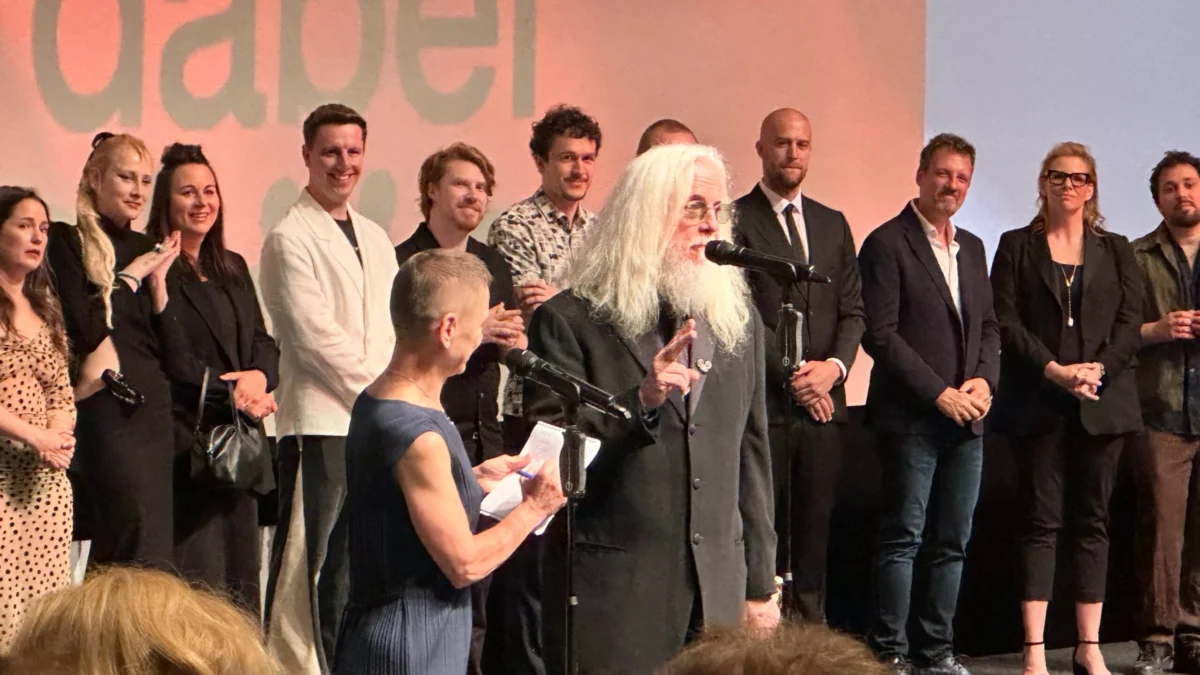
The atmosphere in the Grand Hall of Karlovy Vary’s Hotel Thermal was electric as Richardson ascended the stage, greeted by a resounding ovation that underscored the deep respect and admiration he commands. His presence, a testament to decades of groundbreaking work, captivated the audience. With characteristic humility, Richardson began his acceptance speech by stating, “I’m not an actor,” a lighthearted acknowledgment of his behind-the-camera role that nonetheless highlighted his central importance to the cinematic process.
A Career Defined by Light and Shadow: The Legacy of "The White Devil"
Robert Richardson’s journey to becoming one of the most revered cinematographers in history is a testament to his relentless dedication and innovative spirit. Born in Hyannis, Massachusetts, Richardson’s early passion for photography evolved into a profound mastery of visual storytelling. He studied at the Rhode Island School of Design and the American Film Institute, laying the groundwork for a career that would redefine the aesthetics of modern cinema.
His distinctive style, characterized by dramatic use of light and shadow, high contrast, often a desaturated color palette, and a dynamic, often handheld camera, has lent an unmistakable atmosphere to an astonishing array of films. Richardson is perhaps best known for his extensive collaborations with three of contemporary cinema’s most influential directors: Oliver Stone, Martin Scorsese, and Quentin Tarantino. These partnerships have resulted in some of the most iconic images of the past four decades, earning him a reputation as a visionary who can translate complex narratives into compelling visual experiences.
The KVIFF’s recognition specifically highlighted his achievement as one of the few cinematographers alive to have received the Academy Award for Best Cinematography three times. His first Oscar came for Oliver Stone’s JFK (1991), a film where his innovative use of multiple film stocks, aspect ratios, and black-and-white photography captured the fragmented, conspiratorial mood of the narrative with unparalleled intensity. He then reunited with Stone for other critically acclaimed projects like Platoon and Born on the Fourth of July, further solidifying their powerful artistic synergy.
His second Oscar was for Martin Scorsese’s The Aviator (2004), a biographical drama about Howard Hughes. For this film, Richardson meticulously crafted a visual language that evolved through the decades depicted, mimicking the changing film stocks and color processes of Hollywood’s golden age. This historical accuracy and stunning visual artistry helped immerse audiences in Hughes’s tumultuous life. Their collaboration extended to other Scorsese masterpieces such as Shutter Island and Hugo.
It was for Hugo (2011), also directed by Scorsese, that Richardson earned his third Academy Award. This visually breathtaking 3D film, a love letter to early cinema, showcased his ability to blend intricate production design with groundbreaking visual effects, creating a magical, immersive world. His work on Hugo demonstrated his versatility and willingness to embrace new technologies while maintaining a profound respect for cinematic tradition.
Beyond his Oscar-winning projects, Richardson’s filmography boasts an impressive list of influential films, including Quentin Tarantino’s Kill Bill Vol. 1 and Vol. 2, Inglourious Basterds, Django Unchained, and Once Upon a Time in Hollywood. These collaborations are noted for their bold, often stylized cinematography that perfectly complements Tarantino’s unique narrative voice. He has also worked on films starring some of Hollywood’s biggest names, including Leonardo DiCaprio, Robert De Niro, Brad Pitt, Christoph Waltz, Uma Thurman, Samuel L. Jackson, Jamie Foxx, and Margot Robbie, consistently elevating their performances through his masterful lens. His moniker, "The White Devil," stems not just from his distinctive appearance but also from his famously demanding yet ultimately rewarding approach to capturing light and motion, always pushing the boundaries of what is visually possible.
An Evening of Reverence and Wit: Keitel’s Tribute and Richardson’s Vision
Richardson’s speech at KVIFF was a heartfelt ode to the power of cinema and the vibrant community he observed in Karlovy Vary. He lauded the palpable "love for the art of film" that permeated the town and the festival grounds. "I look out into the streets here, and I see so many people and so many here within this hall, and there are so many young people," he remarked, emphasizing the enduring appeal of film across generations. He articulated his belief that the Crystal Globe represented "a singular future, the future that we all need and want," highlighting KVIFF’s crucial role in fostering this vision.
He particularly praised the festival for its commitment to "open[ing] the opportunity for seeing films that we rarely see, and holding films as [an] art [form]." This statement resonated deeply with KVIFF’s mission to champion independent and art-house cinema from around the globe. Richardson then shared his profound hope for the future of film distribution: "What I’m hoping for one day in the future is that more countries can be reached through streaming or whatever at no cost for everyone to be able to see what we cannot see and to see all the work that many of you are going to do." This vision underscores the contemporary debate about accessibility and global reach for diverse cinematic voices, advocating for a world where geographical and economic barriers do not hinder the appreciation of art.
The evening’s emotional core was further amplified by the presence and words of Harvey Keitel. The veteran actor, known for his intense performances in films like Taxi Driver, Pulp Fiction, and Reservoir Dogs, introduced Richardson after a powerful highlight reel of his work. Keitel’s introduction was a masterclass in understated reverence. He held a piece of paper, ostensibly with a prepared speech, but after the reel concluded, he simply stated, "But seeing Bob’s work speaks for itself. We have before us one of the world’s greatest cinematographers. So, that’s all I have to say." With a dramatic flourish, he then ripped up the paper and scattered the pieces, a spontaneous gesture that spoke volumes about the profound impact of Richardson’s artistry.
Richardson, in turn, expressed his deep admiration for Keitel, calling the Crystal Globe "a very special gift… coming from an extraordinarily special man, Harvey Keitel, who is, in my opinion, truly one of the greatest in cinema history." This mutual respect between two giants of the industry was a poignant moment. Richardson then endeared himself further to the audience with a humorous anecdote from his early career. He recounted his first viewing of Martin Scorsese’s seminal film Mean Streets, admitting, "When I first saw Mean Streets, everyone spoke about a must-see performance of Bob De Niro, and the movie was over, and I was like ‘great!’… Time passes, I’m talking about the movie, and the person I thought was Bob De Niro was Harvey Keitel. His performance was so commanding." As laughter rippled through the hall, Richardson quickly clarified, "It’s not to say anything about Bob’s performance – it’s brilliant, and he’s also a good friend." Keitel, with a perfect comedic timing, quipped back, "Are you trying to get me killed?!" The exchange highlighted the camaraderie and shared history among these cinematic legends.
Celebrating the Craft: The Premiere of Robert Richardson: The White Devil
The presentation of the Crystal Globe was seamlessly integrated into another significant event: the world premiere of the feature documentary Robert Richardson: The White Devil. Directed by Czech filmmaker Jana Hojdová, the film is a dedicated exploration of the life and extraordinary career of the cinema icon, offering audiences an intimate look into the mind and methods of a master craftsman. The decision to premiere such a documentary at KVIFF, coinciding with Richardson’s honor, underscored the festival’s commitment to celebrating not just films, but the artists behind them, particularly those whose contributions often go unsung by mainstream audiences.
Following the award ceremony, the entire crew of the documentary joined Richardson on stage, a collective acknowledgement of the collaborative nature of filmmaking. Director Hojdová presented Richardson with a bracelet, a gesture that prompted another fascinating anecdote from the cinematographer. He explained a personal tradition: "I have a tradition – every time I start a movie, I have one bracelet, and I wear it for the entire movie… When they come off, that means the film’s gonna die." This glimpse into his personal rituals offered a charming insight into the superstitions and deep personal investment that many filmmakers pour into their projects. It served as a reminder that for artists like Richardson, filmmaking is not merely a job, but a deeply personal, almost spiritual endeavor.
Karlovy Vary International Film Festival: A Beacon for World Cinema
The Karlovy Vary International Film Festival holds a unique and esteemed position in the global cinematic landscape. Founded in 1946, it is one of the oldest and most prestigious film festivals in Central and Eastern Europe, recognized as a Class A festival by the International Federation of Film Producers Associations (FIAPF), placing it in the same league as Cannes, Berlin, and Venice. This year’s edition is particularly significant, marking both its 60th edition and its 80th anniversary, a double celebration of its enduring legacy and resilience.
Historically, KVIFF played a crucial role during the Cold War as one of the few platforms where Eastern and Western cinema could meet and exchange ideas. Following the Velvet Revolution, it underwent a significant revitalization, re-establishing itself as a vibrant hub for art-house cinema, independent filmmaking, and emerging talents, particularly from the post-communist bloc. The festival is renowned for its welcoming atmosphere, its focus on discovery, and its picturesque setting in the historic spa town of Karlovy Vary, which transforms into a bustling cinematic hub each summer.
The Crystal Globe, the festival’s top honor, has been awarded to numerous luminaries throughout its history, recognizing individuals whose work has left an indelible mark on world cinema. Bestowing it upon Robert Richardson reaffirms KVIFF’s dedication to acknowledging the profound artistic contributions of cinematographers, who are often considered the unsung heroes of filmmaking. This year’s star-studded lineup of honorees and guests further solidified KVIFF’s standing as a major international event. Alongside Richardson, other iconic figures like Dustin Hoffman, Maggie Gyllenhaal, and Jesse Eisenberg were also celebrated, underscoring the festival’s ability to attract and honor a diverse array of talent, from seasoned legends to contemporary voices.
The Future of Film: Accessibility and Artistic Integrity
Richardson’s impassioned plea for wider accessibility to "smaller films" through streaming and other platforms at no cost for viewers worldwide resonates deeply with ongoing discussions within the film industry. In an era dominated by blockbusters and streaming giants, independent and international cinema often struggles to find broad distribution and reach diverse audiences. His vision of a future where films from places like the Czech Republic, and indeed any corner of the globe, can be seen by everyone, reflects a desire for a more democratic and inclusive cinematic landscape.
This sentiment aligns with KVIFF’s core mission to champion films that might not otherwise gain international exposure. The festival serves as a vital launchpad for new voices and niche narratives, providing a crucial platform for critical recognition and audience engagement. Richardson’s call for free access, while perhaps idealistic in a commercial industry, highlights a philosophical desire to prioritize artistic appreciation and cultural exchange over purely economic models. It poses important questions about the role of technology in democratizing art and the responsibility of the industry to foster a global appreciation for diverse storytelling.
The recognition of a cinematographer of Richardson’s stature also serves to elevate the craft itself. Often, the director and actors receive the lion’s share of attention, while the cinematographer, who is fundamentally responsible for the visual language of a film, remains less known to the general public. By honoring Richardson with its highest award, KVIFF not only celebrated an individual genius but also shone a spotlight on the indispensable artistry of cinematography, reminding audiences and industry professionals alike of its critical importance to the emotional and narrative power of film.
Continuing the Dialogue: Awards Chatter Podcast Recording
The festivities for Robert Richardson in Karlovy Vary extended beyond the Crystal Globe ceremony and documentary premiere. Later on Sunday, the cinematographer was scheduled to sit down with Scott Feinberg, the esteemed awards columnist for The Hollywood Reporter, to record an episode of the popular "Awards Chatter" podcast. This engagement provides an invaluable opportunity for a deeper, more extended conversation about his career, his philosophies, and the challenges and triumphs of filmmaking. Such platforms are crucial for preserving the insights of cinematic masters and for educating aspiring filmmakers and devoted cinephiles alike. It underscores the festival’s role not just as a venue for film screenings and awards, but as a vibrant forum for industry dialogue and intellectual exchange, contributing to the ongoing narrative of world cinema.