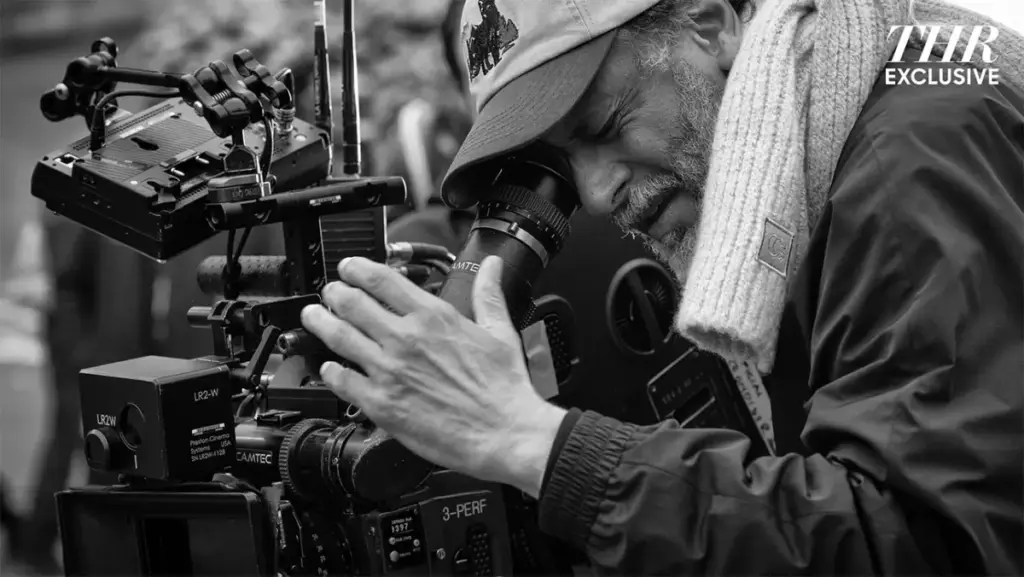
At 71 years old, veteran actor Reed Birney finds himself at the nexus of his career’s most significant and controversial role, starring in Elliot Tuttle’s micro-budget debut feature, Blue Film. With a production cost under $100,000, the independent drama has garnered critical acclaim for its unflinching portrayal of a deeply troubling subject, while simultaneously igniting fervent debate among audiences and industry professionals. Birney, a Tony-winning Broadway regular known for his nuanced character work, delivers a performance that critics have lauded as fearless and profoundly unsettling, yet its challenging nature has also made the film a "radioactive" entity in the cinematic landscape.
The Unflinching Narrative: Unpacking Hank Grant’s Story
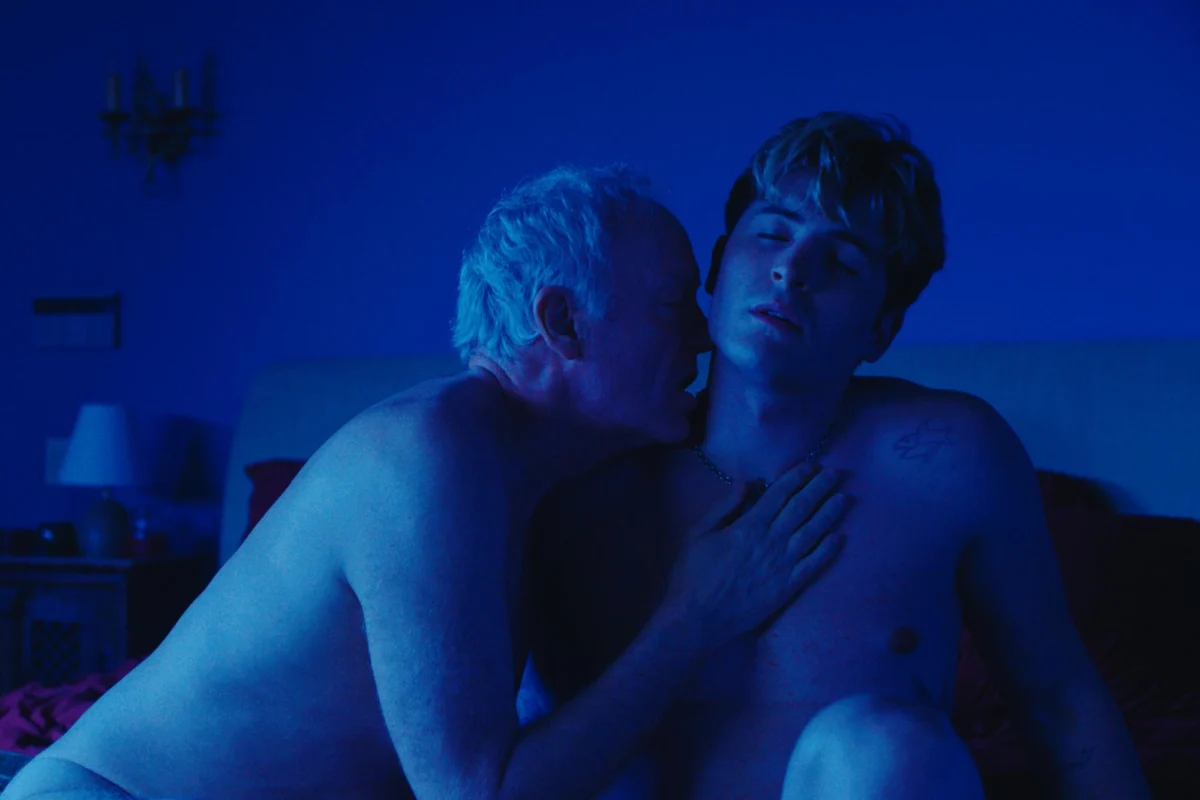
Blue Film introduces audiences to Hank Grant, a former middle-school English teacher who served a seven-year prison sentence for attempting to sexually assault one of his students. The narrative unfolds as Hank, recently released, orchestrates a meeting with an adult sex worker named Aaron Eagle (portrayed by Kieron Moore). The shocking revelation quickly emerges: Aaron is, in fact, Alex, another former student of Hank’s from over a decade prior. Hank’s meticulously planned evening is a desperate attempt to confess his past "love" for Alex, to offer an explanation for his heinous actions, and to confront the man his former pupil has become. What ensues is a claustrophobic, emotionally charged exploration of intimacy, twisted by the indelible trauma rooted in their former student-teacher dynamic.
The film distinguishes itself by presenting one of the most stark and candid portraits of a pedophile ever committed to American cinema. Birney’s portrayal of Hank Grant is a tour-de-force, a "meal of a role" that demands a complete immersion into a character many viewers would instinctively label as irredeemably monstrous. His performance is imbued with palpable shame and regret, anchored by an unsettling genuineness that complicates easy judgment. For an actor like Birney, whose screen presence has often been relegated to smaller, albeit memorable, parts in major television series such as House of Cards, The Blacklist, and Gossip Girl, this leading role represents a profound artistic departure. Critics have suggested that this caliber of work would, under different circumstances, firmly place an actor of Birney’s experience and underrated talent in the heart of the awards conversation. However, the intensely disturbing nature of Tuttle’s final product has proven to be an insurmountable barrier to mainstream recognition.
Birney’s Craft: Fearless Performance in a "Radioactive" Film
Birney’s commitment to the role extended beyond mere performance; he also served as an executive producer on Blue Film, collaborating extensively with director Elliot Tuttle on the script for several months. This deep emotional and creative investment underscores his belief in the film’s artistic merit and its necessity as a piece of radical cinema. "I have such a huge emotional investment in the movie, not only because I am playing this difficult role and I feel it’s the best film work I’ve ever done, but I also really collaborated with Elliot on it," Birney stated, highlighting the profound personal stake he holds in the project.
The actor admits to being unprepared for the intense divisiveness the film has generated. "I guess I’m not as smart as I think I am, but I wasn’t prepared for the divisiveness, honestly," he confessed. His personal interpretation of Hank Grant deviates sharply from how many perceive the character. "I never for a second thought it would be controversial. I never for a second thought of Hank as a monster. I never thought of him as a manipulator or a groomer. Isn’t that weird? I mean, I guess it’s true, but I never thought of it. I just thought he was a sad and broken man." This perspective, while challenging for many to reconcile with the character’s actions, speaks to Birney’s dedication to finding the "mangled humanity" even in the most abhorrent figures, a hallmark of deep character acting.
A Tumultuous Journey to the Screen: ‘Blue Film’s’ Distribution Saga
The journey of Blue Film from conception to public viewing has been as fraught and challenging as its subject matter. The film was shot in 2024, a rapid turnaround for an independent feature. However, once in post-production, it faced "waves of rejections" from various film festivals. This early resistance underscored its "divisive, radioactive even" nature, long before a single public screening. Film festival programmers often weigh artistic merit against potential audience discomfort and public relations challenges, and Blue Film‘s themes clearly triggered significant apprehension.

Despite the initial setbacks, the film eventually found its moment. Last summer, it launched to critical acclaim at the Edinburgh Film Festival, a significant victory for a film struggling to gain traction. Yet, even with positive reviews, the battle for distribution persisted. By October, The Hollywood Reporter‘s review lauded Birney’s performance and the film’s audacious quality, noting that it "crawls directly under the skin, burrowing deep and drawing blood," but also highlighted its continued lack of a distributor, some three months post-premiere.
The landscape for independent films, especially those with challenging themes and micro-budgets, is notoriously difficult. Securing a distribution deal often depends on a combination of critical buzz, commercial viability, and the willingness of a distributor to take on perceived risks. For Blue Film, the latter was a major hurdle. Finally, earlier this year, nascent distributor Obscured Releasing stepped forward, demonstrating a commitment to "radical cinema" and artistic integrity over mainstream appeal. The film was subsequently released in select theaters in May and is now available for rental or purchase on various digital platforms, a common trajectory for independent features finding their audience in the modern era.
Divided Audiences, Profound Reactions: The Film’s Impact
Birney has actively engaged with audience reactions, attending multiple screenings and closely monitoring online discussions. He observes a stark dichotomy in responses. On one hand, he’s heard praise from individuals who felt a profound connection to the film, acknowledging the value of its "bold provocations" and its willingness to confront uncomfortable truths. These viewers often appreciate art that dares to explore the darker, more complex facets of human psychology and trauma.
Conversely, a significant portion of the audience has reacted with condemnation. "Other people are like, ‘This movie should never have been made, it’s irresponsible to tell this story,’" Birney recounts. He understands that the film’s reception is deeply personal and often dictated by individual life experiences. "You meet the movie where you can, and so if you’ve had trauma or sexual abuse, you’re not going to be generous towards Hank. You’re just not. You can’t be. It’s too loaded." This acknowledgment speaks to the film’s intense psychological impact and the ethical considerations inherent in depicting such sensitive material.
The controversy surrounding Blue Film inevitably draws parallels to other films that have ventured into morally ambiguous or pedophilic themes. Birney himself referenced Luca Guadagnino’s 2017 acclaimed film Call Me By Your Name, which depicted a romance between a teenager and an older graduate student. "That movie is also about a pedophile, which nobody seemed to care about at the time," Birney observed. "I sat there thinking, ‘This is so wrong,’ but everybody’s like, ‘It’s so beautiful!’" The difference in reception, while complex, often boils down to narrative framing, aesthetic choices, and the degree to which a film romanticizes or humanizes a perpetrator versus unflinchingly examining the raw, painful reality of their actions and impact. Blue Film offers no such romanticized lens, opting instead for a messy, claustrophobic, and determinedly unsentimental gaze into the darker corners of humanity.
A Career Forged in the Theater, Tested on Screen
Reed Birney’s journey to this career-defining, albeit controversial, role is a testament to perseverance and a deep commitment to his craft. His stage career in New York began in the 1970s, building a reputation as a formidable theater actor. However, his initial forays into film were marked by a series of near-breakthroughs and subsequent disappointments.
His first significant film role came in Arthur Penn’s 1981 dramedy Four Friends, where he played a disabled, dying college student. Despite Oscar buzz preceding its release and critical admiration for his performance, the film flopped. Birney humorously recalls, "I was the fifth friend — story of my life." His next feature role didn’t arrive for another four years, in Sam Raimi’s 1985 Evil Dead follow-up, Crimewave, co-written by the acclaimed Coen Brothers. Birney even secured the lead role, a rare feat for him at the time. "That failed too," he notes, attributing its demise to production company Embassy Pictures wresting control from Raimi after a challenging shoot, leading the director to disavow the final product. "Anyway, that was my big starring thing," Birney says, reflecting on his "cursed film career" that saw him not appear in another movie for 13 long years, only to return in 1998 as "Merchant Prince #1" in A Perfect Murder, where his contribution was limited to the "back of my head at a poker table."

His fortunes began to shift in his mid-50s with the 2008 off-Broadway revival of Sarah Kane’s provocative play Blasted. Birney was cast as a bigoted and predatory tabloid writer, a role he initially felt was "all wrong" for his affable, mild-mannered persona. Yet, his performance earned widespread raves, finally solidifying his standing in the New York theater community after decades of consistent work. A string of Broadway roles followed, culminating in his Tony Award win for The Humans. This theatrical resurgence gradually opened doors back into film, including a searing performance in 2021’s Mass, another uncompromising drama about the aftermath of a school shooting, which earned him a Gotham Award nomination. The irony, however, was not lost on him when his Tony-winning role in The Humans was recast with a more established movie star, Richard Jenkins, for the 2021 screen adaptation.
Challenging Ageism and Expectations in Hollywood
Birney’s career trajectory underscores several key aspects of the entertainment industry: the necessity of resilience in the face of setbacks, the value of embracing challenging and polarizing material, and the potential for late-career breakthroughs. He defies the conventional wisdom that roles for older actors, particularly leading ones, dwindle with age.
At 71, Birney expresses a clear desire for "rich, complicated people who are maybe at a crossroads — it’s weird to be at a crossroads at my age, but certainly we are." He acknowledges the reality of his film career, which has predominantly comprised supporting roles – "The best friend or the awful senator or whatever." Therefore, Blue Film offered a deeply gratifying opportunity: "So it was very gratifying to see, ‘Yeah, Reed, you can play a big part. You can carry a movie.’ I hope other people see it too and realize that." Despite this triumph, he remains cautiously optimistic about future leading roles, noting, "I don’t think there are a lot of wonderful parts for a 71-year-old man…. I would like to be in the middle of the story instead of on the side of the story." This sentiment highlights the persistent ageism in Hollywood, where opportunities for nuanced, central roles often diminish for older actors.
The Enduring Legacy of Radical Cinema
Blue Film‘s status as an "arthouse hot-potato," neither universally seen nor embraced, complicates its long-term impact on Birney’s career. While he beams with pride when discussing the project, he recognizes its complex position. "It’s the biggest thing that’s ever happened to me professionally, but it may be just a blip somewhere," he muses. "I know it’s not for everybody. I wish it were."
The very existence and public discussion of Blue Film, two months after its digital release, is, for Birney, a substantial victory. It represents a triumph for a specific kind of "radical cinema" that faces immense challenges in being made, distributed, and seen in today’s increasingly commercialized film landscape. "It’s already done so much more than it ever should have — look, a $50,000 movie about a pedophile should never have been seen by anybody, honestly," he states with a mix of irony and profound conviction.
Blue Film offers no easy entry point for viewers; it is intentionally messy, confrontational, and deeply uncomfortable. It demands engagement with the darkest aspects of human nature, refusing to shy away from its challenging premise for a single second. In this context, Birney believes the film’s inherent artistic quality will ultimately ensure its place. "This movie is so one of a kind and so beautifully made and so smart, I believe it will find its way. It’s already finding its way. It’s already done so much more than anybody ever dreamed. And if it’s the biggest part I ever play, and it’s the last big part I ever play — that’s not so bad, either." For Reed Birney, Blue Film is more than just a role; it is a profound artistic statement, a testament to a singular career built on daring choices, and a hopeful beacon for cinema willing to explore the uncomfortable truths of the human condition.