The cinematic adaptation of Azar Nafisi’s acclaimed memoir, "Reading Lolita in Tehran," arrives at a geopolitical moment where the complexities of Iran often dominate international headlines. This film, much like the book it draws from, navigates the tumultuous landscape of post-revolutionary Iran, not through the lens of direct conflict, but through the enduring power of literature to illuminate personal truths and foster resilience amidst ideological repression. It underscores how even seemingly disparate narratives, from Nabokov’s controversial "Lolita" to Austen’s social commentaries, can offer profound resonance for those grappling with contemporary Iranian realities.
The Historical Canvas: Iran’s Post-Revolutionary Transformation
The narrative of "Reading Lolita in Tehran" is inextricably linked to the seismic shifts that followed Iran’s 1979 Islamic Revolution. This pivotal event, which overthrew the U.S.-backed monarchy of Shah Mohammad Reza Pahlavi, initially promised an era of liberation and self-determination for many Iranians. Decades of monarchical rule, often characterized by authoritarianism and perceived Western subservience, had fueled a widespread desire for change. Intellectuals, religious leaders, and ordinary citizens united in a diverse coalition, envisioning a future free from oppression and external influence.
However, as the film starkly illustrates from its opening scenes, featuring Azar Nafisi’s arrival at Tehran airport mere months after the revolution, the initial euphoria swiftly gave way to a new, albeit different, form of ideological control. The revolutionary fervor, initially directed against the Shah’s regime, began to consolidate power under a stringent clerical leadership. The promises of liberation quickly transformed into a systematic imposition of a specific interpretation of Islamic law and social norms, fundamentally altering the fabric of Iranian society. The looming presence of Ayatollah Khomeini, depicted through subtle background imagery and reflective shots, serves as a constant visual reminder of the burgeoning totalitarian state, a "Big Brother-like" entity that sought to regulate not just public behavior but also private thought. This transition marked a profound disillusionment for many, including Nafisi, who had returned to Iran with hopes of contributing to a free and flourishing intellectual environment.
Azar Nafisi’s Journey: A Professor’s Unyielding Spirit
At the heart of the film is the autobiographical journey of Azar Nafisi, a distinguished university professor of literature. Her decision to return to Iran after the revolution, driven by a deep love for her homeland and a belief in the potential for positive change, sets the stage for her subsequent struggles. The film chronicles over two decades of her life, capturing her experiences of hope, disillusionment, despair, and ultimately, a resilient reassertion of her core beliefs. Throughout this turbulent period, Nafisi remains unwavering in her conviction regarding the indispensable value of literature, critical thinking, and the fundamental right to independent thought.
As the new regime tightened its grip, academic freedoms were curtailed, curricula were purged, and intellectual discourse was increasingly policed. Nafisi, like many academics, found herself in a precarious position, witnessing the gradual erosion of the very principles she held dear. Her defiance, however, manifested not in overt political protest but in a quiet, intellectual resistance. This steadfast commitment to the power of ideas brings to mind the dystopian vision of Ray Bradbury’s "Fahrenheit 451," where books become clandestine treasures and symbols of humanist sanity in a world succumbing to totalitarian madness. The film subtly echoes Bradbury’s themes, portraying literature as a lifeline for those navigating a society increasingly hostile to independent thought and personal expression.
The Sanctuary of Thought: A Secret Book Club Emerges
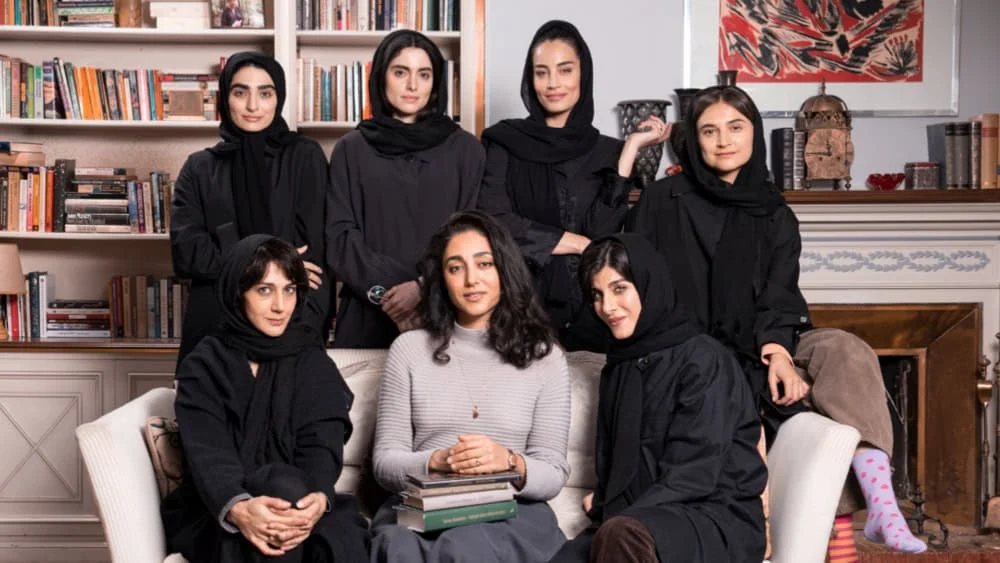
The most poignant and impactful sequences of "Reading Lolita in Tehran" unfold within the confines of Nafisi’s home. After being compelled to resign from her university position due to her refusal to conform to ideological dictates, she establishes a secret literature course and book club. This clandestine gathering, an oasis of intellectual ferment, becomes a vital space where her former female students can shed the mandatory hijab, apply makeup, wear jewelry, and engage in unfettered intellectual discourse. It is here, away from the prying eyes of the state, that these women find not only intellectual stimulation but also a profound sense of solidarity and shared humanity.
These scenes are meticulously crafted, deliberately shifting the focus from the overt horrors and restrictions these women face daily – though chilling glimpses into their oppressive reality are provided – to their inner lives: their aspirations, dreams, desires (including those deemed illicit by the regime, such as sexual longing), and profound longings for freedom. The books and fictional characters under discussion serve as powerful mirrors, reflecting their own feelings, doubts, and the universal human condition that transcends political and cultural boundaries. The performances by the ensemble cast, particularly Golshifteh Farahani as Nafisi, alongside Zahra Amir Ebrahimi and Mina Kavani as her dedicated students, are exemplary. Their understated approach avoids melodrama, lending greater weight to moments of quiet emotion and deeply personal revelation, allowing the audience to connect intimately with their struggles and triumphs.
Literary Dialogues: Lolita, Austen, and the Quest for Freedom
The choice of "Lolita" as a central text for discussion is provocative and deliberate. The women explore the novel’s themes of manipulation, obsession, and the imposition of one’s fantasies onto another, drawing parallels between Humbert Humbert’s depraved control over Lolita and the Iranian regime’s subjugation of its female citizens. This comparison highlights the film’s assertion that literature can provide a powerful analytical framework for understanding real-world power dynamics and oppression.
Beyond Nabokov, the discussions expand to include authors like Jane Austen, whose novels, filled with narratives of oppressed girls, arranged marriages, and patriarchal societal structures, resonate deeply with the experiences of the Iranian women. While the film acknowledges criticisms that these literary discussions might not always delve to the deepest academic levels, their primary function is clear: they serve as immediate, relatable mirrors for the characters’ lived experiences. The novels become vehicles for articulating shared human vulnerabilities and aspirations, allowing the women to process their reality through the lens of universal storytelling. Furthermore, these Western literary works, and the freedom they represent, symbolize a powerful dream for many in Iran – a longing for a world where individual liberty and self-expression are cherished.
The West as a Symbol of Hope: Gatsby’s Green Light and Farrokhzad’s Garden
The original book by Azar Nafisi faced criticism for its perceived emphasis on Western ideals as a source of hope. However, the film, much like the memoir, frames this not as an endorsement of cultural superiority but as a reflection of a deeply felt human yearning. For many men and women living under oppressive regimes worldwide, the West, with its enshrined freedoms of expression, movement, and thought, does indeed represent a potent source of hope. This sentiment is eloquently articulated in the film through the protagonist’s reference to Gatsby’s obsessive gaze at the green light at the end of the dock – a symbol of an unattainable dream. Similarly, the film invokes the mythical garden glimpsed through a cracked wall in the poetry of Forugh Farrokhzad, a renowned Iranian poet whose work often explored themes of female desire, societal constraints, and the search for liberation. Both images underscore the universal human aspiration for a better, freer existence, regardless of its geographical or cultural origin.
Empathy as a Revolutionary Act: Bridging Divides Through Storytelling
The film’s central concern, as Nafisi herself explains, is empathy. Through the shared experience of literature, it insists on the profound possibility of recognizing common aspirations and vulnerabilities that transcend political, national, and gender divides. This emphasis on empathy is presented as a necessary quality not only between men and women, or among women, but also between Iranians, Americans, and Israelis – bridging chasms often widened by political rhetoric and conflict.
The power of fiction to foster such understanding is a long-held belief in literary circles. Gustave Flaubert’s famous declaration, "Madame Bovary, c’est moi" (Madame Bovary, it is I), perfectly encapsulates the idea that literature can allow an individual, regardless of their own background, to inhabit and understand the experience of another, such as a woman in a patriarchal society. "Reading Lolita in Tehran" asserts that films, much like novels, possess this unique capacity for enlightenment. By immersing viewers in the subjective experiences of its characters, the film invites a deeper understanding of the human cost of totalitarianism and the enduring resilience of the human spirit in pursuit of freedom and dignity. It reminds us that in a world often defined by division, stories offer a universal language of connection, enabling us to see ourselves in the struggles and dreams of others, fostering empathy as a quiet, yet revolutionary, act.
Broader Impact and Implications
The release of "Reading Lolita in Tehran" as a film adaptation extends the reach of Nafisi’s powerful narrative beyond the literary world. In a geopolitical climate frequently marked by escalating tensions and simplified portrayals of nations like Iran, the film offers a nuanced, human-centric perspective. It serves as a vital counter-narrative, reminding audiences that beneath the political headlines and ideological clashes lie individual lives, hopes, and struggles. The film’s emphasis on the intellectual and emotional lives of women in Iran is particularly significant, challenging one-dimensional portrayals and highlighting their agency and resilience in the face of systemic oppression.
Furthermore, the movie reinforces the enduring relevance of the arts, particularly literature and film, as tools for social commentary, historical documentation, and emotional connection. It subtly advocates for the preservation of intellectual freedom and critical thought, underscoring their vital role in any truly free society. "Reading Lolita in Tehran" is not merely a historical account; it is a timeless testament to the human spirit’s capacity to find light in darkness, to cultivate intellectual sanctuaries, and to assert the undeniable power of individual thought against the homogenizing forces of totalitarianism. It is a film that resonates far beyond its specific setting, speaking to anyone who believes in the transformative potential of stories to foster understanding, challenge injustice, and inspire hope for a more empathetic world.