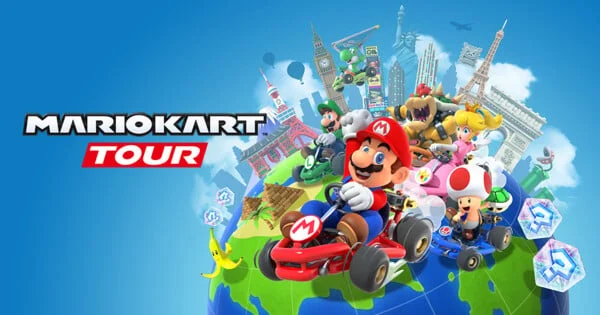
Nintendo’s popular mobile racing game, Mario Kart Tour, will cease its online services on September 29, 2026, at 11:00 p.m. Pacific Daylight Time (September 30, 2026, at 2:00 a.m. Eastern Daylight Time). The announcement, made via the game’s official English X (formerly Twitter) account, marks the end of an era for the franchise’s foray into the smartphone gaming market, which launched in September 2019. This conclusion follows a significant shift in the game’s development strategy in 2023, when Nintendo announced a halt to the introduction of new content, including courses, drivers, karts, and gliders.
The decision to sunset Mario Kart Tour comes after a period where the game transitioned from a content-generating model to one focused on re-releasing existing elements. Since September 2023, tours have consisted solely of previously available content, signaling a gradual winding down of active development. This strategic pivot was likely influenced by evolving market dynamics in the mobile gaming sector and the resource allocation for Nintendo’s broader development pipeline, which includes upcoming console titles and potential new mobile ventures.
Leading up to the service termination, several key features have already been phased out. As of Tuesday, September 28, 2026, at 11:00 p.m. PDT (Wednesday, September 29, 2026, at 2:00 a.m. EDT), sales of the in-game ruby currency have ceased. Furthermore, automatic subscription renewals and new subscriptions to the game’s Gold Pass, a premium membership offering in-game benefits, have also been discontinued. These measures are standard practice for games transitioning towards service termination, allowing existing players to utilize their remaining in-game resources and subscriptions before the complete shutdown.
A Look Back: The Evolution of Mario Kart Tour
Mario Kart Tour first debuted on September 25, 2019, after an initial delay from its planned summer 2019 release. The game was heralded as Nintendo’s ambitious entry into the burgeoning smartphone gaming market, aiming to bring the beloved Mario Kart experience to a global audience of mobile users. Developed in collaboration with DeNA Co., Ltd., which handled the crucial backend infrastructure, servers, and data analysis, Mario Kart Tour was designed as a "free-to-start" title, requiring players to link a Nintendo Account to play.
The game’s initial monetization model relied heavily on a "gacha" system, where players could spend in-game currency to randomly acquire drivers, karts, and gliders. This approach, common in many free-to-play mobile games, generated significant revenue but also drew criticism for its reliance on chance. In response to player feedback and evolving industry trends, Nintendo implemented substantial changes in September 2022. The "Pipe" gacha feature was removed, fundamentally altering the acquisition of new characters and vehicles. This was followed in October 2022 by the introduction of the "Spotlight Shop," offering a more direct purchasing method for a rotating selection of items. Concurrently, a "Battle Mode" was added, providing a new gameplay experience that aimed to recapture the competitive spirit of traditional Mario Kart titles.
Despite these adjustments, the decision to cease new content development in 2023 indicated a strategic reassessment of the game’s long-term viability. The Anniversary Tour in September 2023 served as the final new content addition, effectively marking the beginning of the game’s twilight phase.

Supporting Data and Market Context
The mobile gaming market is characterized by intense competition and rapid player engagement shifts. While Mario Kart Tour achieved considerable download numbers and revenue, particularly in its early years, the sustained investment required to develop and update new content for a free-to-play mobile title is substantial. Data from analytics firms often highlight the challenge of maintaining player retention and monetization in a crowded landscape. For instance, the average revenue per user (ARPU) in mobile games can fluctuate significantly, and the cost of acquiring new users can be high.
Nintendo’s decision to conclude Mario Kart Tour’s services can be viewed within the broader context of its business strategy. The company has historically prioritized quality and unique experiences across its diverse gaming platforms. While mobile gaming represents a significant market, Nintendo’s primary focus remains its console hardware, such as the Nintendo Switch, and the associated first-party software. The success of titles like Mario Kart 8 Deluxe on the Switch, which has sold over 60 million units, demonstrates the enduring appeal of the Mario Kart franchise on its native platform.
The mobile gaming industry also sees a natural lifecycle for many games. Titles that do not consistently innovate or adapt to player preferences can experience declining engagement over time. The discontinuation of a game’s service is a common occurrence, often occurring after several years of operation when player bases shrink or development costs outweigh potential returns.
Potential Reactions and Implications
While official statements from Nintendo regarding the closure are typically brief and factual, the announcement is likely to elicit a range of reactions from the game’s dedicated player base. Many players will undoubtedly express nostalgia for the years spent racing on virtual tracks, collecting favorite characters, and engaging with the game’s community. Forums and social media platforms are expected to become hubs for players sharing their favorite memories and experiences.
For Nintendo, the conclusion of Mario Kart Tour allows for a reallocation of resources. Development teams previously focused on the mobile title can now be directed towards new projects, potentially including future console releases or even entirely new mobile game concepts. This strategic maneuver allows Nintendo to maintain its competitive edge in both the console and mobile markets by focusing its creative and financial capital where it can yield the greatest impact.
The discontinuation also serves as a case study in the evolution of mobile game monetization. The shift from a heavily gacha-reliant model to one that incorporates direct purchase options reflects a broader industry trend towards more player-friendly monetization strategies. However, even with these adjustments, the operational costs and the constant demand for fresh content in the mobile space present ongoing challenges for developers.
The end of Mario Kart Tour’s active service signifies a chapter closing for Nintendo’s mobile gaming endeavors. While the game will be remembered for bringing a beloved franchise to a new audience, its conclusion underscores the dynamic nature of the digital entertainment landscape and Nintendo’s strategic approach to managing its diverse portfolio of gaming experiences. Players will have until September 29 to enjoy the final races, a bittersweet farewell to a mobile racing game that, for a time, brought the thrill of the Mario Kart circuit to pockets worldwide.