The annual Primetime Emmy Awards, scheduled for September 14, are poised to deliver a particularly compelling spectacle this year, not least due to the intricate and often shifting landscape of its award categories. While the Academy Awards present their own set of challenges, the Emmys encompass a far broader and more complex tapestry of television achievement. Twenty-three coveted awards will be distributed at the main Primetime ceremony, recognizing excellence across comedy, drama, and limited series, alongside variety and reality competition programs. This main event is preceded by two Creative Arts Emmy ceremonies, typically held a week prior, where approximately 100 additional Emmys are bestowed, primarily honoring craft-focused categories and, somewhat uniquely, guest acting performances. Adding to this inherent complexity, the Television Academy’s persistent re-evaluation of its rules and regulations means that award categories are in a state of constant evolution, creating both intrigue and occasional confusion for nominees and viewers alike.
Navigating the Academy’s Evolving Rulebook
This year introduces several notable alterations to the Emmy rulebook, one of which directly impacts the guest acting categories. A significant new regulation now prohibits a performer from receiving a guest actor nomination for a role in which they have previously been recognized as a lead or supporting actor. This change aims to prevent scenarios such as Claire Foy’s 2021 win for her brief yet impactful appearance as a young Queen Elizabeth in the fourth season of The Crown, a role that had already earned her an Emmy for Best Actress in a Drama in 2018.
The practical implications of this rule were swiftly demonstrated with the widely reported disqualification of actor Jon Hamm. Hamm was initially submitted for a guest spot on Apple’s The Morning Show. However, the streamer’s submission was erroneous, as Hamm had already secured a supporting actor nomination in 2024 for the very same role. Consequently, the Television Academy, adhering strictly to its updated guidelines, deemed him ineligible for the guest actor category. Fortunately for Hamm, his talents are recognized elsewhere this Emmy season, as he remains eligible for two other nominations, mitigating the impact of this particular disqualification. This incident underscores the meticulous nature of Emmy submissions and the imperative for studios and performers to meticulously track the Academy’s dynamic regulations.
The Resurgence of a Unified Variety Category
Perhaps the most impactful category shift this year, and one generating considerable discussion within the industry, centers on the variety series category. This particular change sets the stage for a high-profile showdown among some of television’s most prominent late-night personalities: Stephen Colbert, Jimmy Kimmel, John Oliver, and the venerable NBC institution, Saturday Night Live. The history of the variety series Emmy is itself a narrative of adaptation and redefinition.
Established in 1951, the category has undergone multiple transformations to accommodate the diverse array of programming falling under the "variety" umbrella. For a brief period in the early 1970s, the Academy recognized the need to differentiate between distinct formats, splitting the category into two subcategories. This allowed traditional talk shows, exemplified by The Tonight Show with Johnny Carson and The Dick Cavett Show, to compete separately from musical and sketch-driven series such as Rowan & Martin’s Laugh-In and The Carol Burnett Show. This separation acknowledged the fundamental differences in their comedic and production approaches.
However, from the mid-1970s until 2014, the category reverted to a single, unified entity. This period often resulted in a heterogeneous mix of competitors, leading to what some observers described as "mismatched" lineups. The 1990s, for instance, saw some perplexing outcomes, such as Jay Leno’s The Tonight Show triumphing over the musically focused MTV Unplugged in 1995. Another notable example was the direct competition between the politically charged Politically Incorrect and the family-friendly Muppets Tonight, both of which ultimately lost to Dennis Miller Live.
By the mid-2000s, a distinct pattern emerged: the variety category became increasingly dominated by late-night talk shows. Hosts such as Stephen Colbert, Jimmy Fallon, Jimmy Kimmel, Bill Maher, Conan O’Brien, and Jon Stewart consistently garnered nominations and wins. While Saturday Night Live received occasional recognition, the landscape was largely defined by the male hosts of late-night, with Jon Stewart’s The Daily Show setting a remarkable record with 10 consecutive wins, solidifying its status as a critical darling and a cultural touchstone.
In 2015, recognizing the continued divergence of variety programming, the Academy once again opted for a split, creating distinct categories for Variety Talk Series and Variety Sketch Series. The initial years of the Variety Sketch Series category saw critical darlings like Inside Amy Schumer and Key & Peele claim victories. This was followed by an impressive six-year winning streak for Saturday Night Live, which cemented its renewed Emmy prominence until 2023. Concurrently, HBO’s Last Week Tonight with John Oliver established itself as an unstoppable force in the Variety Talk Series category, securing seven consecutive Emmys for its incisive, long-form satirical journalism.
A further adjustment occurred in 2023 when the Academy moved Last Week Tonight with John Oliver into the newly defined Scripted Variety Series category, where it continued its winning ways, adding three more Emmys to its impressive tally. This year, however, marks another significant pivot: the two categories have been merged once more. This decision means that the seemingly unassailable Last Week Tonight will now directly contend with the traditional network late-night shows and, crucially, Saturday Night Live. This unification promises to make the variety series race one of the most closely watched and potentially unpredictable of the entire ceremony.
Political Winds and Emmy Fortunes: The Colbert and Kimmel Sagas
The timing of this category merger is particularly salient, occurring against a backdrop of heightened political scrutiny and direct pressure on late-night shows, especially those hosted by Stephen Colbert and Jimmy Kimmel. These hosts have become prominent voices of political commentary, often directing sharp criticism at the current administration, which has, in turn, led to documented retaliatory actions and public statements.
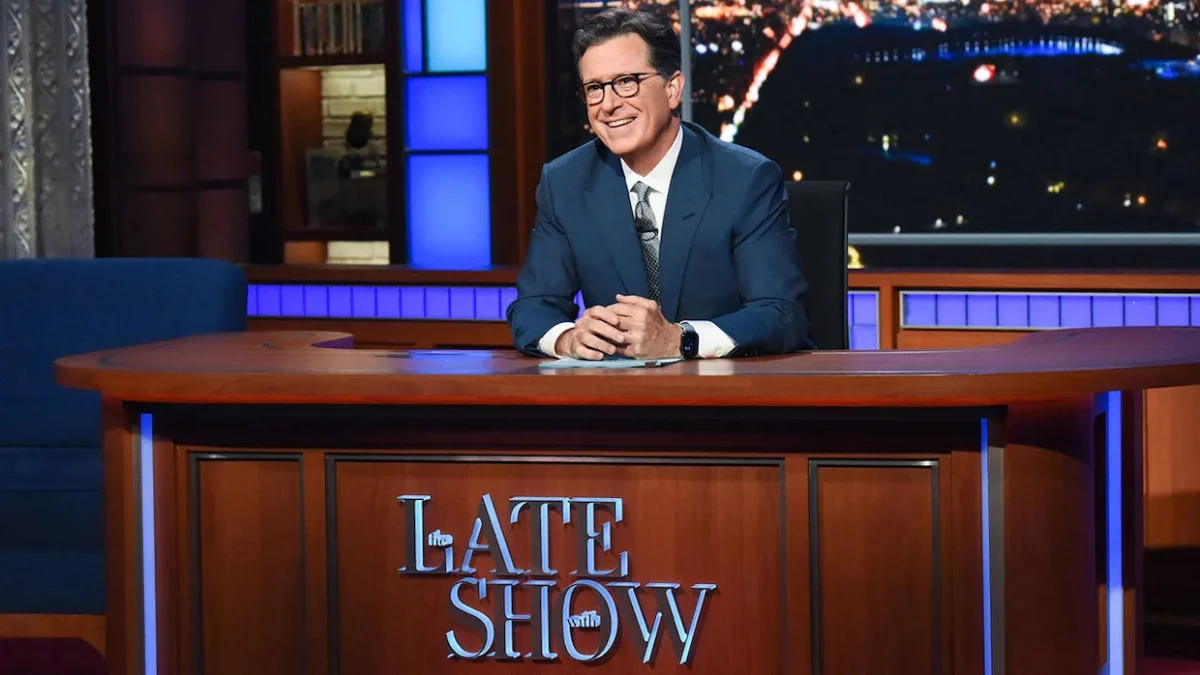
Stephen Colbert’s The Late Show, which he took over following David Letterman’s departure in 2015, recently concluded its 11-season run on May 21. The cancellation by CBS, ending a franchise that had been a network staple for 33 years, followed parent company Paramount’s sale to Skydance Media, led by David Ellison. The official explanation from Paramount was that The Late Show was incurring an annual loss of $40 million. However, this financial rationale was met with considerable skepticism by many critics and industry observers. These detractors suggested that the true impetus behind the cancellation lay in Colbert’s consistent and often biting critiques of former President Trump throughout his presidency and beyond. The perception of a friendly relationship between the Ellison family, who are significant figures in Hollywood and major political donors, and the current administration fueled speculation that political motivations played a role in the show’s abrupt termination.
Despite this unforeseen end to his tenure, Colbert experienced a remarkable swan song. Ahead of its final season, which saw a parade of high-profile guests reflecting on the show’s impact and Colbert’s imminent departure, The Late Show achieved a significant milestone last September. It won its first Emmy for Outstanding Variety Talk Series, breaking Last Week Tonight‘s long streak in that category. This victory was widely seen as a testament to the show’s quality and Colbert’s enduring appeal. Adding to the emotional resonance, Colbert, appearing as a presenter earlier in the ceremony, received a spontaneous and prolonged standing ovation, a powerful acknowledgment of his contributions to television and his recent circumstances. For an 11-time Emmy-winning host, this final victory and public outpouring of support served as a poignant capstone to his impactful run.
Hot on the heels of Colbert’s cancellation came another significant late-night controversy involving Jimmy Kimmel. Jimmy Kimmel Live! was briefly pulled from the air on September 17. This decision reportedly came under considerable pressure from the Trump administration and FCC Chairman Brendan Carr. The controversy ignited after Kimmel made a comment regarding the assassination of Charlie Kirk during an opening monologue, which was interpreted by some as inciting violence or being inappropriate. Major broadcast groups, including Nexstar Media Group and Sinclair Broadcast Group, which operate numerous ABC affiliates, reportedly threatened to pull the show from their local lineups, casting Kimmel’s immediate future into uncertainty.
However, the public reaction to Kimmel’s removal was swift and overwhelmingly negative. An immediate public backlash, coupled with threats of audience boycotts targeting the networks and their advertisers, quickly mounted. Faced with this intense public outcry, Kimmel was back on television within a week. His return episode on September 23 garnered an astounding 6.26 million viewers, setting a new series record for Jimmy Kimmel Live! Furthermore, Kimmel’s powerful monologue addressing the controversy amassed over 26 million views across various social media platforms, demonstrating the immense public interest and support for the host. This incident underscored the significant cultural and political power wielded by late-night hosts and the public’s willingness to defend their perceived freedom of speech against perceived political interference.
The Emmy Race: A Confluence of Artistry and Politics
It is exceptionally difficult to imagine that the extraordinary experiences of both Stephen Colbert and Jimmy Kimmel over the past year will not exert a considerable influence on the Emmy outcomes. The Television Academy, comprising thousands of industry professionals, is often seen as leaning liberal, and the Emmy ballot can, at times, serve as a platform for broader cultural or political statements.
The Late Show with Stephen Colbert appears to hold a unique edge in this race. For many voters, this presents not merely the final opportunity to acknowledge and reward the show’s artistic merit and Colbert’s comedic prowess, but potentially also to cast a symbolic vote against what they might perceive as "Trumpism" or political interference in artistic expression. The prospect of Colbert and his team delivering a poignant and potentially politically charged acceptance speech for a final Emmy would undoubtedly resonate strongly, amplifying the moment’s significance.
Jimmy Kimmel Live!, a consistent nominee in this category (despite its shifting focus over the years) for the last 12 years, has yet to secure the Variety Series Emmy. This persistent nomination without a win places it in a strong second-place contention, particularly if Emmy voters are indeed factoring in the political context of the past year. Kimmel’s resilience in the face of immense pressure and the overwhelming public support he received could translate into a decisive vote. However, this scenario is contingent on Last Week Tonight with John Oliver failing to continue its dominant winning streak and re-establish its claim to the category. Oliver’s program, known for its meticulously researched and deeply critical takes on political and social issues, has maintained a remarkable consistency in quality and impact, making it a formidable contender regardless of the political climate surrounding its rivals.
Saturday Night Live, the long-running sketch comedy series, presents another compelling narrative. While SNL has certainly engaged with political satire, its relationship with the Trump administration has been more nuanced; former President Trump famously hosted the show during his 2015 presidential campaign. As such, SNL may not "ruffle Trump’s feathers" as frequently or directly as the late-night talk hosts, potentially positioning it somewhat differently in the political calculus of voters. However, its enduring cultural relevance and recent successes make it a deserving nominee. The series is still riding high from its monumental 50th-anniversary celebrations last year, a testament to its unparalleled longevity and cultural impact. Its 51st season saw the departure of fan-favorite Bowen Yang in December, who earned four acting nominations during his tenure. Despite this significant cast change, the show has demonstrably maintained its creative energy throughout 2026, increasingly leaning into absurdism and character-driven comedy rather than solely relying on political timeliness. The unexpected success of SNL UK, which broadcasts live from London and has quickly become a surprise hit, further underscores the global reach and institutional status of Lorne Michaels, the show’s creator and executive producer, as a foundational figure in comedy.
Finally, The Daily Show, now featuring Jon Stewart back at the desk on Monday nights and a rotating ensemble of guest hosts throughout the remainder of the week, is highly likely to secure the fifth nomination slot in this competitive category. Recent history serves as a reliable predictor: the Trevor Noah-hosted iteration of The Daily Show won the talk show Emmy after Last Week Tonight was shifted to the Scripted Variety category, and the multiple-host version earned a nomination last year. The return of Stewart, a beloved and highly respected figure in political satire, has injected renewed energy and critical acclaim into the program, solidifying its place among the elite.
Ultimately, the most captivating and unpredictable segment of this year’s Emmy race lies in the direct confrontation between Colbert, Kimmel, and Oliver. For the numerous liberal-leaning members of the Television Academy, the Emmy ballot transcends mere artistic judgment; it offers a potent opportunity for a broader political statement. Regardless of which contender ultimately claims the prize, the heightened political tensions surrounding these shows and their hosts guarantee an evening charged with significance. One can almost anticipate the inevitable rambling commentary from the former president on Truth Social by the time the awards ceremony concludes on September 14, further underscoring the deep intertwining of entertainment and contemporary politics. The 2026 Primetime Emmys are set to be not just a celebration of television excellence, but a reflection of the cultural and political currents shaping the nation.