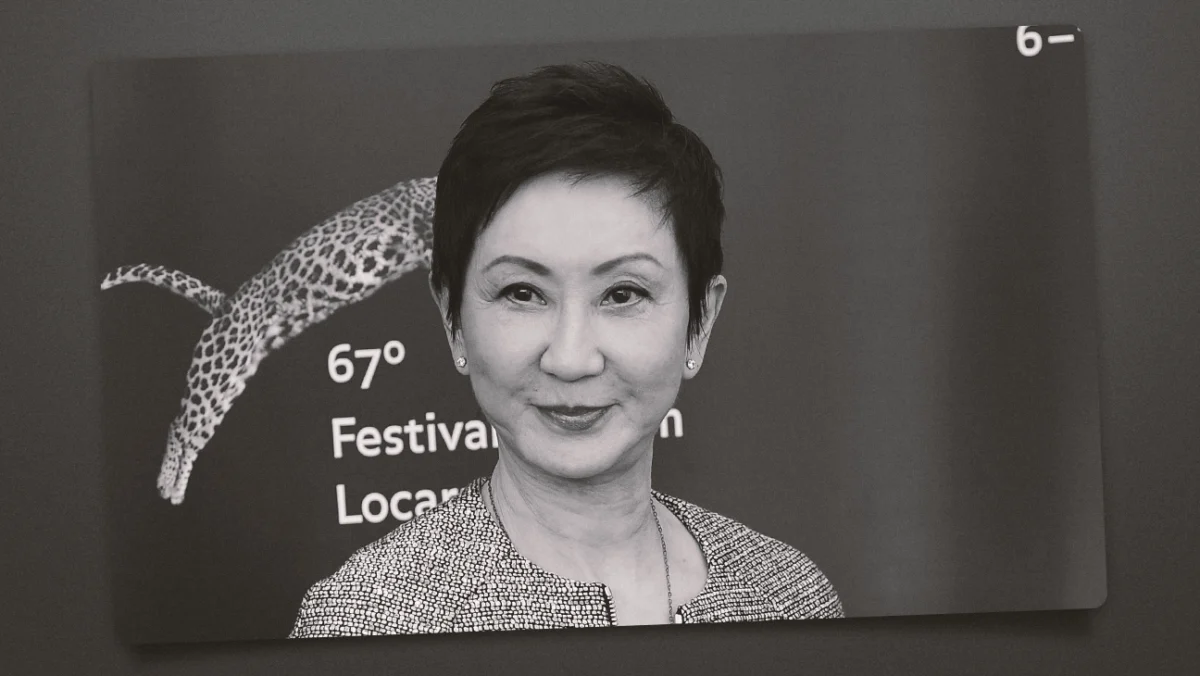
Nansun Shi, the preeminent Hong Kong film producer and executive whose unparalleled vision and strategic acumen were instrumental in sculpting the territory’s cinematic golden age and propelling it onto the global stage, passed away peacefully on Monday at Hong Kong Sanatorium & Hospital. She was 75. Shi, a co-founder of the legendary Film Workshop and the producer behind international sensations such as Infernal Affairs – the seminal crime thriller later remade by Martin Scorsese as the Oscar-winning The Departed – leaves behind an indelible legacy that redefined Asian cinema’s reach and influence.
Film Workshop, the iconic production house Shi established with acclaimed director Tsui Hark in 1984, confirmed her passing, noting that she had been in declining health since 2022 due to complex complications affecting her immune system. Recurrent infections in recent months ultimately led to what the company described as “multiple organ dysfunction.” Shi passed at 8:51 p.m. local time, surrounded by her loving family and cherished loved ones. Details regarding memorial and funeral arrangements are expected to be announced in due course.
A Pillar of Hong Kong Cinema: Four Decades of Influence
Across a distinguished career spanning more than four decades, Nansun Shi consistently ranked among the most influential and innovative figures in the global film industry. Her contributions were multifaceted and profound: she was a pivotal architect of Hong Kong cinema’s glorious 1980s heyday, a driving force behind its early-2000s revival, and a trailblazer in constructing genuine international distribution pipelines for Chinese-language cinema. At a time when many of her peers remained focused solely on regional markets, Shi possessed an foresight that transcended geographical boundaries, envisioning a global audience for Asian stories. Furthermore, she was among the earliest Hong Kong producers to initiate and successfully execute film productions in mainland China, fostering collaboration during an era when the two industries operated with minimal interaction. Her strategic initiatives laid the groundwork for future cross-border co-productions that would become a cornerstone of Chinese-language filmmaking.
Born and educated in Hong Kong, Shi’s intellectual curiosity led her to pursue higher education abroad, where she studied statistics and computing at the Polytechnic of North London. Upon her return to Hong Kong in the mid-1970s, she embarked on her career in the burgeoning television industry, honing her organizational and management skills at prominent broadcasters such as TVB and Rediffusion. This early experience in television, a fast-paced and demanding medium, provided her with a robust foundation in production logistics and audience engagement that would prove invaluable in her later cinematic endeavors.
The Rise of a "Housekeeper" and Cinema City’s Maverick Spirit
Shi’s foray into the film world began in 1981, a pivotal year when she joined Cinema City, an ambitious upstart commercial comedy banner that sought to challenge the established titans of the Hong Kong film industry, Shaw Brothers and Golden Harvest. As executive director, Shi was tasked with overseeing critical operational aspects, including administration, financing, and, most crucially, overseas sales and festival strategy. Her meticulous attention to detail and exceptional organizational capabilities quickly earned her the affectionate nickname “Housekeeper” among her colleagues, a testament to her ability to maintain efficient order amidst the young company’s rapidly expanding and often chaotic operations. Under her stewardship, Cinema City thrived, producing a string of commercial successes. Her credits from this dynamic period include the popular comedies Aces Go Places II, a sequel to the blockbuster action-comedy, and the horror-comedy Till Death Do We Scare, demonstrating her adeptness at navigating diverse genres and maximizing their market potential.
Film Workshop: Forging the Golden Age
In 1984, Nansun Shi, driven by a shared artistic vision and an ambition for greater creative freedom, departed Cinema City alongside its most audacious young talent, director Tsui Hark. Together, they founded Film Workshop, a revolutionary production company conceived as a sanctuary for projects deemed too idiosyncratic or artistically daring for the more commercially conservative pipelines of their former employer. Film Workshop quickly evolved into one of the most storied and influential banners in Hong Kong film history, a crucible for groundbreaking cinema that would define an era.
The company’s inaugural production, Tsui Hark’s visually stunning period romance Shanghai Blues (1984), immediately signaled their intent to push artistic boundaries. This was followed by a remarkable output that included critically acclaimed and commercially successful films such as the genre-bending musical Peking Opera Blues, the iconic supernatural romance A Chinese Ghost Story, and the sprawling martial arts epic Once Upon a Time in China series, which revitalized the wuxia genre for a new generation.
Crucially, Film Workshop also became the home for director John Woo’s seminal works, A Better Tomorrow (1986) and The Killer. These films were not merely box office hits; they were foundational texts of the “heroic bloodshed” genre, a style of action cinema characterized by stylized violence, themes of brotherhood, and operatic melodrama. A Better Tomorrow, in particular, ignited a cinematic revolution, propelling Chow Yun-fat to superstardom and establishing a template for countless action films worldwide. These titles, meticulously managed and strategically distributed by Shi, were key in powering Hong Kong cinema’s global ascent, captivating audiences from Asia to the West and cementing the territory’s reputation as a powerhouse of innovative filmmaking.
Shi’s professional partnership with Tsui Hark deepened over the years, culminating in their marriage in 1996. While the couple eventually divorced in 2014, their professional collaboration remained steadfast and remarkably productive, a testament to their mutual respect and shared passion for cinema. They continued to make films together, demonstrating an enduring creative bond that transcended personal relationship dynamics.
Revival and Global Acclaim: The Infernal Affairs Phenomenon
The late 1990s and early 2000s presented significant challenges for the Hong Kong film industry, facing a decline in local box office and international interest. However, Nansun Shi once again played a pivotal role in its revitalization. In 2002, Peter Lam, chairman of Media Asia, recognized Shi’s unparalleled talent and recruited her as vice president. It was during this tenure that Shi, alongside directors Andrew Lau and John Chong, produced Infernal Affairs.
This rigorously inventive undercover-cop thriller, co-directed by Lau and Alan Mak and featuring a stellar cast including Andy Lau and Tony Leung Chiu-wai, was a critical and commercial triumph. Infernal Affairs was lauded for its intricate plot, psychological depth, and compelling performances, breathing new life into a flagging industry. Its success was immediate and profound, spawning two successful sequels and captivating international audiences. The film’s narrative brilliance and stylistic innovation did not go unnoticed in Hollywood. In 2006, Martin Scorsese directed The Departed, a highly acclaimed remake of Infernal Affairs, which went on to win the Academy Award for Best Picture, a significant validation of the original film’s narrative power and universal appeal. This success not only elevated the profile of Hong Kong cinema globally but also underscored Shi’s remarkable ability to identify and nurture projects with international resonance.
Expanding Horizons: Mainland Collaborations and International Distribution
Shi’s later producing work showcased her adaptability and forward-thinking approach, particularly in navigating the evolving landscape of Chinese cinema. Her collaborations with Beijing-based Bona Film Group yielded several notable successes, including the popular Overheard thrillers, Derek Yee’s period fantasy The Great Magician, and Ann Hui’s poignant drama A Simple Life. The latter, a heartfelt exploration of aging and caregiving, garnered international acclaim, with star Deanie Ip winning the coveted Best Actress prize at the Venice Film Festival in 2011, further cementing Shi’s reputation for producing artistically significant films.
Demonstrating her continuous commitment to expanding the global reach of Chinese-language cinema, Shi co-founded the international sales agency Distribution Workshop with Jeffrey Chan in 2007. She spearheaded the company’s operations until her passing, playing an active role in securing global platforms for diverse Asian films. Her efforts ensured that films like Flora Lau’s Bends, which made its debut in Cannes’ Un Certain Regard section in 2013, found critical recognition and international audiences, showcasing her dedication to fostering new talent and diverse cinematic voices.
Throughout these ventures, Nansun Shi remained steadfast in her commitment to Film Workshop, maintaining it as an independent banner and continuing to produce Tsui Hark’s visionary projects. Her final credits under the Film Workshop banner include the critically acclaimed Detective Dee films, the groundbreaking 3D Flying Swords of Dragon Gate, and the visually spectacular The Taking of Tiger Mountain. Her ultimate producing credit came on Tsui’s Legends of the Condor Heroes: The Gallants, a Lunar New Year box office hit released in 2025, a fitting testament to her enduring passion and productivity until the very end.
A Global Ambassador and Enduring Legacy
Nansun Shi’s contributions extended far beyond individual film productions. She served with distinction on the main competition juries of both the Cannes Film Festival and the Berlin International Film Festival, prestigious roles that underscored her esteemed standing within the global cinematic community. Her profound impact and tireless dedication were recognized through numerous international accolades. France bestowed upon her the distinguished title of Officier de l’Ordre des Arts et des Lettres in 2013, acknowledging her significant contributions to the arts. The Locarno Film Festival honored her with its Premio Raimondo Rezzonico for Best Independent Producer in 2014, recognizing her entrepreneurial spirit and unwavering commitment to independent filmmaking. Italy’s Far East Film Festival in Udine presented her with its lifetime achievement honor in 2015, celebrating her enduring influence on Asian cinema. The Berlinale further acknowledged her global stature by bestowing its Berlinale Camera upon her in 2017. In 2019, China’s Pingyao International Film Festival celebrated her monumental contributions to Chinese cinema, highlighting her pioneering efforts in cross-border collaboration and industry development. For many years, she was also a perennial presence on The Hollywood Reporter’s annual list of the Most Influential Women in Global Film, a consistent recognition of her power and prestige in a male-dominated industry.
In a poignant culmination of her illustrious career, the Hong Kong Film Awards presented Nansun Shi and Tsui Hark with a joint lifetime achievement award in 2025. This final shared bow served as a powerful tribute to a partnership that not only defined Hong Kong cinema for over four decades but also left an indelible mark on global filmmaking. Their collaboration, characterized by artistic daring, commercial acumen, and an unwavering commitment to storytelling, became a blueprint for success and innovation.
Nansun Shi’s passing marks the end of an era, but her legacy will undoubtedly endure. She was not just a producer; she was a visionary, a strategist, and a cultural ambassador who meticulously crafted a pathway for Hong Kong cinema to captivate the world. Her pioneering efforts in international distribution, her ability to foster creative partnerships, and her unwavering dedication to quality storytelling transformed the landscape of Asian cinema. She paved the way for future generations of filmmakers and producers, particularly women, demonstrating that strategic brilliance and artistic integrity could thrive hand-in-hand. Her films will continue to inspire, entertain, and educate, ensuring that the golden age she helped build remains a vibrant and cherished chapter in cinematic history. Industry veterans and emerging talents alike are expected to offer tributes, reflecting on the profound impact of a woman who was truly one of a kind.