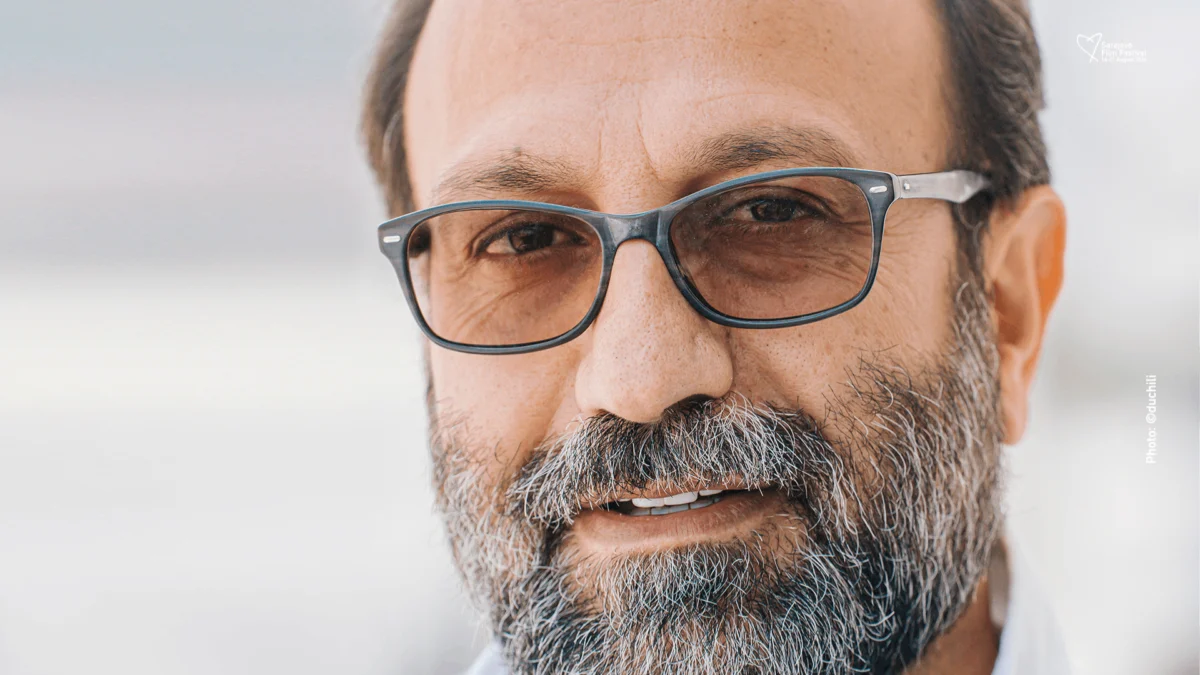
The esteemed Iranian director and screenwriter, Asghar Farhadi, is set to receive the prestigious Honorary Heart of Sarajevo at the upcoming 32nd Sarajevo Film Festival, a testament to his profound and indelible contributions to the art of cinema. The festival, a beacon of cultural resilience and artistic excellence in Southeast Europe, will host Farhadi for the award ceremony, where he will accept the accolade in person. This significant recognition will be further amplified by a comprehensive retrospective of his celebrated body of work, presented as a central component of the festival’s distinguished Tribute to program, offering audiences a unique opportunity to delve into the nuanced narratives and ethical complexities that define his filmmaking.
Farhadi’s return to Sarajevo marks a notable homecoming, eight years after his impactful tenure as the jury president for the feature film competition in 2018. During that edition, his film Everybody Knows, an intricate psychological thriller starring Penélope Cruz and Javier Bardem, captivated audiences during its screening in the Open Air program, further cementing his enduring connection with the festival and its vibrant cinematic community. He joins an esteemed roster of previous Honorary Heart recipients, including the acclaimed British actress Emily Watson, who will also grace this year’s festival as its jury president in August, underscoring the high caliber of talent drawn to this pivotal cultural event.
Jovan Marjanović, the director of the Sarajevo Film Festival, articulated the profound significance of this honor, stating, “It is difficult to overstate Asghar Farhadi’s significance to world cinema. His remarkable body of work reminds us that the most profound dramas are often concealed within everyday life. His films do not offer easy answers; instead, they invite us to look more closely, listen more carefully and engage with life’s complexities. We are honoured to welcome Farhadi back to the Festival.” Marjanović’s words encapsulate the essence of Farhadi’s filmmaking—a commitment to exploring the intricate moral landscapes of human existence, often through the prism of seemingly ordinary domestic disputes, which inevitably escalate into profound examinations of truth, justice, and societal pressures.
A Journey Through Cinematic Excellence: Asghar Farhadi’s Illustrious Career
Born in 1972 in Homayounshahr, Iran, Asghar Farhadi’s fascination with cinema ignited during his formative teenage years. His foundational education in filmmaking commenced in 1986 when he joined the Youth Cinema Society of Esfahan. It was here, amidst the burgeoning cinematic fervor, that he honed his craft by creating numerous 8mm and 16mm short films, laying the groundwork for the meticulous storytelling and visual precision that would later become his hallmarks. His academic pursuits led him to Tehran University, where he earned a Master of Arts in film directing. Notably, his final thesis delved into the works of the seminal British playwright Harold Pinter, specifically analyzing the critical importance of silence and pauses in Pinter’s dramatic structures. This early academic inquiry into the unspoken and the understated profoundly influenced Farhadi’s directorial approach, where pregnant silences, ambiguous dialogue, and carefully timed pauses often carry as much narrative weight as explicit conversations, contributing to the rich tapestry of his films’ psychological realism.
Farhadi made his feature directorial debut with Dancing in the Dust in 2002, followed by Beautiful City (2004) and Fireworks Wednesday (2006), each earning critical attention within Iran. However, it was with About Elly (2009) that Farhadi truly began to capture significant international recognition. The film, a gripping mystery exploring themes of truth, deception, and social judgment among a group of middle-class Iranians on a Caspian Sea holiday, earned him the Silver Bear for Best Director at the 59th Berlin International Film Festival. This award marked a pivotal moment, propelling him onto the global stage and foreshadowing the immense critical acclaim that was to follow.
The breakthrough moment in Farhadi’s career arrived with A Separation (2011), a film that not only garnered unprecedented international recognition but also redefined the global perception of Iranian cinema. This taut, emotionally charged drama meticulously dissects the unraveling of a marriage amidst a complex legal battle, exposing class divisions, religious tenets, and deeply ingrained societal values in contemporary Iran. A Separation achieved monumental success, winning the Golden Bear at the Berlinale—making it the first Iranian film to do so—and subsequently securing the Academy Award for Best Foreign Language Film (now International Feature Film), a historic win that resonated worldwide. It also earned the César Award for Best Foreign Film and a Golden Globe, among countless other accolades, solidifying Farhadi’s reputation as a master storyteller capable of crafting narratives with universal resonance. Its success was not just critical; it was a commercial triumph, earning over $24 million globally on a modest budget, a testament to its widespread appeal. The film’s critical reception was overwhelmingly positive, with an average rating of 97% on Rotten Tomatoes and 95 on Metacritic, reflecting its near-universal praise for its masterful screenplay, direction, and performances.
Following the colossal success of A Separation, Farhadi ventured beyond Iran’s borders to shoot The Past (2013) in France. This French-language drama continued his exploration of complex human relationships and unresolved emotional baggage, focusing on an Iranian man who returns to Paris to finalize his divorce from his French wife, only to find himself entangled in her new life and a web of secrets. The film premiered in competition at the 2013 Cannes Film Festival, where Bérénice Bejo won the Best Actress award for her compelling performance. The Past demonstrated Farhadi’s versatility and his ability to navigate different cultural and linguistic contexts while maintaining his signature thematic depth and directorial precision.
Farhadi returned to Iran for his next project, The Salesman (2016), a searing drama that examines the repercussions of a violent home invasion on a couple performing Arthur Miller’s Death of a Salesman. The film premiered in competition at the 2016 Cannes Film Festival, where it was lauded with the Best Screenplay award for Farhadi and Best Actor for Shahab Hosseini. The Salesman went on to become Farhadi’s second film to win the Academy Award for Best Foreign Language Film, cementing his place as one of the few directors to achieve this feat twice. Its narrative brilliance and poignant exploration of revenge, honor, and the fragility of dignity resonated deeply with audiences and critics alike, further solidifying his unique voice in global cinema.
His subsequent works continued to garner significant attention. Everybody Knows (2018), a Spanish-language film shot with an international cast, screened at the Cannes Film Festival and, as noted, at the Sarajevo Film Festival during his jury presidency. His most recent critically acclaimed work, A Hero (2021), returned him to Iran and premiered at the Cannes Film Festival, where it won the Grand Prix. A Hero delved into themes of public perception, media manipulation, and the fine line between truth and fabrication, offering a timely commentary on the digital age. Looking ahead, Farhadi’s anticipated future project, Parallel Tales, is slated for a 2026 debut, promising further explorations into the human condition that have become synonymous with his artistic vision.
Farhadi’s Cinematic Philosophy: Unpacking Complexity
At the core of Asghar Farhadi’s filmmaking lies a profound commitment to moral ambiguity and psychological realism. His narratives rarely present clear-cut heroes or villains; instead, characters are multifaceted, driven by a confluence of love, fear, pride, and societal expectations. This approach, deeply rooted in the humanist tradition, compels viewers to confront their own biases and assumptions, inviting them into a space of empathy and critical self-reflection. Farhadi’s Pinter-esque sensitivity to silence and pauses, honed during his academic studies, is evident in the lingering looks, unspoken truths, and subtle shifts in power dynamics that permeate his films, creating an almost palpable tension that keeps audiences engaged and intellectually stimulated.
His films are often characterized by a naturalistic visual style, utilizing long takes and handheld camerawork that immerse the viewer directly into the unfolding drama, creating an intimate, almost documentary-like feel. This aesthetic choice reinforces the realism of his narratives, making the profound dilemmas faced by his characters feel immediate and relatable. Farhadi masterfully uses domestic spaces—apartments, cars, courtrooms—as crucibles for intense interpersonal conflict, transforming everyday settings into stages for universal human struggles. Through these intimate portrayals, he subtly critiques socio-political structures and class disparities within Iranian society, without resorting to overt political statements, allowing the human drama to speak for itself.
The Sarajevo Film Festival: A Crucible of Culture and Connection
The Sarajevo Film Festival, established in 1995 during the Siege of Sarajevo, stands as a powerful symbol of artistic resilience and cultural revival. What began as an act of defiance and a beacon of hope amidst conflict has evolved into one of the most significant film festivals in Southeast Europe, playing a crucial role in promoting regional cinema and fostering international dialogue. Its "Tribute to" program, under which Farhadi’s retrospective will be presented, is designed to honor the world’s most influential filmmakers, offering audiences a deep dive into their filmographies and providing valuable educational opportunities through masterclasses and discussions.
By bestowing the Honorary Heart of Sarajevo upon Asghar Farhadi, the festival not only recognizes an individual artist but also reinforces its commitment to celebrating cinematic excellence that transcends geographical and cultural boundaries. Farhadi’s presence, along with the retrospective of his work, is expected to draw a significant number of international film enthusiasts, critics, and industry professionals, further elevating the festival’s global profile. His prior involvement as jury president and the screening of Everybody Knows in 2018 already established a strong rapport between Farhadi and the festival, making this year’s honor a natural progression of a valued relationship.
Broader Impact and Implications
The recognition of Asghar Farhadi with the Honorary Heart of Sarajevo carries significant implications beyond the immediate accolades. For Iranian cinema, it reaffirms its prominent standing on the global stage, largely spearheaded by Farhadi and his contemporaries. His films have consistently provided nuanced windows into Iranian society, challenging stereotypes and fostering a deeper understanding of its complexities among international audiences. This award further validates the artistic integrity and universal appeal of storytelling rooted in specific cultural contexts but addressing universal human experiences.
For the Sarajevo Film Festival, honoring a filmmaker of Farhadi’s stature enhances its prestige and cultural currency, solidifying its position as a key event in the international film calendar. It underscores the festival’s role not just as a showcase for new talent but also as a custodian of cinematic legacy, connecting past masters with future generations. The retrospective will undoubtedly serve as an invaluable resource for aspiring filmmakers and film students, offering insights into the craft of a director who has consistently pushed the boundaries of narrative and emotional depth.
Furthermore, Farhadi’s work, with its profound exploration of ethical dilemmas and the human condition, fosters crucial cross-cultural dialogue. His films often spark debates on moral relativism, justice, and truth, encouraging audiences worldwide to engage with complex questions that resonate across diverse societies. In a globalized world often marked by cultural misunderstandings, cinema like Farhadi’s serves as a powerful bridge, promoting empathy and shared understanding through the universal language of human emotion.
The 32nd Sarajevo Film Festival, scheduled to take place from August 14 to 21, promises to be an extraordinary celebration of cinema, marked by the presence of luminaries like Asghar Farhadi and Emily Watson. The recognition of Farhadi is not merely an award; it is an affirmation of his enduring legacy, a testament to the power of cinema to illuminate the human spirit, and a vibrant declaration of the Sarajevo Film Festival’s unwavering commitment to artistic excellence and global cultural exchange.