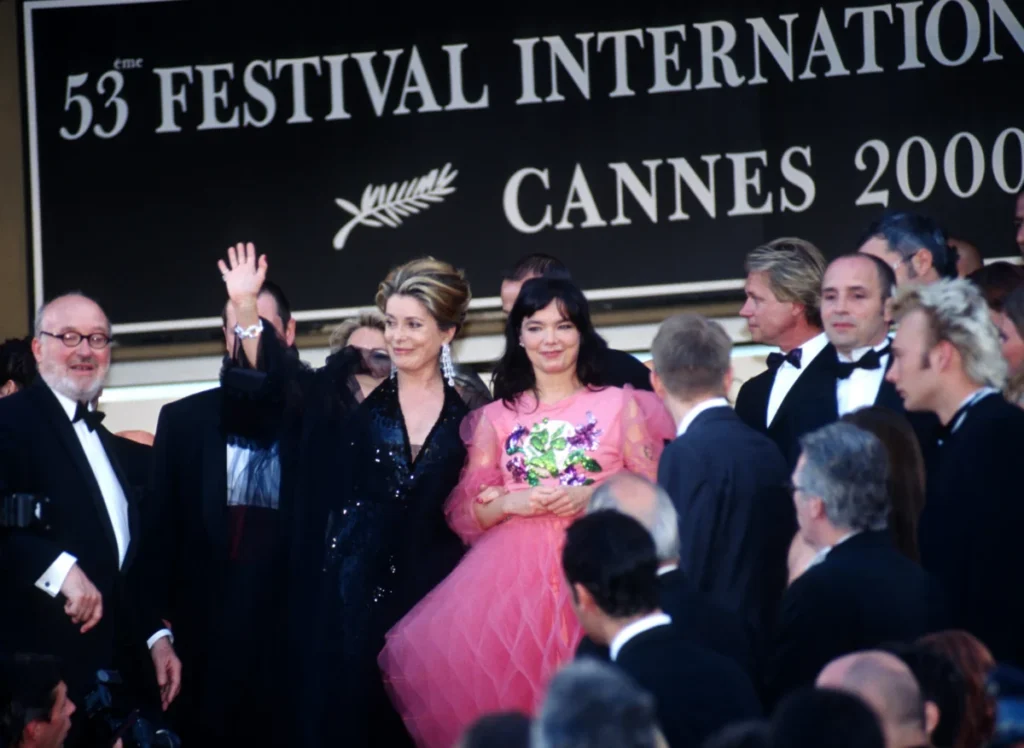
The 79th Cannes Film Festival culminated in a night of significant achievements and powerful declarations, with Romanian auteur Cristian Mungiu’s English-language debut, Fjord, taking home the coveted Palme d’Or. This victory marks a historic moment for Mungiu, positioning him among an elite group of filmmakers to win the festival’s top prize twice. The ceremony, held against the picturesque backdrop of the French Riviera, also saw a poignant honorary award bestowed upon Hollywood icon Barbra Streisand and impassioned calls for peace from winning filmmakers, underscoring the festival’s enduring role as a platform for both artistic excellence and global discourse.
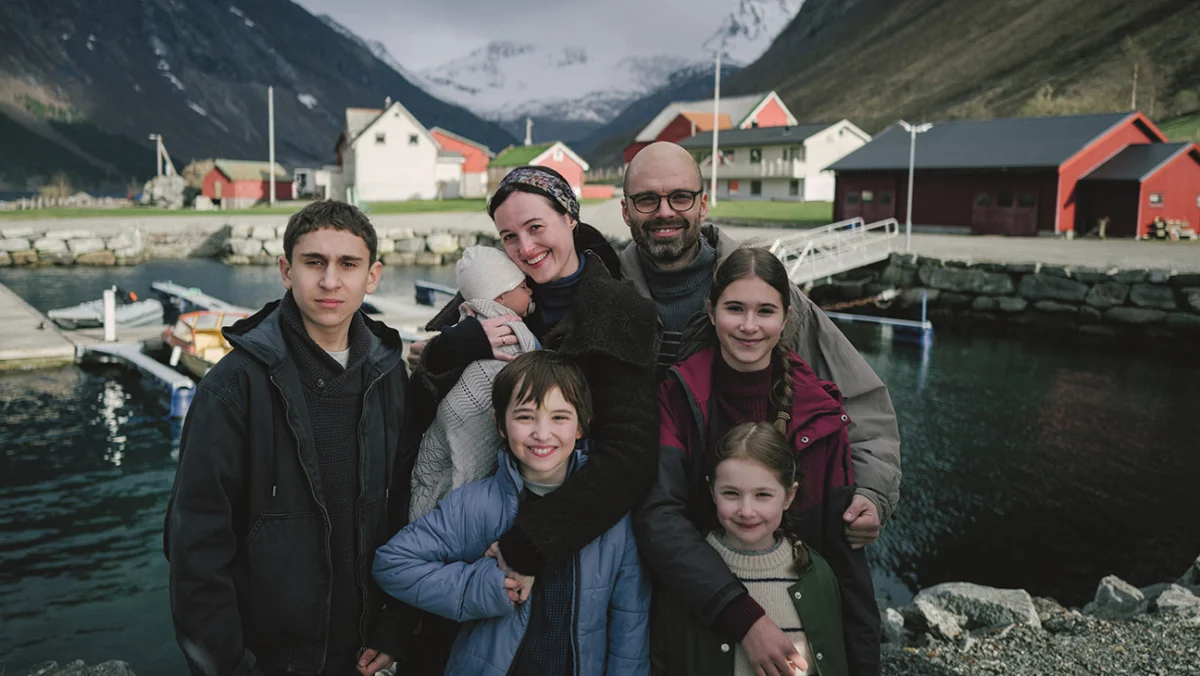
Mungiu’s Fjord captivated the jury and critics alike with its compelling narrative, starring Renate Reinsve and Sebastian Stan as Romanian religious parents who embark on a new life in a secluded Norwegian village. Their challenging relocation takes a dark turn when they face accusations of child abuse, plunging them into a cultural and legal quagmire. The film’s nuanced exploration of cultural clash, faith, and justice resonated deeply, demonstrating Mungiu’s masterful storytelling even as he ventured into an English-language production for the first time. His previous Palme d’Or win in 2007 for 4 Months, 3 Weeks and 2 Days cemented his reputation for unflinching, socially charged cinema, and Fjord further solidifies his status as one of contemporary cinema’s most significant voices. That earlier film, a searing account of illegal abortion in Communist-era Romania, remains a benchmark for its stark realism and profound emotional impact, and its legacy undoubtedly informed the anticipation surrounding Fjord.
Neon’s Unprecedented Winning Streak
The triumph of Fjord also extended a remarkable winning streak for independent distributor Neon, which secured the domestic release rights for the film prior to the festival’s commencement. This marks the seventh consecutive year that Tom Quinn’s indie powerhouse has successfully picked the Palme d’Or winner, an unprecedented run that speaks volumes about their discerning taste and strategic acumen. Neon’s consistent ability to identify and champion future festival darlings has made them a formidable force in the independent film landscape, often transforming critically acclaimed festival entries into significant awards season contenders. Their roster of past Palme winners includes a diverse array of cinematic achievements, demonstrating a commitment to artistic vision that transcends genre or origin. This consistent success not only underscores Neon’s influence but also highlights the increasing importance of shrewd distribution partnerships in translating festival buzz into broader audience and critical recognition.
A Jury Head’s Humorous Aside and a Call for Peace
The awards ceremony was punctuated by moments of levity and profound seriousness. South Korean director Park Chan-wook, who presided over the 2026 competition jury, injected a moment of humor during the press conference following the awards. With characteristic wit, he quipped about his initial reluctance to award the Palme d’Or, playfully stating, "because it’s an award that I myself have never gotten." After a calculated pause, he delivered the punch line, referencing his acclaimed latest film: "But I had No Other Choice." The remark, a nod to his own celebrated career which includes multiple Cannes accolades like the Grand Prix for Oldboy and Best Director for Decision to Leave, was met with appreciative laughter, perfectly balancing the gravitas of the occasion with a touch of self-deprecating charm.
However, the political undertones of the festival came to the forefront with the announcement of the Grand Prix winner, Andrey Zvyagintsev’s Minotaur. The Russian director’s film, a harrowing modern reinterpretation of Claude Chabrol’s The Unfaithful Wife, is set against the backdrop of contemporary Russia. It follows an executive grappling with the moral dilemma of signing over his employees to be "cannon fodder" for the war effort in Ukraine, all while simultaneously suspecting his wife’s infidelity. Zvyagintsev, known for his incisive critiques of Russian society in films like Leviathan and Loveless, used his acceptance speech as a powerful platform for protest. Addressing Russian President Vladimir Putin directly, he declared, "For millions of people, contact with art right now is about only one thing: That finally, the senseless killing of people would stop. And the only person who can stop this meat grinder is you, Mr. President of the Russian Federation. Put an end to this slaughter. The whole world is waiting for this." His courageous statement, delivered on one of the world’s most prominent cultural stages, resonated globally, reminding attendees and viewers of the profound responsibility artists often feel to speak truth to power, especially in times of international conflict.
Celebrating Diverse Directorial Visions and Acting Prowess
The Best Director honors were shared between two distinct cinematic voices, reflecting the diverse range of talent showcased at the festival. Spanish co-directors Javier Calvo and Javier Ambrossi were recognized for La Bola Negra, a vibrant, García Lorca-inspired queer epic that spans multiple eras, featuring acclaimed performances from Penélope Cruz and Glenn Close. Their film was praised for its ambitious scope, emotional depth, and innovative musical drama format. Sharing the award was Polish maestro Paweł Pawlikowski for Fatherland, a chilling and grief-laden drama set in 1949. The film follows novelist Thomas Mann (Hanns Zischler) and his daughter Erika (Sandra Hüller) as they return to a fractured, post-war Germany after years of American exile, offering a poignant reflection on identity, displacement, and national trauma. Pawlikowski, a previous Oscar winner for Ida and Best Director winner at Cannes for Cold War, continued to demonstrate his unique ability to craft visually stunning and emotionally resonant historical narratives.
The acting awards celebrated fresh faces and seasoned performers alike. The Best Actor prize was jointly awarded to newcomers Emmanuel Macchia and Valentin Campagne for their compelling portrayals in Lukas Dhont’s Coward. Dhont’s WWI drama explores the tender and tragic complexities of queer love amidst the brutal realities of trench warfare, with Macchia and Campagne delivering performances of remarkable vulnerability and strength. Best Actress honors were also shared, going to French actress Virginie Efira and Japan’s Tao Okamoto for their captivating work in Ryusuke Hamaguchi’s emotional drama, All of a Sudden. Both performers were visibly moved, tearing up as they accepted their awards on stage, a testament to the profound impact of their roles and the recognition from the prestigious festival jury. Hamaguchi, a celebrated director with a growing international profile, once again proved his prowess in eliciting deeply human and nuanced performances from his casts.
Emmanuel Marre received the Best Screenplay award for A Man of His Time, a period drama based on the life of his own great-grandfather, an author and engineer who made the controversial choice to work for the fascist Vichy regime during World War II. The film’s complex moral landscape and historical inquiry resonated with the jury. German director Valeska Grisebach earned the Jury Prize for The Dreamed Adventure, a slow-burn thriller set in Bulgaria, which notably screened on the final day of the festival, leaving a lasting impression on the jury.
A Historic Win for Rwandan Cinema
The Camera d’Or, awarded to the best first film screening in the official selection, marked a significant milestone for African cinema. Ben’Imana, directed by Clémentine Dusabejambo, became the first film from Rwanda to compete at Cannes and subsequently win this prestigious award. The film bravely explores the difficult themes of justice and reconciliation for survivors of the Rwandan genocide, offering a powerful and necessary voice to a story that continues to resonate globally. Dusabejambo’s achievement not only celebrates her individual talent but also shines a crucial spotlight on the burgeoning film industry in Rwanda and the broader African continent, signaling a growing diversity in cinematic storytelling on the world stage.
A Reverent Tribute to Barbra Streisand
The ceremony commenced with a deeply moving tribute to one of Hollywood’s most enduring legends, Barbra Streisand, who was honored with an honorary Palme d’Or for her lifetime achievements. Though a knee injury prevented Streisand from attending in person, her presence was felt through a heartfelt video message and a poignant tribute delivered by legendary French actress Isabelle Huppert. Huppert’s eloquent speech celebrated Streisand’s unparalleled career, highlighting her extraordinary accomplishments across film, music, and stage. Beyond her artistic genius, Huppert also underscored Streisand’s unwavering commitment to social causes, particularly her vocal support for the LGBTQ+ community and religious and ethnic minorities, cementing her legacy as both an artist and an activist.
Huppert’s tribute was followed by a meticulously curated highlight reel spanning Streisand’s remarkable five-plus decades in cinema. The montage showcased iconic moments from her diverse filmography, including her Oscar-winning debut in Funny Girl (1968), the groundbreaking musical drama A Star Is Born (1976), her directorial tour de force Yentl (1983), and even her later comedic successes like Meet the Fockers (2004). This cinematic journey reminded audiences of Streisand’s versatility, her trailblazing spirit, and her profound impact on popular culture.
Appearing via video, Streisand expressed her gratitude to the Cannes Film Festival "for this magnificent award." She reminisced about her formative years, recalling how she was "mesmerized" by foreign films at her local cinema, the Astor, and how those powerful images inspired her to pursue acting and "live in those more interesting worlds." She candidly recounted the significant obstacles she faced as a woman and "an actress who wanted to direct," particularly in an industry historically dominated by men. Streisand specifically highlighted the arduous 15-year journey it took to bring her passion project, Yentl, to the screen, a film she felt she "had to make." She concluded her heartfelt message with a celebration of cinema itself, emphasizing its "magic ability to unite us and open up our hearts and minds." Her powerful closing statement, "That is what we are celebrating in Cannes. Merci beaucoup pour cet honneur et vive le cinéma!" resonated as a timeless ode to the art form she has so profoundly enriched. Her journey with Yentl is a testament to the perseverance required of female filmmakers breaking barriers in Hollywood, a struggle that continues to be relevant today.
Cannes: A Bellwether for Awards Season
Historically, the Cannes Film Festival has proven to be a strong predictor for the subsequent international awards season, particularly the Academy Awards. The prestige associated with a Palme d’Or or other major Cannes accolades often generates crucial early buzz, attracting distributors and critics who can propel a film through the competitive awards circuit. The festival serves as a vital launchpad, providing an unparalleled platform for international films to gain global recognition and secure distribution deals that are essential for Oscar consideration.
Last year’s festival, for instance, saw several winning or highly acclaimed films go on to receive Oscar nominations. These included Jafar Panahi’s It Was Just an Accident, Joachim Trier’s Sentimental Value, Kleber Mendonça Filho’s The Secret Agent, and Oliver Laxe’s Sirat. Notably, Trier’s Sentimental Value ultimately clinched the Academy Award for Best International Feature, further solidifying Cannes’ reputation as a critical bellwether. This year’s crop of winners, with its diverse international representation and powerful thematic content, is poised to continue this tradition, setting the stage for what promises to be an exciting and globally engaged awards season. The strong showing of films addressing contemporary political and social issues, alongside deeply personal narratives, suggests a rich pool of contenders for upcoming accolades.
Full List of 2026 Cannes Award Winners:
Palme d’Or
Fjord, dir. Cristian Mungiu
Grand Prix
Minotaur, dir. Andrey Zvyagintsev
Jury Prize
The Dreamed Adventure, dir. Valeska Grisebach
Best Director
Javier Calvo, Javier Ambrossi, for La Bola Negra
Paweł Pawlikowski for Fatherland
Best Screenplay
Emmanuel Marre for A Man of His Time
Best Actress
Virginie Efira, Tao Okamoto for All of a Sudden, dir. Ryusuke Hamaguchi
Best Actor
Emmanuel Macchia, Valentin Campagne for Coward, dir. Lukas Dhont
Camera d’Or for Best First Film
Ben’Imana, dir. Clémentine Dusabejambo
Palme d’Or for Best Short Film
Para Los Contincantes (To Opponents), dir. Federico Luis
Un Certain Regard Prize for Best Film
Everytime, Sandra Wollner
Un Certain Regard Jury Prize
Elephants in the Fog, Abinash Bikram Shah (first film)
Un Certain Regard Special Jury Prize
Iron Boy, Louis Clichy
Un Certain Regard Best Actor
Bradley Fiomona Dembeasset, Congo Boy, dir. Rafiki Fariala
Un Certain Regard Best Actress
Marina de Tavira, Daniela Marín Navarro, Mariangel Villegas, Siempre Soy Tu Animal Materno, dir. Valentina Maurel