
Sixty years to the day after the inaugural broadcast of "Ultraman" in Japan, director and special-effects filmmaker Takeshi Yagi graced the stage of the Fantasia International Film Festival in Montreal to deliver a profound reflection on the indelible cultural transformation ignited by the iconic series. The event, held on July 17, served as a pivotal moment, marking the diamond jubilee of a franchise that has transcended mere entertainment to become a cornerstone of Japanese and global pop culture, shaping generations of dreams and imaginations.
Yagi’s appearance was timed with the highly anticipated international premiere of "The Origin of Ultraman," a meticulously crafted documentary by Tsuburaya Productions that delves into the genesis and enduring global resonance of the beloved red-and-silver hero. Overseen by the acclaimed filmmaker Hirokazu Koreeda, the documentary boasts a remarkable roster of contributors, featuring poignant memories and insightful observations from surviving members of the original production team. Critically, it also incorporates perspectives from a constellation of international filmmakers and creators, including the visionary Hideaki Anno (director of "Shin Ultraman"), video game titan Hideo Kojima, master of the macabre Guillermo del Toro, and the distinctive Nicolas Winding Refn. The inclusion of such diverse and celebrated voices underscores the universal appeal and profound artistic influence of Ultraman, positioning it not merely as a Japanese cultural artifact but as a global creative touchstone.
The significance of the occasion was further amplified by the presence of Nicolas Winding Refn, who, having earlier presented a masterclass at Fantasia, personally introduced Yagi. This symbolic gesture created a compelling bridge, connecting the documentary’s international appreciation of "Ultraman" with the perspective of a director whose career has been inextricably linked to the franchise’s evolution. Refn’s endorsement highlighted the series’ cross-cultural impact, demonstrating how a show born in post-war Japan could inspire filmmakers continents away, working in vastly different genres.
The Birth of a Giant: Ultraman’s Initial Impact
Rather than providing a conventional chronological account of "Ultraman’s" production history, Yagi structured his presentation around a more expansive and philosophical inquiry: What fundamental shifts occurred within Japan following the debut of "Ultraman" on television on July 17, 1966? His answer illuminated the series’ deep-seated societal impact, framing it as a catalyst for collective imagination.
For Yagi, the profound influence was most vividly observable in the behavior of children across the nation. In the mid-1960s, Japan was undergoing rapid economic growth and societal change, still grappling with the psychological aftermath of World War II. Amidst this era of rebuilding and technological advancement, "Ultraman" offered a powerful unifying narrative. Across disparate backgrounds and social strata, children were suddenly connected by a shared, thrilling 30-minute experience. The subsequent mornings saw schoolyards and parks transformed into arenas for imaginative play. Children envisioned themselves as members of the heroic Science Patrol, meticulously drew fantastical monsters (kaiju), staged epic battles, and gazed skyward, filled with wonder about what mysteries lay beyond the clouds.
Yagi emphatically argued that "Ultraman" did not merely achieve commercial success as a popular television program—a fate that befalls many shows destined for eventual obscurity. Instead, "Ultraman" burrowed its way into the fabric of Japanese society, becoming an enduring element of family memories, childhood games, and, crucially, the collective imagination of multiple generations. "I don’t believe Ultraman simply became popular," Yagi stated, articulating the series’ deeper cultural penetration. "It became part of childhood, part of family memories, part of our imagination, and eventually part of our collective imagination." This distinction highlights the series’ unique ability to transcend fleeting trends and embed itself as a foundational cultural narrative.
Tokusatsu: The Art of Tangible Impossibility
Yagi contextualized this profound impact within the rich Japanese tradition of tokusatsu. While commonly translated as "special effects," Yagi emphasized that the term encompasses a far broader conceptual and artistic methodology than mere technical wizardry. According to the director, tokusatsu is a unique form of storytelling that meticulously gives physical form to abstract concepts: dreams, fears, and boundless possibilities. It is the art of rendering the impossible tangible, making fantastical elements resonate with a sense of reality.
The groundwork for Japanese monster cinema had been laid years prior by Ishiro Honda’s "Godzilla" (1954), which introduced audiences to the immense potential of kaiju storytelling. However, "Ultraman" innovatively brought a comparable scale of spectacle directly into domestic spaces. Week after week, viewers witnessed a towering 40-meter silver giant engaging in monumental kaiju battles amidst meticulously crafted miniature cities, all brought to life through elaborate visual effects. Crucially, this grand spectacle was broadcast in vivid color (a relatively new luxury for many households) through an ordinary television schedule, democratizing access to cinematic wonder.
Yagi characterized this phenomenon as nothing less than a "cinematic revolution." What had previously been largely confined to theatrical monster features—requiring a trip to the cinema—was now arriving directly in Japanese living rooms. For children, tokusatsu became a powerful conduit, a space where ordinary individuals could momentarily become extraordinary heroes, and where imagined worlds suddenly felt profoundly accessible and real. The meticulous craft of suit acting, miniature sets, forced perspective, and practical effects—hallmarks of early tokusatsu—created an immersive experience that captivated young minds and fostered a unique connection to the stories unfolding on screen.
"The Origin of Ultraman": A Global Acknowledgment
The documentary "The Origin of Ultraman" serves as a testament to the franchise’s expansive reach and continued relevance. Produced by Tsuburaya Productions, the company founded by special effects pioneer Eiji Tsuburaya, the film offers an unprecedented look into the creative processes and cultural significance of the Ultra Series. Its direction by Hirokazu Koreeda, an internationally acclaimed filmmaker known for his humanistic dramas, signals a serious artistic approach to exploring Ultraman’s legacy, elevating it beyond mere fan service.
The documentary’s decision to feature a global array of filmmakers and creators—including Hideaki Anno, whose "Shin Ultraman" (2022) successfully reinterpreted the hero for a new generation; Hideo Kojima, whose innovative video games often draw from cinematic influences; and Guillermo del Toro, a celebrated director with a profound love for monsters and genre storytelling—speaks volumes about Ultraman’s cross-disciplinary and international impact. Their insights not only highlight the show’s direct influence on their own creative output but also demonstrate how Ultraman has become a universal archetype, inspiring diverse narratives and artistic expressions across various media. This collective endorsement from such esteemed figures firmly establishes Ultraman’s position as a significant force in global pop culture and artistic inspiration.
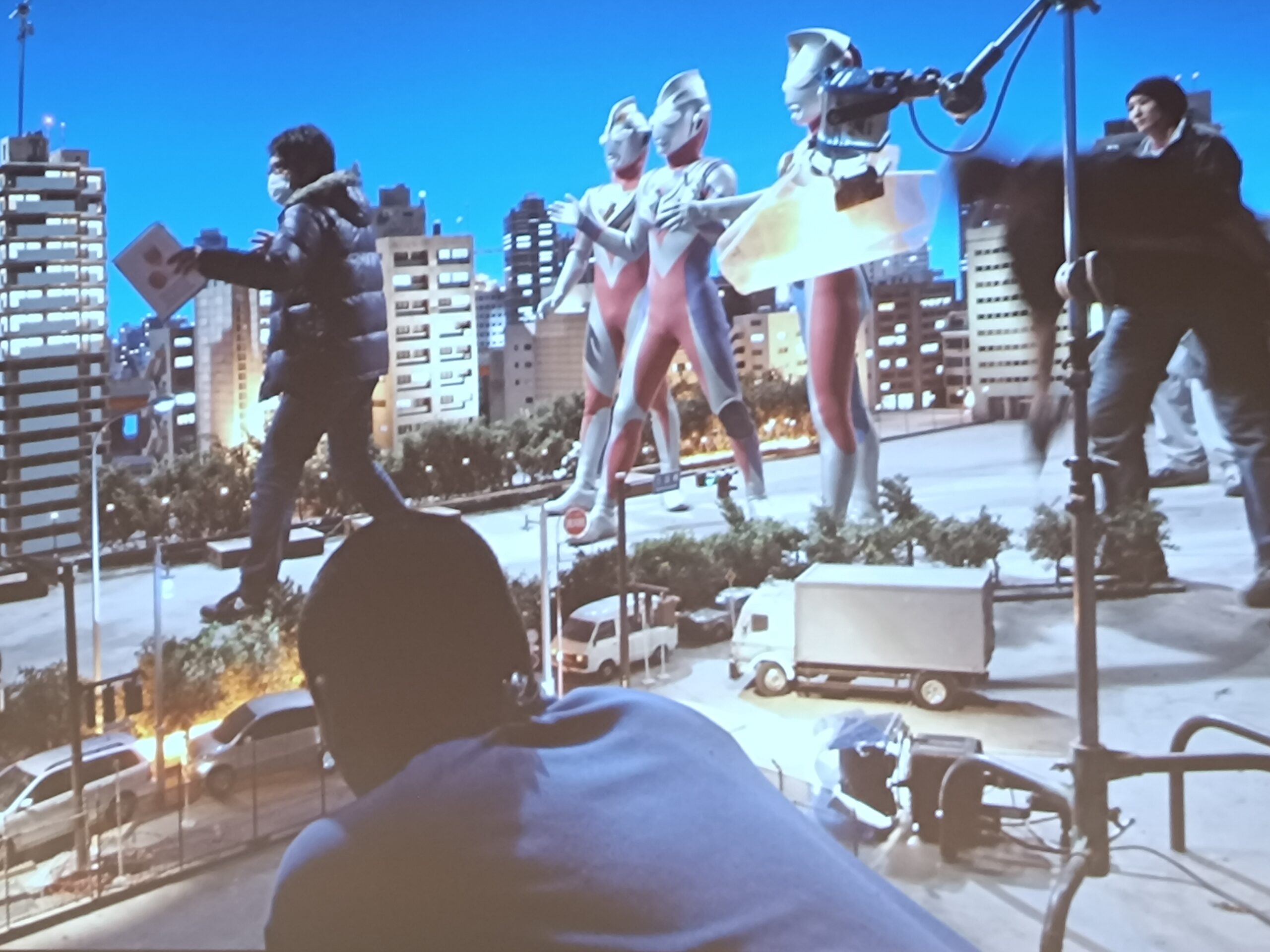
The Fantasia International Film Festival, renowned for its dedication to genre cinema and its role as a premier platform for international premieres, provided an ideal setting for this anniversary celebration. Its curatorial choice to spotlight "The Origin of Ultraman" and host Takeshi Yagi underscores the festival’s recognition of the series’ artistic merit and cultural weight.
Takeshi Yagi: A Career Forged in Light
Takeshi Yagi’s personal journey mirrors the generational impact of Ultraman. Born in 1967, a year after the original broadcast, Yagi was not among the initial cohort of viewers who witnessed "Ultra Operation No. 1" live. Instead, he discovered "Ultraman" through later reruns, receiving what he eloquently described as "the same dream." This deferred encounter highlights the series’ inherent ability to transmit its core message across time and successive generations.
He recounted a poignant childhood memory: walking by the sea with his father and asking what lay beyond the horizon. His father’s answer—that other countries existed, and the world was far vaster than what they could perceive—instilled in young Yagi a profound sense of wonder and possibility. While the precise words of the conversation faded with time, the enduring feeling remained: the conviction that another world, another future, and countless other possibilities lay just beyond the visible landscape. Years later, he recognized this identical sentiment, this quiet conviction that "beyond the limitations of the present, another tomorrow was waiting," within the narratives of "Ultraman."
This childhood fascination blossomed into a professional career deeply intertwined with the Ultra Series. Yagi joined Tsuburaya Productions in the mid-1990s, an era when the franchise was experiencing a significant revitalization with the Heisei Ultraman series. He began as an assistant director, notably contributing to productions such as "Ultraman Tiga" (1996), a series credited with re-energizing the franchise and introducing it to a new generation.
Following his directorial debut with an episode of "Moon Spiral" in 1996, Yagi’s career trajectory at Tsuburaya Productions was marked by a prolific output, working as both a director and a special-effects director across numerous Ultra productions. His extensive credits include fan-favorite series such as "Ultraman Gaia" (1998), "Ultraman Cosmos" (2001), "Ultra Q: Dark Fantasy" (2004), "Ultraman Nexus" (2004), and "Ultraman Mebius" (2006). He further ascended within the production hierarchy, serving as series producer on "Ultraman Max" (2005) and taking on the significant role of main director and series organizer for "Ultraseven X" (2007). In 2008, he transitioned to a freelance filmmaking career, continuing to contribute to the industry.
One of Yagi’s most prominent and celebrated contributions to the franchise is the 2008 feature film "Superior 8 Ultraman Brothers." This ambitious project assembled heroes from both the Showa and Heisei periods, creating a multi-generational epic. The film ingeniously opens with children watching the original "Ultraman" broadcast on July 17, 1966, before tracking their lives into adulthood, where their youthful aspirations have gradually faded amidst the realities of everyday life. Yagi explained his deliberate choice of the opening date, stating it represented "the day the imagination of Japan’s childhood changed forever." The film was not merely an exercise in nostalgia or a celebration of the past; rather, it was a conscious effort to transmit the enduring "dream" that Yagi and his generation had inherited, passing it forward to inspire new audiences.
The Child’s Eye View: Ultraman’s Enduring Philosophy
Yagi’s presentation distilled the core strength of the Ultraman franchise to its ability to consistently "see the world through the eyes of children." This was not simply a strategic decision based on demographic targeting; it reflected a fundamental philosophical approach. Children represented not just the principal audience, but crucially, the future towards which "Ultraman" continually looked. The narratives consistently emphasized themes of hope, courage, unity, and the potential for a better tomorrow, resonating deeply with the innocence and boundless optimism of youth.
This generational stewardship, Yagi suggested, is precisely why "Ultraman" has sustained itself for six decades. No single generation has ever retained exclusive ownership of the character or its narrative. Instead, each successive generation has encountered the hero in its own context, interpreted his meaning anew, and then reshaped it for the next. This continuous process of re-imagination and re-interpretation has allowed the Ultra Series to remain fresh, relevant, and inspiring across different eras, preventing it from becoming a static relic of the past.
Yagi concluded his insightful address by emphasizing that the 60th anniversary should not be approached as a mere exercise in nostalgia. He pointed out that the original creators behind "Ultraman" were never content with simply repeating past successes. They were driven by an unyielding desire to constantly search for innovative images, compelling stories, and fresh ideas capable of inspiring children who had yet to discover the character. This spirit of continuous innovation and future-oriented storytelling is, in Yagi’s view, the true legacy and ongoing power of Ultraman.
The Legacy Continues: Looking Beyond 60 Years
Following Yagi’s thought-provoking presentation, the Fantasia audience was brought back to the very genesis of the franchise with a special screening of "Ultra Operation No. 1," the episode first broadcast on July 17, 1966. In Yagi’s eloquent account, watching this foundational episode six decades later was far more than a simple opportunity to revisit a piece of Japanese television history. It was, rather, an profound invitation: an invitation to momentarily perceive the world through the unblemished eyes of the children whose imaginations it irrevocably transformed, and, crucially, to consider the boundless futures that "Ultraman" continues to inspire.
The global expansion of Ultraman further solidifies its enduring relevance. From animated series on Netflix to comic book collaborations with Marvel, the Ultra Series continues to find new platforms and new audiences. While tokusatsu special effects have evolved with technological advancements, incorporating CGI alongside traditional practical effects, the core principles of wonder, heroism, and the battle between good and evil remain steadfast. Ultraman has become an unwitting ambassador of Japanese pop culture, fostering an appreciation for tokusatsu and its unique storytelling methods across continents. Its legacy is not just in the memories it created but in the continuous possibilities it ignites, promising "another tomorrow" for generations to come.