Horsegirls marks the feature-length directorial debut of Lauren Meyering, offering a poignant examination of neurodiversity, familial bonds, and the pursuit of independence amidst the shadow of terminal illness. The film, written by Meyering and Mackenzie Breeden, stars Lillian Carrier as Margarita, a 22-year-old woman on the autism spectrum who is forced to navigate the complexities of adulthood as her mother, Sandy, portrayed by Gretchen Mol, faces a life-altering medical diagnosis. With a running time of 101 minutes, the production serves as both a character study and a narrative on the resilience of the human spirit, utilizing the niche subculture of hobby horsing as a central metaphor for agency and self-expression.
Narrative Overview and Character Dynamics
The core of the film focuses on the symbiotic yet evolving relationship between Margarita and Sandy. The two share a domestic life characterized by routine and deep emotional connection, frequently engaging in shared activities such as karaoke and communal meals. However, this stability is disrupted by Sandy’s health crisis. As Sandy undergoes chemotherapy, the film captures the visceral realities of her condition, including the physical toll of treatment. A pivotal moment in the narrative occurs when Margarita experiences the direct impact of her mother’s illness—symbolized by Sandy’s hair falling out—forcing a shift in their dynamic from protected child to potential caregiver.
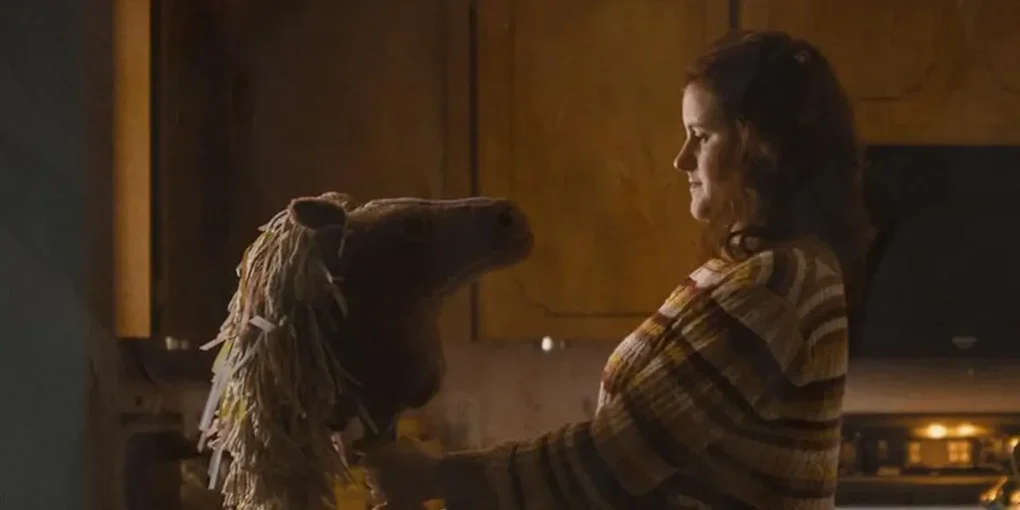
Margarita’s journey toward autonomy is catalyzed by her discovery of a hobby horsing group. This sport, which involves participants performing equestrian-style jumps and dressage movements using wooden sticks with prosthetic horse heads, provides Margarita with a sense of purpose outside her mother’s immediate orbit. To fund her participation and the coaching fees required by the team’s leader (Jerod Haynes), Margarita secures employment at a local Halloween store, managed by Hank (Iqbal Theba). This professional step represents her first tangible foray into traditional adult responsibilities, creating a dual narrative of personal passion and societal integration.
Authentic Representation and Industry Context
A significant aspect of Horsegirls is the casting of Lillian Carrier, an actress who is herself on the autism spectrum. This decision aligns with a growing movement within the film and television industry toward authentic representation. For decades, neurodivergent characters were predominantly portrayed by neurotypical actors—a practice that has faced increasing scrutiny from advocacy groups. By centering Carrier, the production ensures that Margarita’s mannerisms, social interactions, and internal logic are grounded in lived experience rather than caricature.
Data from the Centers for Disease Control and Prevention (CDC) indicates that approximately 1 in 36 children in the United States is diagnosed with an autism spectrum disorder (ASD). As this population transitions into adulthood, the demand for media that accurately reflects their experiences has intensified. Horsegirls contributes to this shift by presenting a protagonist whose autism is a foundational part of her identity but not the sole focus of her narrative arc. The film avoids common tropes such as the "savante" or the "burden," instead focusing on Margarita’s emotional intelligence and her ability to sense shifts in her environment, even when information is withheld from her.
The Cultural Phenomenon of Hobby Horsing
The film’s inclusion of hobby horsing introduces a wider audience to a legitimate competitive sport that originated in Finland. Hobby horsing, or keppihevonen, has seen a massive surge in popularity over the last decade, particularly among young women. In its professional form, the sport involves rigorous athleticism, including high jumps that can exceed four feet and intricate dressage routines that require significant core strength and coordination.
In the context of the film, hobby horsing serves as a bridge between Margarita’s childhood comforts—represented by her stuffed horse, Cheeseburger—and the disciplined world of competitive sports. It provides a community where she is valued for her contributions to the team’s eligibility for championships. The sport acts as a medium through which the film explores themes of creativity and the rejection of social "norms." As the Coach in the film observes, many individuals spend their lives attempting to conform to societal expectations; Margarita’s embrace of hobby horsing represents a departure from that exhaustion, favoring authentic joy over perceived maturity.
Performance Analysis and Supporting Cast
Gretchen Mol provides a grounded counterpoint to Carrier’s performance, portraying Sandy not as a tragic figure, but as a mother grappling with the "overprotective love" that often characterizes parents of neurodivergent children. Mol, known for her roles in Boardwalk Empire and Manchester by the Sea, brings a seasoned gravitas to the role, illustrating the internal conflict of a woman who wants her daughter to be independent but fears the world’s potential for cruelty.
The supporting cast further fleshes out the community surrounding the central duo. Jerod Haynes delivers a resonant performance as the Coach, serving as a mentor who recognizes Margarita’s intrinsic value. Tony Hale, a two-time Emmy winner, appears as Uncle Patrick, providing a familiar and comforting presence during the family’s periods of transition. The ensemble is rounded out by Iqbal Theba and Matthew Schwab, whose interactions with Margarita at the Halloween store highlight the mundane but essential social connections that form the fabric of an independent life.
Production Background and Chronology
The development of Horsegirls is rooted in the real-life experiences of Mackenzie Breeden, a friend of director Lauren Meyering. Breeden, who co-wrote the script, appears in the film’s final scene, providing a meta-narrative link between the fictionalized story and its real-world inspiration. This personal connection informed the film’s empathetic tone and its focus on the "everyday passions" that provide individuals with a sense of belonging.
The production timeline reflects a commitment to capturing the nuances of the hobby horsing community. The cinematography emphasizes the "majestic and graceful" qualities of the sport, treating the faux horses with the same visual respect afforded to live animals in traditional equestrian films. This stylistic choice elevates the subject matter, ensuring that the audience views Margarita’s passion through her eyes rather than through a lens of irony.
Implications for Neurodiversity in Media
The release of Horsegirls is expected to have broader implications for how neurodivergent stories are told in independent cinema. By focusing on the transition to adulthood—a period often overlooked in favor of childhood diagnoses—the film addresses a critical gap in representation. It explores the "uncertain diagnosis" of the parent as a catalyst for the child’s growth, reversing the traditional caregiver dynamic and providing a roadmap for narratives that center disability agency.
Furthermore, the film’s focus on a niche hobby highlights the importance of unconventional communities in providing support systems for those who may feel marginalized by mainstream society. The hobby horsing competition in the film’s final act is portrayed not as a quest for a trophy, but as a celebration of collective effort and the resilience to continue after a stumble.
Conclusion and Future Outlook
Horsegirls stands as a testament to the power of authentic storytelling and the importance of diverse perspectives in film. Through the collaboration of Meyering, Breeden, Carrier, and Mol, the production delivers a factual and emotionally resonant portrait of a family in flux. As the film enters the distribution phase and reaches wider audiences, it is likely to be cited as a benchmark for neurodivergent representation and a poignant exploration of the universal desire for independence and belonging.
By avoiding the cliches of terminal illness dramas and "coming-of-age" tropes, Horsegirls offers a nuanced look at the complexities of the mother-daughter bond. It suggests that while the future may be uncertain and the threat of loss ever-present, the discovery of one’s own "voice"—whether through a job, a community, or a wooden horse—is the ultimate act of growing up. The film’s legacy will likely be defined by its commitment to showing Margarita as a whole person: complex, humorous, and entirely capable of navigating her own world.