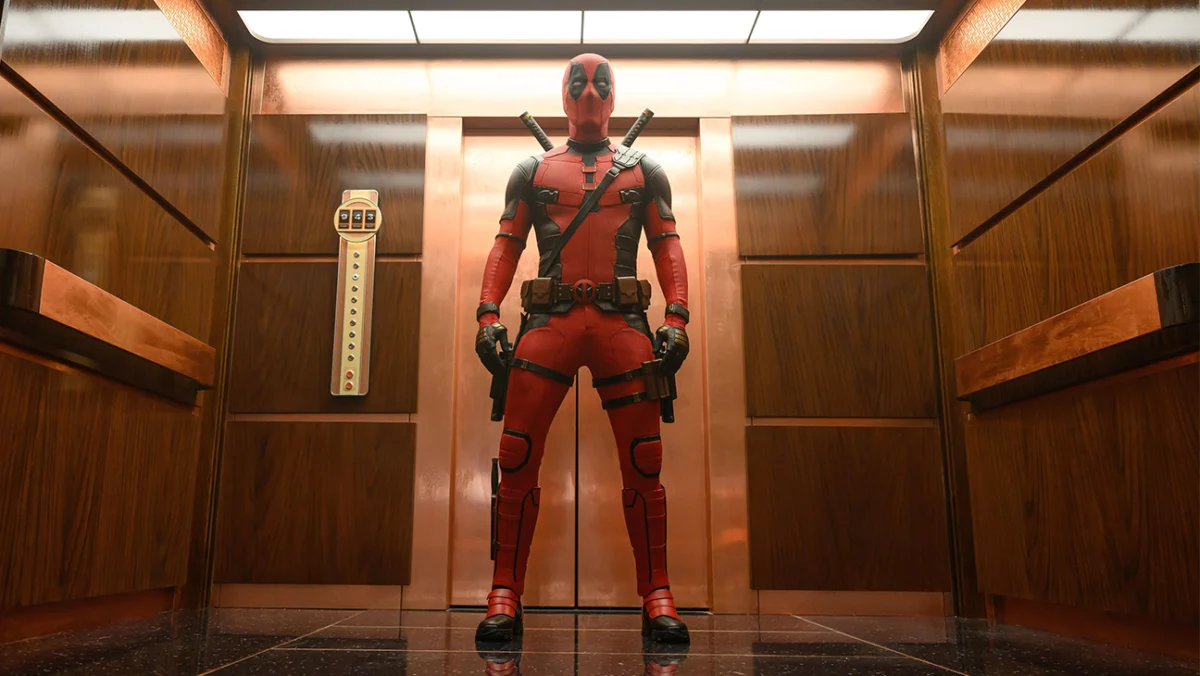
Ryan Reynolds, the inimitable actor-producer synonymous with the irreverent antihero Deadpool, has officially confirmed the impending arrival of another installment in the highly successful franchise. During a recent appearance at Fanatics Fest 2026, Reynolds delighted fans and industry observers alike with the revelation, indicating that the cinematic universe of Wade Wilson is far from concluded, especially in the wake of the monumental box office triumph of 2024’s Deadpool & Wolverine. This announcement, while anticipated by many given the character’s enduring popularity and the recent film’s unprecedented financial performance, nevertheless injects a fresh wave of excitement into the superhero genre, solidifying Deadpool’s unique position within the broader Marvel narrative.
The confirmation comes at a pivotal moment for the Deadpool saga, which has consistently defied conventional superhero tropes and studio expectations since its inception. Reynolds, known for his deep personal investment in the character, offered glimpses into the creative direction and influences for the forthcoming project, referencing key comic book writers who have shaped Deadpool’s legacy. "There’s a few really deep cuts that I think are missing behind the movies. I think there’s a few deep cuts missing from some of the comics. There’s certainly some stuff that, you know, I love that Fabian Nicieza [co-creator of Deadpool] wrote that is incredible. Gerry Duggan, who was a friend, was an incredible comic writer," Reynolds articulated from the stage, as captured in a video widely circulated on social media platform X. He then concluded with the unequivocal statement that there is "stuff upcoming. There’s eventually, you know, remotely another Deadpool film. It’s going to be great." While the actor-producer remained tight-lipped regarding specific plot details, casting, or whether the film would be a solo vehicle for the Merc with a Mouth or an ensemble piece, his words resonated deeply with a fanbase eager for more of Deadpool’s signature blend of action, humor, and meta-commentary.
The Genesis of an Antihero Icon: A Chronology of Deadpool’s Cinematic Journey
The journey of Deadpool to the big screen is itself a testament to perseverance, fan power, and Ryan Reynolds’ unwavering dedication. The character, co-created by artist Rob Liefeld and writer Fabian Nicieza, first appeared in The New Mutants #98 in February 1991. Known for his accelerated healing factor, expert combat skills, and fourth-wall-breaking humor, Deadpool quickly became a cult favorite within the Marvel Comics canon. Reynolds first portrayed Wade Wilson in 2009’s X-Men Origins: Wolverine, a portrayal largely criticized by fans and Reynolds himself for its significant deviation from the source material, particularly the decision to stitch his mouth shut. This initial misstep only fueled Reynolds’ determination to bring an authentic Deadpool to life.
For years, Reynolds championed a faithful R-rated adaptation, navigating studio skepticism regarding the commercial viability of a hard-R superhero film. The turning point arrived in 2014 with the infamous "test footage" leak, which showcased the character’s irreverent tone, brutal action, and unique comedic style. The overwhelming positive fan reaction to the leaked footage proved to 20th Century Fox that there was a significant appetite for an uncompromised Deadpool film. This grassroots movement ultimately paved the way for the greenlighting of the first standalone movie.
Deadpool (2016), directed by Tim Miller and starring Reynolds, proved to be a groundbreaking success. Released with an R-rating, it shattered expectations, grossing over $782 million worldwide against a modest budget of $58 million. The film’s critical acclaim lauded its innovative approach to the superhero genre, its self-aware humor, and Reynolds’ pitch-perfect performance. It demonstrated that audiences were ready for darker, more mature superhero narratives that weren’t afraid to push boundaries. The sequel, Deadpool 2 (2018), directed by David Leitch, continued this trajectory, introducing fan-favorite characters like Cable (Josh Brolin) and Domino (Zazie Beetz) and expanding the cinematic universe while maintaining the character’s signature R-rated charm. It further cemented the franchise’s commercial prowess, earning over $785 million globally, reinforcing the viability of the R-rated superhero model.
Navigating the Disney-Fox Merger and MCU Integration
The acquisition of 20th Century Fox by The Walt Disney Company in 2019 introduced a period of profound uncertainty for the Deadpool franchise. Fans and critics alike wondered how the R-rated, fourth-wall-breaking antihero would fit into the family-friendly Marvel Cinematic Universe (MCU), which had, until then, largely adhered to PG-13 ratings. The concern was palpable: would Disney dilute Deadpool’s essence to integrate him into the MCU? Ryan Reynolds, again, became the vocal advocate for preserving the character’s integrity, assuring fans that any future Deadpool film would remain true to its R-rated roots. This advocacy played a crucial role in shaping the character’s transition under the Marvel Studios banner.
These assurances culminated in the highly anticipated Deadpool & Wolverine (2024), which marked Deadpool’s official, albeit chaotic, entry into the MCU. Directed by Shawn Levy, the film not only brought back Reynolds but also saw the triumphant return of Hugh Jackman as Wolverine, a character he had ostensibly retired from with 2017’s Logan. This crossover was a monumental event for comic book fans, merging two beloved Fox-era Marvel characters into the sprawling MCU multiverse. The film’s commercial performance was nothing short of spectacular; it not only dominated the global box office but also became the highest-grossing R-rated movie of all time, surpassing the previous record holders with a global haul exceeding $1.3 billion. This unprecedented success unequivocally demonstrated that audiences were not only ready for an R-rated MCU entry but actively demanded it, validating the creative risks taken by Marvel Studios and Disney.
Ryan Reynolds’ Evolving Vision for Deadpool’s Future
Reynolds’ recent comments at Fanatics Fest 2026 gain significant context when viewed against his past statements regarding the future of the Deadpool franchise. As The Hollywood Reporter exclusively reported last year, Reynolds had already been exploring ideas for another film, notably one that would feature more X-Men characters. This aligns with his long-held belief that Deadpool thrives within an ensemble dynamic rather than being perpetually isolated.
In a candid interview with THR in 2024, Reynolds articulated his evolving perspective on solo Deadpool outings. "Centering Deadpool works best if you take everything away from him and put his back against the wall. I can’t really do that again," he explained, reflecting on the narrative structure of the first two films. "A fourth time feels a little iterative and redundant. That doesn’t mean sacrificing fun. There is still an arc for Deadpool which is fulfilling and powerful." This statement strongly suggests that the newly confirmed Deadpool film is unlikely to be a traditional solo adventure in the vein of the first two. Instead, it points towards a more expansive narrative, potentially positioning Deadpool as a central figure within a larger group, perhaps even leading a new iteration of the X-Men within the MCU, which would be a significant development for the franchise and the character’s role in the wider universe.
The mention of "deep cuts" from comic creators like Fabian Nicieza and Gerry Duggan offers further clues into Reynolds’ creative intentions. Nicieza, as co-creator, is fundamental to Deadpool’s characterization and history. His early work established many of Deadpool’s defining traits, including his fourth-wall awareness, complex moral ambiguity, and the tragic elements beneath his comedic exterior. Gerry Duggan, on the other hand, had a highly acclaimed and lengthy run on the Deadpool comic series from 2012 to 2018, often exploring the character’s internal struggles, his relationships with other Marvel characters (like the X-Men and S.H.I.E.L.D.), and his place in the broader Marvel Universe. Duggan’s run was praised for balancing Deadpool’s signature humor with genuine emotional depth and impactful storylines, often involving him in large-scale events. By invoking these names, Reynolds signals a desire to delve into richer, potentially more nuanced aspects of Deadpool’s character and lore, possibly moving beyond the more surface-level gags and meta-commentary that defined some of his earlier appearances. This could mean exploring storylines that involve Deadpool interacting with a wider array of Marvel characters or tackling more intricate comic book arcs that require a larger ensemble to truly realize, expanding the thematic scope of the films.
Implications for the Marvel Cinematic Universe and Beyond
The confirmation of another Deadpool film carries significant implications for the Marvel Cinematic Universe and the superhero film industry as a whole.
1. The Enduring Viability of R-Rated Superhero Films: Deadpool & Wolverine‘s colossal box office success has unequivocally proven that R-rated superhero films are not just commercially viable but can be record-breaking. This success validates Disney’s decision to allow Deadpool to retain its mature rating within the MCU framework and could potentially pave the way for other adult-oriented Marvel properties to be explored with their intended grit and edge, such as Blade or more mature takes on characters like The Punisher. It represents a significant strategic shift for Marvel Studios, broadening the demographic appeal of their interconnected universe and challenging previous assumptions about market limitations.
2. Deadpool’s Central Role in the MCU’s Future: Reynolds’ preference for an ensemble film, combined with the "deep cuts" reference, suggests that Deadpool is being groomed for a more integral and potentially leadership role within the MCU, particularly concerning the X-Men. Deadpool & Wolverine served as a soft reboot and an introduction to the multiverse concept for Fox’s Marvel characters. The next film could further integrate these characters, or new iterations of them, into the main MCU timeline, with Deadpool acting as a bridge or even a de facto leader. This would align with long-standing fan theories and the general direction of the MCU, which is currently re-introducing the X-Men and other mutant characters into its ongoing narrative.
3. Creative Freedom and Storytelling Potential: By emphasizing "deep cuts" and the works of specific comic writers, Reynolds signals a commitment to rich, comic-accurate storytelling that goes beyond simple crowd-pleasing antics. This could lead to more complex narratives, exploring Deadpool’s psychological depth, his relationships, and his unique place as an anomaly within the superhero landscape. The blend of established MCU lore with Deadpool’s chaotic, fourth-wall-breaking nature offers unparalleled creative freedom for filmmakers, allowing for meta-commentary on the very nature of cinematic universes.
4. Ryan Reynolds’ Continued Influence: Beyond his acting, Ryan Reynolds is a formidable creative force behind the Deadpool films, serving as a producer and often a co-writer. His deep understanding and passion for the character are crucial to the franchise’s success, distinguishing it from many other studio-driven blockbusters. The announcement underscores his continued pivotal role in shaping Deadpool’s cinematic destiny, ensuring that the character remains authentic to his comic book roots while evolving within the larger narrative framework. This level of creative control for a lead actor-producer is somewhat unique in the modern studio system, especially within a franchise as massive as the MCU.
5. Fan Engagement and Anticipation: The announcement at a fan event like Fanatics Fest highlights the importance of direct engagement with the fanbase. Deadpool’s success has always been intrinsically linked to his passionate followers, who actively campaigned for the first film and enthusiastically supported its R-rated approach. Reynolds’ direct communication fosters a sense of community and involvement, further fueling anticipation for the next chapter. The record-breaking performance of Deadpool & Wolverine is a clear indicator of the immense fan appetite, ensuring that the next film will arrive with significant pre-existing hype and a dedicated audience.
The Broader Impact on the Superhero Genre
The Deadpool franchise has had a profound impact on the superhero genre, demonstrating that there is a vast market for diverse storytelling approaches beyond the traditional PG-13 blockbuster. Its success pioneered a new era for R-rated comic book adaptations, inspiring films like Logan (2017), which offered a gritty, emotionally resonant farewell to Hugh Jackman’s Wolverine, and Joker (2019), a dark psychological thriller that redefined what a comic book movie could be. The continued success of Deadpool ensures that studios will remain open to exploring more mature and unconventional narratives, pushing the boundaries of what a "superhero movie" can encompass and fostering greater creative diversity within the genre.
In an increasingly competitive and sometimes saturated superhero film market, Deadpool‘s distinct voice and meta-commentary offer a refreshing contrast. It serves as a reminder that originality, character authenticity, and a willingness to break conventions can yield immense rewards, both critically and commercially. As the MCU navigates its multi-phase saga, Deadpool provides a unique narrative tool – a character who can comment on the very fabric of the cinematic universe, offering both comedic relief and insightful observations, while still participating in the high-stakes action. This ability to be both inside and outside the narrative offers unparalleled opportunities for innovative storytelling.
While specific details remain under wraps, Ryan Reynolds’ confirmation of another Deadpool film is a significant development, signaling a vibrant and expansive future for the character within the MCU. It promises more of the beloved antihero’s chaotic charm, potentially in a new, more ensemble-driven context, drawing from the rich tapestry of his comic book history. As Marvel Studios and Reynolds continue to chart this exciting course, the anticipation for Deadpool’s next great adventure is already reaching fever pitch, promising another "great" chapter for the Merc with a Mouth. The Hollywood Reporter has reached out to Marvel for further comment, as the industry awaits official pronouncements on this highly anticipated project.