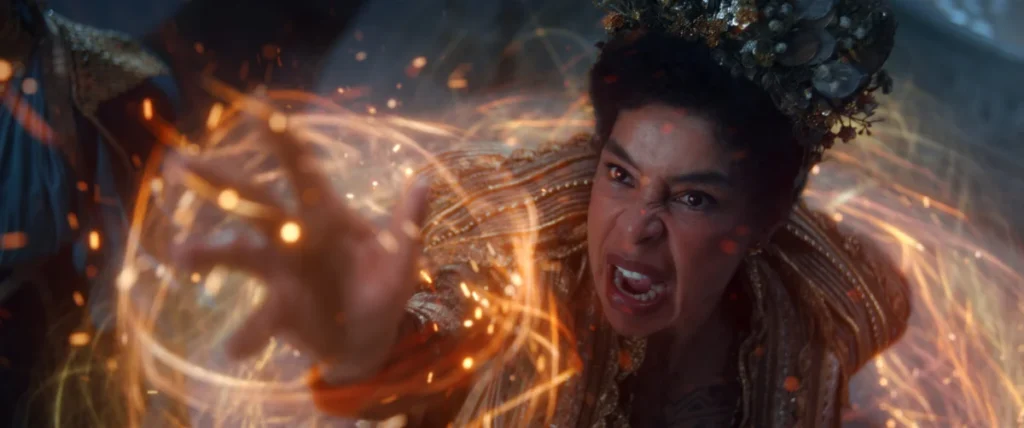
The latest installments of X-Men ’97 have plunged viewers into a whirlwind of temporal paradoxes and character-defining confrontations, culminating in the dramatic rise of Apocalypse and a shocking turn of events for a beloved founding member. Episodes four and five, "Rise of Apocalypse Part II" and "Weapon X, Lies, and DVDs," respectively, serve as pivotal moments in the season, exploring themes of destiny, betrayal, and the enduring struggle for a better future, while also delving into the dark origins of some of mutantkind’s most formidable figures.
The Cataclysmic Climax: Apocalypse Ascends
"Rise of Apocalypse Part II" picks up immediately after the devastating attack by Rama-Tut (John de Lancie), leaving the X-Men reeling in the ruins of En Sabah Nur’s (Adetokumboh M’Cormack) base. Magneto (Matthew Waterson), utilizing his magnetic abilities, manages to shield the X-Men from the immediate fallout. However, Nur’s forces are annihilated, fueling his rage at what he perceives as the X-Men’s betrayal.
Amidst the wreckage, Magneto clings to his vision of a redeemed En Sabah Nur, a future Apocalypse, guided towards a more noble path. This optimistic outlook is met with stark opposition from Bishop (Isaac Robinson-Smith), a seasoned time-traveler who warns against tampering with the established timeline. The majority of the team echoes Bishop’s skepticism, their doubts amplified by the grim reality of their situation. Only Rogue (Lenore Zann) appears to harbor a flicker of hope, envisioning a world where Genosha remains unscarred and Gambit is still among them.
Magneto, however, brooks no debate. In a decisive move, he deactivates Bishop’s timeband, effectively stranding the team in ancient Egypt. Their only hope for return lies in locating a lost temple and harnessing its power.
Meanwhile, Professor X (Ross Marquand) attempts to reason with Nur, revealing the X-Men’s origins in the future and articulating his dream of coexistence between humans and mutants. Nur, deeply entrenched in his survival-of-the-fittest philosophy, remains unmoved. Yet, he permits Xavier to probe his mind, a process that unearths profound pain: memories of maternal abandonment and a lifetime of enslavement. This mental excavation also reveals a celestial constellation, a cryptic guide to the temple they all seek.
A Desert Trek and a Cosmic Revelation
The journey across the desert on camelback is fraught with tension. During an overnight encampment, Rogue engages En Sabah Nur in a candid conversation, only to be met with his hardened view of love as a fundamental weakness. Simultaneously, Professor X experiences a telepathic vision from Rama-Tut, who reveals his multiversal identity as Kang the Conqueror and a host of other personas. Tut offers Xavier a grim ultimatum: to prevent Apocalypse’s ascension, he must allow Tut to claim the celestial temple’s power instead of Nur.
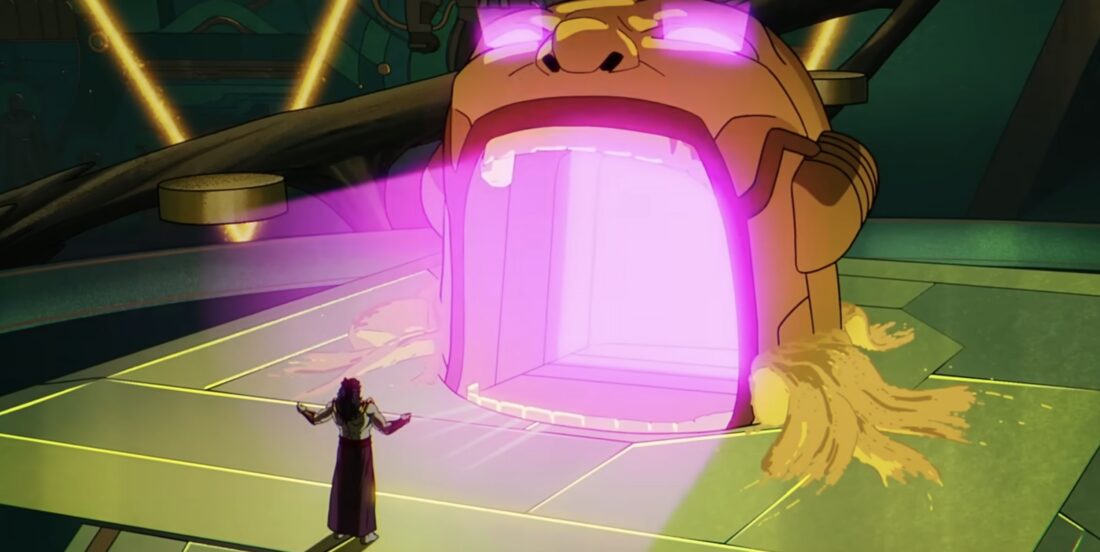
Upon entering the temple, the X-Men divide their efforts to locate the energy source. Beast (George Buza) leads a contingent that discovers a control panel, realizing the temple is, in fact, the sentient spacecraft known as Ship—a formidable weapon of Apocalypse in their own time. En Sabah Nur, Professor X, and Bishop uncover ancient engravings depicting Nur’s rise to power, ominously surrounded by the X-Men themselves. Nur grasps the horrifying truth: this is a prophecy of his future, and the X-Men have been actively working to thwart his destiny. Nur effortlessly incapacitates the X-Men and proceeds to the inner sanctum. There, he confronts a god-like Celestial, who summons him to become an avatar of destruction.
Time, Destiny, and a Tragic Farewell
With Ship’s technology, Beast manages to restore the X-Men’s timebands. The team engages in another spirited debate about the nature of time and destiny, but Magneto, once again, takes unilateral control, initiating a temporal jump back to the 1990s. Only he and Professor X remain, Charles clinging desperately to Magneto’s cape to resist the portal’s pull.
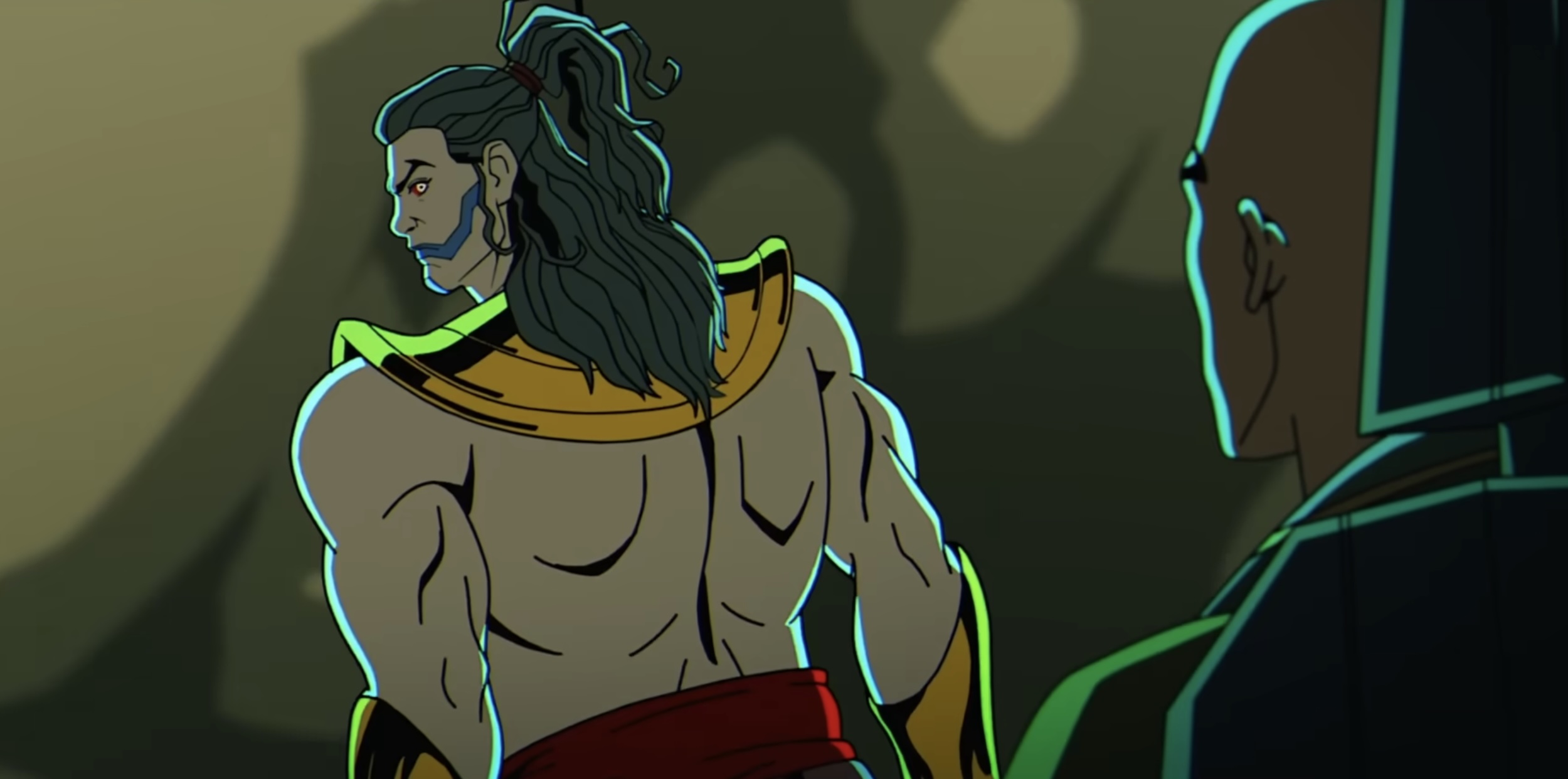
Emerging from the shrine, En Sabah Nur has undergone a profound transformation, now fully embodying the immense power of Apocalypse. He commands Ship to oblash the city. Rama-Tut, recognizing his missed opportunity to conquer this era, retreats to seek other timelines.
Magneto confronts the newly empowered Apocalypse, attempting to subdue him with a vortex of metal. However, Ship, now solely responsive to Apocalypse’s commands, begins to decimate the city. Magneto pushes his powers to their absolute limit, redirecting the black hole generated by Ship and saving countless lives. In a poignant farewell, Erik shares a heartfelt embrace with Charles, urging him to "honor me with action, not tears."
A weakened Magneto collapses outside the city. Apocalypse reappears, warning Xavier that his affections will be his undoing, before vaporizing Magneto. A grief-stricken Xavier cries out that Apocalypse will forever remain a monster. As Apocalypse departs, Bishop reappears to escort a bereft Professor X back to the 1990s.

Weapon X, Lies, and a Return to the Past
The subsequent episode, "Weapon X, Lies, and DVDs," shifts focus dramatically, initiating a "bottle episode" structure that centers on Morph (J.P. Karliak) and Wolverine (Cal Dodd). The opening credits, featuring an expanded roster of ten X-Men, signal a broader narrative arc, with Forge receiving his own title card, signifying his full integration into the team. Magneto’s conspicuous absence is a somber acknowledgment of his fate. Jubilee, also missing from the credits, is presumed to be with the X-Force, hinting at potential future team dynamics and tensions.
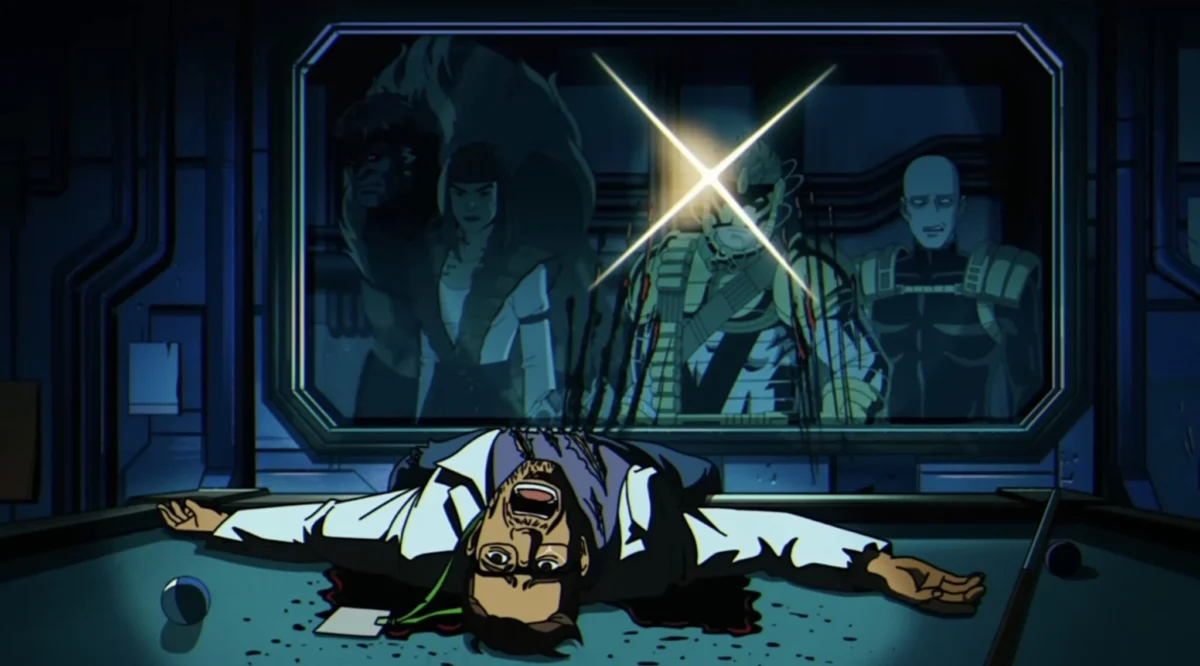
The episode opens with Morph piloting a helicopter carrying a team assembled by Wolverine: Sabretooth (Darin De Paul), Maverick (Crispin Freeman), Kane (Ben Pronsky), and Yuriko, also known as Lady Deathstrike (Erika Ishii). This group, all former subjects of the ethically dubious Weapon X program, share a complicated history with Wolverine. Their mission is to dismantle Dr. Cornelius’s (Todd Haberkorn) renewed experiments.
A flock of mutated birds causes the helicopter to crash, resulting in Kane’s death. The survivors are then attacked by an infected polar bear, revealing Wolverine’s shocking loss of his adamantium.
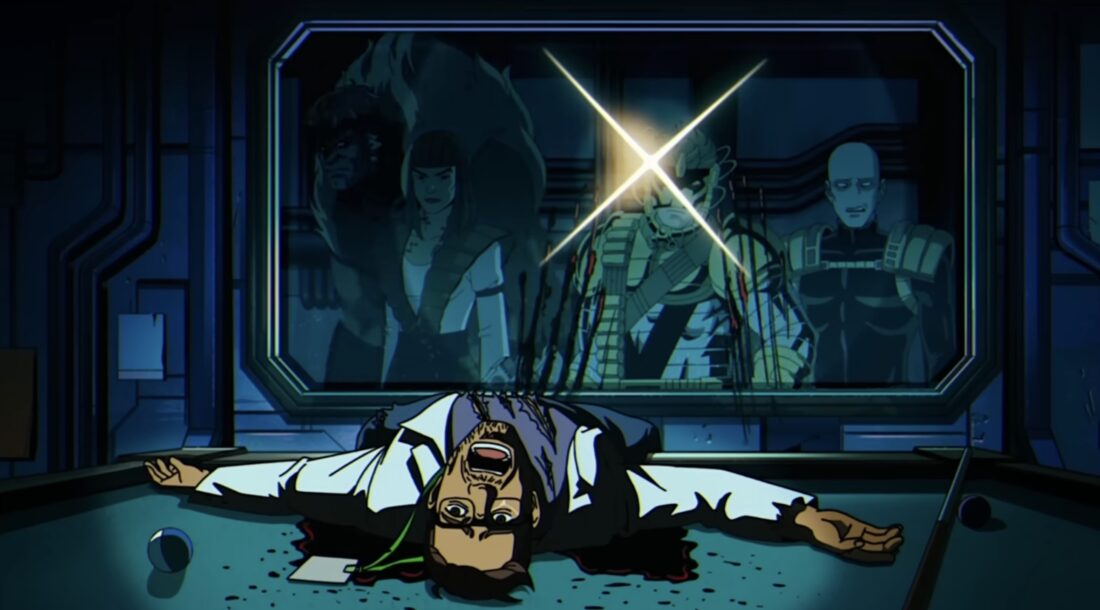
Exploring the derelict facility, littered with corpses, the team confronts Dr. Cornelius. He transforms into an insectoid creature, unleashing a swarm of giant, potentially alien, flying insects. The team theorizes that these creatures are of extraterrestrial origin.
Unraveling the Brood Conspiracy
Amidst the escalating chaos, suspicions arise about who might have been infected by the alien insects. The theory is posited that Cornelius and his scientists may have intentionally experimented with alien DNA injections. The team splits, with Maverick and Wolverine ostensibly searching for a vehicle, while the others attempt to reboot the generators for an escape.
Yuriko, Morph, and Sabretooth discover a trove of DVDs containing fan-service Easter eggs, referencing characters like Aurora, Fantomex, Winter Soldier, and X-23. One DVD reveals Dr. Cornelius explaining the difficulty in controlling their subjects due to the resurgence of traumatic memories. The scientists’ attempt to purge these memories using the cranial fluids of a captured Brood alien—an insectoid species with a hive mind—resulted in hybrids that were both untamable and incapable of surviving the adamantium process.
Escaping another Brood attack, the trio seeks their missing teammates. They locate Wolverine and Maverick not at a vehicle bay, but in the lab where Logan’s adamantium infusion first occurred. A Brood-Wolverine hybrid, accompanied by numerous other Brood, attacks. During the ensuing battle, Maverick is killed, and a hibernating Omega Red is released from his stasis.
A Calculated Gambit and a Familiar Reunion
Lady Deathstrike, Morph, and Sabretooth find temporary refuge. An argument ensues, revealing Wolverine’s deception: his true objective was to reclaim his adamantium. Morph devises a plan to lure the Brood-infected Wolverine into the adamantium chamber, believing the process will purge him.

Morph impersonates Cyclops to taunt the "Brood-erine" into the chamber, but Sabretooth’s ambush disrupts the plan. Morph pleads with the feral Wolverine, reminding him of their friendship. A pivotal moment arrives when Morph transforms into Jean Grey, causing Wolverine to hesitate. This brief pause allows Lady Deathstrike to force him into the adamantium chamber.
Omega Red then attacks Morph and Yuriko, intending to use the Brood to conquer the planet. However, Wolverine emerges from the chamber, cleansed of the Brood infection and with his adamantium claws restored. He repels Omega Red, aiding the remaining crew in their escape as the Weapon X facility explodes below.
During the flight home, Wolverine confides in Morph, stating he is merely an animal with claws. Morph poignantly asks if that saddens Logan, revealing his own sadness at the situation.
Commentary and Season Structure
These two episodes underscore a structural strategy mirroring the first season: a build-up of narrative threads, a significant midpoint confrontation culminating in an unexpected death, followed by a character-focused bottle episode. The Sentinel attack on Genosha and Gambit’s demise in Season 1 are paralleled by Apocalypse’s rise and Magneto’s tragic end in the current season.
While Magneto’s death, though impactful, may not have resonated as profoundly as Gambit’s, the episode masterfully conveys the emotional weight through Professor X’s reactions. The deep, often subtextual, relationship between Charles and Erik is brought to the forefront, with Charles’s desperate clinging to Magneto’s cape and their tearful embrace powerfully illustrating the depth of their bond. Professor X’s anguished cry to Apocalypse—"your mother was right to abandon you"—speaks volumes about the profound pain he is experiencing.
The cracking of Magneto’s helmet and Charles’s subsequent telepathic communication with him may serve as a precursor to the introduction of Onslaught, a villain born from the merged psyches of Professor X and Magneto. While Onslaught’s integration into the Apocalypse-centric narrative of this season seems unlikely, this development could be laying the groundwork for future seasons.
En Sabah Nur’s transformation into Apocalypse is a compelling narrative pivot, raising questions about how his temporal misadventures might affect his actions in the 1990s. The X-Men’s consistent disregard for Bishop’s warnings about timeline integrity suggests that Apocalypse may have become even more formidable as a result of their interference. The phrase "Bishop Was Right" is likely to become a popular meme among viewers.
John de Lancie’s portrayal of Rama-Tut, reminiscent of his iconic Q from Star Trek: The Next Generation, effectively captures the character’s enigmatic and powerful nature. Though a direct confrontation between the X-Men and this Kang variant was not fully realized, the narrative’s pacing justified the condensed appearance.
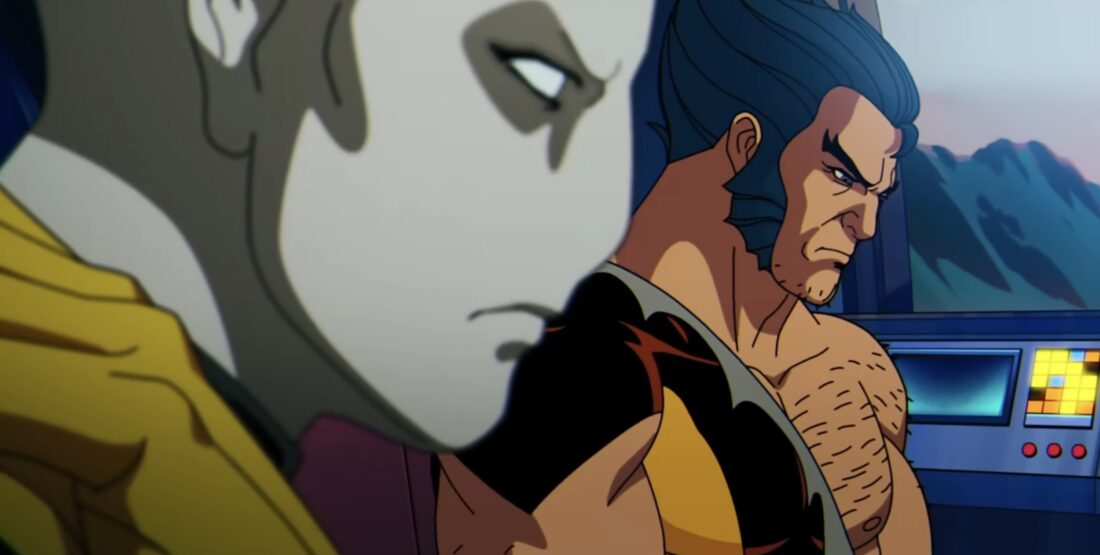
Following a precedent set in Season 1, where Storm was the focus of a post-climax episode, this season centers on Wolverine, with Morph as his companion. Morph’s inclusion provides much-needed levity and allows for an exploration of their friendship with Wolverine, a dynamic previously relegated to subtext.
The subtextual relationship between Morph and Wolverine is amplified, with Sabretooth and Yuriko even chiding Morph for their intense devotion to Logan. J.P. Karliak’s voice performance as Morph is nuanced, conveying deep affection for Logan while also embodying a resilient queer identity. The episode’s depiction of unrequited queer affection, while sometimes uncomfortable, is a testament to its effectiveness and its period accuracy for the 1990s. The final scene, wherein Morph expresses the sadness Wolverine cannot, highlights the strength found in emotional vulnerability, contrasting with Wolverine’s often-celebrated gruffness. Wolverine’s rapid recovery of his adamantium is consistent with the show’s brisk pacing.
The recurring cameos and fan service, including the appearance of Celestials and Rama-Tut’s Kang persona, are enjoyable. However, some instances, like Morph’s extensive transformations in a single episode, verge on excessive, potentially serving more as trailer fodder than narrative development.
While the initial division of the X-Men allowed for focused character development, the season is now past its midpoint, and the full team has yet to reunite in the 1990s. The anticipation for this reunion in the upcoming episode is high, with hopes for a satisfying culmination of the season’s overarching conflict with Apocalypse.