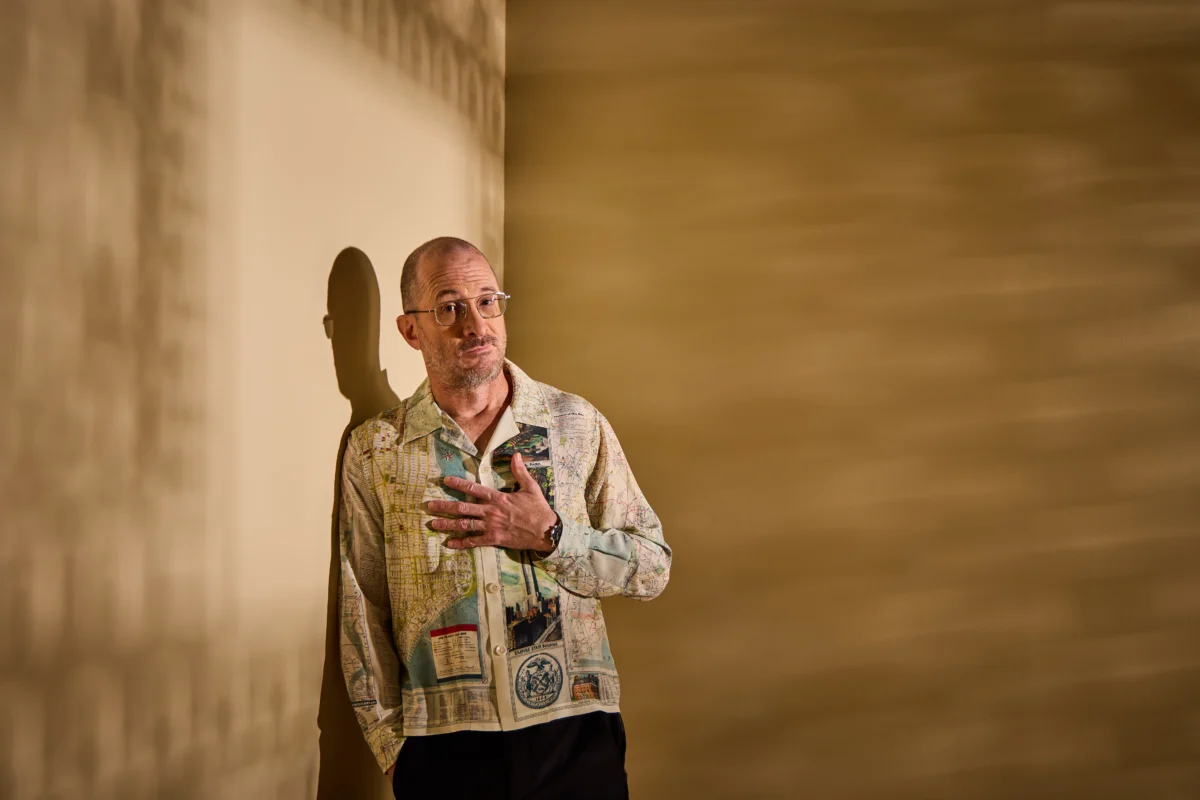
Primordial Soup Labs, Inc., the artificial intelligence-focused film and content studio co-founded by acclaimed filmmaker Darren Aronofsky, is significantly expanding its financial and operational footprint. Recent filings with the Securities and Exchange Commission (SEC) reveal that the company is in the process of raising $15 million in an equity-based funding round. This capital infusion arrives at a critical juncture for the entertainment industry, as traditional Hollywood structures grapple with the rapid integration of generative AI tools into the filmmaking pipeline.
The SEC documentation, which identifies Aronofsky and his longtime producing partner Dylan Golden as executive officers, indicates that the studio has already secured approximately $11.1 million of its $15 million target. The first sale associated with this offering was recorded on July 1, marking a formalization of the studio’s transition from a high-profile experimental venture into a capitalized production entity. While the specific identity of the investors remains undisclosed, the successful procurement of over two-thirds of the target amount suggests strong institutional or private interest in Aronofsky’s vision for AI-augmented storytelling.
Strategic Expansion and the Search for Leadership
The capital raise appears to be directly fueling a comprehensive recruitment drive. Primordial Soup’s current organizational activities suggest a shift from a boutique creative lab to a full-scale production house. The company is currently seeking to fill several high-level roles, most notably a "Head of Studio." This position is described as a cornerstone role that will oversee the development, production, and commercialization of a diverse content slate.
According to the job description, the Head of Studio will manage a portfolio that includes digital-first creator content, feature films, television series, and branded content. This multi-pronged approach indicates that Primordial Soup does not intend to limit itself to the traditional theatrical model. By prioritizing "digital-first" content alongside feature films, the studio is positioning itself to compete in the fast-paced social media and streaming ecosystems where AI-generated content currently sees its highest engagement.
Other open roles within the organization include generative artists, social media strategists, and a chief of staff. The emphasis on "generative artists" highlights the studio’s commitment to a new category of creative professional—individuals who possess both traditional cinematic sensibilities and the technical proficiency required to manipulate complex AI models.
A Legacy of Technological Experimentation
Darren Aronofsky’s pivot toward AI-driven production is not an outlier in his career but rather a continuation of a long-standing fascination with the intersection of technology and narrative. Known for psychologically complex films such as The Whale, Black Swan, and Requiem for a Dream, Aronofsky has consistently sought out unconventional mediums to expand the cinematic experience.
In 2018, he served as an executive producer on Spheres, a three-part virtual reality series directed by Eliza McNitt. The project was a landmark in the VR space, becoming the first VR experience to be acquired for a seven-figure deal at the Sundance Film Festival. This early foray into immersive technology demonstrated Aronofsky’s willingness to move beyond the 2D frame.
More recently, Aronofsky directed Postcard from Earth, a bespoke cinematic experience created specifically for The Sphere in Las Vegas. The project utilized the "Big Sky" camera system, a ground-breaking 18K resolution technology designed to cover the massive interior LED screen of the venue. The logistical and technical demands of the Sphere project likely served as a precursor to the data-heavy workflows required for high-end AI filmmaking.
The Genesis of Primordial Soup and the Google DeepMind Alliance
Primordial Soup was officially introduced to the public just over a year ago with a mission statement summarized by the tagline: "Make soup, not slop." This phrase was widely interpreted as a commitment to quality in an era where generative AI is often criticized for producing "slop"—low-effort, derivative content that lacks artistic intentionality.
Central to the studio’s launch was a non-exclusive partnership with Google DeepMind. This collaboration granted Aronofsky and his team early access to Google’s suite of generative video tools, including the "Veo" model. Veo, which competes with other high-end video generators like OpenAI’s Sora and Runway’s Gen-3, was designed to create high-definition video from text prompts with a focus on cinematic consistency and temporal stability.
At the 2025 Tribeca Festival, Aronofsky and McNitt showcased the fruits of this partnership with the premiere of Ancestra. A 45-minute featurette, Ancestra serves as the first installment of a planned trilogy exploring themes of motherhood and memory through an AI-influenced lens. During a panel discussion at the festival, Aronofsky emphasized that his interest in these models is purely narrative-driven, stating that the goal is to discover how these tools can unlock new ways to tell stories that were previously impossible or prohibitively expensive to produce.
Navigating Creative Friction and Public Perception
The studio’s journey has not been without controversy. During the winter of 2024, Aronofsky released On This Day, a series of live-action shorts set during the American Revolution. The project utilized AI to reconstruct historical figures, placing them in modern or stylized contexts. The initial episodes faced significant criticism from both the public and industry insiders, who pointed to "uncanny valley" effects—the discomfort caused by human-like figures that look almost, but not quite, real.
However, the studio demonstrated an iterative approach to these critiques. As the series progressed, the visual fidelity improved. In a notable pivot last month, Aronofsky announced that On This Day would move toward an animated aesthetic. The most recent episode featured an anime-inspired sequence depicting a boxing match between Thomas Jefferson and King George III. The shift suggested a strategic realization: while photorealistic AI humans remain difficult to perfect, stylized animation allows for greater creative freedom and bypasses the aesthetic pitfalls of the uncanny valley.
The Economic Implications of AI-First Filmmaking
The $15 million funding round highlights a broader economic shift in Hollywood. While AI tools are often marketed as cost-saving measures, the reality of high-end AI production remains capital-intensive. The costs associated with a studio like Primordial Soup include:
- Computational Power: Rendering high-fidelity generative video requires significant GPU resources, which are currently at a premium globally.
- Specialized Talent: The "generative artists" and prompt engineers required to guide AI models are a niche workforce commanding high salaries.
- Hybrid Workflows: Primordial Soup’s model involves supplementing AI generations with traditional post-production, voice acting, and professional scoring, all of which maintain traditional price points.
- Legal and Ethical Compliance: As the legal landscape regarding AI and copyright remains in flux, significant resources must be allocated to ensuring that generated content does not infringe on intellectual property rights.
By securing $15 million, Primordial Soup is positioning itself to weather the "R&D phase" of AI filmmaking, allowing it to produce a volume of content that can eventually achieve profitability through licensing, branded partnerships, and direct-to-consumer platforms.
A Growing Trend Among Industry Titans
Aronofsky is far from the only traditionalist exploring the frontier of artificial intelligence. The broader industry is currently witnessing a massive realignment as studios and directors attempt to integrate AI without alienating their core audiences or creative unions.
- Martin Scorsese: The legendary director has reportedly begun using AI tools for storyboarding and pre-visualization, allowing for more complex camera movements to be planned before a single frame is shot.
- Lionsgate: The studio recently announced a first-of-its-kind partnership with Runway, an AI research company, to build a proprietary AI model trained on Lionsgate’s own library of film and television content.
- A24: Known for its "auteur-driven" brand, A24 has also begun experimenting with AI in its marketing and post-production workflows, signaling that even the most artistically rigorous corners of the industry are not immune to the technology’s influence.
The trend suggests that AI is moving away from being a niche tool used by hobbyists and toward becoming a standard component of the professional filmmaker’s toolkit.
Future Outlook: From Experiment to Industry Standard
The success of Primordial Soup’s funding round serves as a barometer for the investment community’s confidence in AI-driven media. As the studio fills its "Head of Studio" role and expands its slate, the industry will be watching closely to see if the "Soup not Slop" philosophy can truly bridge the gap between algorithmic generation and cinematic art.
The implications for the labor market are also significant. The hiring of social media strategists alongside feature film producers suggests that Primordial Soup envisions a future where a single creative vision can be deployed across multiple formats simultaneously, with AI handling the heavy lifting of adaptation and localization.
For Darren Aronofsky, Primordial Soup represents a bold bet on the future of his craft. Whether the studio becomes a new pillar of Hollywood or remains a high-budget experiment will depend on its ability to produce content that resonates emotionally with audiences, proving that while the tools may change, the fundamental human desire for storytelling remains constant. As the studio approaches its $15 million goal, the transition from "primordial" experimentation to a structured, commercial powerhouse is well underway.