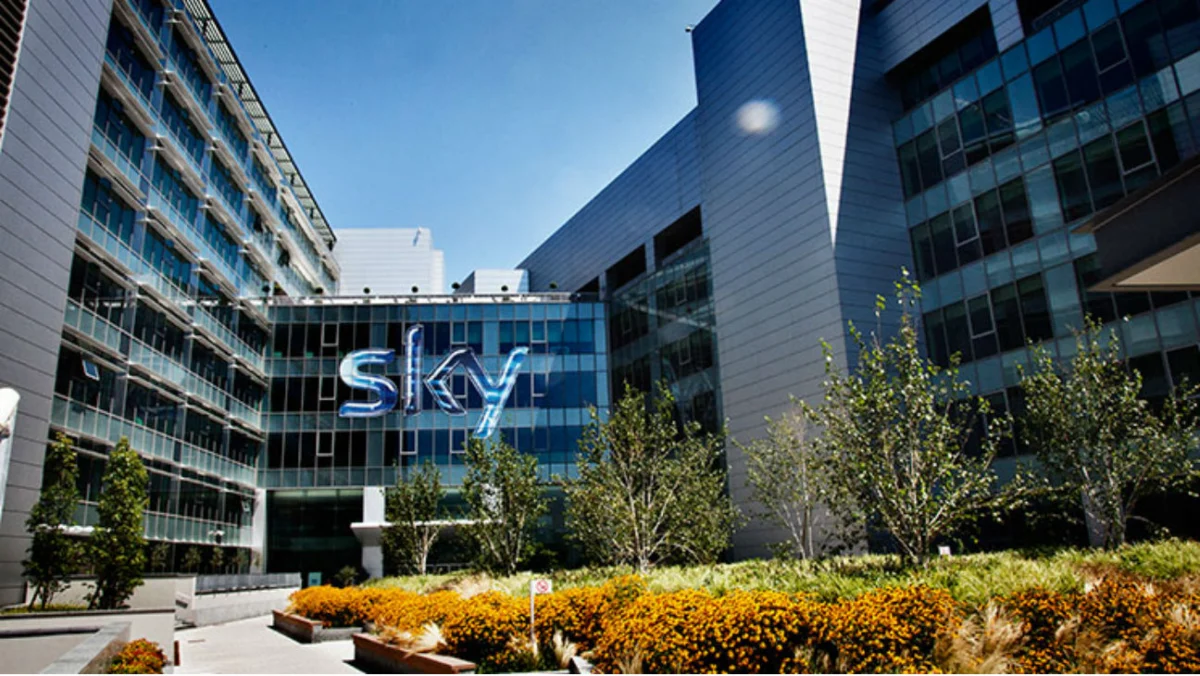
In a move that signals a tectonic shift in the British media landscape, Comcast-owned Sky has officially reached an agreement to acquire the media and entertainment (M&E) division of ITV for £1.6 billion ($2.13 billion). The deal, confirmed by both companies on Wednesday, marks a definitive pivot for ITV, which will now see its broadcast channels and streaming operations move under the Sky umbrella while its prolific production arm, ITV Studios, transitions into a standalone entity. This acquisition encompasses ITV’s entire suite of commercial free-to-air channels, including the flagship ITV1, as well as the rapidly growing ITVX streaming platform.
The transaction represents one of the most significant consolidations in UK broadcasting history since Comcast acquired Sky in 2018 for $39 billion. By absorbing ITV’s broadcasting assets, Sky—which has traditionally operated as a pay-TV and telecommunications provider—gains a dominant foothold in the UK’s free-to-air market and a massive boost to its digital advertising inventory. For ITV, the sale provides a significant cash infusion and allows the company to refocus its resources entirely on its high-growth production business, which remains one of the largest independent content creators in the world.
The Architecture of the Deal and Strategic Separation
The agreement is structured to decouple ITV’s traditional broadcasting business from its content creation engine. Under the leadership of CEO Carolyn McCall, ITV had first disclosed that it was in exclusive talks with Sky in November. Those discussions were laser-focused on the "Media and Entertainment" side of the house, which manages the linear television networks and the advertising-led video-on-demand (AVOD) services.
By selling these assets, ITV effectively sheds the volatility of the traditional linear advertising market, which has faced headwinds as audiences migrate to digital platforms. Conversely, Sky, led by CEO Dana Strong, views the acquisition as a way to integrate premium free-to-air content into its existing ecosystem. Sky already operates a robust streaming infrastructure through Sky Glass and Sky Stream, and the addition of ITVX provides a massive library of British-centric content to compete with global giants like Netflix and Disney+.
Crucially, the deal does not include ITV Studios. Instead, ITV Studios will now operate as an independent powerhouse, free from the constraints of servicing a domestic broadcast network. In a simultaneous move to bolster its portfolio, ITV Studios announced it is acquiring Love Productions, the renowned creator of The Great British Bake Off and The Piano. This acquisition reinforces ITV Studios’ strategy of owning high-value intellectual property that can be licensed globally.
A Chronology of Consolidation
The path to this multi-billion-pound deal has been paved by several years of intense competition and shifting consumer habits. To understand the gravity of this acquisition, one must look at the timeline of the UK media sector over the last decade:
- 2018: The Comcast Takeover. Comcast won a dramatic bidding war against Disney and Fox to acquire Sky, signaling the American giant’s intent to dominate the European media market.
- 2022: The Launch of ITVX. ITV replaced its aging ITV Hub with ITVX, a modernized streaming service designed to compete with SVOD (Subscription Video on Demand) platforms. The service saw rapid growth, reaching billions of streams within its first year.
- Early 2024: The RedBird IMI Disruption. The acquisition of All3Media by RedBird IMI for $1.45 billion sent shockwaves through the industry, creating a massive production rival to ITV Studios.
- November 2024: Initial Negotiations. ITV confirmed it was exploring a sale of its M&E unit to Sky to unlock value for shareholders who felt the company’s stock was undervalued.
- Present Day: The Definitive Agreement. The £1.6 billion deal is finalized, setting the stage for a new era of British television.
Sky’s Expanding Footprint and the Role of Sky Studios
Sky’s acquisition of ITV’s channels is part of a broader strategy to diversify its revenue streams. While Sky remains the leader in UK pay-TV, it has aggressively expanded into broadband, mobile telephony, and original content production. Under Cécile Frot-Coutaz, Sky Studios has become a major player in high-end drama. Recent successes like Mary & George, starring Julianne Moore, and the reimagining of The Day of the Jackal starring Eddie Redmayne, demonstrate Sky’s commitment to "prestige" television.
By acquiring ITV’s free-to-air channels, Sky can now implement a "windowing" strategy, where high-end content can debut on Sky’s premium channels before eventually migrating to ITV’s free-to-air networks to maximize advertising revenue. This vertical integration mirrors the strategies used by US conglomerates like Paramount and Warner Bros. Discovery.
The Standalone Future of ITV Studios
For ITV Studios, the separation marks the beginning of its life as a "pure-play" content creator. The studio already boasts an impressive roster of global hits, including the reality phenomenon Love Island, the perennial favorite Britain’s Got Talent, and the Harlan Coben Netflix series Fool Me Once.
The decision to remain independent comes at a time when the demand for high-quality content has never been higher. Production giants are currently in a state of hyper-consolidation. Recently, François Riahi, CEO of Banijay Group (the parent company of Banijay and All3Media), noted that "consolidation is the name of the game" in the current climate. Riahi pointed to the rumored mergers between Warner Bros. and Paramount as evidence that scale is the only way to remain relevant in a globalized market.
By acquiring Love Productions, ITV Studios is doubling down on unscripted formats, which are highly lucrative due to their ability to be adapted into local versions in dozens of international territories. The addition of The Great British Bake Off—one of the most successful TV exports in history—gives ITV Studios significant leverage in future negotiations with global streamers.
Market Analysis and Economic Implications
The £1.6 billion price tag reflects a nuanced valuation of the UK’s broadcasting sector. While linear TV advertising has seen a decline, the digital advertising market is surging. ITVX reported a significant increase in digital ad revenue in its last fiscal year, a trend Sky intends to capitalize on.
Industry analysts suggest that the deal will likely face scrutiny from the Competition and Markets Authority (CMA) and Ofcom. Sky already holds a dominant position in the UK media market, and the acquisition of the nation’s largest commercial broadcaster could raise concerns regarding media plurality and advertising market share. However, proponents of the deal argue that in the face of competition from American tech giants like Amazon and Google, domestic consolidation is necessary to preserve the health of the British creative economy.
Furthermore, the deal has significant implications for the BBC and Channel 4. With Sky and ITV joining forces on the commercial side, the BBC may face increased pressure to justify its license fee model, while Channel 4—which recently avoided privatization—finds itself competing against a much larger and more well-capitalized rival.
Official Responses and Industry Reactions
While official statements from the CEOs have remained focused on growth and synergy, the underlying sentiment in the industry is one of cautious optimism.
Carolyn McCall, CEO of ITV, emphasized that the deal "unlocks the inherent value of our production business while ensuring our beloved broadcast channels have a secure and innovative future within Sky."
Dana Strong, CEO of Sky, remarked on the cultural importance of the acquisition: "ITV’s channels are woven into the fabric of British life. By bringing them into the Sky family, we are committed to investing in high-quality local content and providing viewers with more ways to watch the shows they love."
From the production side, François Riahi’s comments during a recent conference call highlight the competitive pressure. He noted that to be "relevant in this sector," a company must be "big and global." This sentiment is shared by many in the industry who believe that the era of the medium-sized broadcaster is over.
Conclusion: A New Era for British Media
The acquisition of ITV’s media and entertainment unit by Sky for £1.6 billion is more than just a financial transaction; it is a blueprint for the future of television. By separating content creation from content distribution, both entities are positioning themselves to survive and thrive in an age of digital disruption.
Sky moves closer to becoming an all-in-one entertainment and telecommunications utility, while ITV Studios prepares to compete on the world stage as a premier content factory. As the regulatory process begins and the integration phase looms, the UK media landscape will be watching closely to see how this "mega-merger" influences the quality of programming and the diversity of the British voice in global entertainment. For the viewer, the immediate impact may be subtle, but the long-term result will likely be a more streamlined, technologically advanced, and content-rich television experience.