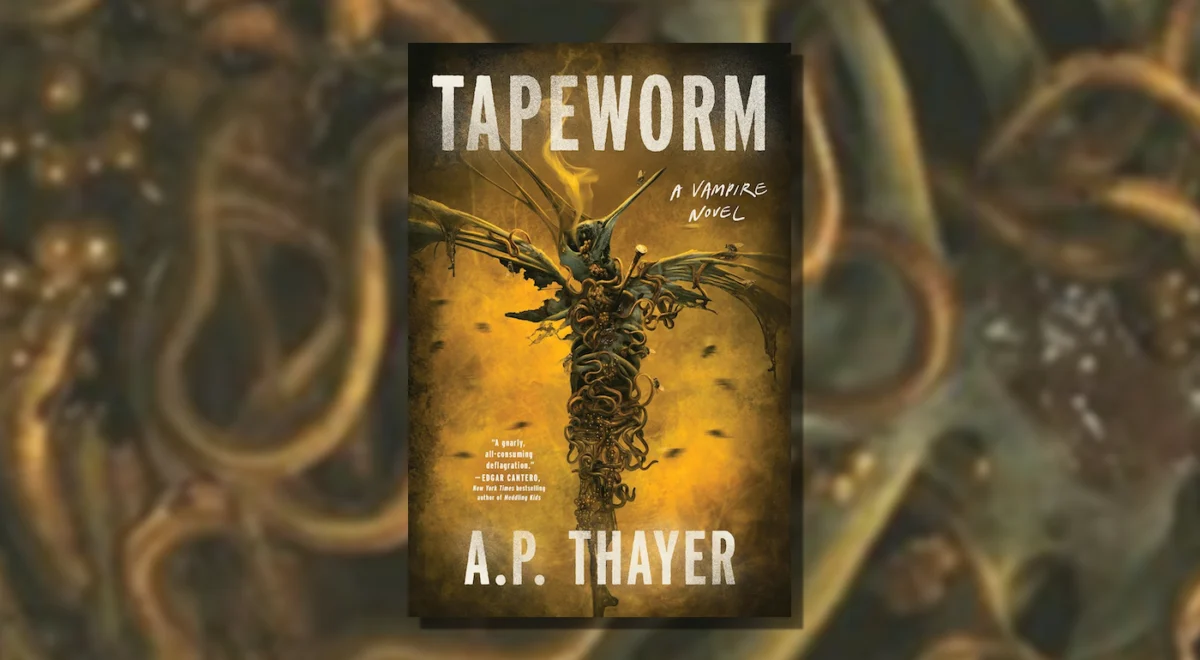
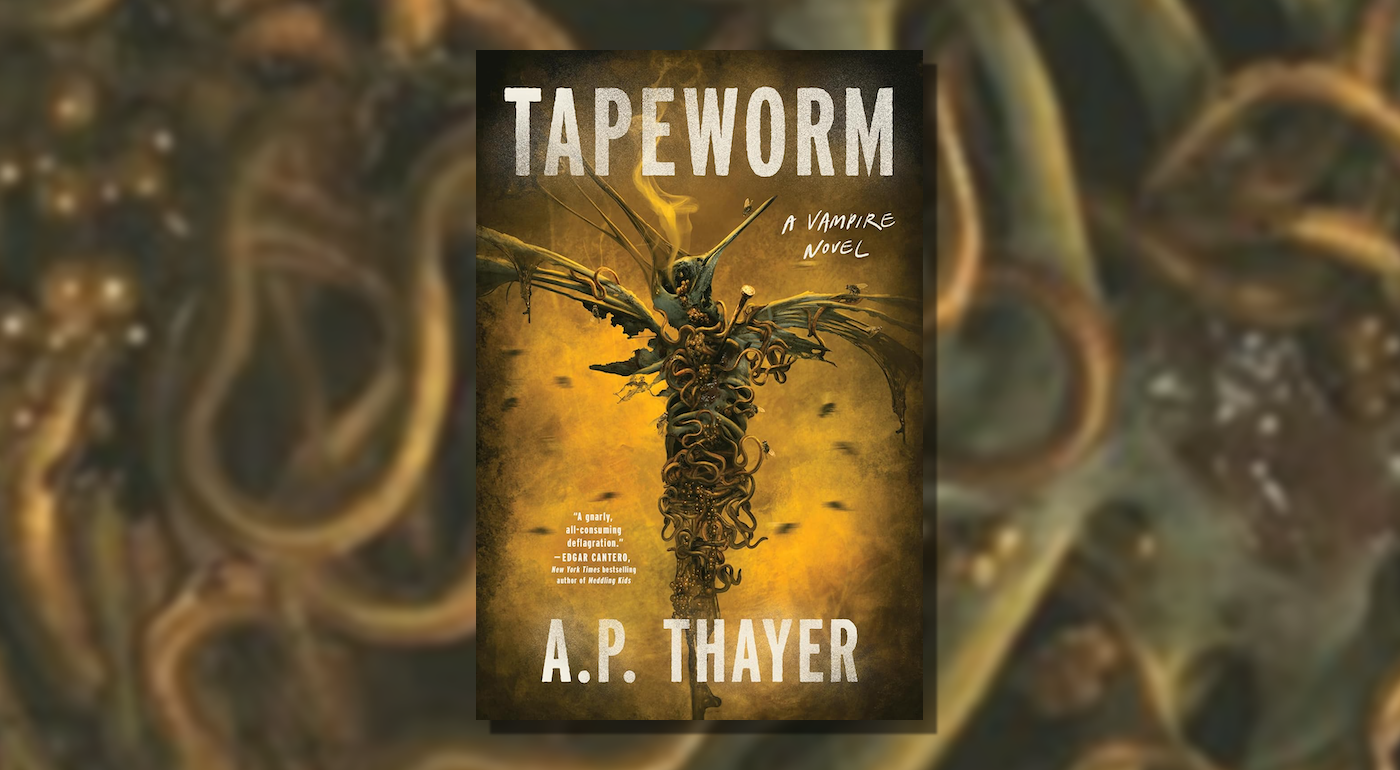
A chilling new body-horror vampire novel, "Tapeworm" by A.P. Thayer, is set to unnerve readers with its visceral exploration of desire, repression, and ancient parasitic entities. Slated for release on August 18th by Evil Twin, the novel plunges into the dark underbelly of a seemingly idyllic desert town, promising a potent blend of psychological dread and visceral terror. Adding to the anticipation, an exclusive excerpt from the audiobook, narrated by Lee Osorio, has also been made available, offering a sonic glimpse into the novel’s unsettling atmosphere.
The narrative centers on Victor, a man grappling with the recent dissolution of his marriage to Trish. Seeking solace and a reconnection with his fractured friend group, Victor embarks on their annual weekend retreat to Superstition, a secluded Californian desert town. However, the desert’s tranquility is shattered by a subterranean awakening. Something ancient and malevolent, described as a "formless mist of yellow," has been unleashed from its millennia-long slumber beneath the earth. This entity, born from a violent seismic event, is not merely an external threat but a parasitic force that preys on the deepest human desires and vulnerabilities.
"Tapeworm" delves into Victor’s internal struggles, highlighting his lifelong battle with repression and his attempts to be the "perfect partner," a role he feels he has consistently failed to inhabit. With Trish absent from the retreat, Victor finds himself drawn into the "wild underbelly of Superstition" in ways he hadn’t anticipated. The proximity of the entity seems to amplify these submerged urges, leading to a darkly seductive encounter with a charismatic figure from the town’s Welcoming Committee, who offers a "romantic, sexually charged offer." This encounter hints at the transactional nature of the entity’s influence, where fulfillment comes at a steep, and potentially monstrous, price. The novel suggests that by the end of the weekend, the very concept of "group bonding" will be redefined by a shared, primal hunger that threatens to consume them all.
The prologue of "Tapeworm" sets a profoundly disturbing stage for the unfolding horror. It details the uncharacteristic earthquake that shakes Superstition Valley, not for its seismic activity but for the lingering aftershocks that precede a far more ancient and terrifying emergence. From a newly formed fissure, the entity, a being of "formless mist," awakens, reveling in the sensory bombardment of a world transformed by millennia of dormancy. It experiences the world through temperature, time, and crucially, through the emotions of the living—particularly pain.
The text vividly contrasts the desolate landscape of its imprisonment with the vibrant life that now flourishes. Cacti bloom, and wildflowers carpet the basin, all under the harsh glare of the sun, its "ancestral enemy." The creature’s emergence is thus tied to the cyclical rhythm of day and night, its true freedom contingent upon the descent of darkness. This natural cycle becomes a crucial element in its predatory strategy, as it must wait for nightfall to fully engage with its surroundings.
The prologue then introduces its first potential victims: Trish and Victor. Trish, standing near a sliding glass door, is depicted experiencing a potent cocktail of grief and longing, emotions that resonate deeply with the ancient entity. The creature senses an echo of its own "centuries-old anger" within her pain and a profound feeling of being "trapped." These complex emotions, described as a "maelstrom of emotional carnage," present the entity with a fertile vessel for habitation. The presence of other humans within the house, emanating feelings of embarrassment, feigned joy, and annoyance, further highlights the growing chasm between Trish and her companions, creating an environment ripe for the entity’s manipulation.
The entity’s nascent understanding of the human world is underscored by its interpretation of Trish’s whispered expletive, "Fuck," as an "invitation." Simultaneously, "the creature’s ancient young," a horde of offspring, pour from the cracks of their subterranean prison, awakened by their mother’s return. These younger entities are met by "ageless hummingbirds," depicted as wardens, who dive-bomb the water to feast on the squirming spawn, preventing their escape. However, this violent containment is revealed as a mere distraction, a sacrifice to allow the primary entity to escape unnoticed.
The narrative then shifts to Victor’s arrival, his strained greeting to Trish ("Trish.") and the palpable tension between them. Their relationship is described with brutal honesty as a "bloated dead thing," waterlogged and decaying, a macabre metaphor for their marital decay. The dialogue between them, laced with lies and unspoken resentments, paints a bleak picture of a couple trapped by cowardice and inertia, clinging to the pretense of their former love. The creature, observing this dynamic, experiences a primal hunger, its long dormancy having amplified its need.
The physical interaction between Vic and Trish, a forced hand-holding that elicits "involuntary revulsion," is a stark illustration of their disconnect. As the sun sets, casting long shadows, the creature makes its move. It seizes the opportunity presented by the encroaching darkness and the emotional turmoil between the couple. A "corpse-white tendril" darts out, piercing Trish’s skin, an insidious invasion that marks the beginning of its physical takeover. Her cry, "Something bit me," is met with Victor’s dismissive, irritated response, further fueling her anger and providing the creature with its first taste of her "spiked cortisol and adrenaline."
The entity’s parasitic nature is further elaborated as it manipulates Trish’s perception and emotions. It floods her bloodstream with hormones that stoke her rage, preventing her from moving on and exacerbating the conflict with Victor. The dialogue that follows is a raw display of their marital animosity, each barb and accusation a feast for the creature. Victor’s condescending remark, "Used to be sweeter," is met with Trish’s sharp retort, "I used to be happy, too," a poignant reflection of their shared loss.
As the argument escalates, the creature seeps from Trish’s ear canal, extending towards Victor, eager to exploit his burgeoning anger. The back-and-forth escalates, with Victor’s attempts at control and Trish’s escalating venom creating a volatile atmosphere. The creature, now inhabiting Trish, manipulates her words and expressions, forcing a smile as she whispers, "I wish I still wanted to touch you," a chilling testament to its insidious control. Victor’s retreat and his final, dismissive command, "Get your shit together," only serve to further alienate them, creating a more potent environment for the entity’s influence.
The creature’s internal experience is described as "indolent in its consumption," as it slips behind Trish’s retinas, witnessing their relationship unfold linearly. It bathes in the memories of their past love, their "fiery need," and manipulates these memories, resurrecting a "happy future" that Trish had once envisioned. This manipulation is not just about recollection; the creature impregnates her fantasies with "new possibilities," reigniting the desire for a lifetime together. The question posed, "Do you want this?", is rhetorical, as the creature orchestrates her longing for a past happiness, a promise of a return to what she once was.
The narrative then contrasts Trish’s internal state with the mundane departure of her friends, their conversations a distant hum carried by the wind. They are oblivious to the horror unfolding within Trish, who, under the creature’s influence, sees them as already "dead." Her tears, streaked with foundation, fall unheeded to the ground, a visual representation of her emotional state.
As Vic hauls Trish’s suitcase, the creature, now deeply embedded, orchestrates Trish’s recollection of Victor’s former self – "Fun. Happy. Playful." The memories of their "passion" and "strength" are juxtaposed with the "sorry state of their marriage," amplifying her fury. The "purple twilight" mirrors her emotional purgatory. The creature’s internal voice, "I can make it better," resonates with her desperate desire for change.
Trish’s scream of frustration to the darkening sky is met with the feigned ignorance of her departing friends, a stark depiction of social detachment. Her final, whispered "Yes," signifies her complete surrender to the entity. The creature, now fully in control, cocoons her in "sickly sweet" promises, its tendrils spreading, taking over "every part of her."
The creature’s predatory nature extends beyond human manipulation. A nearby hummingbird, sensing the anomaly, becomes its next target. Trish, now an extension of the creature’s will, snatches the bird from the air, its crushed body wiped away, a chilling demonstration of the entity’s insatiable hunger and control. Trish’s final words, "Everything will be better," uttered as she anticipates the next year’s trip, underscore the horrifying cyclical nature of the entity’s influence, a promise of future torment disguised as solace.
The novel "Tapeworm" by A.P. Thayer is poised to delve into the dark corners of human psychology, using the supernatural to amplify and expose the vulnerabilities that lie beneath the surface of everyday life. The release date of August 18th marks the arrival of a story that promises to be both a disturbing exploration of horror and a potent commentary on the complexities of relationships and the hidden desires that can lead to monstrous awakenings. The availability of both the print and audiobook editions ensures that readers can experience this unsettling narrative in their preferred format, further immersing themselves in the chilling world of Superstition.