The 79th Festival de Cannes concluded its annual showcase amid a flurry of polarized critical discourse, with early dismissals characterizing the 2026 edition as restrained compared to the high-adrenaline competition cycles of preceding years. However, beneath the surface of the festival’s traditional prognostications lay a profound tectonic shift in contemporary cinematic storytelling. Rather than relying on the white-knuckle, high-concept narrative tension that defined festival favorites in 2025—such as Jafar Panahi’s critically lauded It Was Just an Accident—the 2026 selection favored accumulative, somatic works. These features built their emotional resonances incrementally, prioritizing bodily impacts and structural character studies over sudden dramatic twists.
Main Facts and Palmarès Overview
The official competition showcased a diverse array of international heavyweights and emerging auteurs, ultimately culminating in a contentious victory for Cristian Mungiu’s multilingual drama Fjord. Examining the complex, highly bureaucratic mechanics of Norwegian child protective services, Mungiu’s film divided critics. While admirers praised its rigorous procedural focus, detractors argued that its stark critique of Scandinavian social welfare systems echoed an increasingly reactionary political worldview. Mungiu previously secured the Palme d’Or in 2007 with 4 Months, 3 Weeks and 2 Days, marking this latest win as a significant milestone in his career, though one that sparked intense debate among industry insiders regarding its ideological underpinnings.
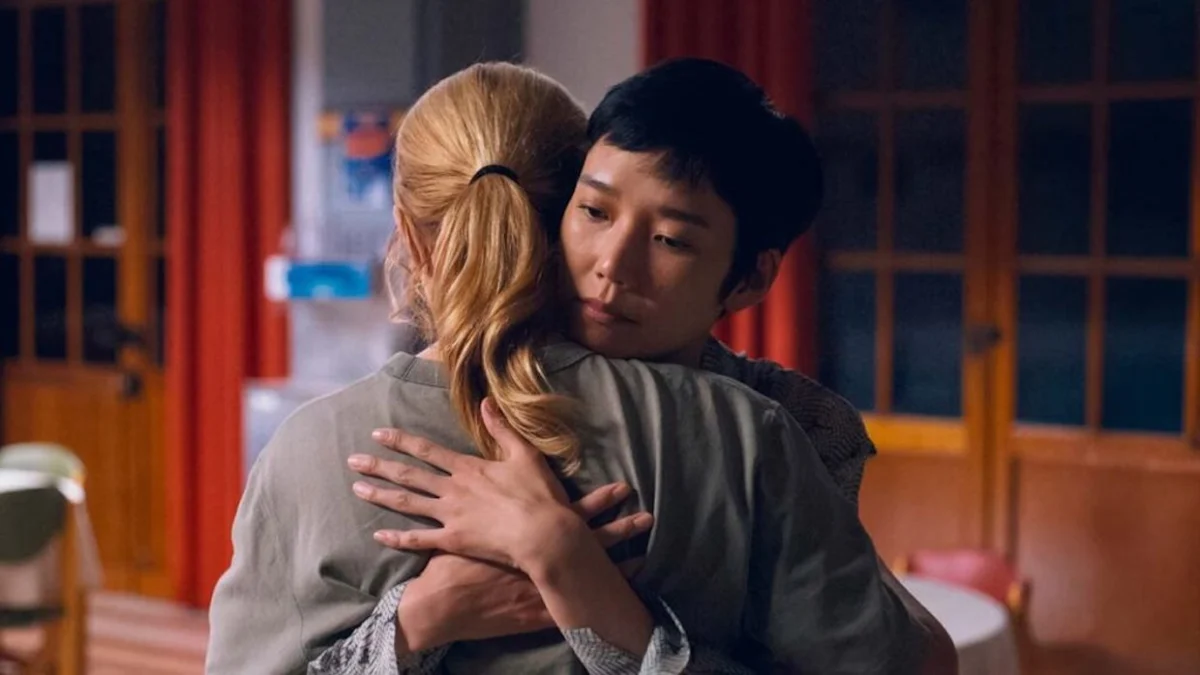
Despite missing out on the top prize, the Competition featured standout performances that dominated festival headlines. Ryusuke Hamaguchi’s intricately crafted All of a Sudden emerged as a critical darling. Chronicling the profound, life-affirming dialogue between a Japanese playwright named Mari and a French eldercare manager named Marie-Lou, the film explores themes of global decline, mortality, and unexpected human connection. The emotional authenticity of the central dynamic earned a joint Best Actress award for Virginie Efira and Tao Okamoto. The film’s conceptual genesis drew inspiration from real-life correspondence between Japanese anthropologist Maho Isono and the late philosopher Makiko Miyano, adding a layer of poignant biographical authenticity to Hamaguchi’s screenplay.
Chronology and Standout Selections of the Fortnight
The festival schedule unfolded across a grueling twelve-day gauntlet of screenings, press conferences, and market negotiations. Mid-festival entries shifted the tone toward historical excavations and regional borderland dramas. Valeska Grisebach’s expansive, three-hour-plus canvas, The Dreamed Adventure, bowed late in the festival schedule to widespread critical acclaim. Set in the rugged borderlands of Eastern Europe, the film follows an archaeologist, Veska—portrayed with unflinching resolve by nonprofessional actor Yana Radeva—as she navigates a landscape plagued by post-Soviet criminal stagnation and retrograde gender dynamics. Grisebach spent years conducting field research in the region, a meticulous preparation phase that yielded an unvarnished examination of power structures and modern masculine decay.
Concurrently, historical narratives set against the backdrop of World War II captured the zeitgeist. Pawel Pawlikowski’s Fatherland functioned as a finely calibrated road movie tracking the 1949 speaking tour of author Thomas Mann (Hanns Zischler) and his daughter Erika (Sandra Hüller) across a fractured Germany. The film’s intellectual rigor contrasted sharply with Emmanuel Marre’s A Man of His Time, a harrowing deep dive into the moral rot of a municipal bureaucrat in Vichy France, featuring a chilling lead performance by Swann Arlaud. Utilizing hard-lit 16mm cinematography to evoke period-accurate immediacy, Marre based the narrative partly on historical correspondence written by his own great-grandfather.
Supporting Data and Sidebar Triumphs
While the main competition captured media attention, the festival’s parallel sections—Un Certain Regard, Critics’ Week, and Directors’ Fortnight—provided some of the most adventurous cinema of the year.

In the Critics’ Week section, Marine Atlan’s debut feature La Gradiva captured critical acclaim and an immediate United States distribution deal with 1-2 Special. Filmed entirely on location in Pompeii, Atlan’s sensitive coming-of-age drama follows a group of French students and their dedicated instructor (Antonia Buresi), avoiding easy ironic detachment in favor of genuine empathy for adolescent emotional crises.
In the Un Certain Regard sidebar, Sandra Wollner’s Everytime claimed the top prize. Shot with striking intimacy by cinematographer Gregory Oke, the film presents an unsettling, fragmented study of grief and recovery. Meanwhile, the prestigious Camera d’Or for best debut feature was awarded to Clarissa, a Nigerian adaptation of Virginia Woolf’s Mrs. Dalloway directed by the Esiri brothers, Arie and Chuko, which integrated a incisive post-colonial critique inspired by the literary traditions of Chinua Achebe.
Official Responses and Geopolitical Resonance
True to the historic role of the Festival de Cannes as a platform for sociopolitical commentary, the 2026 edition concluded with pointed anti-authoritarian declarations. Russian dissident filmmaker Andrei Zvyagintsev accepted the Grand Prix for his drama Minotaur—an adaptation of Claude Chabrol’s The Unfaithful Wife translated into the realities of contemporary Russian corporate corruption. During his acceptance speech, Zvyagintsev delivered a direct appeal to Russian leadership, urging an immediate halt to the ongoing conflict in Ukraine.
This political undercurrent echoed the ongoing struggles of international filmmakers facing state-sponsored censorship and persecution, notably Jafar Panahi, whose previous festival triumph cast a long shadow over the proceedings as he faces further legal jeopardy in Iran.
Broader Impact and Industry Implications
The commercial landscape of Cannes 2026 was heavily shaped by aggressive acquisitions. Independent studio NEON maintained a dominant presence across the Croisette, securing North American rights to an eclectic slate of films. These included James Gray’s classic New York family tragedy Paper Tiger, Jane Schoenbrun’s speculative meta-horror exploration Teenage Sex and Death at Camp Miasma, and the visually arresting South Korean feature Hope.
Despite initial critiques labeling the 2026 festival selection as muted in star power or lacking a singular, consensus-driven masterpiece, the long-term industry implications point toward a healthy recalibration. The embrace of gradualist narratives, formally rigorous historical inquiries, and intimate psychological studies suggests that international cinema is moving away from shock-value aesthetics. Instead, filmmakers are increasingly investing in durable, resonant explorations of trauma, systemic corruption, and human solidarity—works that will undoubtedly continue to define critical conversations long after the final curtains have fallen on the grand Lumière Theatre.